 Andrew Adams · Co-Founder & Operations at Wireflow ·
 RunComfy Alternative: A Hosted Canvas That Is Not ComfyUI
A hosted node canvas for AI media generation with no ComfyUI graph to maintain, no GPU clock to watch, pay per generation, and every workflow callable as a REST endpoint and an MCP tool.
Free to build · no credit card · See how it works ↓
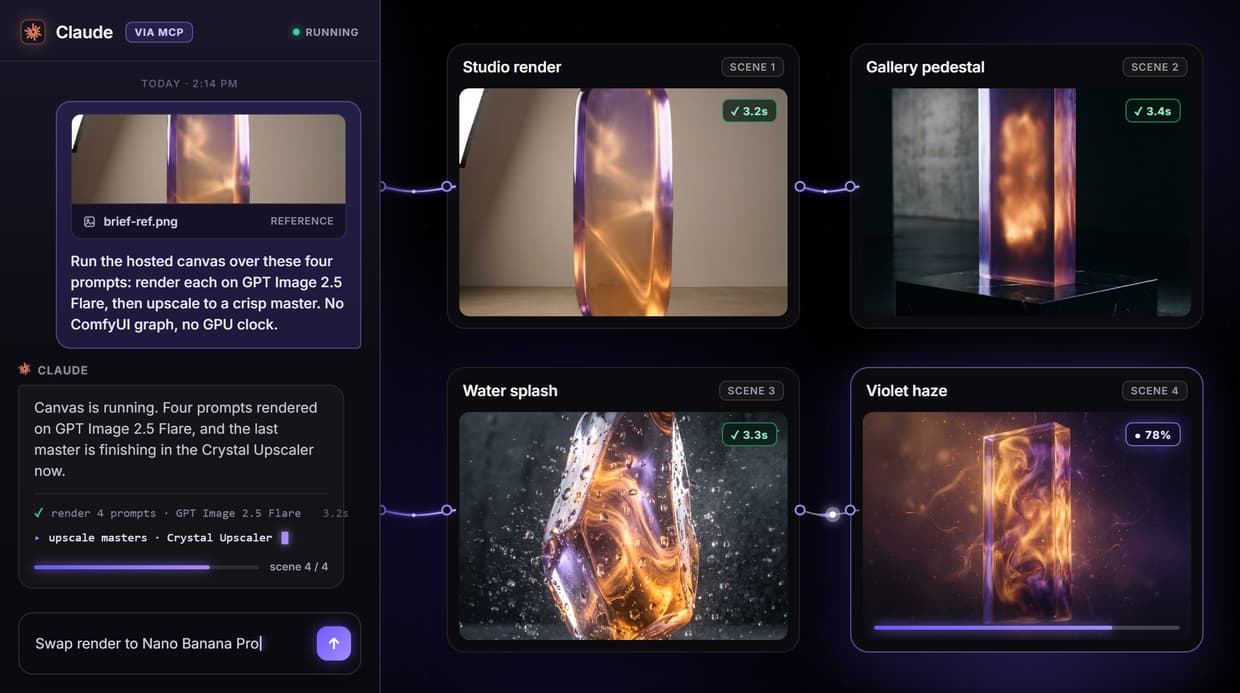
How to Use RunComfy Alternative: A Hosted Canvas That Is Not ComfyUI
Steps to get you started in Wireflow.
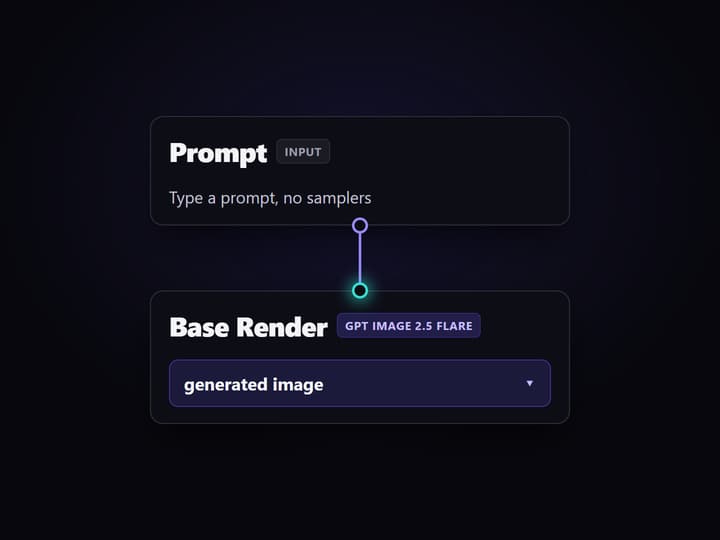
Write the prompt into the canvas
Open the template and type a prompt into the prompt node. It wires straight into the GPT Image 2.5 Flare render node, so there are no samplers, latents, or checkpoints to configure first.
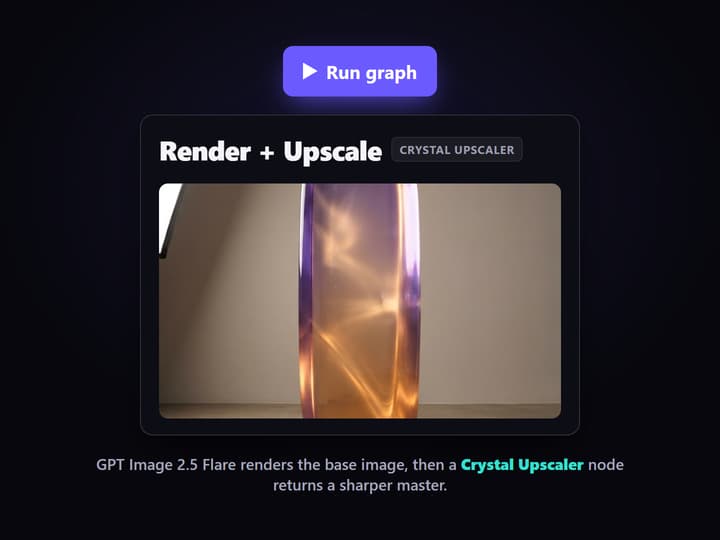
Render and upscale
Run the graph. GPT Image 2.5 Flare generates the base image, then the Crystal Upscaler node takes that image and returns a sharper, higher-resolution master.
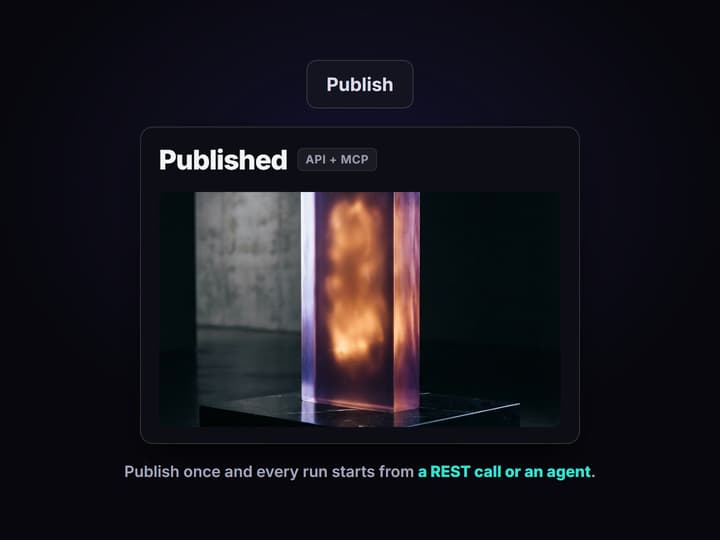
Publish and call it anywhere
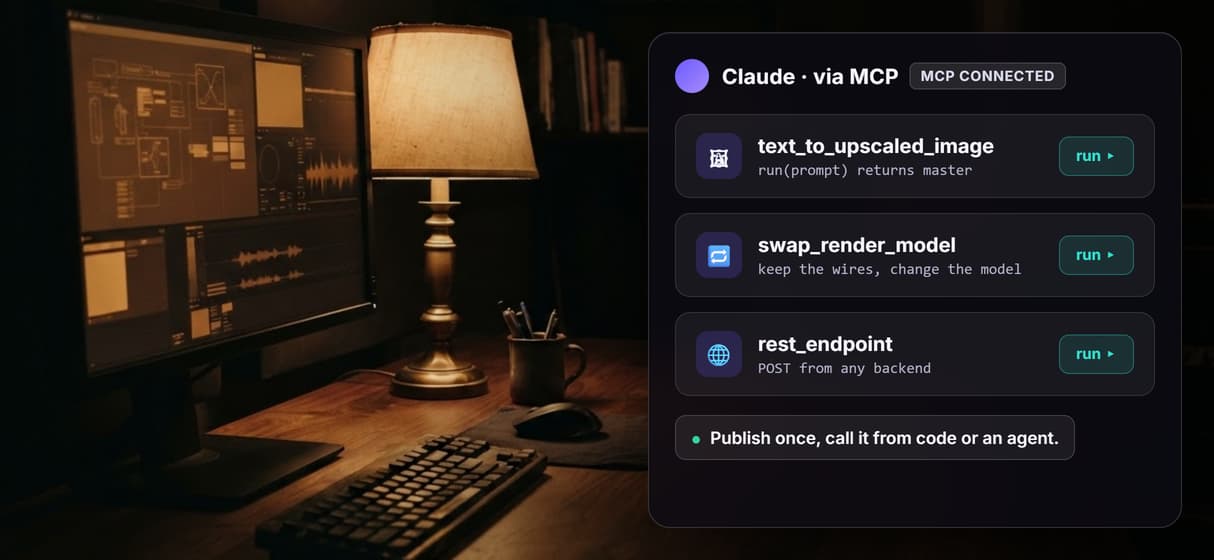
Publish the canvas and it becomes a REST endpoint and an MCP tool. Send a new prompt from your backend or an agent and finished image URLs come back in the response.
The hosted canvas without ComfyUI underneath
RunComfy solves the local install and the GPU by running ComfyUI in the browser, but it keeps everything ComfyUI is built on: the graph of samplers, latents, VAEs, and checkpoints, plus the custom nodes that an upstream ComfyUI update can quietly break mid-project. Wireflow keeps the node idea and drops that whole layer. The workflow above is a live canvas you can open and copy. A prompt node feeds a GPT Image 2.5 Flare render node, and that render feeds a Crystal Upscaler node for the final master.
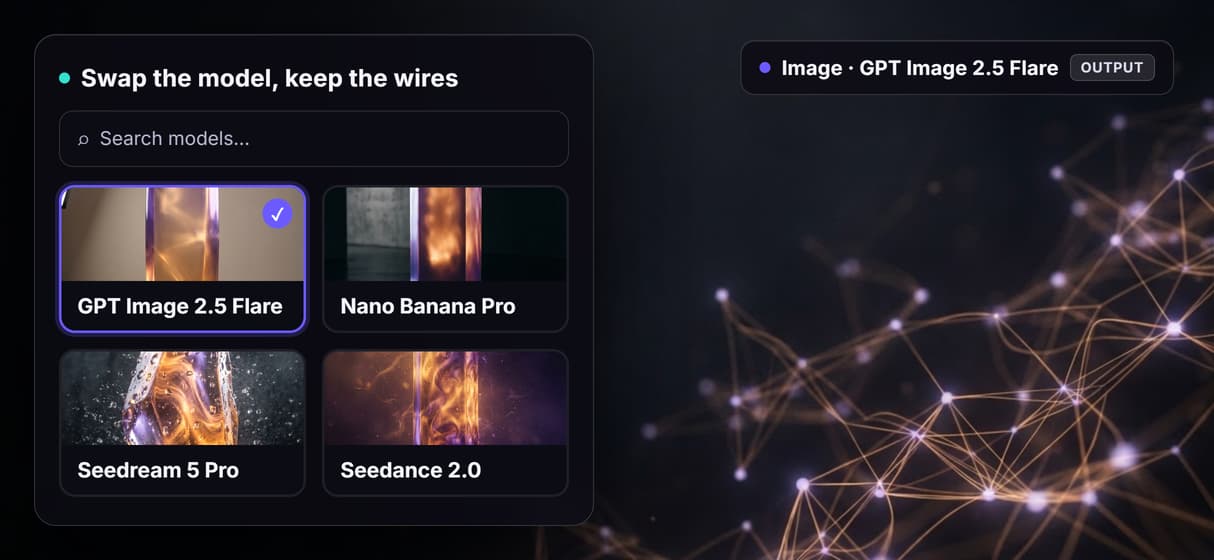
Each node is a whole model rather than a stage of one, so the graph stays short and readable, and nothing about it is version-fragile. Swap the render node from GPT Image 2.5 Flare to Nano Banana Pro or Seedream 5 Pro for a sharper base, and the rest of the graph runs on unchanged. It is the ComfyUI alternative with no GPU for people who want the result, not the wiring.
Pay per generation, not per GPU hour
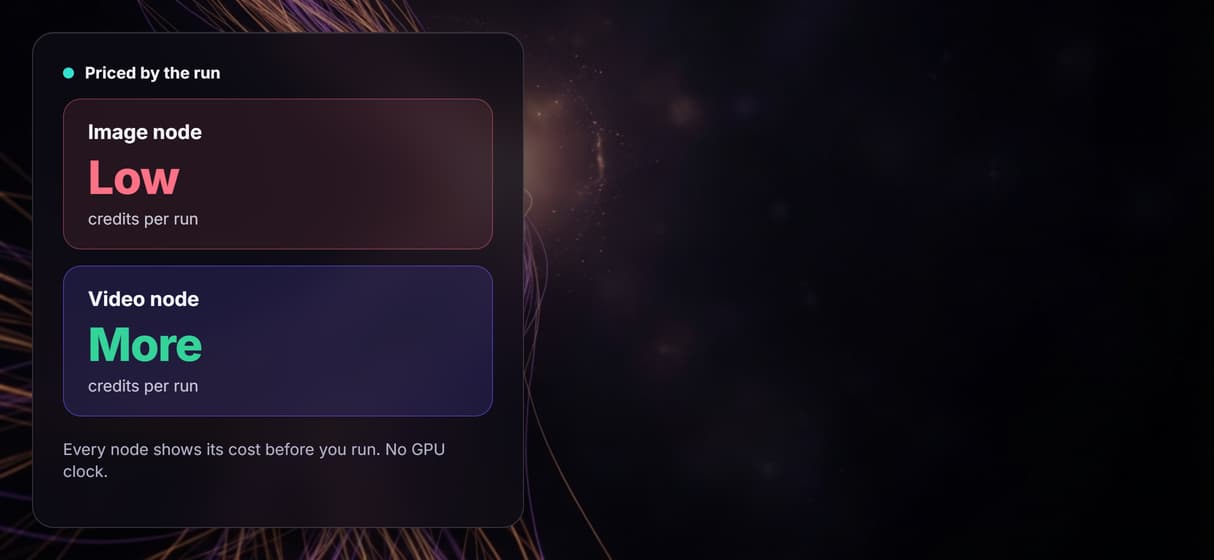
The loudest complaint about a rented cloud GPU is that the meter runs on wall-clock time, not on useful output, so the balance can drain during a long or iterative session before you notice. Wireflow prices by generation instead. Every node shows its credit cost on the canvas before you run, so an expensive step is obvious next to a cheap one while you are still building.
Building on the canvas is free. You spend credits only when a node actually runs, so a quiet week costs nothing and a heavy render week is something you can see coming. There is no machine tier to pick and no session runtime cap to work around, because a run is a run rather than a block of rented GPU time. If sharpening is your main job, the AI image upscaler node prices the same way.
Workflows that stay reproducible
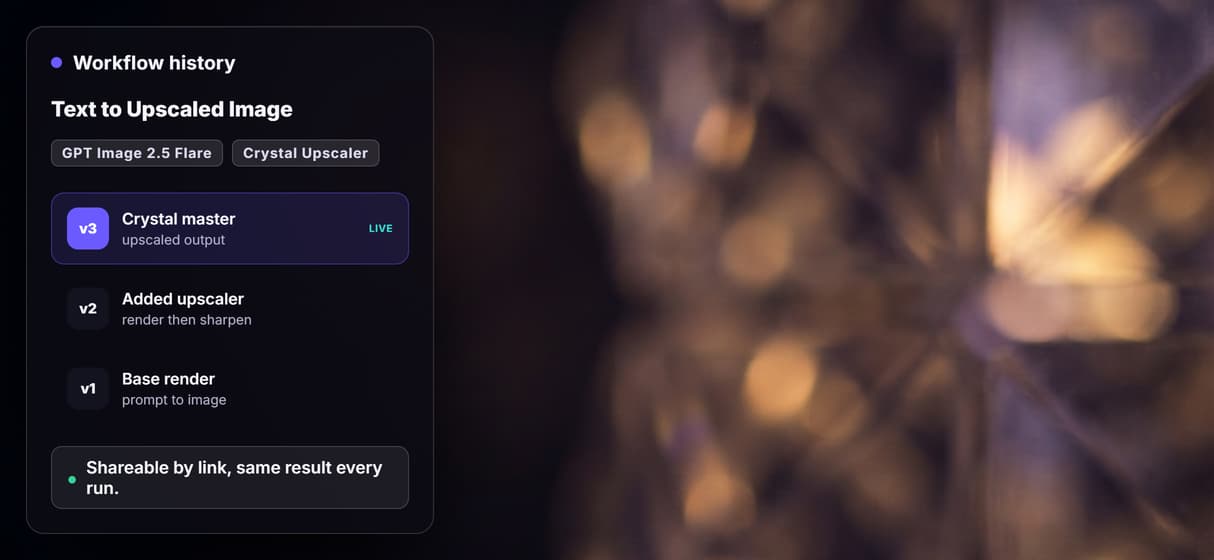
A personal ComfyUI graph is fragile: it lives in one workspace, drifts as you tweak it, and can behave differently after a node update. A Wireflow workflow is versioned server-side, so a published pipeline keeps producing the same result and you can share it by link instead of by exporting a .json file and hoping the other machine has the same nodes.
That matters the moment more than one person, or one script, depends on the output. The graph you approved is the graph that runs, every time, whether a teammate opens it on the canvas or a backend calls it at 3am.
Every canvas is an API and an MCP tool
A hosted canvas is only half the value. The other half is running it without opening the canvas at all. When you publish a Wireflow workflow it becomes a REST endpoint and an MCP tool at the same time. Your backend can POST a prompt and get finished asset URLs back, and an agent connected through MCP can call the same workflow with typed inputs and receive the results in the conversation.
If you want to trigger runs from your own code, this is the node-based AI platform with an API, so one workflow serves both the person on the canvas and the script that never opens it. Add a video model and the same graph is also an AI video generator.
What the hosted canvas gives you
Not ComfyUI
No node graph, custom Python, or checkpoints to maintain, and no upstream update that can break your pipeline.
Pay per generation
Priced by the run, not the GPU hour, with each node's credit cost shown on the canvas before you press go.
No local GPU
Render in the cloud with no CUDA, no install, no driver upkeep, and no machine tier to size and pick.
Reproducible runs
Every workflow is versioned server-side and shareable by link, so the graph you approved is the graph that runs.
Every workflow is an API
Publish the graph and call it as a REST endpoint or an MCP tool from any backend, script, or agent.
Swap models freely
Repoint any node to a different image, video, or audio model and the rest of the graph runs unchanged.
When RunComfy is still the better pick
Wireflow is not a drop-in replacement for ComfyUI, and it is honest about that. If your work depends on your existing ComfyUI graphs, on custom Python nodes, or on Civitai checkpoints and LoRAs you have tuned, RunComfy runs the real ComfyUI in the cloud and Wireflow does not. There is no import path for a ComfyUI .json file here, because the node sets are different. You rebuild the intent of a workflow, not the graph itself.
So pick Wireflow when your real goal is hosted AI media generation with a wide model range, cost you can see per node, and a canvas you can run from an API. Stay on RunComfy when running specific ComfyUI graphs, custom nodes, or your own checkpoints is the whole point. If you want the middle path, the ComfyUI cloud API comparison covers the hosted-ComfyUI route in more detail.
More Than Just RunComfy Alternative: A Hosted Canvas That Is Not ComfyUI
Not ComfyUI, nothing to maintain
A hosted canvas with no node graph to babysit and no custom Python to break, the ComfyUI alternative with no GPU an upstream update cannot break.
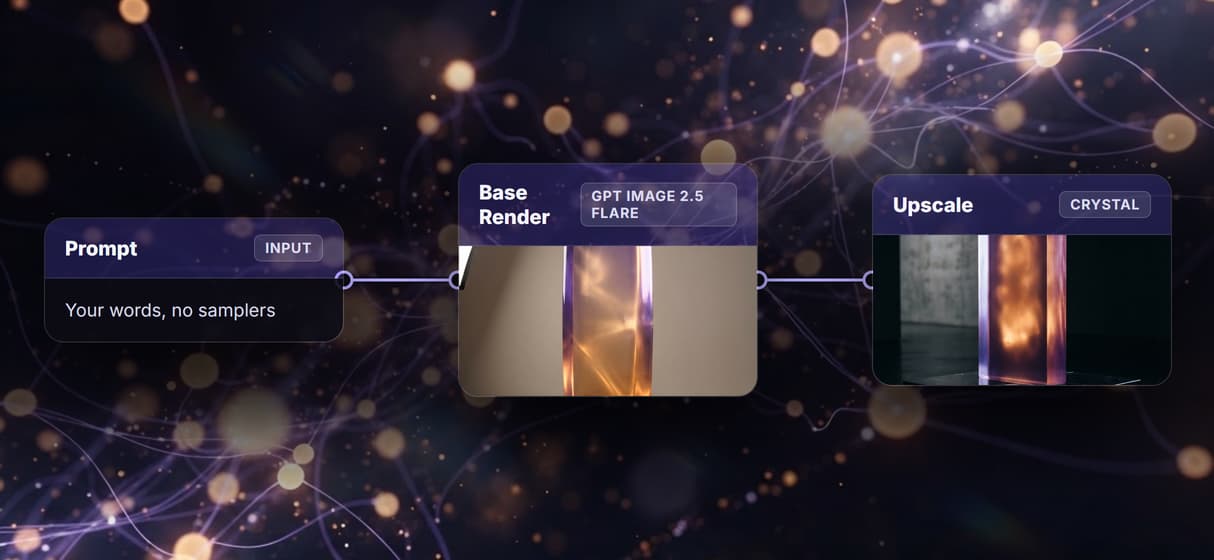
Pay per generation, not per hour
Priced by the run instead of the GPU clock, with each node's cost shown before you run, the ComfyUI cloud API route without the metered machine tier.
Reproducible, versioned workflows
Every workflow is versioned server-side and shareable by link, so the best node based AI workflow platform runs the graph you approved.
Every model on one canvas
One graph holds 70+ image, video, and audio models, new ones added as they launch, so node based image generation stays current.
Run it from your own code
Publish any canvas and it answers a REST call or an MCP agent, the node based AI platform with an API your backend can call on demand.
Runcomfy alternative: a hosted canvas that is not comfyui Workflows
No Code Required
API & Batch Processing
FAQs
Wireflow is a hosted node canvas built for the same job: wire a prompt into a model node and chain the outputs. It differs by not being ComfyUI, so there is no node graph to maintain, no custom Python to break on an upstream update, and no GPU machine tier to pick, plus 70+ models, pay-per-generation pricing, and an API for every workflow.
Discover related AI tools
- Weavy AI Alternative: More Models, Same Node Canvas
- Flora AI Alternative
- Freepik Spaces Alternative
- RoboNeo AI Alternative: 79 Models in Your Browser
- Sotatech AI Alternative
- Pletor AI Alternative: 79 Models, No Black Box
- Fuser Studio AI Alternative
- AI Creative Workflows
- Visual Node Editor
- No Code AI Canvas
- Reusable AI Templates
- AI Pipeline API
More From Wireflow
Written by
Andrew Adams · Co-Founder & Operations at Wireflow
Runs client operations and content strategy at Wireflow. Works directly with creative teams and agencies to build production AI workflows.
Try the hosted node canvas
Every node in this workflow is public and ready to copy. Open it, drop in your own prompt, and run the chain from a GPT Image 2.5 Flare render to a Crystal Upscaler master. Publish it, and your next run can start from an API call or an agent.