Hailuo, MiniMax's video model family, is one of the strongest image-to-video options available in 2026, and the fastest way to use it in production is through an API rather than the consumer app. This guide ranks the eight best Hailuo API tools by pricing, latency, model coverage and how well they fit into a larger pipeline, starting with Wireflow, which lets you call Hailuo alongside other models on one canvas and one bill.
Quick summary
- Wireflow: Best overall for chaining Hailuo with other models
- MiniMax Open Platform: Best for direct, first-party access
- fal.ai: Best for raw speed and model breadth
- Replicate: Best for developer ergonomics and versioning
- WaveSpeedAI: Best for low-latency batch runs
- PiAPI: Best for cheap, high-volume generation
- Segmind: Best for mixing Hailuo into image pipelines
- AI/ML API: Best for one key across many providers
How we ranked these Hailuo API tools
Hailuo 02 and the newer Hailuo 2.3 line are served by a lot of platforms, and the model output is identical across most of them because they all proxy MiniMax inference. What differs is price per second, queue time, whether you get Standard (768p) and Pro (1080p) tiers, and what happens after the clip is generated. For a hands-on look at this in practice, see the Hailuo API feature page, which walks through calling the model and passing its output into a follow-up step.
We weighted four things: cost transparency, whether both text-to-video and image-to-video endpoints are exposed, how quickly a job returns under normal load, and whether the platform gives you spend limits and budget controls before a batch job runs away with your credits. Reseller platforms that only publish credit prices without a dollar conversion scored lower.
1. Wireflow
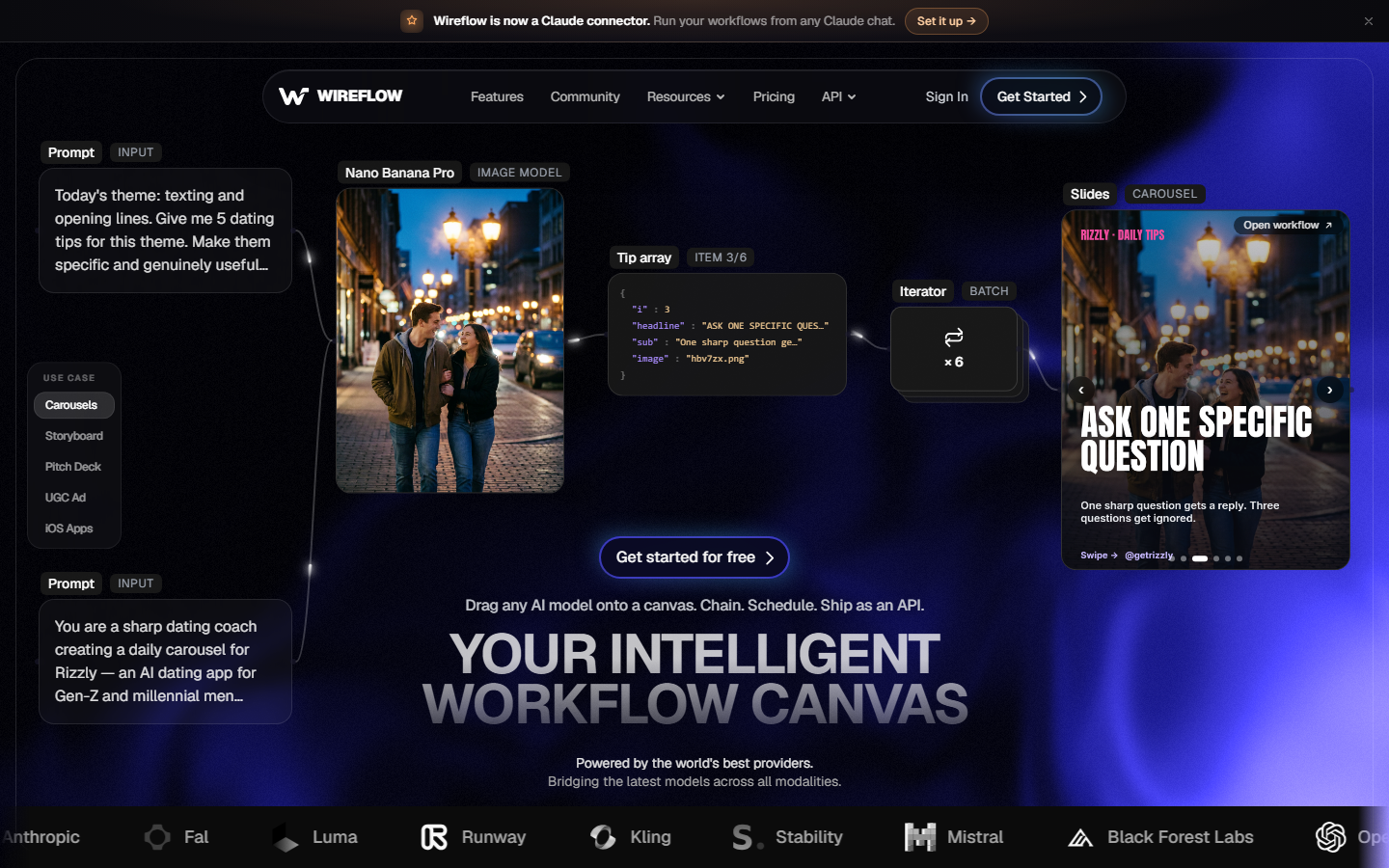
Wireflow treats Hailuo as one node in a visual pipeline instead of a standalone endpoint. You drop in a Hailuo node, wire an image or prompt into it, then connect the output to whatever comes next: an upscaler, a lip-sync pass, an audio track, or a second video model for the following shot. Most real production work is a sequence, not a single call, and stitching that sequence together yourself means writing polling loops, storing intermediate files and handling retries per provider.
The same canvas is available as a REST API, so a workflow you build visually can be triggered from code with one request. Teams that need to chain several AI models behind one API call usually end up here, because the alternative is maintaining glue code for every model vendor. Billing is unified across models, which removes the usual problem of reconciling four different provider invoices at month end.
Best for: teams building multi-step video pipelines, not one-off clips.
2. MiniMax Open Platform
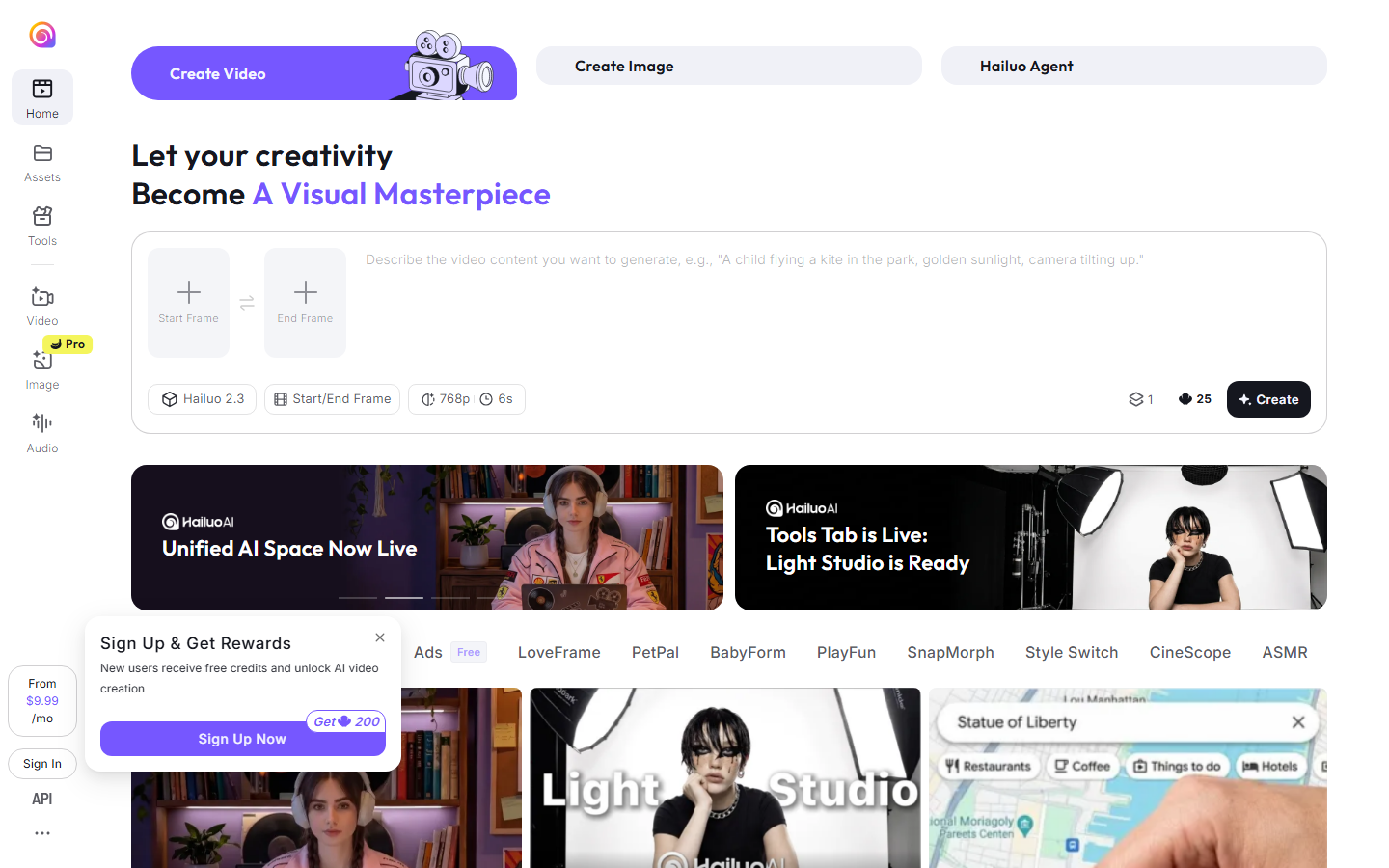
The first-party option is MiniMax's own Open Platform, which exposes Hailuo 02 and Hailuo 2.3 directly with no reseller in the middle. You get the newest model versions first, usually days or weeks before aggregators finish wiring them up, and you get access to features that resellers sometimes drop, such as camera movement controls and subject reference.
The tradeoff is operational. Documentation is thinner than most Western developers expect, billing runs on a credit system that needs conversion for cost comparisons, and you are on your own for orchestration once the clip returns. If you also run image models, a single-vendor account becomes one more thing to manage next to a general AI video generator setup.
Best for: shops standardizing on Hailuo alone and wanting day-one model access.
3. fal.ai

fal.ai hosts hundreds of models behind one key and is generally the fastest of the aggregators for Hailuo. It publishes clear per-model pricing, splits Standard and Pro into separate endpoints, and its queue API with webhooks is well suited to batch jobs where you fire many requests and collect results asynchronously.
Pricing sits around $0.28 for a Hailuo 02 Standard clip and roughly $0.08 per second on the Pro tier, which is close to first-party cost. The client libraries are good, and because the same key also serves models like Seedance, it is easy to A/B one shot across two video models without new credentials. You still write your own orchestration on top.
Best for: developers who want fast inference and are comfortable writing their own pipeline code.
4. Replicate
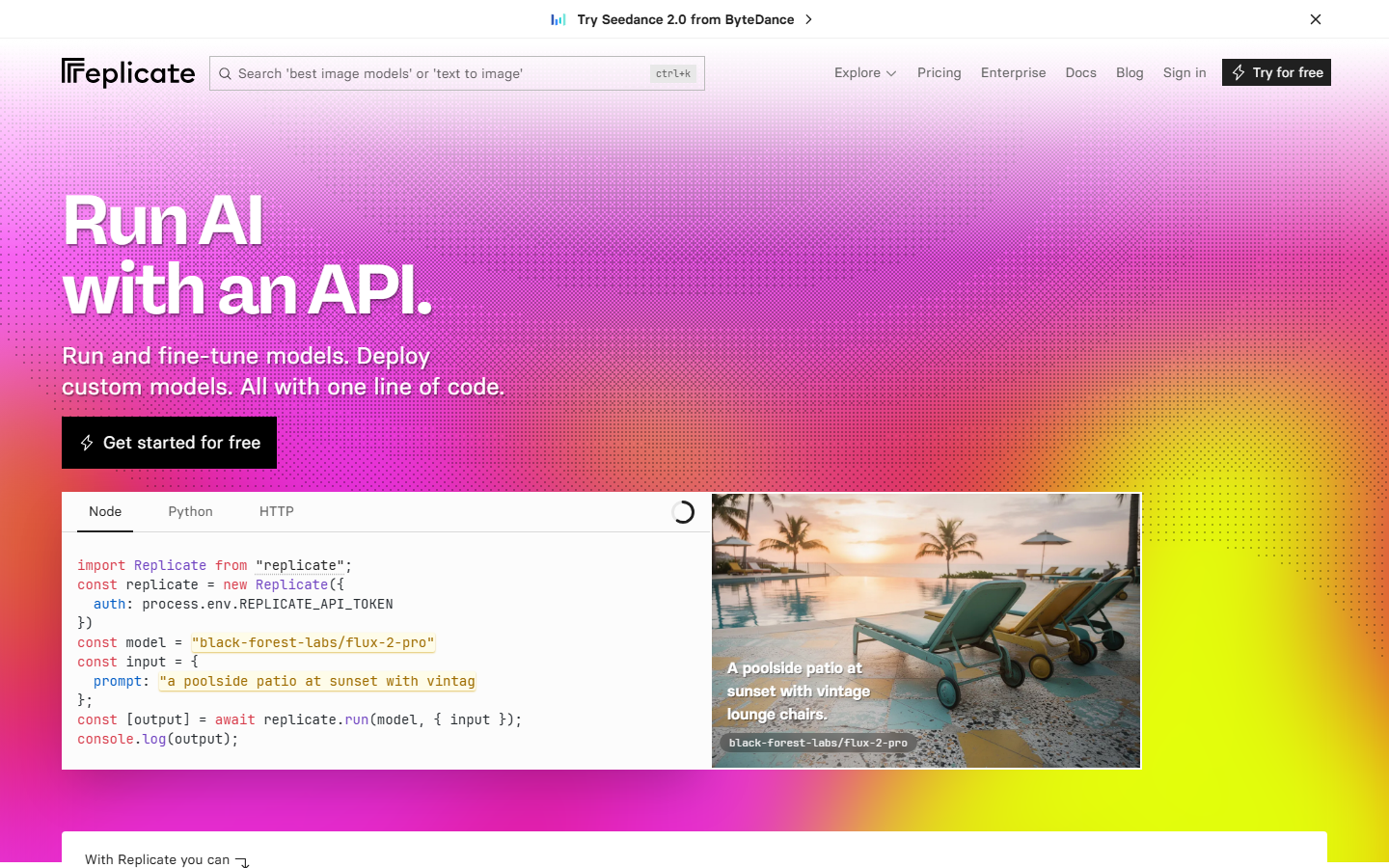
Replicate is the most developer-friendly way to call Hailuo if you value pinned model versions. Every model runs at an immutable version hash, so a workflow that worked last quarter still behaves the same today, which is rare in this category and useful for regression testing.
Cost is per-run rather than per-second on some models, and cold starts can add seconds to the first call after idle time. The API is clean enough that coding agents handle it well, which is why it shows up often in agent-driven video pipelines. Expect to pay a small premium over fal for the ergonomics.
Best for: engineering teams that need version pinning and predictable behavior.
5. WaveSpeedAI
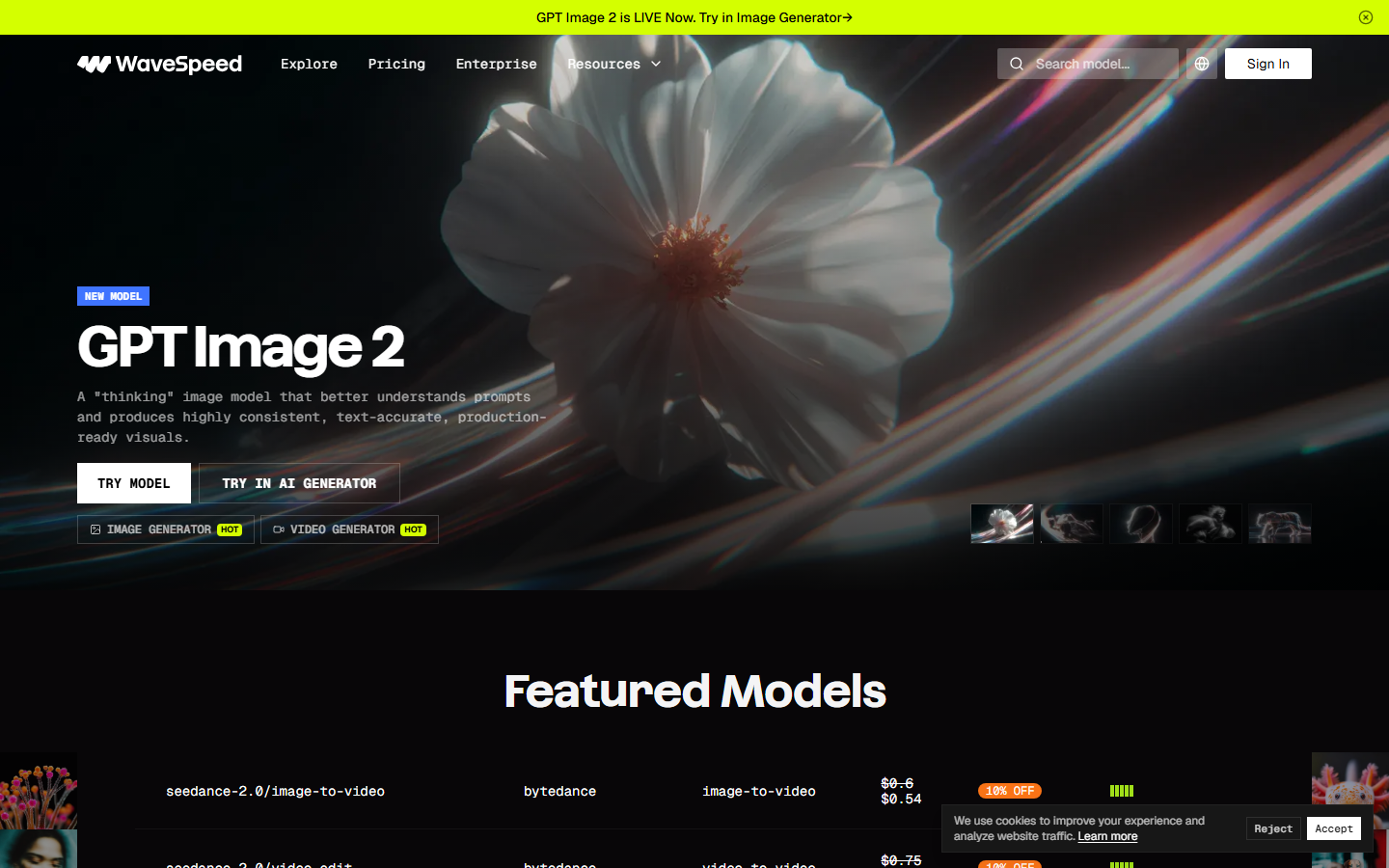
WaveSpeedAI optimizes for inference speed and publishes latency benchmarks per model, including the Hailuo 02 Pro and Standard tiers. For high-volume batch work where you are generating hundreds of clips, the time saved per job compounds, and the platform's concurrency limits are more generous than most at the same price point.
The model catalog is narrower than fal's but covers the video models that matter, so a shop running Hailuo next to Kling can stay on one account. Documentation is API-first with little hand holding, and there is no visual builder, so this is a fit for teams that already have their orchestration layer.
Best for: batch video generation where throughput matters more than model breadth.
6. PiAPI
PiAPI is the budget pick. It aggregates models that are otherwise hard to reach programmatically and prices Hailuo below most competitors, with both pay-as-you-go and host-your-own-account modes. The second mode lets you attach your own MiniMax subscription and pay only a thin routing fee, which is the cheapest path if you already hold credits.
Reliability is the tradeoff. Queue times vary with load, and error messages are less descriptive when a job fails, so you need retry logic in front of it. If your work involves assembling many short clips into longer sequences, pair it with a proper multi-shot stitching step rather than handling concatenation ad hoc.
Best for: high-volume, cost-sensitive generation with tolerance for variable latency.
7. Segmind
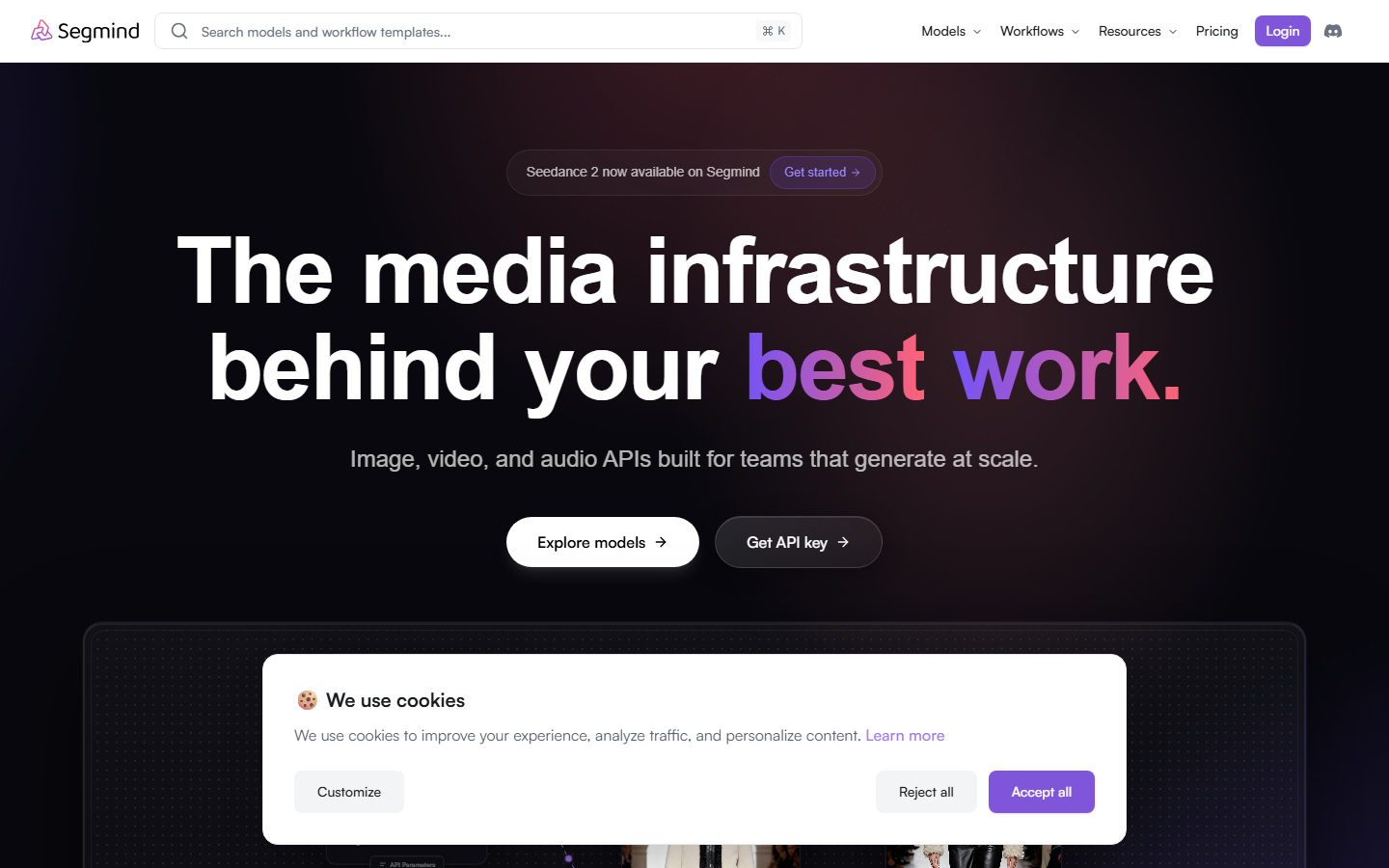
Segmind started as an image-model platform and added video, so its strength is combining the two. A typical Segmind pipeline generates a still with an image model, then feeds that frame into Hailuo for image-to-video, all inside one serverless workflow with no infrastructure to run.
That makes it a good fit when the video is the second half of a job that starts with an image, similar to how a Nano Banana image step can feed a video model. The visual pipeline builder is basic compared to a dedicated canvas, and video model coverage lags the specialists, but for image-first work it removes a whole integration.
Best for: image-to-video jobs that begin with a generated still.
8. AI/ML API
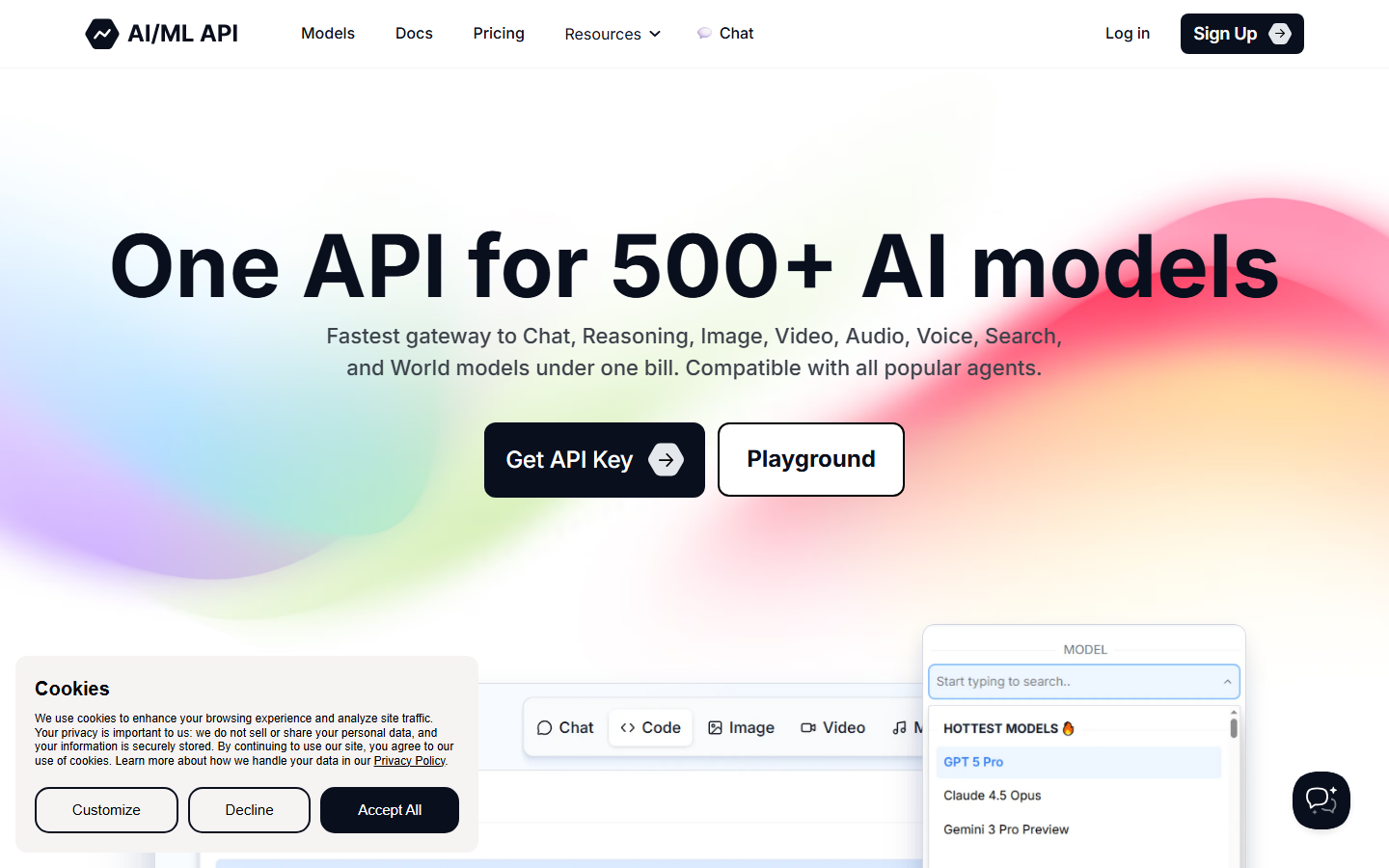
AI/ML API puts several hundred models behind an OpenAI-compatible interface, which means the SDK you already use often works with a base URL change. Hailuo sits alongside language, image and audio models under one key and one invoice, which simplifies procurement for teams that hate adding vendors.
The abstraction has a cost: model-specific parameters are sometimes flattened or delayed, so advanced Hailuo controls may lag the first-party API. It is a sensible default if you are evaluating several AI workflow platforms with API access and want one credential while you decide.
Best for: teams consolidating many model vendors behind a single key.
Hailuo API pricing and access compared
| Tool | Hailuo tiers | Approx. cost | Orchestration | Best for |
|---|---|---|---|---|
| Wireflow | Standard + Pro | Unified credits | Visual canvas + REST | Multi-step pipelines |
| MiniMax Open Platform | All, day one | Credit system | None | First-party access |
| fal.ai | Standard + Pro | ~$0.28/clip, ~$0.08/s Pro | Queue + webhooks | Fast batch inference |
| Replicate | Standard + Pro | Per-run, slight premium | Versioned runs | Reproducibility |
| WaveSpeedAI | Standard + Pro | Competitive per-second | API only | Throughput |
| PiAPI | Standard + Pro | Lowest per clip | API only | Budget volume |
| Segmind | Limited tiers | Per-run credits | Basic pipelines | Image-first jobs |
| AI/ML API | Standard + Pro | Bundled credits | API only | Vendor consolidation |
Prices move often, so treat the column above as an ordering rather than a quote, and check each vendor's pricing page before committing to a batch. The practical spread between the cheapest and most expensive option for the same clip is roughly two to three times.
Which one should you pick
If Hailuo is a single step inside a longer job, a canvas that handles retries, intermediate storage and the handoff to the next model saves more engineering time than any per-second price difference. If Hailuo is the whole job and you generate at volume, go direct to MiniMax or use fal for speed and PiAPI for cost. Teams already running a production video pipeline should test two providers side by side for a week, since queue behavior under real load differs more than the marketing pages suggest.
Try it yourself: Build this Hailuo workflow in Wireflow, where the nodes are pre-configured with the setup described above.
FAQ
What is the Hailuo API? The Hailuo API is MiniMax's video generation endpoint, covering text-to-video and image-to-video across the Hailuo 02 and Hailuo 2.3 model families. You send a prompt or a starting image, poll for the job, and receive a hosted clip.
Is the Hailuo API cheaper direct or through an aggregator? Direct access through MiniMax is usually cheapest per clip, but the gap is small. Aggregators like fal and PiAPI often land within a few cents and save you an account, so the deciding factor is normally orchestration rather than raw price.
What is the difference between Hailuo Standard and Pro? Standard renders at 768p and costs roughly half as much per second. Pro renders at 1080p with better motion coherence. Most teams draft on Standard and re-run the approved shots on Pro.
How long does a Hailuo API call take? A six second Standard clip typically returns in 40 to 90 seconds depending on queue load. Pro tier and longer durations take proportionally longer, so build asynchronously with webhooks rather than blocking on the request.
Does the Hailuo API support image-to-video? Yes, and it is the model's strongest mode. You supply a start frame plus a motion prompt, which gives far more control over composition than text-to-video alone.
Can I chain Hailuo with other video models? Yes. Chaining is the normal pattern for multi-shot work: generate a still, animate it with Hailuo, then run a different model for a shot that needs a capability Hailuo lacks. Doing this by hand means writing per-provider polling code, which is what a workflow platform removes.
Which Hailuo API tool is best for beginners? A visual builder is the gentlest entry point because you can see each step's output before wiring the next one. Pure API platforms assume you already have a backend to call them from.
Conclusion
Hailuo access is close to a commodity in 2026: the same weights, similar prices, and a handful of cents separating most providers. The real difference is what happens around the model call, meaning retries, storage, budget ceilings and the handoff to the next step in the job. Pick a direct or aggregator endpoint if you only need clips, and pick a pipeline layer such as a hosted video API for agents if Hailuo is one stage of something larger.
Would you rather we just built it?
We get on a call, learn your style, build the workflow, and ship the deliverables on a schedule. You keep the workflow either way.