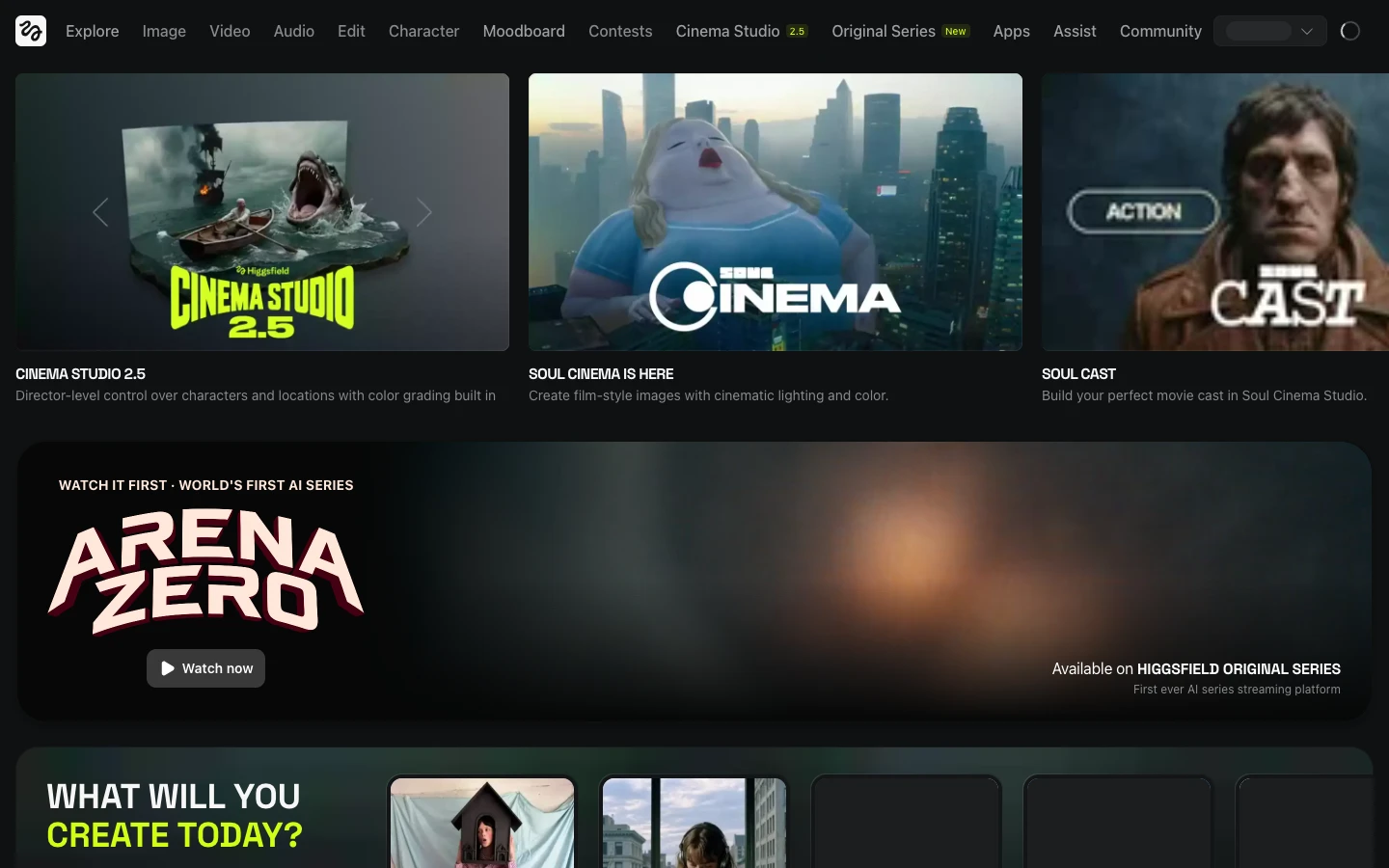
Higgsfield MCP put 30+ image and video models behind a single hosted endpoint your agent can call, and that convenience is exactly why teams start looking for alternatives once their pipelines grow past one generation per prompt. Wireflow takes the other approach: instead of exposing individual models as tools, it exposes whole multi-step workflows as callable tools, so an agent triggers a chain and gets a finished asset back. This guide compares eight agent-callable generation backends you can use instead of, or alongside, Higgsfield, with honest notes on which ones ship an official MCP server and which need a thin wrapper.
Quick summary
- Wireflow: Best overall. Workflows as MCP tools, multi-model chaining, versioned runs.
- fal.ai: Best model breadth for developers. Fast inference, community MCP servers.
- Replicate: Best open-model catalog. Huge public model library, predictable API shape.
- ComfyUI: Most customizable. Self-hosted graphs, full node-level control.
- Freepik: Best bundled licensed assets. Generation plus stock in one account.
- Segmind: Best low-cost serverless inference. Cheap per-call pricing at volume.
- n8n: Best no-code orchestration. Native MCP server trigger, hundreds of integrations.
- Smithery: Best for discovery and hosting. Registry and hosted runtime for MCP servers.
Why teams look past Higgsfield MCP
Higgsfield MCP fits one specific shape of work: a person in a chat window asking for a shot, one model at a time. The friction shows up when the job stops being a single generation. Production creative work is usually a chain: generate a still, upscale it, animate it, add audio, render a caption pass. Chaining that from an agent means the agent holds every intermediate artifact and every retry, which is where token cost and failure rates climb. Our breakdown of MCP servers built for video editing covers that failure mode in more detail.
The second reason is portability. A hosted endpoint tied to one vendor's roster means you inherit their pricing and their catalog changes, so a deprecated model rewrites your agent's prompts. Teams tracking this usually compare it against the same vendor's raw REST surface, which we covered in our Higgsfield API alternatives roundup.
Build this in Wireflow
Make the same kind of asset on a canvas you control, with a free account and no credit card.
1. Wireflow: Best overall
Wireflow is a node-based canvas where you build a multi-model pipeline visually, then expose that whole pipeline as a single callable tool over MCP or REST. The agent sends one input, the graph runs image generation, upscaling, video, and audio in the right order, and the agent gets back a finished file instead of five intermediate URLs it has to shuttle around. For a hands-on look at this in action, check out the Higgsfield MCP alternative feature page.
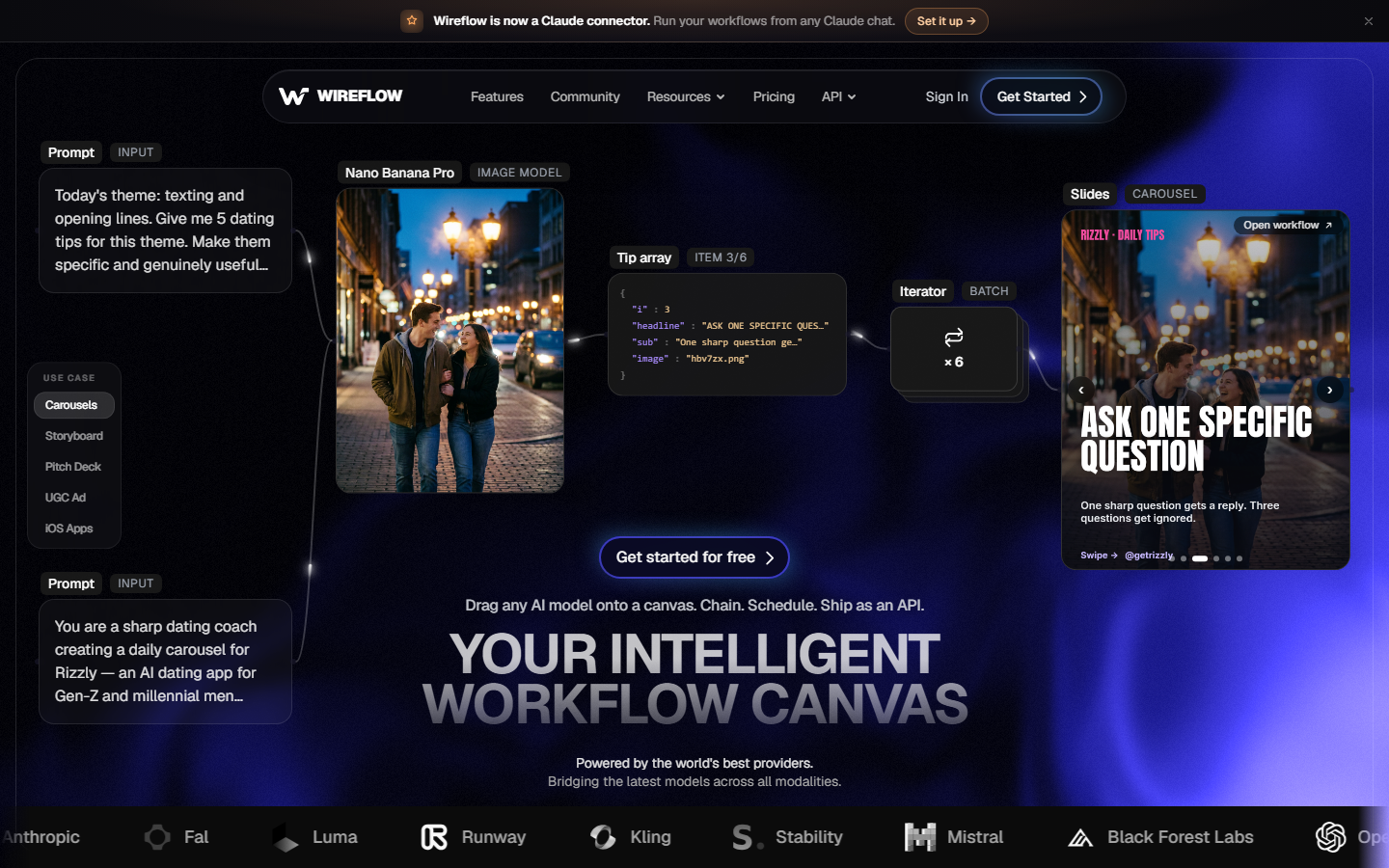
The practical difference is where complexity lives. With a model-level server, orchestration logic sits in your prompt and gets re-reasoned every run. With a workflow-level tool, it is a saved graph: deterministic node order, fixed model versions, re-runnable with new inputs. That matters most for agencies producing the same asset shape for dozens of clients, and it is the pattern behind our guide to building multi-model AI workflows.
Best for: teams whose agent needs finished assets, not raw model calls. Watch out for: you have to build the graph once before the agent can call it.
2. fal.ai: Best model breadth for developers
fal.ai hosts a large roster of image, video, and audio models behind a consistent queue-based API, with inference latency that is usually the fastest of any hosted provider for FLUX-class models. There is no single official MCP server, but several well-maintained community servers wrap the API, and writing your own is a short job because the endpoint shape barely varies between models. Our fal MCP walkthrough covers the setup.
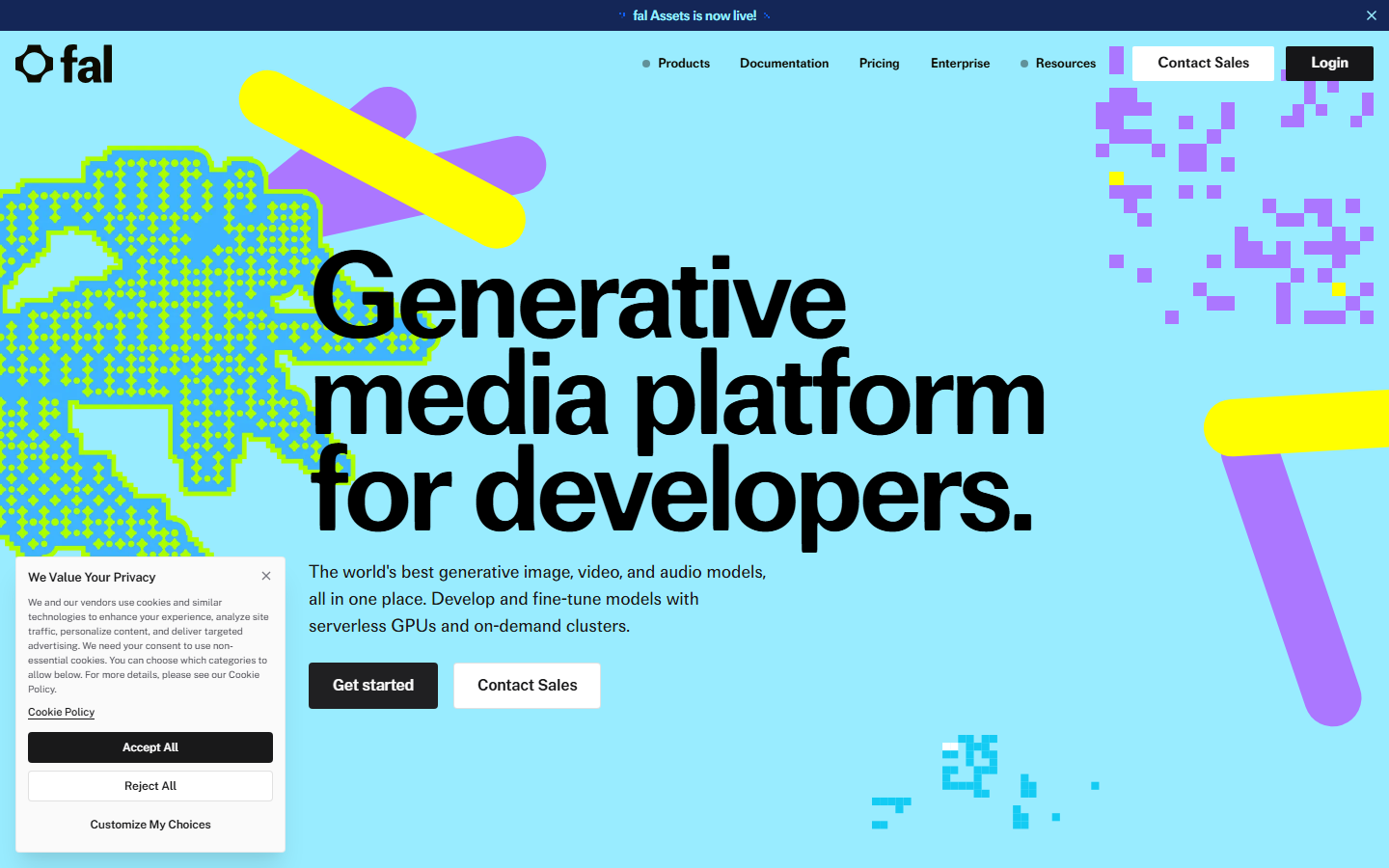
Pricing is per-second or per-megapixel depending on the model, which is cheaper than Higgsfield's credit bundles for high-volume image work and roughly comparable for video. The tradeoff is that fal gives you models, not pipelines: chaining is your problem, and an agent calling six fal endpoints in sequence still pays the orchestration tax described above.
3. Replicate: Best open-model catalog
Replicate has the widest public catalog of open models, including many community fine-tunes you will not find on a curated platform. Every model shares the same prediction API, so one MCP wrapper covers thousands of models, and there are multiple published Replicate MCP servers to start from. We break down the options in our Replicate MCP roundup.
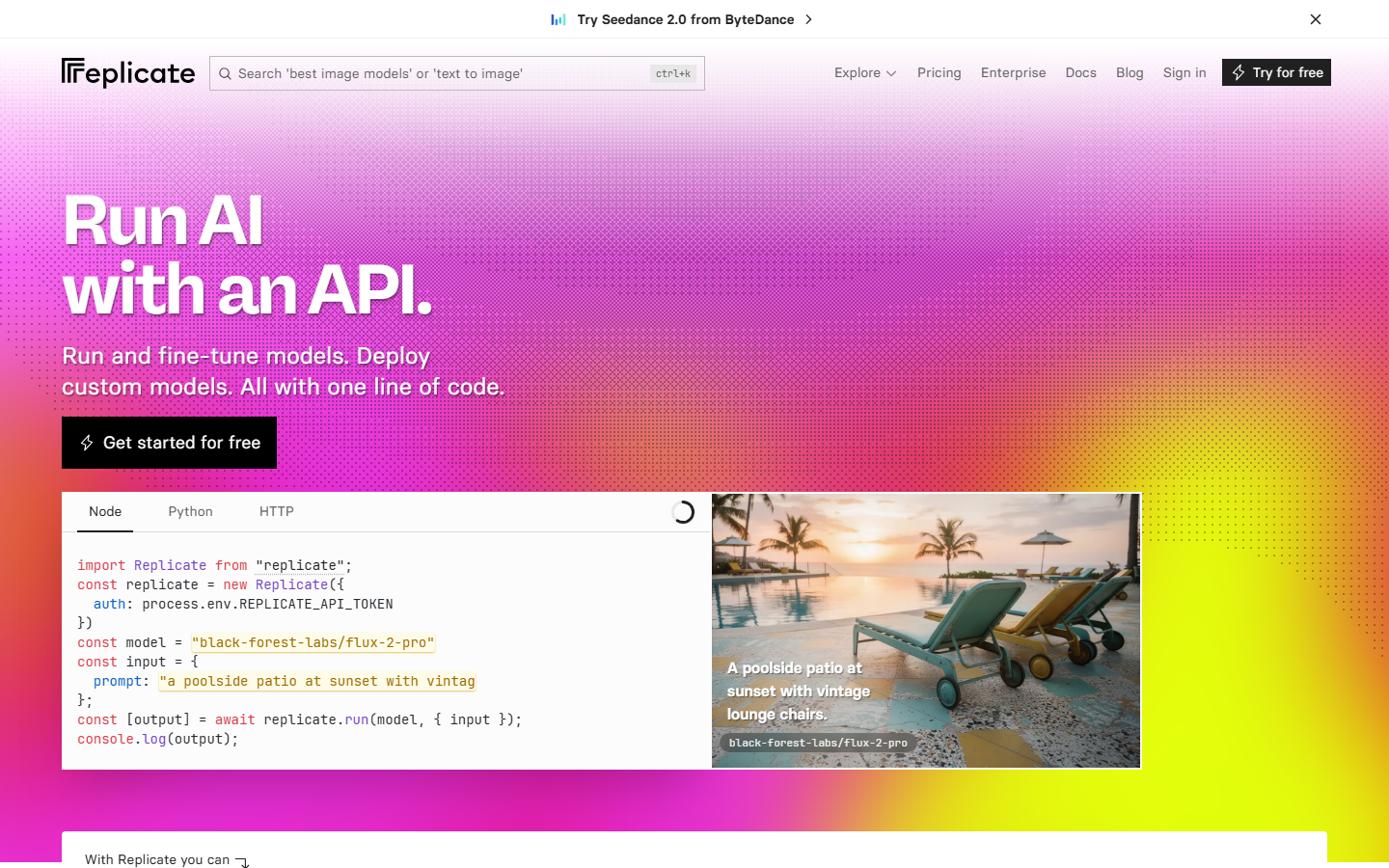
The known weak spot is cold starts: infrequently used models can sit for tens of seconds, which reads as a hung tool call to an agent with a short timeout, so budget for retries or keep a warm model set. Cost is per-second of compute, transparent but harder to forecast than a flat credit price.
4. ComfyUI: Most customizable
ComfyUI is the self-hosted option. You build a node graph locally or on a rented GPU, and community bridges expose that graph over MCP so an agent can queue prompts against it. Nothing else on this list gives you the same node-level control over samplers, LoRAs, masks, and custom models. Hosted ComfyUI providers remove the GPU management step, which we compared in our ComfyUI cloud API roundup.
The cost is operational. You own the GPU, the model weights, the custom-node dependency tree, and the uptime. Teams that pick ComfyUI usually have a specific technical requirement, such as a proprietary LoRA or a compliance rule against sending assets to a third party, that justifies the maintenance load.
5. Freepik: Best bundled licensed assets
Freepik pairs multi-model generation with a large licensed stock library under one subscription, which is useful when a brief needs both a generated hero and a licensed background plate. The API is REST and there is no official MCP server, so you wrap it yourself, but the endpoints are simple enough that a thin wrapper takes an afternoon.
It is the weaker pick for pure video work: a smaller video roster than Higgsfield and less granular per-generation controls, so it suits marketing teams producing stills and short social clips more than studios needing shot-level motion control. Compare it against the dedicated options in our agent media tools list.
6. Segmind: Best low-cost serverless inference
Segmind runs serverless inference for a curated set of image and video models at some of the lowest per-call prices available, plus a pixel-level pipeline builder for simple chains. There is no first-party MCP server; you expose the REST API as a tool. For batch jobs where an agent generates hundreds of variations, the per-call saving compounds quickly.
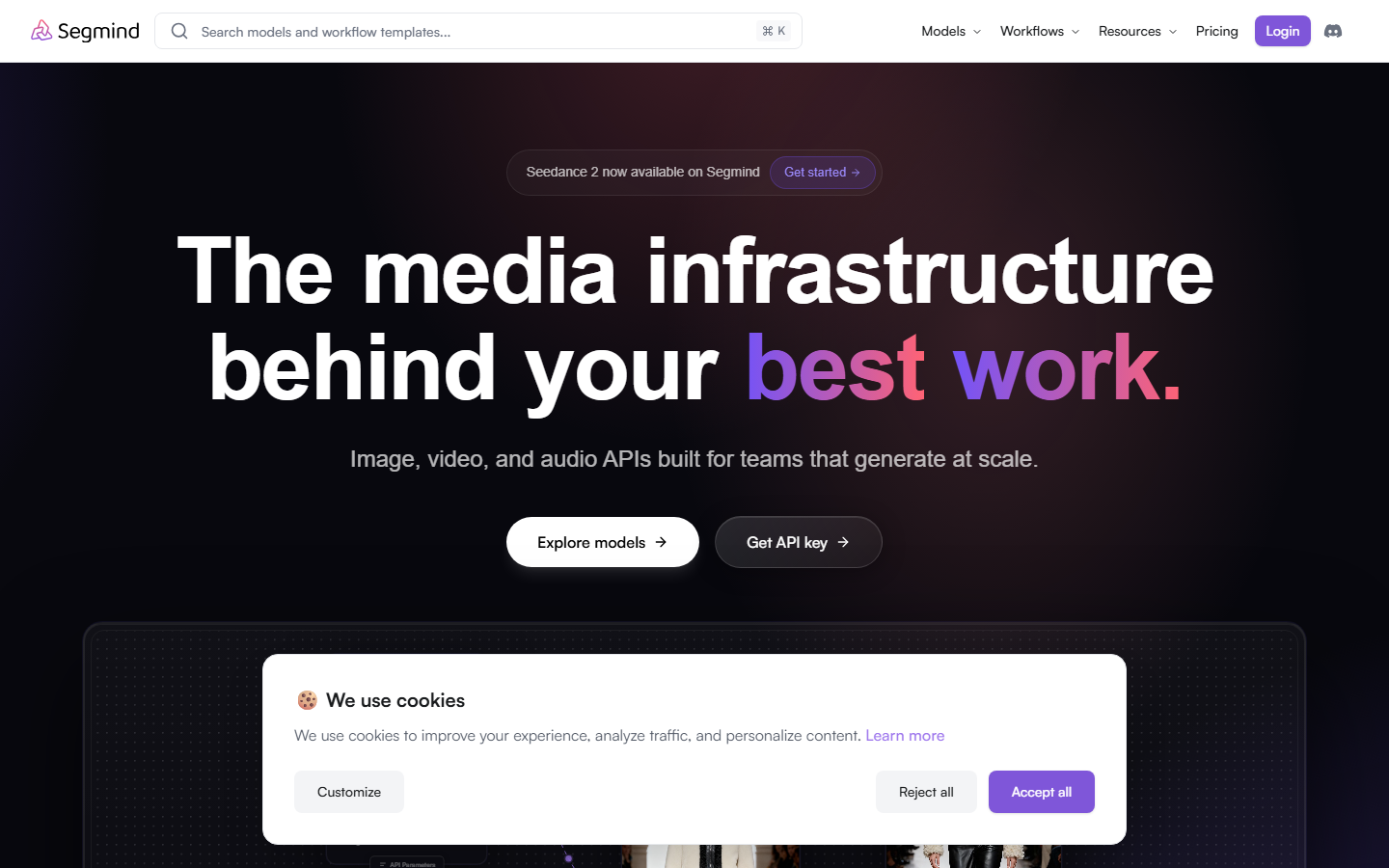
The catalog is narrower than fal or Replicate and new frontier video models arrive later, so treat Segmind as a cost-optimized backend for known model choices, not a place to evaluate what just shipped. Our notes on building a video generation agent cover splitting traffic across a cheap and a premium backend.
7. n8n: Best no-code orchestration
n8n is a workflow automation tool with a native MCP server trigger, so any n8n workflow becomes a tool your agent can call. Because n8n also connects to hundreds of non-AI services, it is the easiest way to put generation next to the rest of a business process: pull a row from a sheet, generate a clip, post it, log the result. We compared the two approaches directly in n8n vs MCP for video automation.
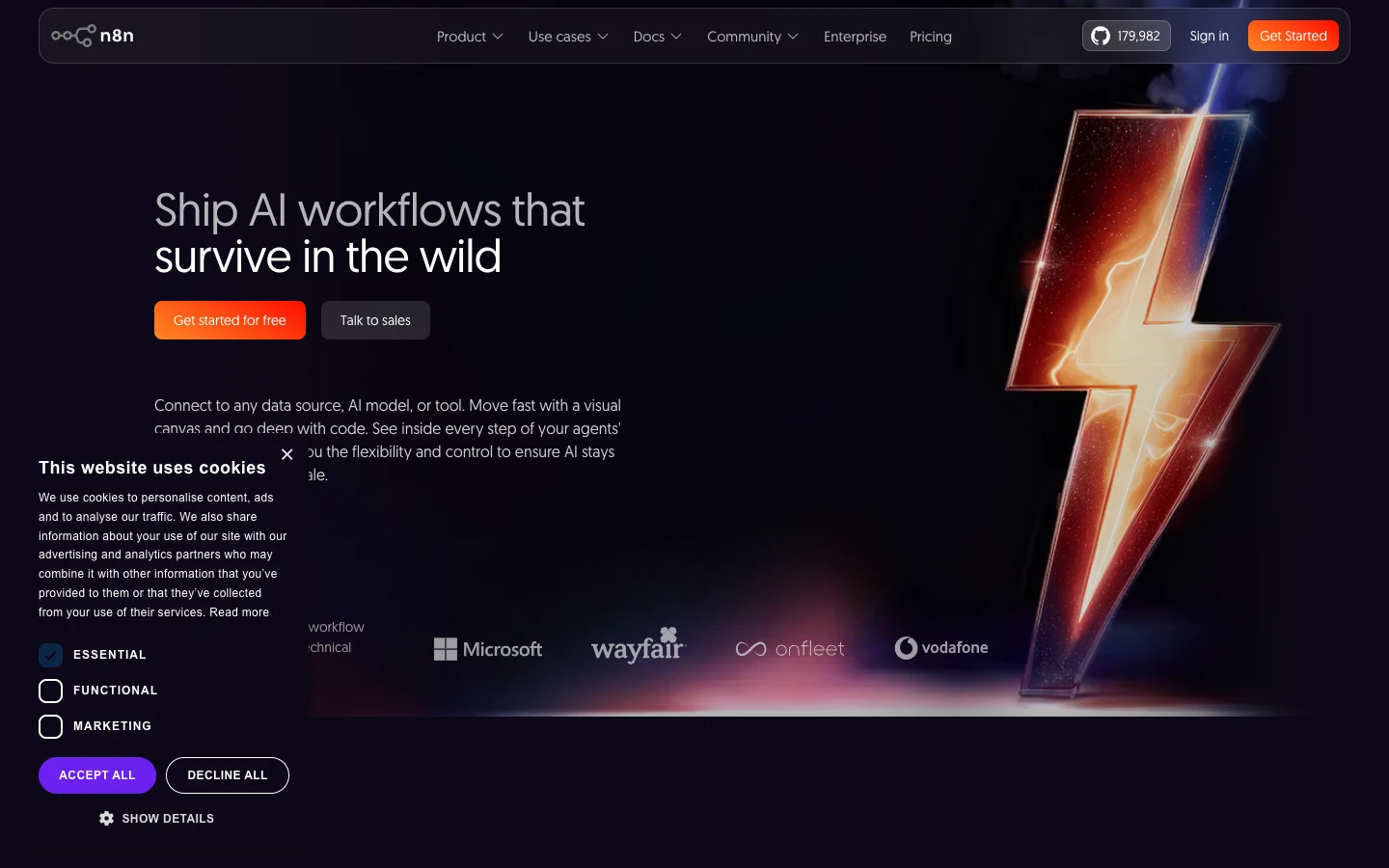
n8n has no models of its own, so it always sits in front of one of the other providers here. Long-running video jobs also need careful handling: default execution timeouts and a linear list-based canvas make branching media pipelines harder to read than a purpose-built node graph.
8. Smithery: Best for discovery and hosting
Smithery is not a generation backend. It is a registry and hosted runtime for MCP servers, which makes it the fastest way to find an existing server for a provider you want and run it without managing a process. If you are evaluating three or four backends before committing, this is where you start.
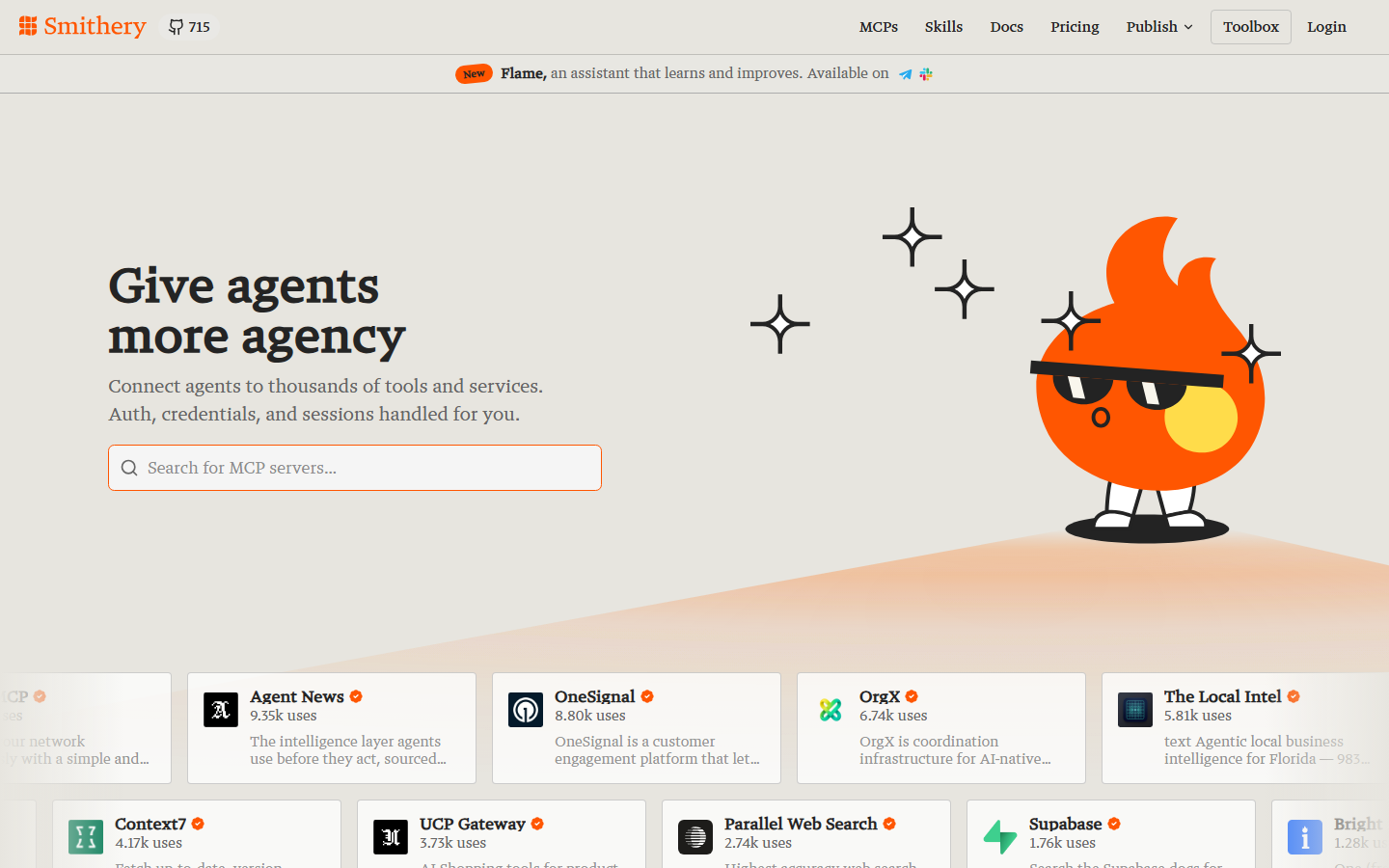
Hosted third-party servers do mean your API keys pass through another party's runtime, so check each server's source before pointing production credentials at it. Once you have picked a backend, most teams move the server in-house. Our MCP server image generation example shows what a minimal self-hosted server looks like.
Comparison table
| Tool | Official MCP server | Model breadth | Multi-step chaining | Self-host | Pricing model |
|---|---|---|---|---|---|
| Wireflow | Yes | 100+ via canvas | Yes, native graphs | No | Credits |
| Higgsfield | Yes | 30+ curated | No, single calls | No | Credits |
| fal.ai | Community | Large | No | No | Per second / megapixel |
| Replicate | Community | Largest | No | No | Per second of compute |
| ComfyUI | Community bridge | Unlimited, bring weights | Yes, local graphs | Yes | GPU cost only |
| Freepik | No, REST | Medium | Limited | No | Subscription |
| Segmind | No, REST | Narrow, curated | Limited | No | Per call |
| n8n | Yes, trigger node | None of its own | Yes, linear flows | Yes | Per execution or self-host |
| Smithery | Registry | Depends on server | No | Partial | Free tier plus hosting |
How to choose
Start with the shape of the request your agent will make. If it is genuinely one generation per prompt, a model-level server such as fal or Replicate is the cheapest path and Higgsfield MCP is already fine. If the agent is expected to return a finished, multi-stage asset, a workflow-level tool removes most of the token cost and most of the retry surface, which is the argument laid out in our headless AI workflow platforms comparison.
Then check two constraints. Licensing terms vary by provider even for the same underlying model, so confirm them for anything you ship as client work. And per-second compute pricing is honest but hard to quote, so if you bill fixed fees, favour flat per-call or credit pricing and check the current rates before you estimate.
Try it yourself: Open this workflow in Wireflow. It is a prompt-to-product-motion graph that generates a still, animates it, and is callable by an agent as a single MCP tool.
FAQ
What is Higgsfield MCP? It is Higgsfield's hosted Model Context Protocol server, shipped in April 2026, which exposes 30+ image and video models as tools an agent can call. It works with Claude web, Claude Code, and several other MCP clients.
Do the alternatives all have official MCP servers? No. Wireflow and n8n ship first-party MCP interfaces, fal.ai and Replicate are covered by well-maintained community servers, and Freepik and Segmind are REST-only, so you wrap them yourself. Smithery is a registry for finding and hosting servers rather than a generation backend.
Which alternative is cheapest for high-volume image generation? Segmind is usually the lowest per-call price for its curated model set, with fal.ai close behind and far broader. Replicate's per-second billing can be cheaper still on fast models but is harder to forecast.
Can I use more than one MCP server at once? Yes. MCP clients load multiple servers side by side without conflict, so a common setup is one broad model provider for experimentation plus one workflow-level server for the pipelines you ship.
Why does agent-driven chaining cost more than a saved workflow? Because the agent has to hold every intermediate artifact, decide the next step, and re-reason the plan on each run. A saved graph fixes the node order and model versions, so the agent sends one input and receives one output.
Is self-hosting ComfyUI worth it instead of a hosted MCP server? Only if you have a requirement a hosted provider cannot meet, such as a proprietary LoRA, custom nodes, or a rule against sending assets to third parties. Otherwise the GPU and dependency maintenance outweighs the control.
How do I stop long video jobs from timing out as tool calls? Use an async pattern: the tool returns a job id immediately and the agent polls or receives a webhook. Queue-based providers support this natively; if you build your own wrapper, do not block the tool response on render completion.
Do I need to switch away from Higgsfield entirely? Usually not. Most teams keep it for its cinematic presets and character consistency and add a second backend for volume work or multi-step pipelines, routing each request to whichever one fits.
Conclusion
The right Higgsfield MCP alternative depends on whether your bottleneck is model choice or pipeline complexity. If it is model choice, fal.ai and Replicate give you more surface for less money, and Segmind trims the per-call cost once you know what you need. If the bottleneck is complexity, the answer is to stop asking the agent to orchestrate at all and hand it one tool that already contains the chain, which is the model Wireflow is built around and the reason it sits at the top of this list.
Would you rather we just built it?
We get on a call, learn your style, build the workflow, and ship the deliverables on a schedule. You keep the workflow either way.