Higgsfield Alternatives in 2026: 7 Video APIs Compared

In this article▾
The best Higgsfield alternatives in 2026 offer frontier video models minus the gated API: documented endpoints, webhook triggers, and no expiring credits. Higgsfield aggregates several frontier video models under one creative interface, but its API remains gated behind higher-tier plans with sparse documentation and expiring credits. If you need reliable programmatic access to video generation, several platforms offer more developer-friendly REST APIs. Wireflow provides documented endpoints, webhook triggers, and multi-model orchestration that lets you chain video, image, and audio models in a single pipeline.
Quick Summary
- Wireflow:Best overall API platform for video generation workflows
- Fal.ai:Fastest inference across 600+ model APIs
- Replicate:Best for open-source model hosting
- Runway:Best for high-end creative video (Gen-4.5)
- Kling AI:Best for audio-video sync and lip-sync
- Segmind:Best for visual workflow building with APIs
- Layer.ai:Best multi-model aggregator
Why Developers Look for Higgsfield API Alternatives
Higgsfield's Cloud API at cloud.higgsfield.ai provides Python and Node.js SDKs, but developers consistently report issues that push them toward other options. For a detailed comparison of API capabilities, check out the Higgsfield API alternative feature page.
The most common pain points include undocumented rate limits that cause silent failures, API access restricted to higher-tier subscription plans ($15-$99/month), credits that expire after 90 days, and no support for webhooks or batch processing. Production integrations need predictable behavior, transparent error codes, and async completion patterns that Higgsfield's current API does not provide.
Build this in Wireflow
Make the same kind of asset on a canvas you control, with a free account and no credit card.
Top 7 Higgsfield API Alternatives
1. Wireflow
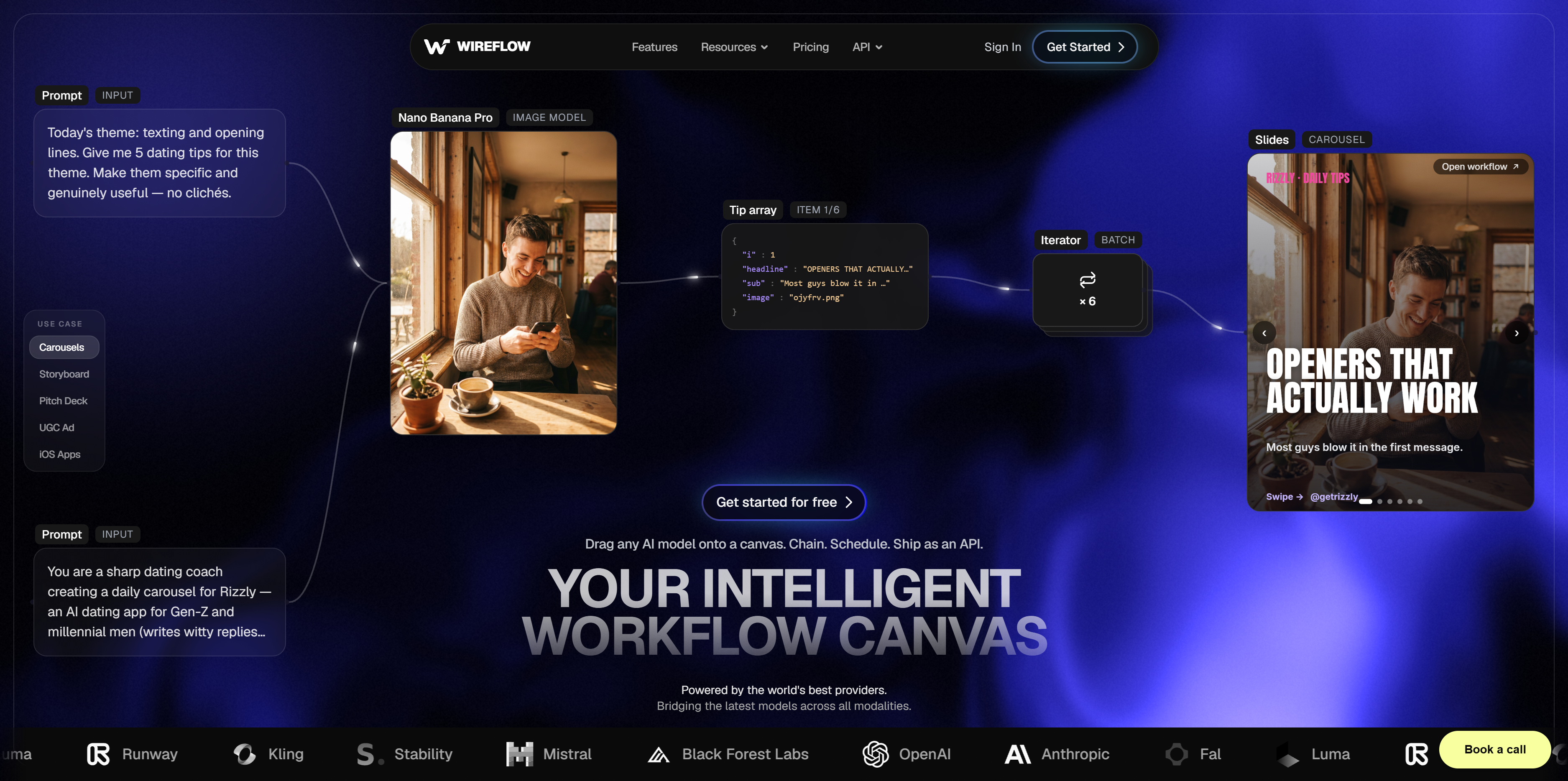
Wireflow provides a full REST API where every workflow you build on the visual canvas becomes a callable endpoint. Instead of integrating with a single-model SDK, you can chain multiple AI models (Kling 3.0, Veo 3.1, Flux 2, and 150+ others) into pipelines and trigger them through one API call.
Key advantages over Higgsfield's API:
- API access on every plan, including free tier
- Webhook triggers for async workflows without API keys
- Batch processing through iterator configurations
- Documented rate limits with
X-RateLimit-*headers on every response - Idempotency keys to prevent duplicate executions
- Pay-per-use pricing with no expiring credits
The async execution pattern follows a standard POST-then-poll approach with exponential backoff. Every response includes an X-Request-Id header for debugging, and every plan includes full pipeline automation capabilities.
2. Fal.ai
Fal.ai is an API aggregator with access to over 600 models, including Kling 3.0, Seedance 2.0, Veo 3.1, and Sora 2. It claims up to 4x faster inference through optimized GPU infrastructure. Pricing runs $0.05-$0.40 per second of generated video, which compares favorably to Higgsfield's $0.10/second rate. Fal focuses purely on API access with no visual editor, making it a solid choice for teams that already have their own model chaining infrastructure in place.
3. Replicate
Replicate hosts open-source and commercial models with pay-per-second compute pricing. Developers can deploy custom fine-tuned models alongside popular options like Stable Video Diffusion and AnimateDiff. The API follows a clean predict-then-poll pattern similar to what many headless AI workflow platforms use. Replicate is strongest when you need flexibility to run your own models, though it lacks the multi-model orchestration that dedicated workflow platforms provide.
4. Runway
Runway's Gen-4.5 and Gen-3 Alpha Turbo models target high-end creative video production. The API supports character and product continuity through reference images, which is useful for brand-consistent marketing content. Pricing is higher than most Runway alternatives, and API access requires a paid plan. Runway is the strongest option when output quality matters more than cost or developer ergonomics.
5. Kling AI
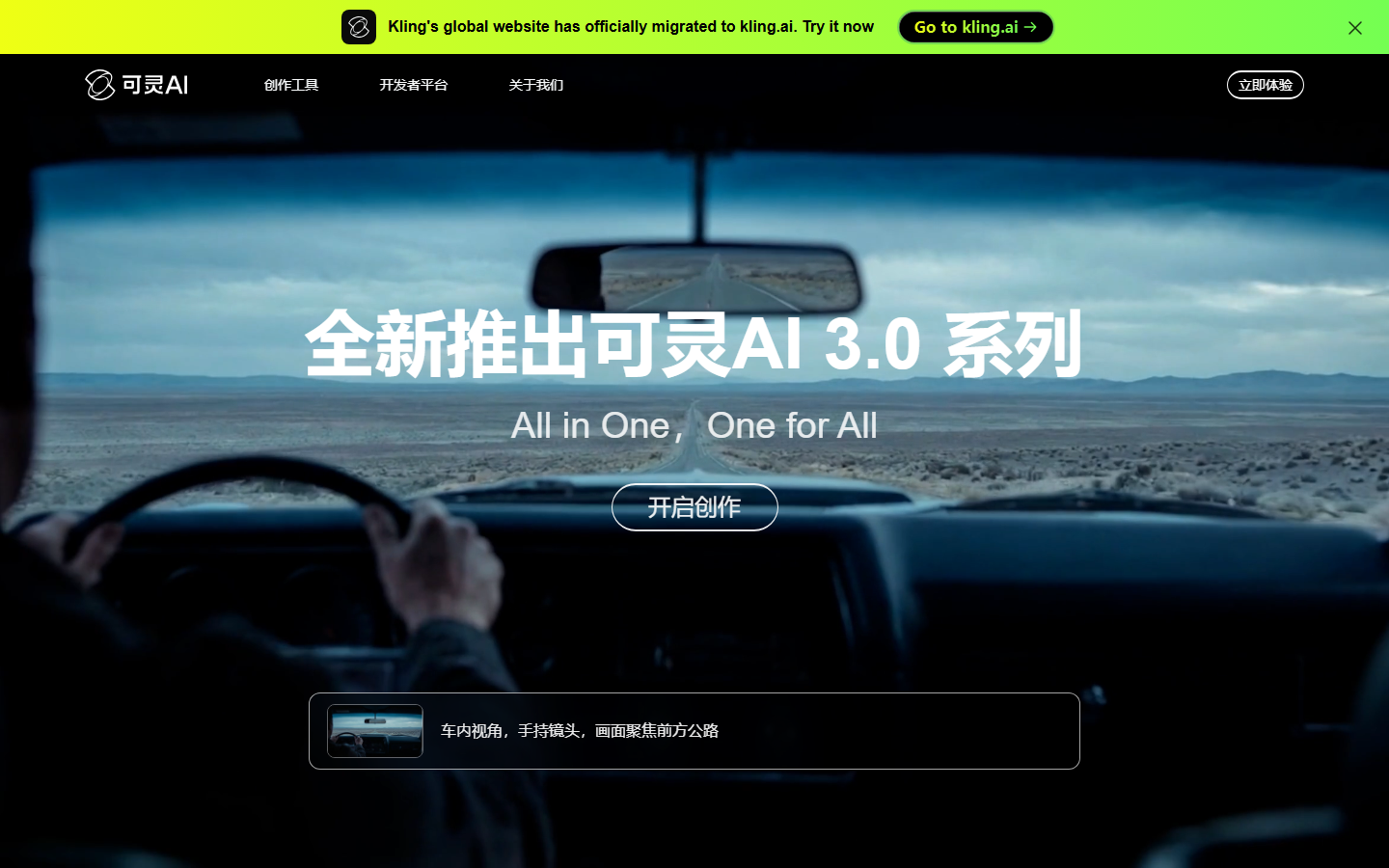
Kling AI (by Kuaishou) offers one of the strongest video models in 2026. Kling 3.0 generates 1080p video at 48fps with synchronized audio and phoneme-level lip-sync in 8+ languages. The direct Kling AI API is available without aggregator markup, and the model is also accessible through multiple third-party platforms. Kling excels at talking head content, image-to-video transformations, and any use case that requires natural audio-video synchronization.
6. Segmind
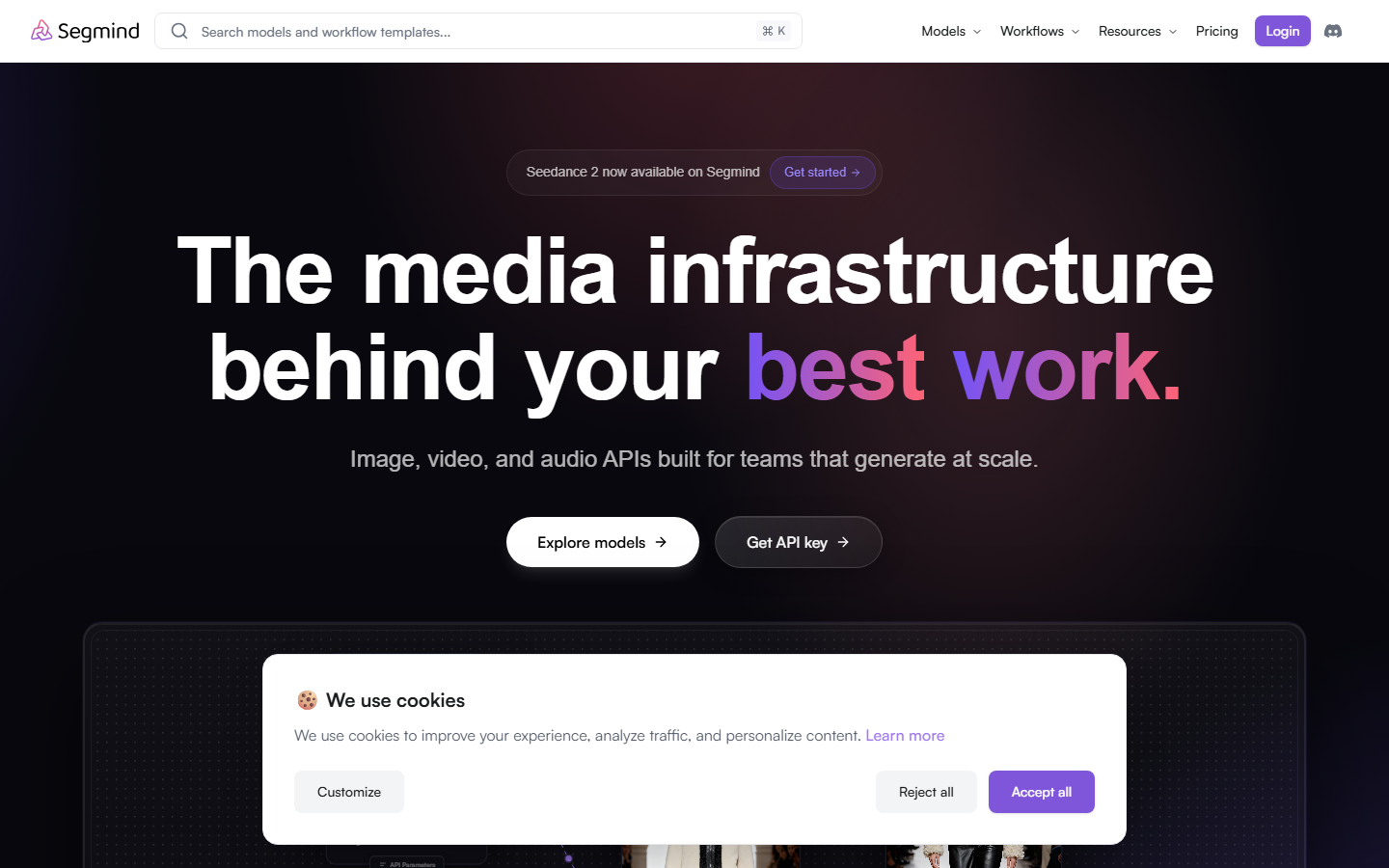
Segmind takes an API-first approach with every model accessible via REST endpoints from day one. Its Pixelflow feature adds a visual workflow builder for constructing multi-step pipelines without code. Pay-per-use pricing with no subscription requirement appeals to teams with variable workloads. Segmind is a practical option for developers who need both direct API access and visual orchestration capabilities.
7. Layer.ai
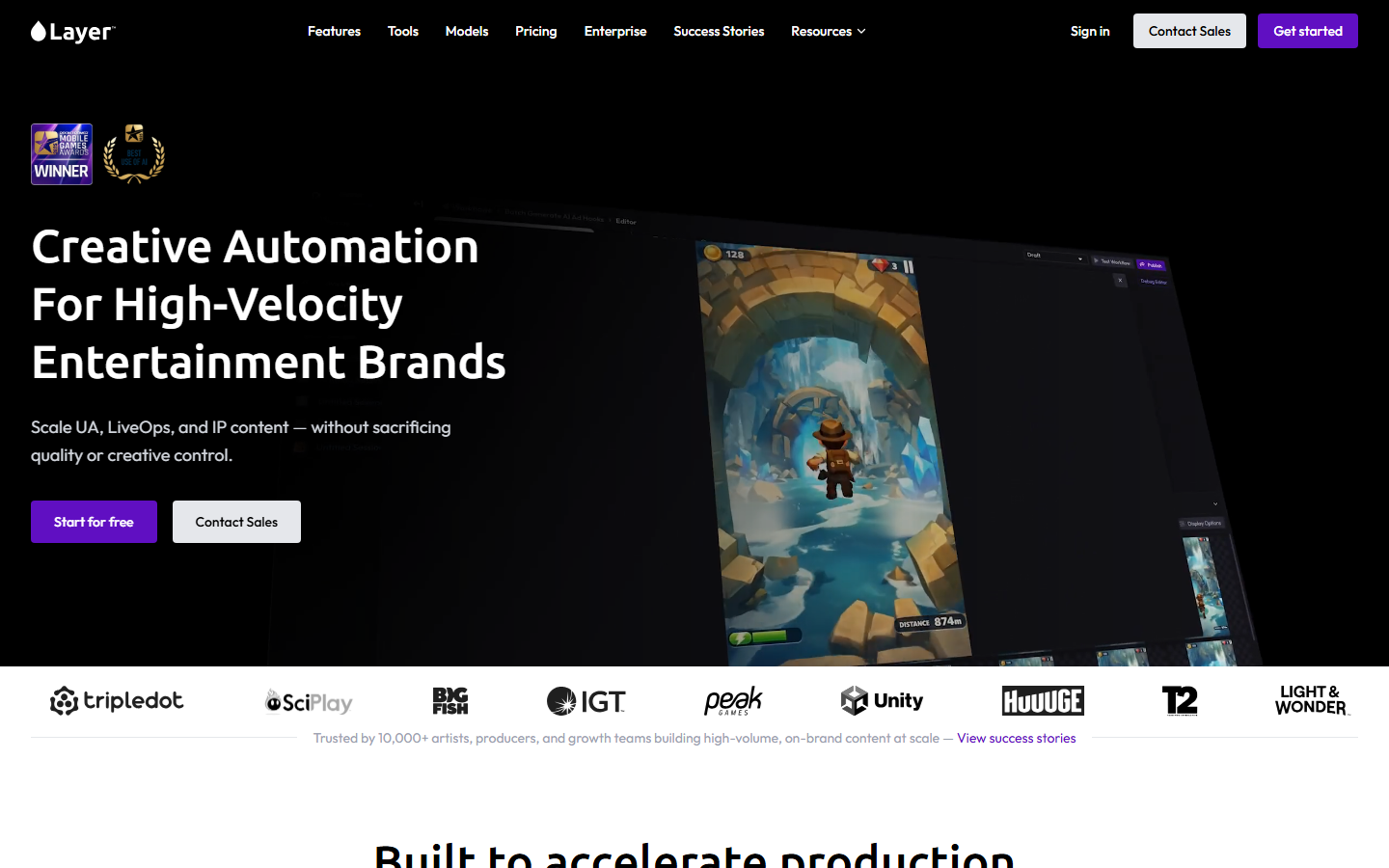
Layer.ai aggregates 20+ video models including Veo 3, Kling, Seedance, and Wan under a unified interface. It also covers image, 3D, and audio generation on one platform. Interestingly, Layer includes Higgsfield's own Turbo model in its lineup, so you can access Higgsfield-quality output through a better-documented API integration.
Comparison Table
| Platform | API Access | Webhooks | Batch Processing | Models | Pricing |
|---|---|---|---|---|---|
| Wireflow | All plans (free+) | Yes | Yes | 150+ | Pay-per-use |
| Fal.ai | All plans | No | Limited | 600+ | Per-second |
| Replicate | All plans | On predictions | No | 500+ | Per-second |
| Runway | Paid only | No | No | Proprietary | Subscription + credits |
| Kling AI | Direct + aggregators | No | No | Proprietary | Per-generation |
| Segmind | All plans | No | Via Pixelflow | 200+ | Pay-per-use |
| Layer.ai | All plans | No | No | 20+ video | Credits |
For detailed rate comparisons, see pricing across these platforms (rates are as of mid-2026 and may vary).
Get started with video generation APIs: Wireflow provides documented REST endpoints for creating, executing, and monitoring AI workflows programmatically. Read the API documentation at wireflow.ai/docs/api/workflows to build your first video pipeline in minutes.
Frequently Asked Questions
Does Higgsfield have a public API?
Yes. Higgsfield offers a Cloud API at cloud.higgsfield.ai with Python and Node.js SDKs. However, API access is gated behind higher-tier subscription plans, documentation is sparse, and rate limits are not published.
What is the cheapest Higgsfield API alternative?
Wireflow and Segmind both offer free tiers with API access from day one. Fal.ai provides competitive per-second pricing starting at $0.05 for basic video generation.
Can I chain multiple AI models through a single API call?
Yes. Platforms like Wireflow support multi-model workflow building where you connect video, image, audio, and LLM nodes on a visual canvas, then execute the entire chain through one API endpoint.
Which alternative has the best video quality?
Kling AI 3.0 and Google Veo 3.1 currently produce the highest-quality output. Both are accessible through aggregators, so the choice depends more on your video pipeline setup than model quality alone.
Do any alternatives support webhook notifications?
Wireflow provides webhook triggers that accept HTTP requests without API keys, making it straightforward to connect to CI/CD systems, Zapier, and form builders. Replicate also supports webhooks on individual prediction runs.
Is there an official Higgsfield SDK?
Higgsfield maintains Python and Node.js SDKs, but both have low community adoption and minimal documentation. Most alternatives work with plain REST calls using curl, fetch, or any standard HTTP client, with no SDK dependency required.
How do I migrate from Higgsfield to another platform?
Migration is straightforward since Higgsfield's API surface is small. Most workflows involve text-to-video or image-to-video calls that map directly to equivalent endpoints on alternatives. The AI workflow templates on Wireflow can help you rebuild and extend existing pipelines.
What about rate limits?
Higgsfield does not publish its rate limits, which causes unpredictable throttling. Wireflow documents transparent limits (10-200 req/min depending on plan) with X-RateLimit-* headers on every response. Fal.ai and Replicate also provide clear rate limit policies.

Co-Founder & Operations at Wireflow
Runs client operations and content strategy at Wireflow. Works directly with creative teams and agencies to build production AI workflows.
- Content Strategy
- Client Operations
Get unlimited ad creatives today.
One call to see if we are a fit and scope the first ad. If it fits, your first batch lands inside week one.