Replicate Alternatives in 2026: 8 AI Inference Platforms


In this article▾
- Quick Summary
- Why Developers Look for a Replicate Alternative
- 1. Wireflow (Best Overall)
- 2. fal.ai (Best for Low-Latency Image Generation)
- 3. Modal (Best for Custom Python Workloads)
- 4. Baseten (Best for Enterprise Model Serving)
- 5. Hugging Face Inference Endpoints (Best Open-Source Catalog)
- 6. RunPod (Best for Dedicated GPU Rentals)
- 7. Together AI (Best for LLM Inference)
- 8. Fireworks AI (Best for High-Throughput LLM Serving)
- Comparison Table
- Frequently Asked Questions
- Conclusion
Looking for a good Replicate alternative? We compare 8 AI inference platforms for 2026 on cold starts, latency, models and pricing, starting with Wireflow.
If you need reliable, fast AI inference without cold starts and unpredictable billing, you are not alone. Thousands of developers are searching for a replicate alternative that offers better pricing, faster model updates, and production-grade reliability. Wireflow stands out as a visual workflow platform where you can chain multiple AI models through a drag-and-drop canvas and call the entire pipeline via a single API endpoint, making it one of the strongest options for teams that want more than raw inference.
Quick Summary
- Wireflow - Best overall (visual multi-model workflows with API)
- fal.ai - Best for low-latency image generation
- Modal - Best for custom Python workloads
- Baseten - Best for enterprise model serving
- Hugging Face Inference Endpoints - Best open-source model catalog
- RunPod - Best for dedicated GPU rentals
- Together AI - Best for LLM inference
- Fireworks AI - Best for high-throughput LLM serving
Why Developers Look for a Replicate Alternative
Replicate popularized one-click model hosting, but several pain points push teams to explore other options. Cold starts of 10 to 30 seconds make real-time applications impractical. Hardware billing is unpredictable because you pay per second of GPU time, and queue waits can spike costs during peak hours. The model catalog often lags weeks behind open-source releases, so developers cannot access the latest checkpoints when they need them. For teams building multi-model AI workflows, Replicate's single-model-per-call architecture also means you have to orchestrate chaining yourself. For a hands-on look at this in action, check out the AI Content Generation API.
Build this in Wireflow
Make the same kind of asset on a canvas you control, with a free account and no credit card.
1. Wireflow (Best Overall)
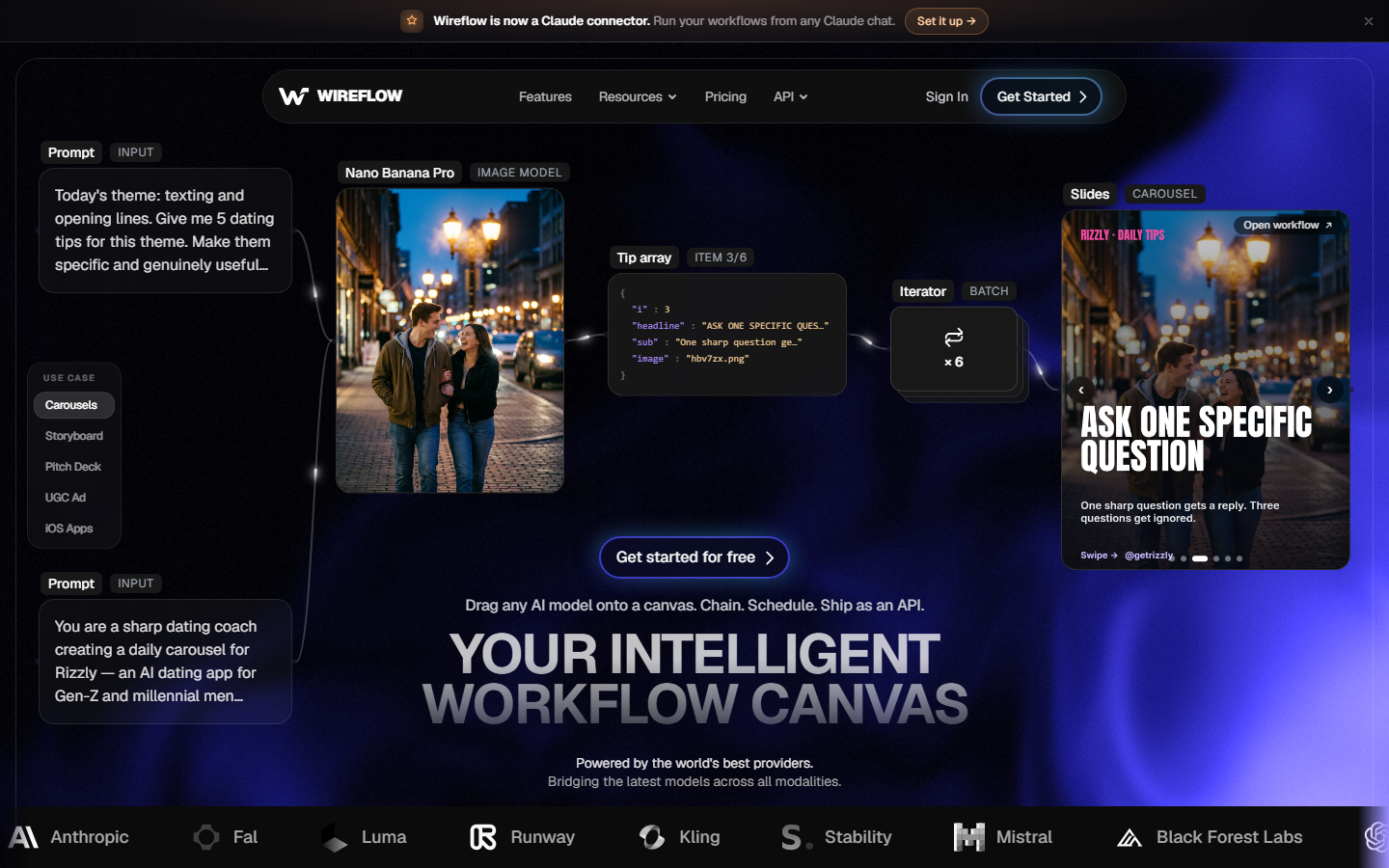
Wireflow takes a fundamentally different approach to AI inference. Instead of calling one model at a time, you build visual workflows on a no-code canvas that chains image, video, audio, and text models together. Each workflow is callable via REST API, so your backend sends one request and gets back the final output, whether that is an upscaled product photo, a lip-synced video, or a batch of social media assets.
Key advantages over Replicate:
- No cold starts. Models stay warm on shared infrastructure.
- Pay-per-generation pricing instead of per-second GPU billing.
- 100+ models available, including Flux 2 Pro, Nano Banana 2, Seedance, Kling, and Recraft v4.
- Batch generation built in for high-volume use cases.
- Visual node editor means non-engineers can build and iterate on pipelines.
2. fal.ai (Best for Low-Latency Image Generation)
fal.ai specializes in optimized inference for image and video models. Their infrastructure delivers sub-second image generation for FLUX and Stable Diffusion models, which makes them a strong choice for applications where latency matters more than model variety. The platform supports serverless and dedicated endpoints, with a straightforward per-request pricing model. Developers working with a narrow set of image models will find fal.ai's speed hard to beat, though teams needing model chaining or video pipelines may outgrow the platform quickly.
3. Modal (Best for Custom Python Workloads)
Modal provides a Python-native cloud platform for running any containerized workload on GPUs. Unlike Replicate's model-hosting approach, Modal gives you full control over the runtime environment. You write standard Python functions, decorate them, and Modal handles provisioning, scaling, and GPU allocation. This flexibility makes it ideal for teams with custom training loops, fine-tuning jobs, or inference pipelines that do not fit into a standard model-serving pattern. The tradeoff is complexity: you write and maintain the serving code yourself. For teams that prefer a visual pipeline builder over writing infrastructure code, Modal's developer-first approach can feel heavyweight.
4. Baseten (Best for Enterprise Model Serving)
Baseten focuses on production model serving with Truss, their open-source model packaging framework. The platform offers autoscaling, A/B testing, and model versioning out of the box. Baseten is particularly strong for teams deploying custom-trained models that need enterprise features like VPC peering, SLAs, and dedicated hardware. Pricing is based on GPU-seconds, similar to Replicate, but with more transparent hardware selection. If your primary need is a stable diffusion API or serving a single large model at scale, Baseten delivers solid infrastructure.
5. Hugging Face Inference Endpoints (Best Open-Source Catalog)
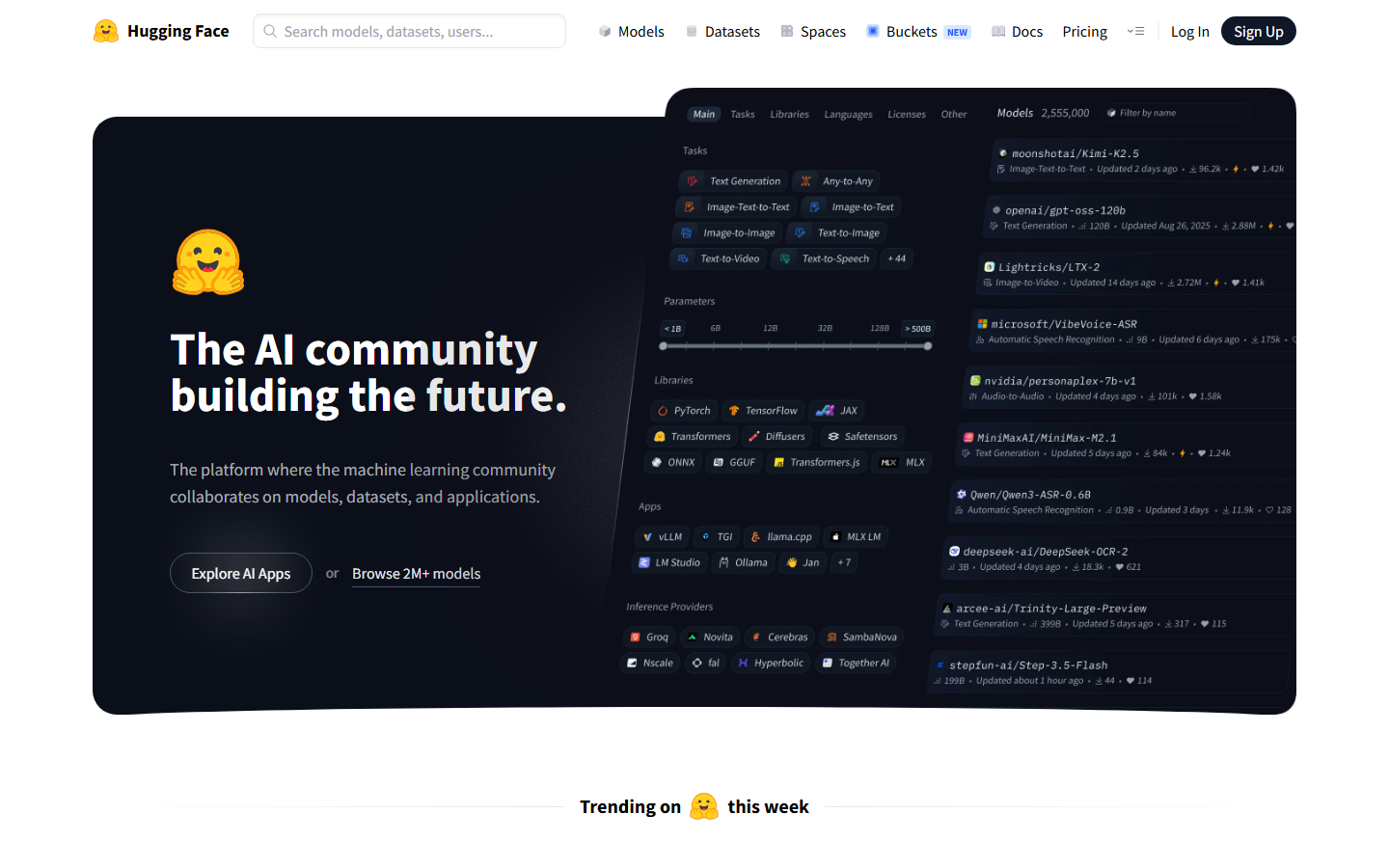
Hugging Face Inference Endpoints let you deploy any model from the Hugging Face Hub on dedicated infrastructure. With over 500,000 models in the catalog, Hugging Face offers the broadest selection of any platform on this list. You pick a model, choose your hardware (CPU, GPU, or TPU), and get an API endpoint in minutes. The platform integrates tightly with the Hugging Face ecosystem, including datasets, tokenizers, and evaluation tools. For teams that need access to niche or community-contributed models, nothing else comes close. The downside is that you manage scaling and cold starts yourself on dedicated endpoints. Teams wanting orchestration across models will need to build that layer separately.
6. RunPod (Best for Dedicated GPU Rentals)
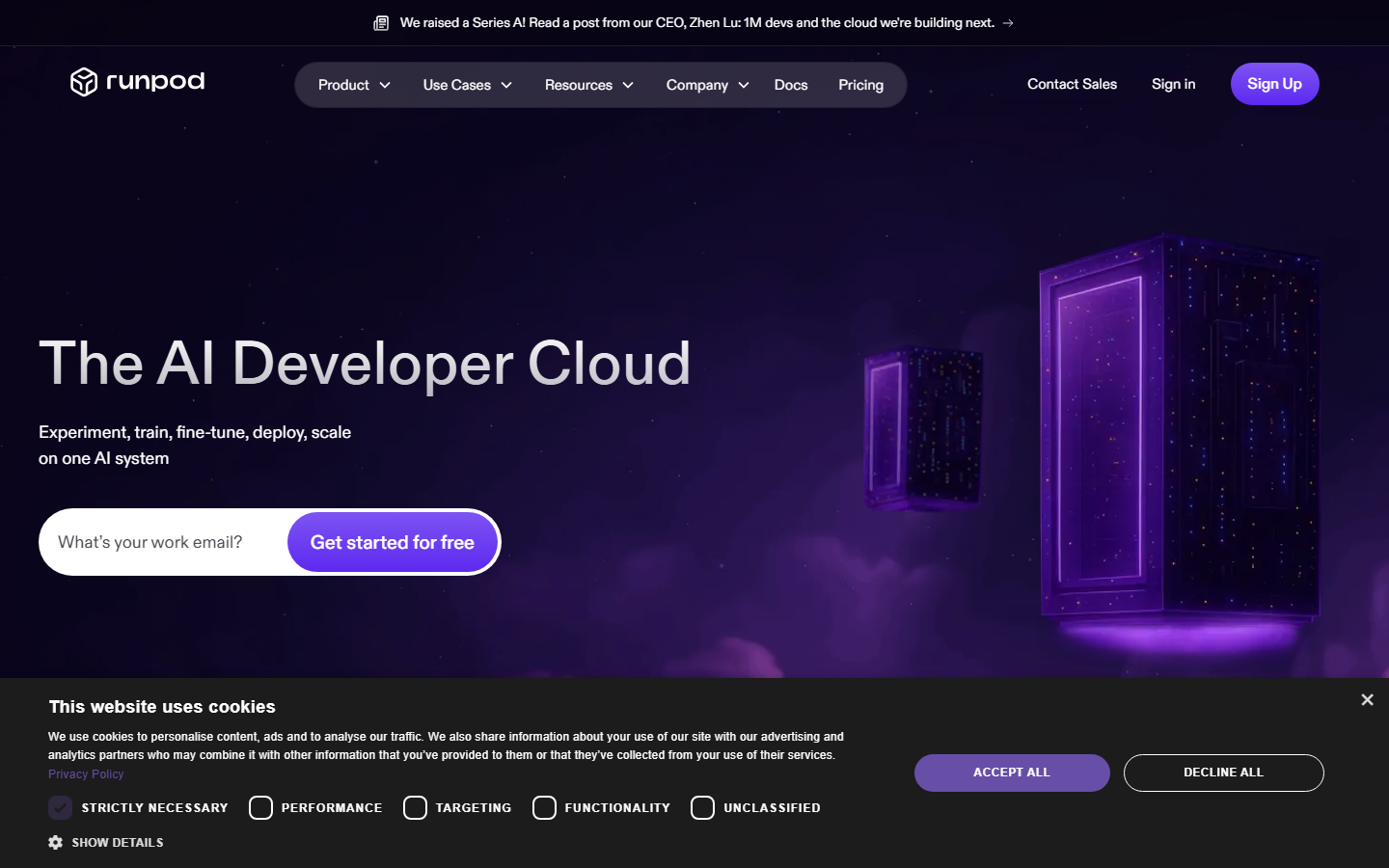
RunPod offers both serverless GPU inference and dedicated GPU rentals. The serverless product competes directly with Replicate, while the dedicated pods give you persistent GPU instances at lower hourly rates. RunPod supports custom Docker containers, so you can run any framework or model. Pricing starts at $0.39/hr for a 16 GB GPU, which undercuts Replicate significantly for sustained workloads. The platform also offers community cloud pricing for even lower rates, though with less availability guarantees. For teams with predictable video generation workloads, dedicated RunPod instances can cut costs by 60% or more compared to per-call pricing.
7. Together AI (Best for LLM Inference)
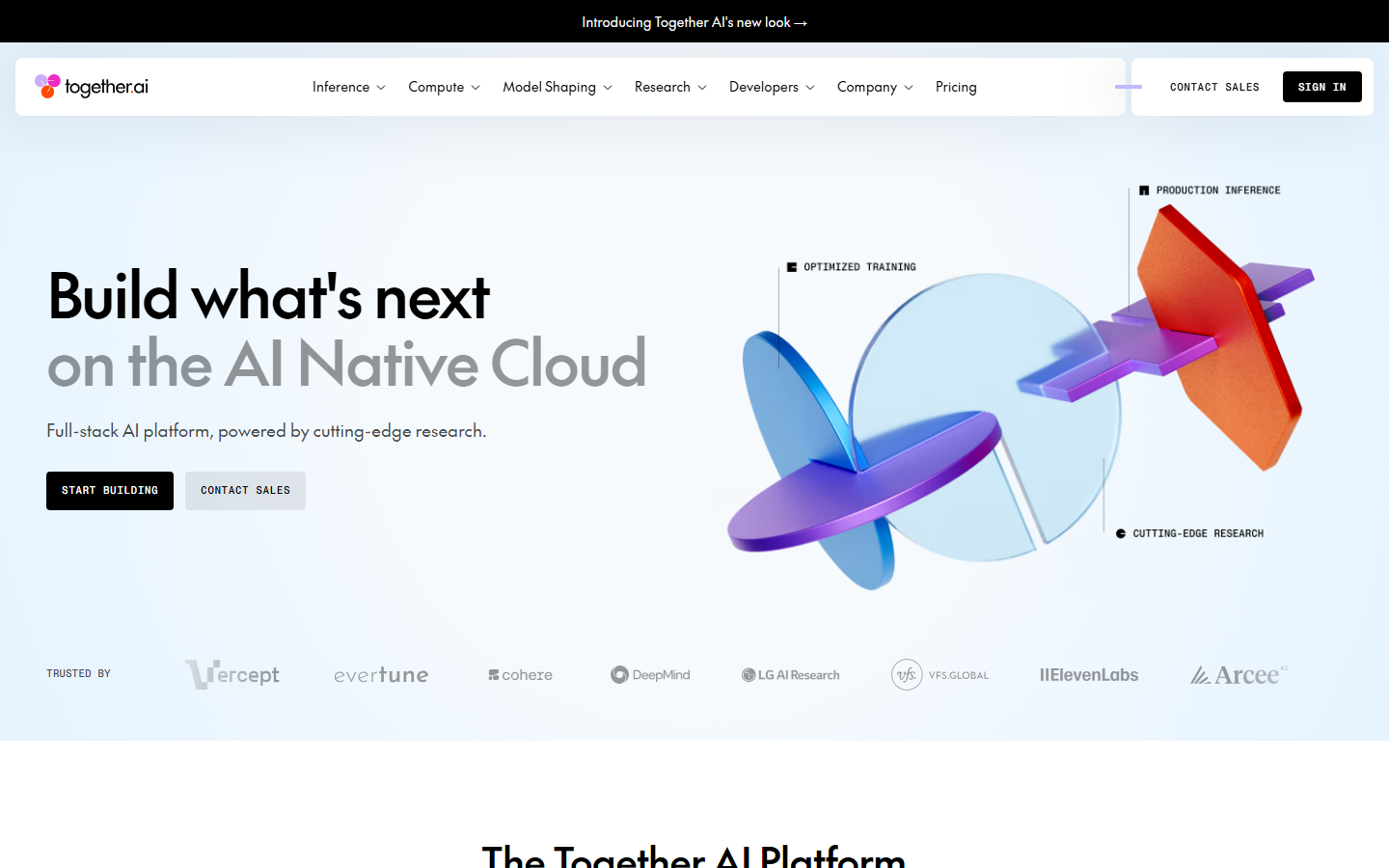
Together AI specializes in large language model inference with 200+ hosted models, including open-source options like Llama, Mistral, and Qwen. The platform offers fine-tuning, dedicated endpoints, and an OpenAI-compatible API, making migration straightforward. Together AI's LLM tooling is deeper than Replicate's, with features like structured output, function calling, and JSON mode. For teams whose primary use case is text generation, Together AI offers better pricing and lower latency than Replicate's LLM endpoints. If you need to combine LLM outputs with image generation workflows, you will need a separate orchestration layer.
8. Fireworks AI (Best for High-Throughput LLM Serving)
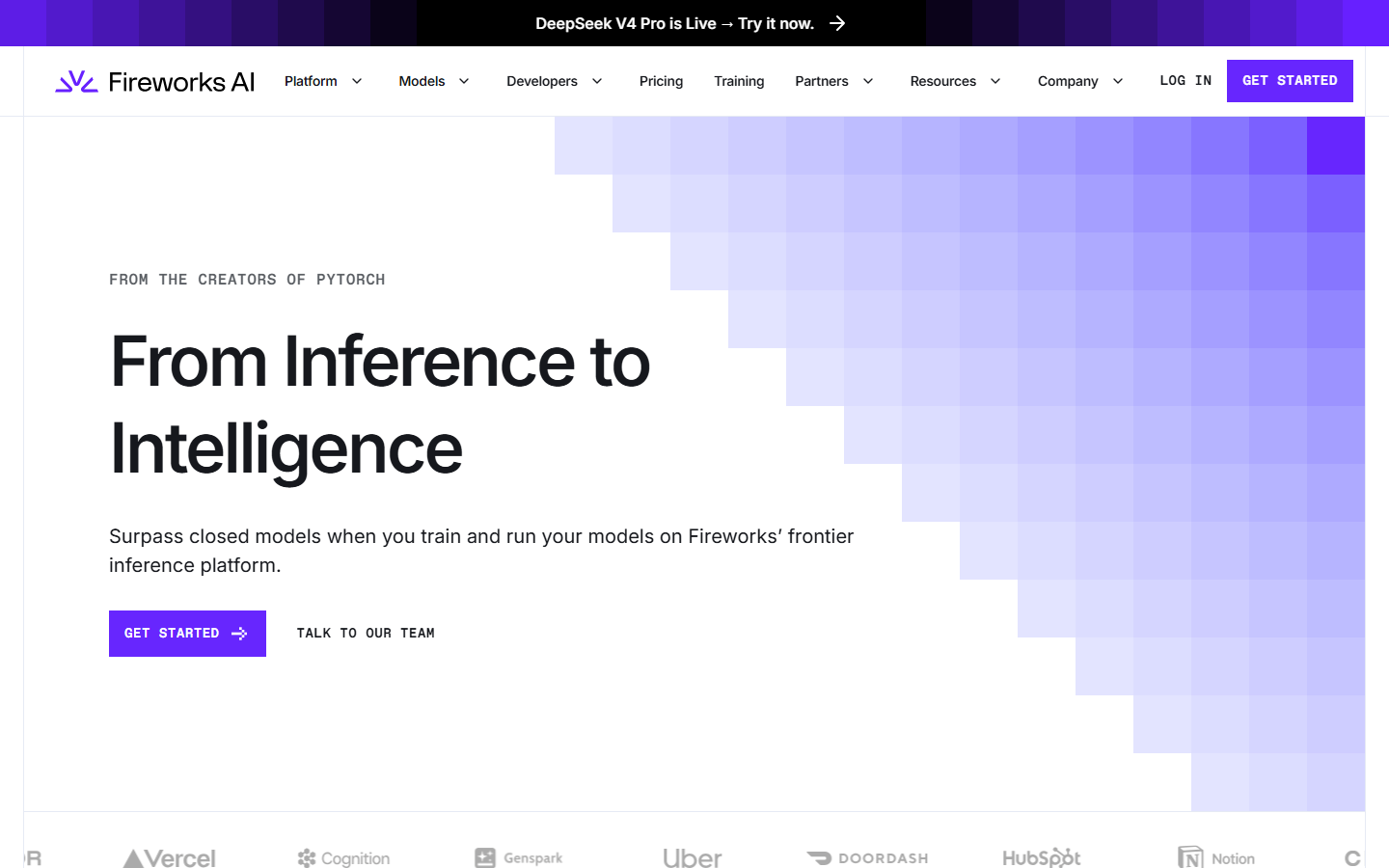
Fireworks AI focuses on high-performance inference for both LLMs and image models. Their custom inference engine, FireAttention, delivers throughput improvements that make the platform competitive for high-volume production workloads. Fireworks AI supports fine-tuned model deployment, LoRA serving, and speculative decoding. The OpenAI-compatible API makes integration simple, and they offer both serverless and on-demand deployment options. For teams processing millions of requests per day, Fireworks AI's optimization can translate to meaningful cost savings compared to Replicate's general-purpose inference infrastructure.
Comparison Table
| Platform | Best For | Pricing Model | Cold Starts | Model Catalog | Multi-Model Chaining |
|---|---|---|---|---|---|
| Wireflow | Visual workflows + API | Per-generation | None | 100+ | Built-in |
| fal.ai | Fast image generation | Per-request | Minimal | 50+ image/video | No |
| Modal | Custom Python jobs | Per-GPU-second | Configurable | BYO | Manual |
| Baseten | Enterprise serving | Per-GPU-second | Configurable | BYO + catalog | No |
| Hugging Face | Open-source models | Per-GPU-hour | Dedicated only | 500,000+ | No |
| RunPod | GPU rentals | Per-hour / per-call | Configurable | BYO | No |
| Together AI | LLM inference | Per-token | None | 200+ LLMs | No |
| Fireworks AI | High-throughput LLMs | Per-token | None | 100+ LLMs | No |
Try it yourself: Build this workflow in Wireflow. The nodes are pre-configured with a text-to-image pipeline running Nano Banana 2 and Flux 2 Pro in parallel.
Frequently Asked Questions
What is the main problem with Replicate?
The most common complaints are cold starts (10 to 30 seconds for idle models), unpredictable GPU billing, and a model catalog that lags behind the latest open-source releases by weeks.
Is Wireflow a direct Replicate replacement?
Wireflow serves a broader use case. While Replicate focuses on single-model inference, Wireflow lets you chain multiple models into visual workflows and call the entire pipeline through one API request. This makes it a stronger fit for teams building multi-step generation pipelines.
Which Replicate alternative has the lowest latency?
For image generation, fal.ai offers sub-second inference on optimized models like FLUX. For LLM inference, Together AI and Fireworks AI both deliver low-latency responses on popular open-source models.
Can I run custom models on these platforms?
Modal, Baseten, RunPod, and Hugging Face all support deploying custom-trained models. Wireflow focuses on its curated catalog of 100+ models optimized for the node editor, while fal.ai supports a growing selection of community models.
Which alternative is cheapest for image generation?
Wireflow's per-generation pricing starts lower than Replicate for most image models. RunPod's dedicated GPUs offer the lowest cost for sustained high-volume workloads. fal.ai is competitive for FLUX-specific generation at scale.
Do any of these alternatives support video generation?
Wireflow supports video generation through models like Seedance, Kling, and Veo directly in its visual workflow editor. RunPod and Modal support video models through custom deployments. The other platforms are primarily focused on image and text.
How do I migrate from Replicate to one of these alternatives?
Most platforms offer OpenAI-compatible or REST APIs, so migration typically involves updating your API endpoint and authentication. Wireflow provides a different approach with its workflow templates, where you build the pipeline visually and then call it via API, which can simplify complex multi-model setups.
Which platform is best for a startup with variable traffic?
Wireflow and fal.ai both use per-request pricing with no minimum commitments, making them ideal for startups with unpredictable traffic. Together AI's serverless endpoints also scale well for variable LLM workloads without requiring capacity planning.
Conclusion
The best Replicate alternative depends on your specific workload. For teams that need multi-model pipelines callable via API, Wireflow offers a unique visual approach that eliminates the need to write orchestration code. For raw image generation speed, fal.ai leads. For custom Python workloads, Modal gives you full control. For LLM-heavy applications, Together AI and Fireworks AI specialize in text generation at scale. Evaluate based on your primary model types, expected volume, and whether you need single-model inference or complete workflow automation.

Co-Founder & Operations at Wireflow
Runs client operations and content strategy at Wireflow. Works directly with creative teams and agencies to build production AI workflows.
- Content Strategy
- Client Operations
Make AI videos and ads.
Start free, no card needed.