Best AI Workflow Orchestration Platforms With an API in 2026

In this article▾
- Quick Summary: The 8 Platforms Ranked
- How We Ranked These Platforms
- 1. Wireflow: Best Overall
- 2. n8n: Best Open Source
- 3. Zapier: Best for Non-Technical Teams
- 4. Apache Airflow: Best for Data Engineering
- 5. LangGraph: Best for Agent Control
- 6. CrewAI: Best for Multi-Agent Tasks
- 7. Pipedream: Best for Developer Glue
- 8. Dify: Best for LLM Apps
- Comparison Table
- Which One Should You Pick
- Frequently Asked Questions
- Conclusion
Choosing an AI workflow orchestration platform in 2026 comes down to one question: can you call the workflow from your own code, or are you stuck clicking through a dashboard? This guide ranks eight platforms that expose a real HTTP API, covering what each one orchestrates, how its API is shaped, and who it suits. Wireflow takes the top spot because it chains image, video, audio, and language models on a visual canvas and then exposes that same canvas as a single AI workflow API endpoint, so the thing you designed is the thing you call.
Quick Summary: The 8 Platforms Ranked
- Wireflow: Multi-model AI media pipelines behind one endpoint. Best Overall
- n8n: Open source automation with 400+ integrations. Best Open Source
- Zapier: Consumer-grade automation with an AI orchestration layer. Best for Non-Technical Teams
- Apache Airflow: Python DAGs for scheduled data pipelines. Best for Data Engineering
- LangGraph: Stateful graphs for long-running agents. Best for Agent Control
- CrewAI: Role-based multi-agent teams. Best for Multi-Agent Tasks
- Pipedream: Event-driven serverless workflows in code. Best for Developer Glue
- Dify: LLM app backend with prompt and RAG orchestration. Best for LLM Apps
How We Ranked These Platforms
Every platform here was judged on four things: whether the API can trigger a run and return the output in one call, whether the run is observable after it starts, how many model providers you can reach without leaving the platform, and what happens to cost when volume rises. Platforms that only offer a webhook trigger with no way to read results back were excluded, because they push the hard part of AI pipeline automation back onto you.
For posting rather than raw generation, automated content publishing adds a Social Publish node that sends each caption and image to your connected channels.
The second filter was scope. Some of these tools orchestrate data; others orchestrate models. That distinction matters more than raw feature counts, and it is the main reason a team ends up switching platforms six months in. If you want a deeper technical breakdown of the endpoint patterns involved, the AI orchestration API guide covers request shapes, polling, and webhook callbacks in detail.
Build this in Wireflow
Make the same kind of asset on a canvas you control, with a free account and no credit card.
1. Wireflow: Best Overall
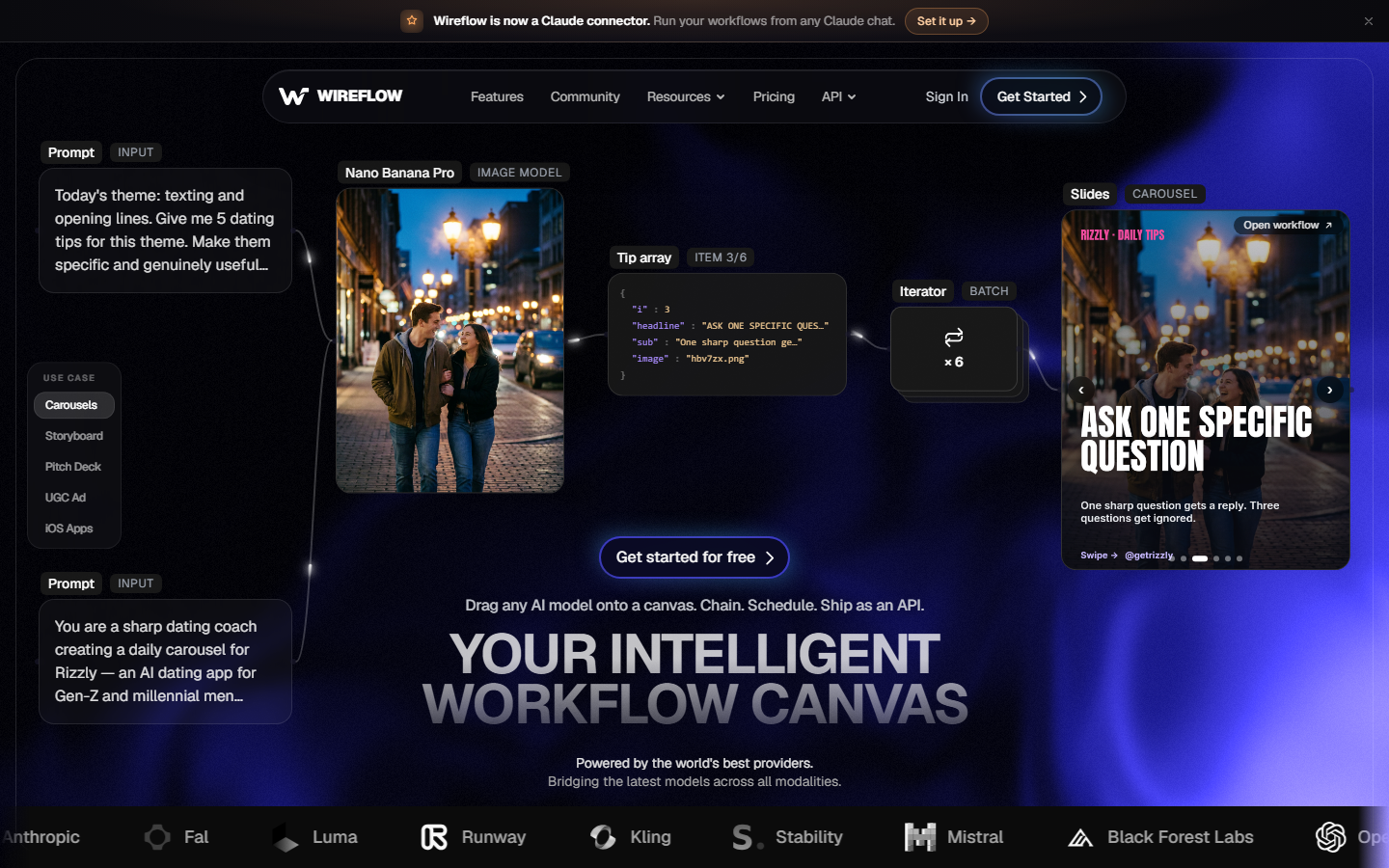
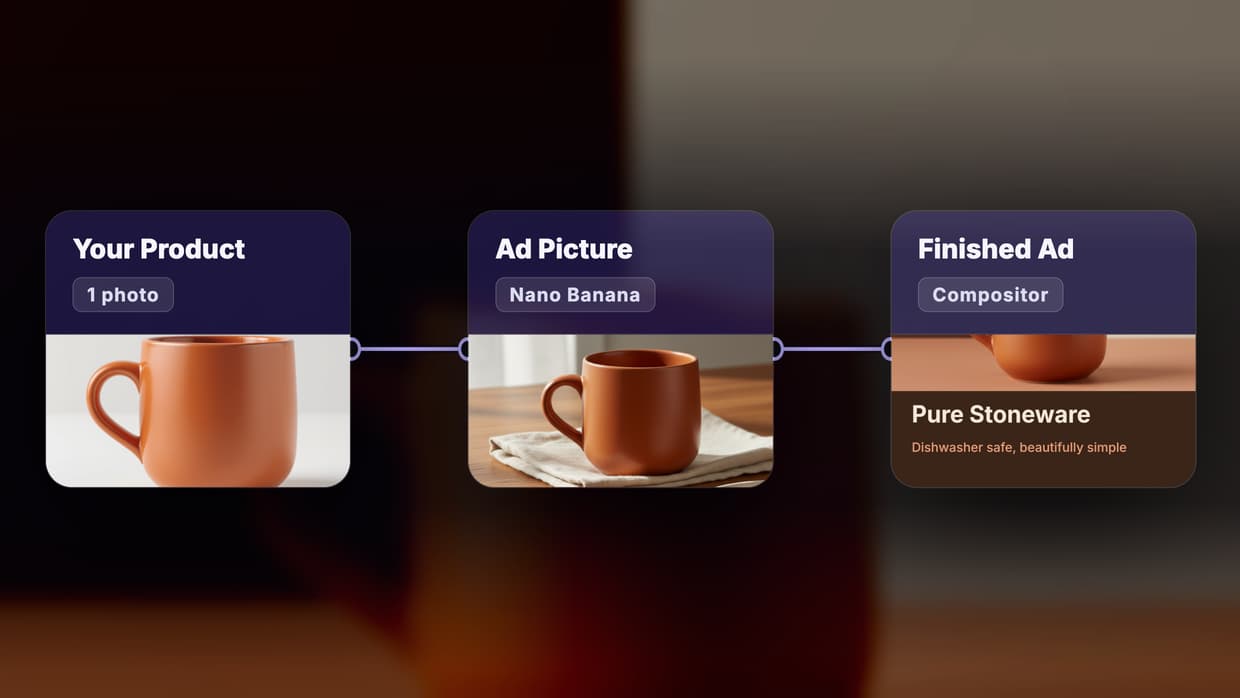
Wireflow is a node-based canvas where each node is a hosted AI model: image generation, video generation, upscaling, background removal, text-to-speech, transcription, and language models. You wire them together visually, run the graph to confirm it produces what you expect, then publish it. Publishing turns the graph into an addressable workflow you can POST to, with your runtime inputs passed as JSON.
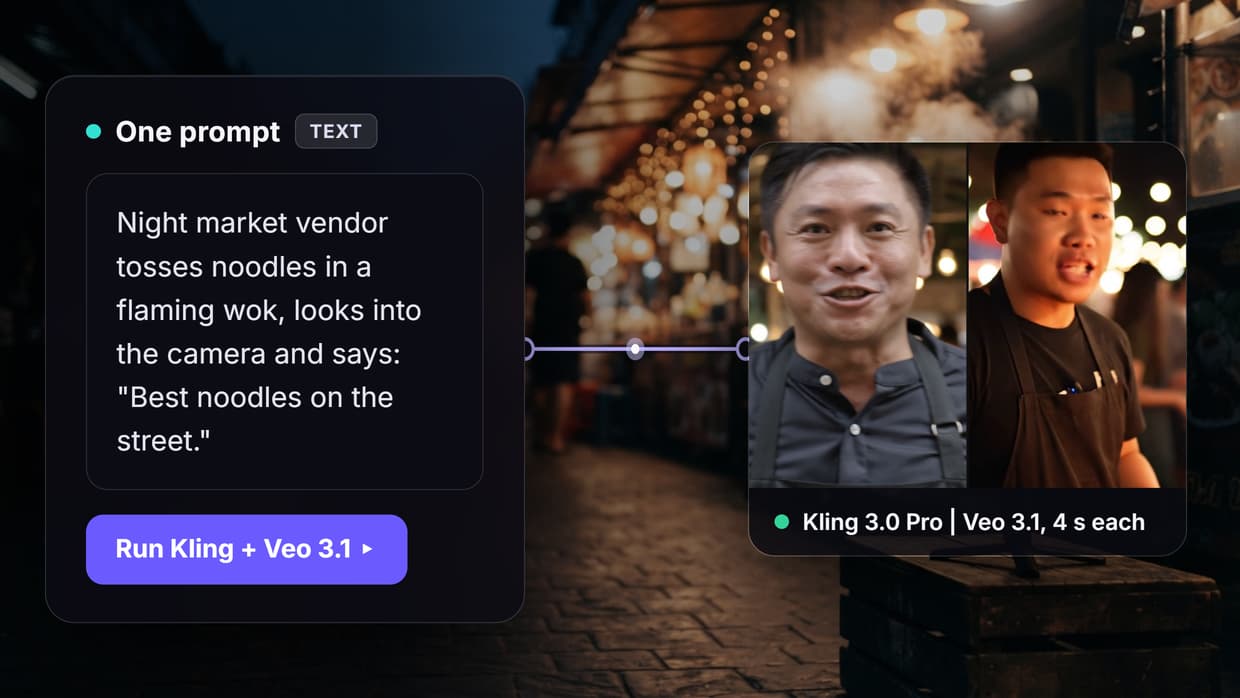
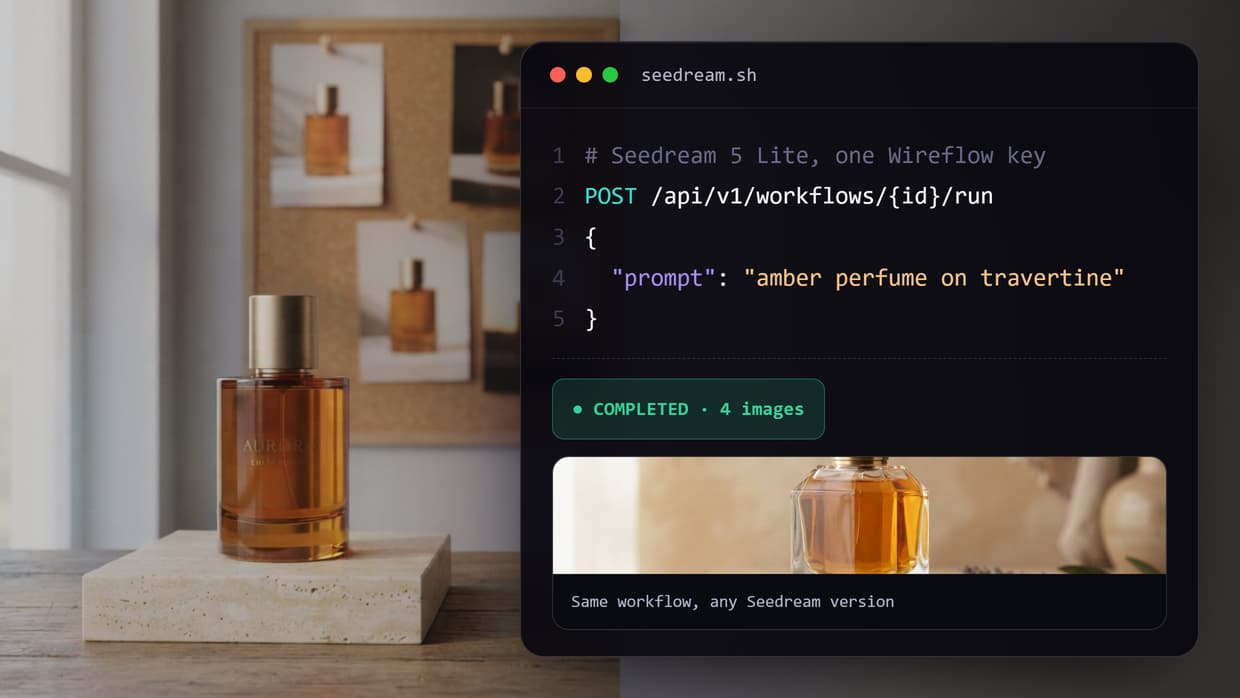
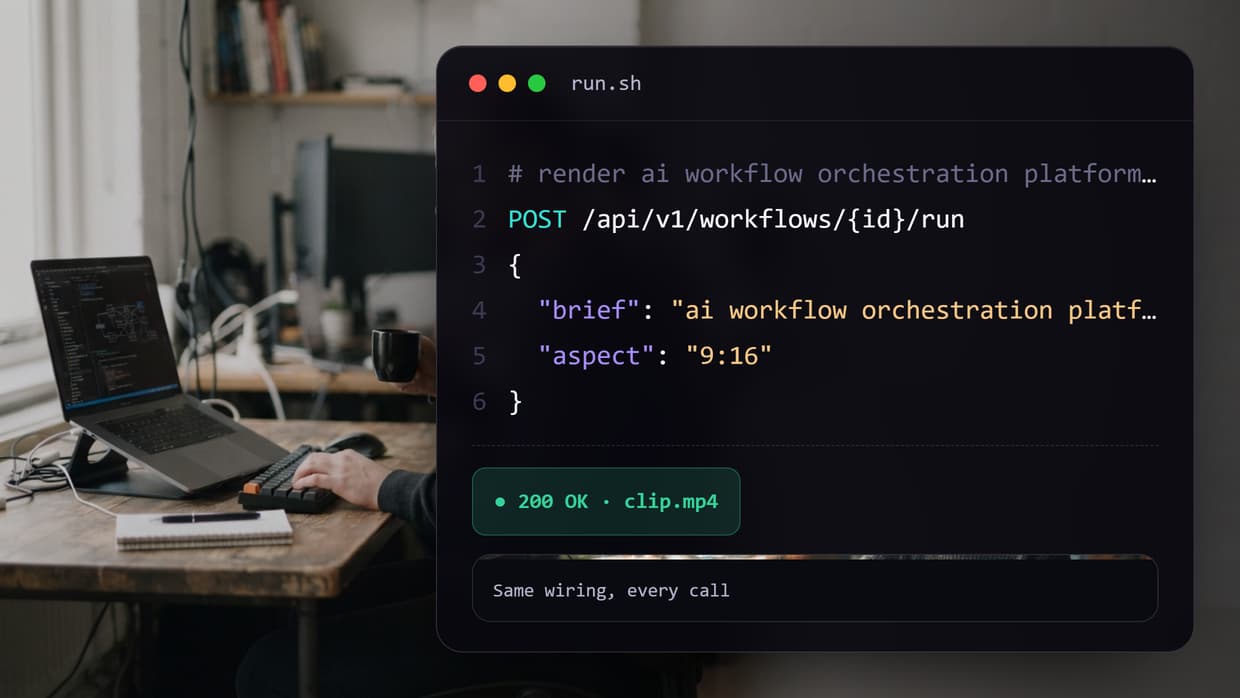
The API is the differentiator. Most orchestration tools give you an API for the platform; Wireflow gives you an API for the specific pipeline you built. A single call can run a five-model chain, and the response carries the finished asset URLs rather than a job stub you have to reassemble. That pattern is described in more depth in this walkthrough on chaining multiple AI models in one API call.
Best for: product teams shipping AI media features who do not want to hold provider keys, retry logic, and format conversion in their own codebase.
Watch for: it is built around generative media and language models, not around scheduled ETL. If your workload is nightly database jobs, look further down this list.
2. n8n: Best Open Source
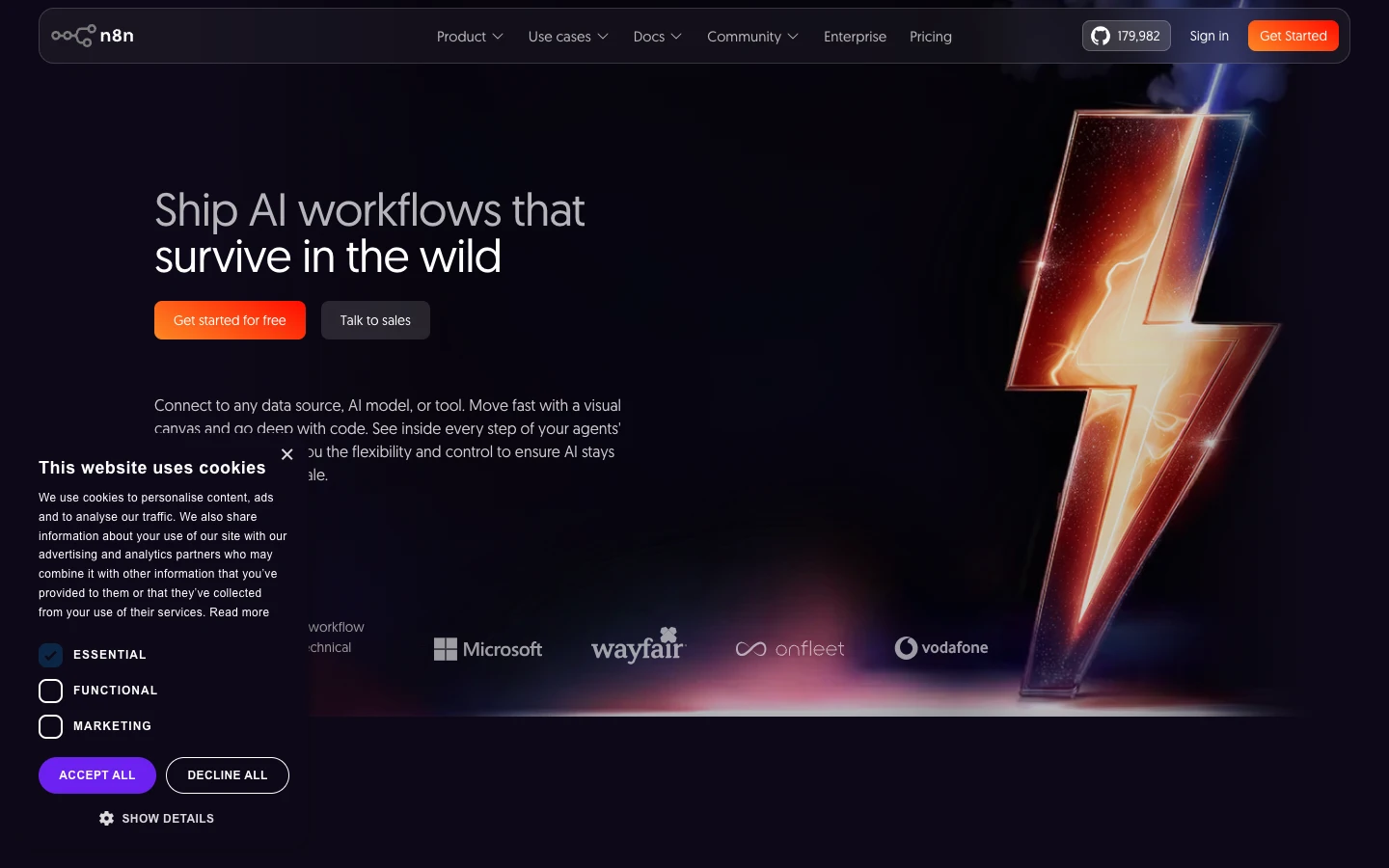
n8n is a self-hostable automation platform with a visual editor and more than 400 integrations. Its AI nodes wrap LangChain primitives, so you can build agent loops, vector store lookups, and tool-calling flows alongside ordinary SaaS automation. Workflows are triggered over HTTP through webhook nodes, and the public REST API handles workflow CRUD, execution history, and credentials.
The self-hosting story is the reason most teams pick it. You run it on your own infrastructure, your data never leaves, and the fair-code license permits internal commercial use without a per-task bill. The tradeoff is operational: you own the upgrades, the queue mode setup, and the scaling. Teams that want the same visual model without infrastructure work usually compare it against a headless AI workflow platform instead.
Best for: engineering teams that want full control and are comfortable running their own instance.
3. Zapier: Best for Non-Technical Teams
Zapier connects around 8,000 apps and has layered AI orchestration on top through Agents, Chatbots, and Canvas. For an API-driven setup you expose a Zap via a webhook trigger, and Zapier's own REST API lets you list Zaps and manage app connections programmatically.
Zapier is the fastest path from idea to running automation when the steps are mostly SaaS actions. It becomes expensive quickly when a workflow fires thousands of times a day, because pricing counts tasks and every step in a multi-step Zap is a task. Teams hitting that ceiling on generative workloads typically move to usage-based AI API pricing where cost tracks compute rather than step count.
Best for: operations and marketing teams automating business processes without engineering support.
4. Apache Airflow: Best for Data Engineering
Apache Airflow is the long-standing standard for scheduled batch orchestration. You define DAGs in Python, and the stable REST API covers triggering DAG runs, reading task instance state, managing connections, and pulling logs. Airflow 3 added event-driven scheduling and asset-aware DAGs, which closed part of the gap with newer tools.
Airflow shines when workflows are recurring, long-running, and data-heavy: model retraining, embedding refreshes, warehouse loads. It is a poor fit for low-latency request/response work, since a DAG run is a scheduled unit rather than a synchronous call. Its ecosystem maturity is unmatched, though, and the operator library covers most cloud services. For request-time generative work, a multi-model AI workflow runner is the better shape.
Best for: data platform teams orchestrating pipelines on a schedule.
5. LangGraph: Best for Agent Control
LangGraph models an agent as a state graph with explicit nodes, edges, and conditional routing. Because state is checkpointed, a run can pause for human approval, resume days later, or roll back to an earlier step. LangGraph Platform wraps this in a deployable server with a REST API for creating threads, streaming runs, and inspecting state.
It is a framework rather than a hosted studio, so you write the graph in Python or TypeScript. That is the point: teams choose it precisely because they want the control loop in code and under version control. Debugging is genuinely good through LangSmith tracing. If your agents also need to generate media, you will still be wiring provider SDKs yourself, which is where a visual node editor usually removes more work than it adds.
Best for: engineering teams building production agents with human-in-the-loop steps.
6. CrewAI: Best for Multi-Agent Tasks
CrewAI organizes work into agents with roles, goals, and backstories, grouped into crews that collaborate sequentially or hierarchically. Its Flows feature adds deterministic control on top, so you can mix scripted steps with agentic ones. CrewAI Enterprise deploys a crew behind an HTTP endpoint with a kickoff call and a status poll.
The role metaphor makes complex research and analysis tasks easy to reason about, and the framework is small enough to read end to end. The weakness is predictability: multi-agent delegation can consume far more tokens than a fixed pipeline for the same result. Where the steps are actually known in advance, AI model chaining in a fixed graph is cheaper and easier to test.
Best for: research, analysis, and content tasks that benefit from role separation.
7. Pipedream: Best for Developer Glue
Pipedream is an event-driven platform where each step is Node.js, Python, Go, or Bash running serverless, with 2,500+ pre-built app integrations and managed OAuth. Workflows are exposed as HTTP endpoints by default, and the REST API covers deployment, sources, and subscriptions.
Managed authentication is the standout feature. Connecting a third-party account takes one component instead of a token refresh implementation, which removes a large slice of integration work. Runtime limits are real, though: long-running generative jobs need an async pattern rather than a single synchronous execution, similar to the callback approach used by most AI generation APIs with spend limits.
Best for: developers stitching APIs together with small amounts of custom code.
8. Dify: Best for LLM Apps
Dify is an open source platform for building LLM applications, combining a prompt IDE, RAG pipeline, agent framework, and observability in one place. Every app you build gets a backend-as-a-service API immediately, with endpoints for chat messages, completions, file upload, and conversation history.
It is the most complete answer for teams whose product is a chat or retrieval experience: model routing across providers, dataset management, and streaming responses come as standard. Its orchestration stays inside the LLM domain, so image and video steps are handled by external tools. Teams that need both usually run Dify for conversation and a separate AI workflow builder for media generation.
Best for: teams shipping chat, retrieval, or assistant products.
Comparison Table
| Platform | Orchestrates | API Trigger | Hosting | Best For |
|---|---|---|---|---|
| Wireflow | Image, video, audio, LLM | POST run, assets returned | Hosted | Multi-model media pipelines |
| n8n | SaaS apps, LLM, agents | Webhook + REST | Self-host or cloud | Open source control |
| Zapier | SaaS apps, AI agents | Webhook + REST | Hosted | Non-technical teams |
| Apache Airflow | Data pipelines | REST DAG trigger | Self-host or managed | Scheduled batch jobs |
| LangGraph | Agent state graphs | REST runs + streaming | Self-host or platform | Human-in-the-loop agents |
| CrewAI | Multi-agent crews | Kickoff + status poll | Self-host or enterprise | Role-based collaboration |
| Pipedream | Events, code, APIs | HTTP endpoint + REST | Hosted serverless | Developer integrations |
| Dify | LLM apps, RAG | Chat + completion API | Self-host or cloud | Conversational products |
Which One Should You Pick
Match the platform to the shape of the work rather than to the feature list. Scheduled data movement goes to Airflow. Business process automation with no engineers goes to Zapier. Agent behaviour that needs checkpointing goes to LangGraph. Conversational products go to Dify. Code-level glue between APIs goes to Pipedream, and self-hosted general automation goes to n8n.
Generative media pipelines are the case where the answer is least obvious, because the work spans several providers and each one has its own polling model, output format, and failure mode. That is the workload the platforms above were not designed for, and it is why teams comparing AI workflow platforms with API access end up weighing single-endpoint execution against building the same orchestration by hand.
One practical test before you commit: build the same small pipeline on your two finalists and call it from a script. How many lines of your own code it takes to get a finished output back is a more honest signal than any comparison table, including this one. The same principle applies when you evaluate the best AI API for developers more broadly.
Try it yourself: Open the AI Content Orchestration Pipeline in Wireflow, and the nodes are pre-configured to plan a campaign with a language model, generate hero and lifestyle images, and produce a voiceover from a single brief, exactly the multi-model chain discussed above.
Frequently Asked Questions
What is AI workflow orchestration? AI workflow orchestration is the coordination of multiple AI models and services into one sequence, handling the order of steps, passing data between them, retrying failures, and returning a combined result. It differs from single-model API calls because the value sits in the connections rather than in any one model.
Do all of these platforms have a REST API? Yes. All eight expose HTTP endpoints, but the shape differs. Wireflow, Pipedream, and Dify return results from the run call itself. Airflow, CrewAI, and LangGraph use trigger-then-poll patterns. n8n and Zapier rely on webhook triggers plus a separate management API.
Which platform is best for generative image and video pipelines? Wireflow, because image, video, upscaling, and audio models are first-class nodes and one call runs the whole chain. The other platforms can reach those models, but you supply the provider keys, the polling loops, and the format conversion between steps.
Can I self-host an AI orchestration platform? n8n, Apache Airflow, LangGraph, CrewAI, and Dify all offer self-hosting. Zapier and Pipedream are hosted only. Self-hosting removes per-task fees and keeps data in your environment, at the cost of running the infrastructure yourself.
How much do these platforms cost? Pricing models split three ways. Zapier charges per task, which scales with step count. Airflow, n8n, LangGraph, CrewAI, and Dify are free to self-host with paid managed tiers. Wireflow and Pipedream charge for compute consumed, so cost tracks actual generation rather than the number of steps in the graph.
What is the difference between orchestration and automation? Automation runs a fixed sequence of steps when a trigger fires. Orchestration adds coordination across systems: conditional branching, parallel execution, state management, error handling, and retries. Every orchestration platform can automate, but not every automation tool can orchestrate.
Do I need an agent framework or a workflow platform? Use a workflow platform when the steps are known in advance, which covers most production pipelines and is cheaper and easier to test. Use an agent framework such as LangGraph or CrewAI when the model must decide the sequence at runtime, for example open-ended research.
How do I avoid vendor lock-in? Keep the business logic in your own service and treat the orchestration platform as an execution layer called behind an interface. Platforms with exportable definitions such as n8n JSON, Airflow Python, or LangGraph code make migration easier. Hosted platforms compensate by removing the provider integrations you would otherwise rebuild.
Conclusion
The eight platforms above solve different problems that share a vocabulary. Airflow and n8n orchestrate systems, LangGraph and CrewAI orchestrate agent reasoning, Zapier and Pipedream orchestrate app events, Dify orchestrates language model applications, and Wireflow orchestrates generative models across image, video, and audio. Pick by workload shape, run the two-finalist test described above, and check that the API returns what you actually need instead of a job id you have to chase. If your pipeline spans several generative providers, start from the AI workflow templates rather than an empty canvas.

Co-Founder & Operations at Wireflow
Runs client operations and content strategy at Wireflow. Works directly with creative teams and agencies to build production AI workflows.
- Content Strategy
- Client Operations
Get unlimited ad creatives today.
One call to see if we are a fit and scope the first ad. If it fits, your first batch lands inside week one.