Best Kling AI Alternatives in 2026

In this article▾
- Quick Summary: Best Kling AI Alternatives in 2026
- Why Look for Kling AI Alternatives?
- 1. Wireflow - Best Overall
- 2. Seedance 2.0 - Best Quality
- 3. Runway Gen-4 - Best for Professionals
- 4. Luma Dream Machine - Best for Image-to-Video
- 5. Hailuo AI - Best for Budget
- 6. Google Veo 3 - Best for Native Audio
- 7. Pika - Best for Beginners
- 8. HeyGen - Best for Avatar Videos
- Comparison Table
- FAQ
Kling AI is one of the most widely used AI video platforms, but its credit-based pricing, limited workflow integration, and lack of avatar support push many creators to look for better options. Wireflow lets you chain multiple AI video models in a visual canvas, comparing outputs from Seedance, Runway, Luma, and others in a single session before committing to a render. This guide covers the eight strongest Kling alternatives in 2026, with honest notes on pricing, quality, and use cases. To wire that swap into a full scene, try our AI movie maker with swappable video models. If Kling is one engine among several you want to wire together, try a Google Flow alternative that swaps models in one node.
For a hands-on look at this in action, check out the Kling AI alternative feature page.
Quick Summary: Best Kling AI Alternatives in 2026
- Wireflow - Best Overall: multi-model AI video workflow platform
- Seedance 2.0 - Best Quality: Elo #1 benchmark, 1080p output
- Runway Gen-4 - Best for Professionals: production-grade creative control
- Luma Dream Machine - Best for Image-to-Video: cinematic motion from photos
- Hailuo AI - Best for Budget: fast generation, volume-friendly pricing
- Google Veo 3 - Best for Native Audio: photorealistic video with synchronized sound
- Pika - Best for Beginners: lowest entry price, simple templates
- HeyGen - Best for Avatar Videos: talking-head and multilingual dubbing
Why Look for Kling AI Alternatives?
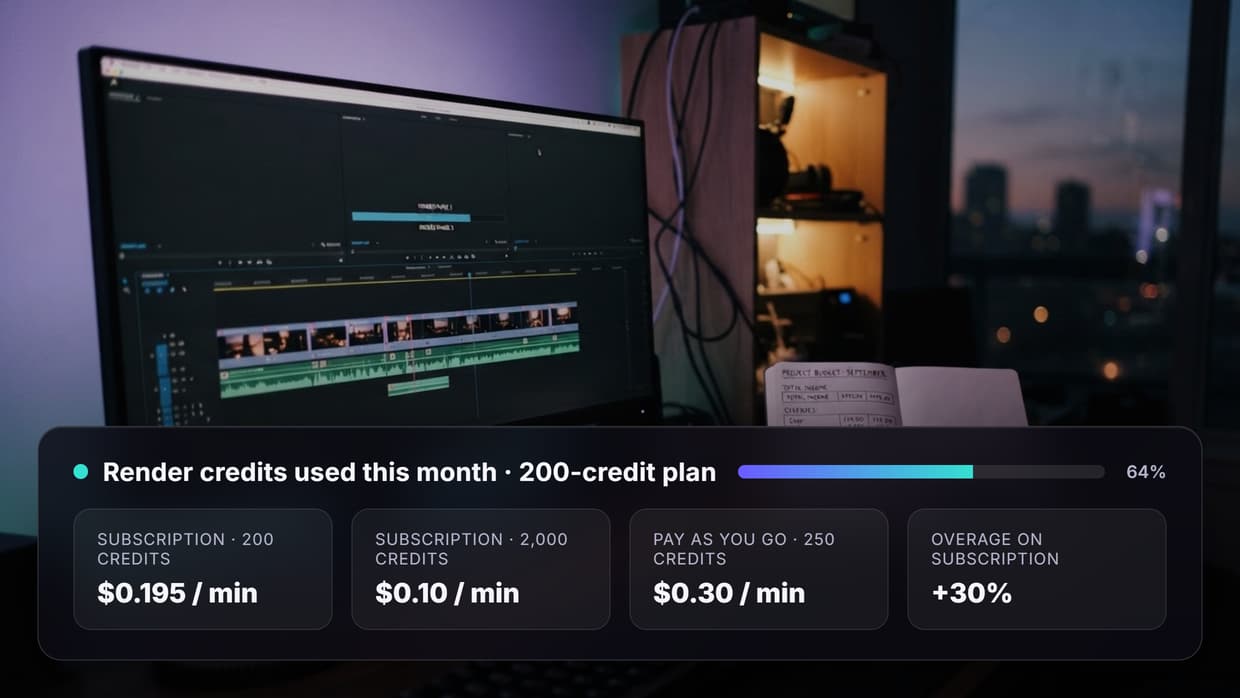
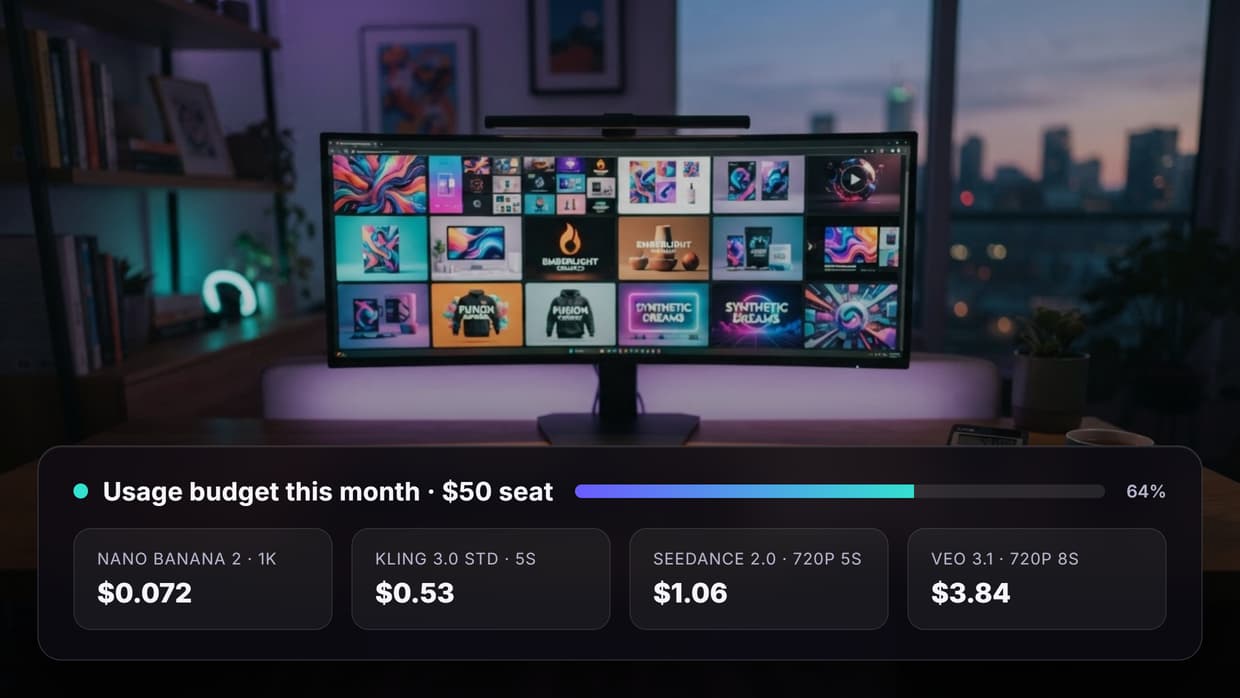
Kling uses a credit system that costs roughly $0.11 to $0.50 per clip depending on resolution and mode. That burns through credits fast when you're iterating. For more context on how Kling's output holds up under comparison, the Kling Video 3 review goes deeper on quality benchmarks.
Beyond cost, Kling has a few hard limitations: no native avatar or talking-head capability, no end-to-end workflow integration, and inconsistent usable output rates. Some creators report only 30-40% of generations being usable without additional editing. These pain points make a solid case for evaluating alternatives, particularly if your workflow involves iteration or multi-model comparison.
Build this in Wireflow
Make the same kind of asset on a canvas you control, with a free account and no credit card.
1. Wireflow - Best Overall
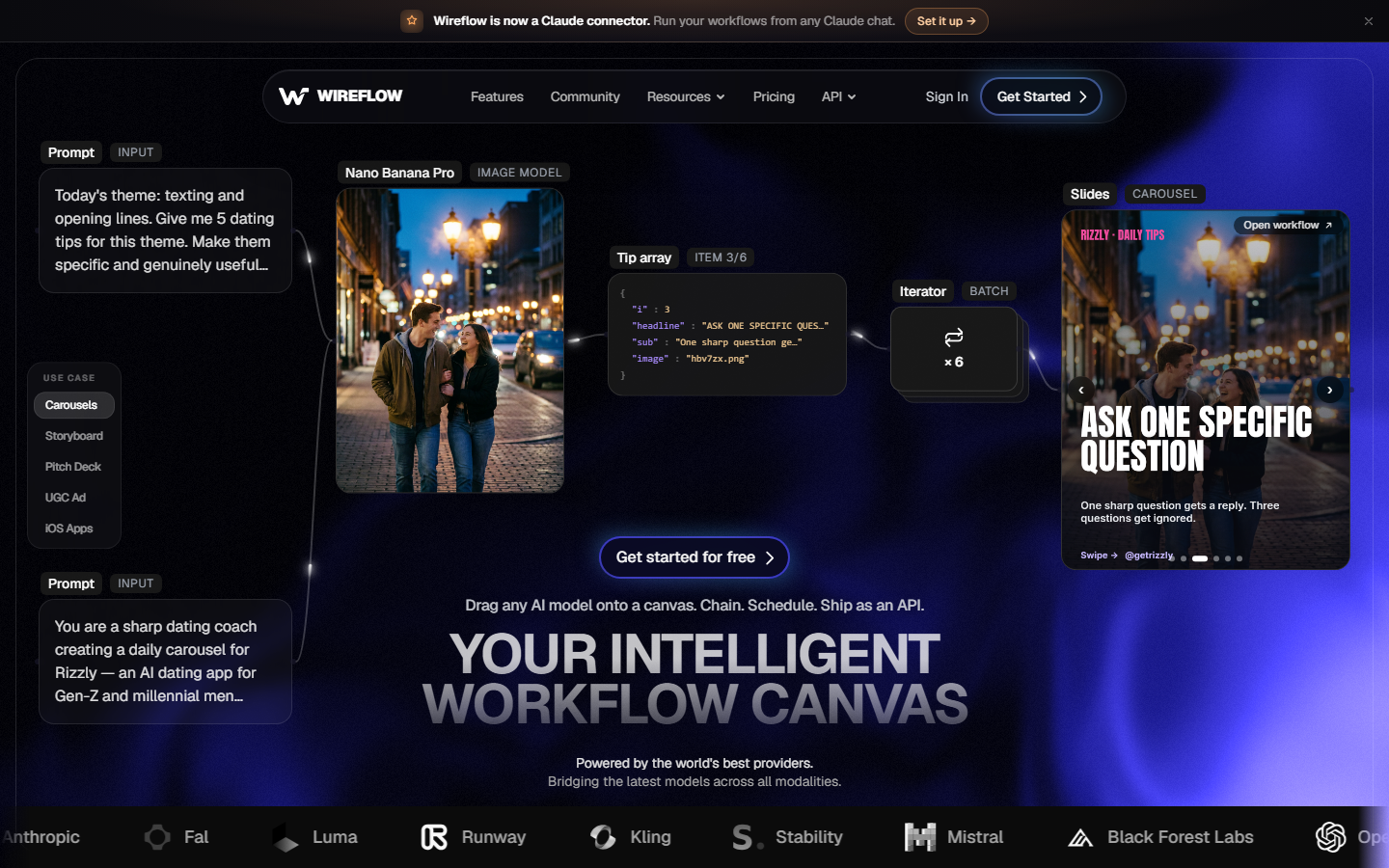
Wireflow is a visual canvas where you connect AI video models as nodes and run them in sequence or parallel. Instead of being locked into a single model, you can route the same prompt through Seedance 2.0, Runway Gen-4, and Luma Dream Machine in one session and compare outputs directly before downloading.
The key advantage over Kling is workflow persistence. Calls through Wireflow's video generation API are parameterized and reusable, so you're not starting from scratch each time you want a variation. Credits apply to the underlying models only, not a separate Wireflow layer.
Wireflow supports image-to-video, text-to-video, multi-shot assembly, background removal, and upscaling within the same canvas. It's the strongest option if you work with multiple AI models regularly, need to hand off workflows to a team, or want a pipeline that survives a model price change by swapping one node.
Best for: Teams and developers who want model flexibility and repeatable workflows. Pricing: Pay-per-model API calls. No separate Wireflow subscription for standard use.
2. Seedance 2.0 - Best Quality
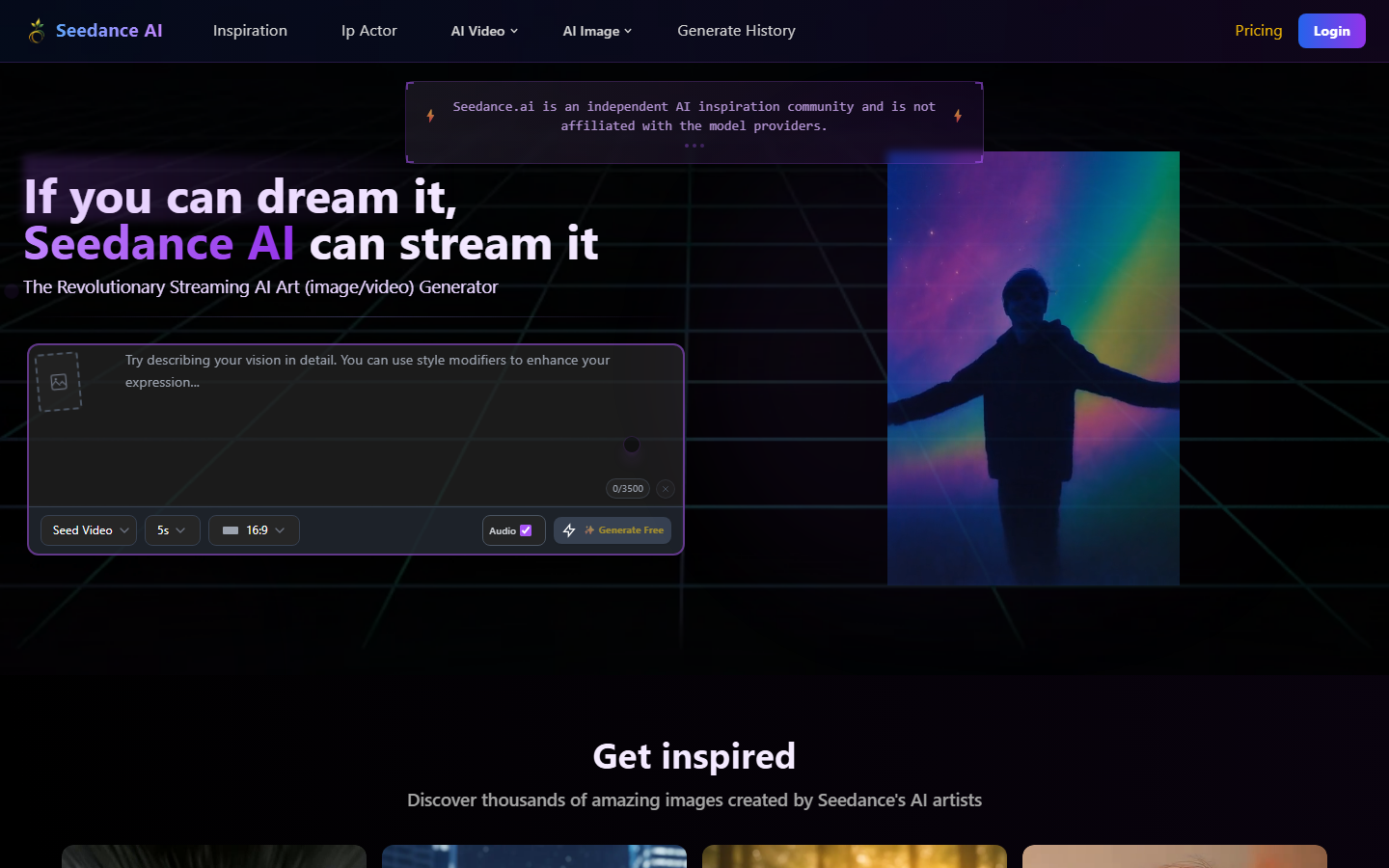
Seedance currently holds the top Elo score on the Artificial Analysis video benchmark at around 1,269, placing it above Kling 3.0 on motion quality and output consistency. It generates 1080p clips with strong subject tracking and fine-grained camera control.
The most practical differentiator is motion consistency. Seedance handles complex camera movements without the jitter or object drift that Kling sometimes produces at longer durations. That predictability matters for programmatic video generation pipelines that need consistent quality across a batch without manual curation.
Seedance 2.0 also supports longer clips than most competitors and offers a clean API for developers building generation pipelines at scale.
Best for: Creators who prioritize raw output quality and motion accuracy. Pricing: Pay-per-clip. API access available. Free tier: Limited credits on signup.
3. Runway Gen-4 - Best for Professionals
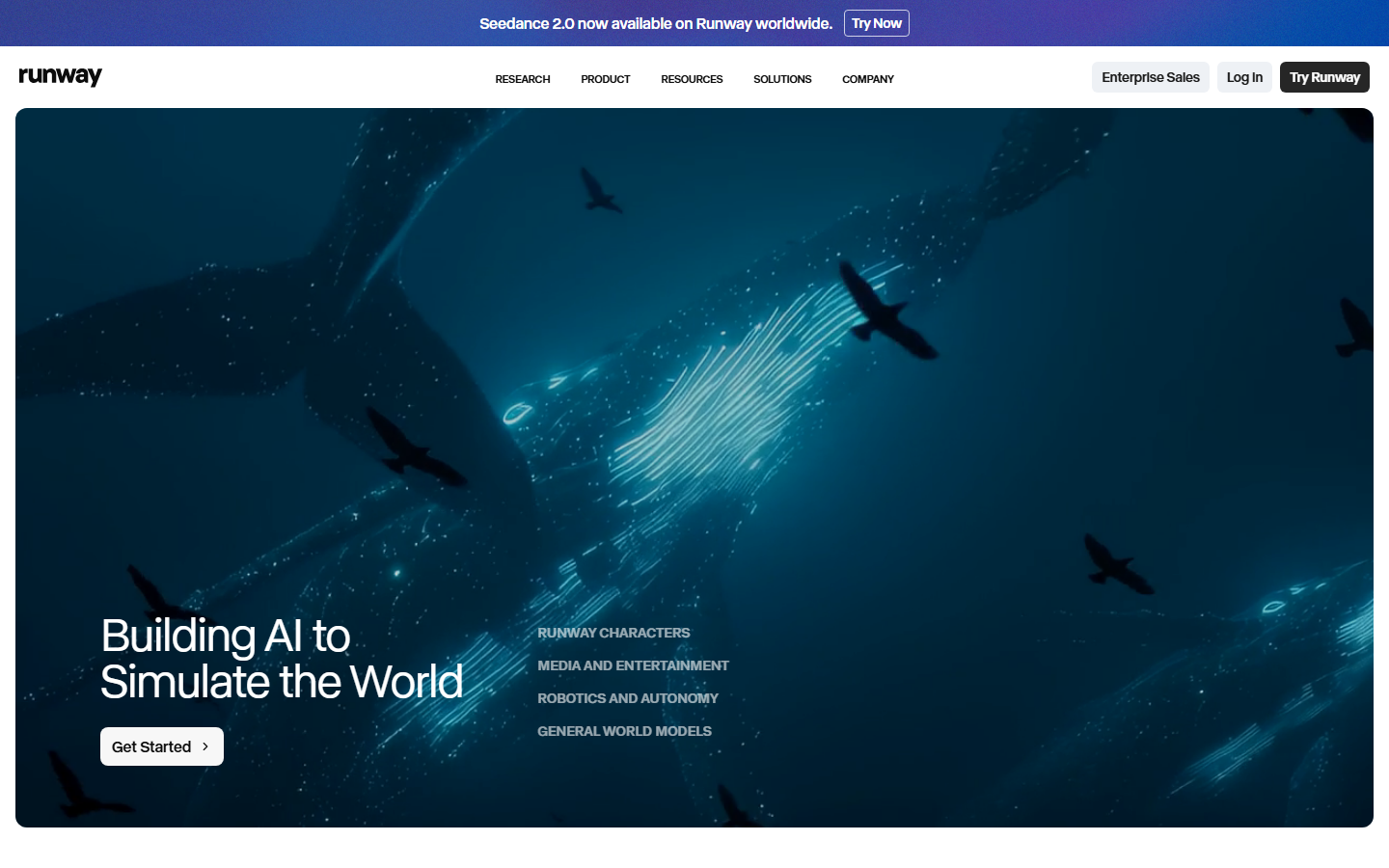
Runway Gen-4 and Gen-4.5 are production-grade tools used by commercial studios and post-production teams. The platform offers precise camera controls, Act One for character animation, and multi-shot generation with consistent subject tracking across scenes.
Runway's pricing starts at around $15 per month, which is higher than Kling's standard tier, but the control over output is significantly better. For best video generation API tools comparisons, Runway consistently ranks at the top for professional creative control and reliability in client-facing workflows.
The platform also includes team collaboration, version history, and asset management, none of which Kling offers. If you produce content for clients or need audit trails, those features are not optional.
Best for: Professional creators, agencies, and post-production teams. Pricing: Starts at $15/month. Enterprise plans available. Free tier: Limited credits.
4. Luma Dream Machine - Best for Image-to-Video
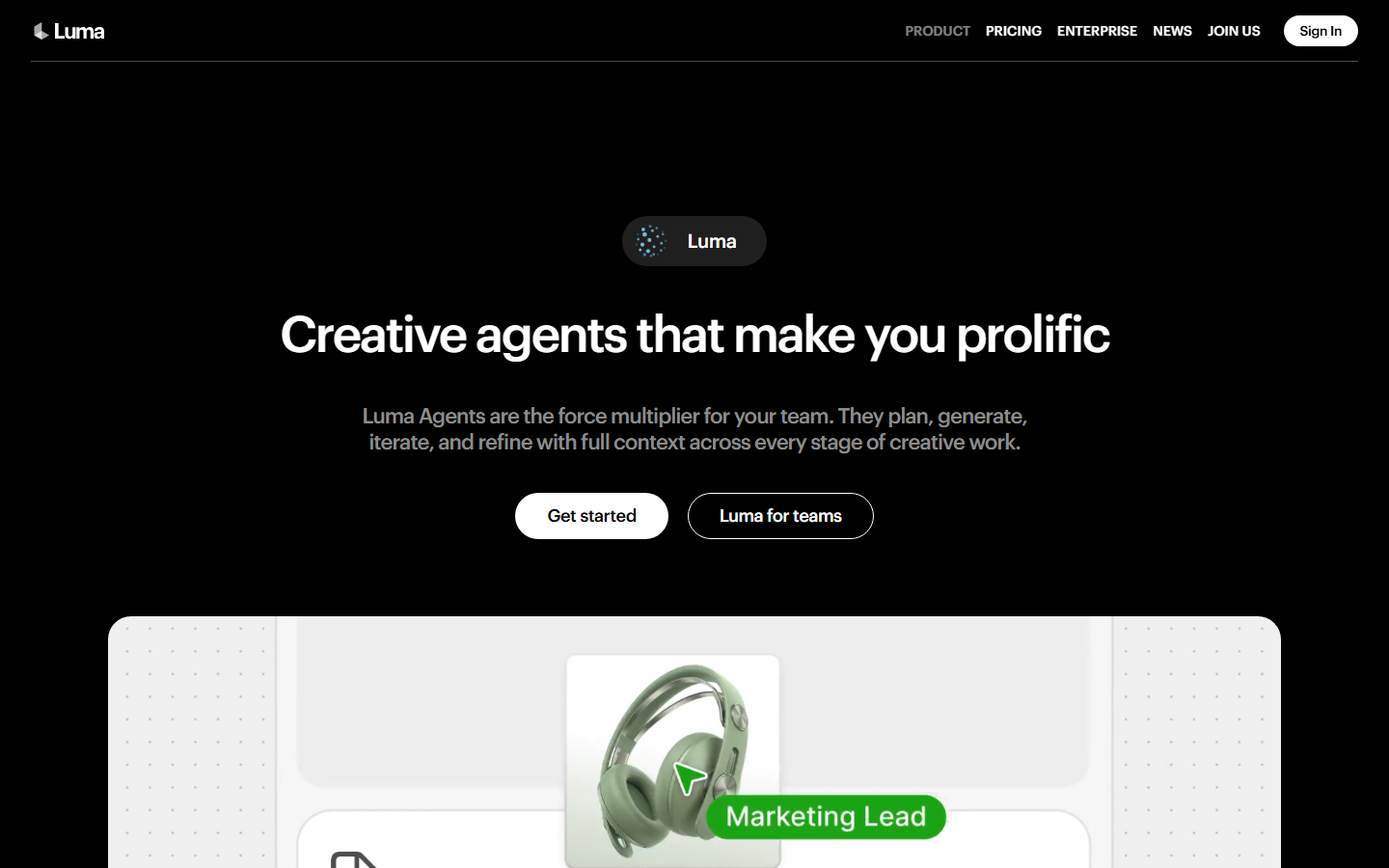
Luma Dream Machine (Ray3.14) is the strongest alternative if your workflow starts with a reference image. It produces cinematic motion from still photos and handles complex scene transitions with visual quality that many users find more consistent than Kling.
Luma generates clips quickly, often within 60-90 seconds, with a distinctive cinematic aesthetic and smooth camera movement. It is a common choice for creators who shoot product photos and want to animate them without complex setup. The free AI video generator options comparison shows Luma consistently offers one of the stronger free tiers for the output quality delivered.
Luma's API is well-documented and integrates with standard creative pipelines, making it easy to connect to downstream tools.
Best for: Image-to-video workflows, cinematic content, product animation. Pricing: Free tier with credits. Paid plans from around $10/month. Free tier: Yes.
5. Hailuo AI - Best for Budget
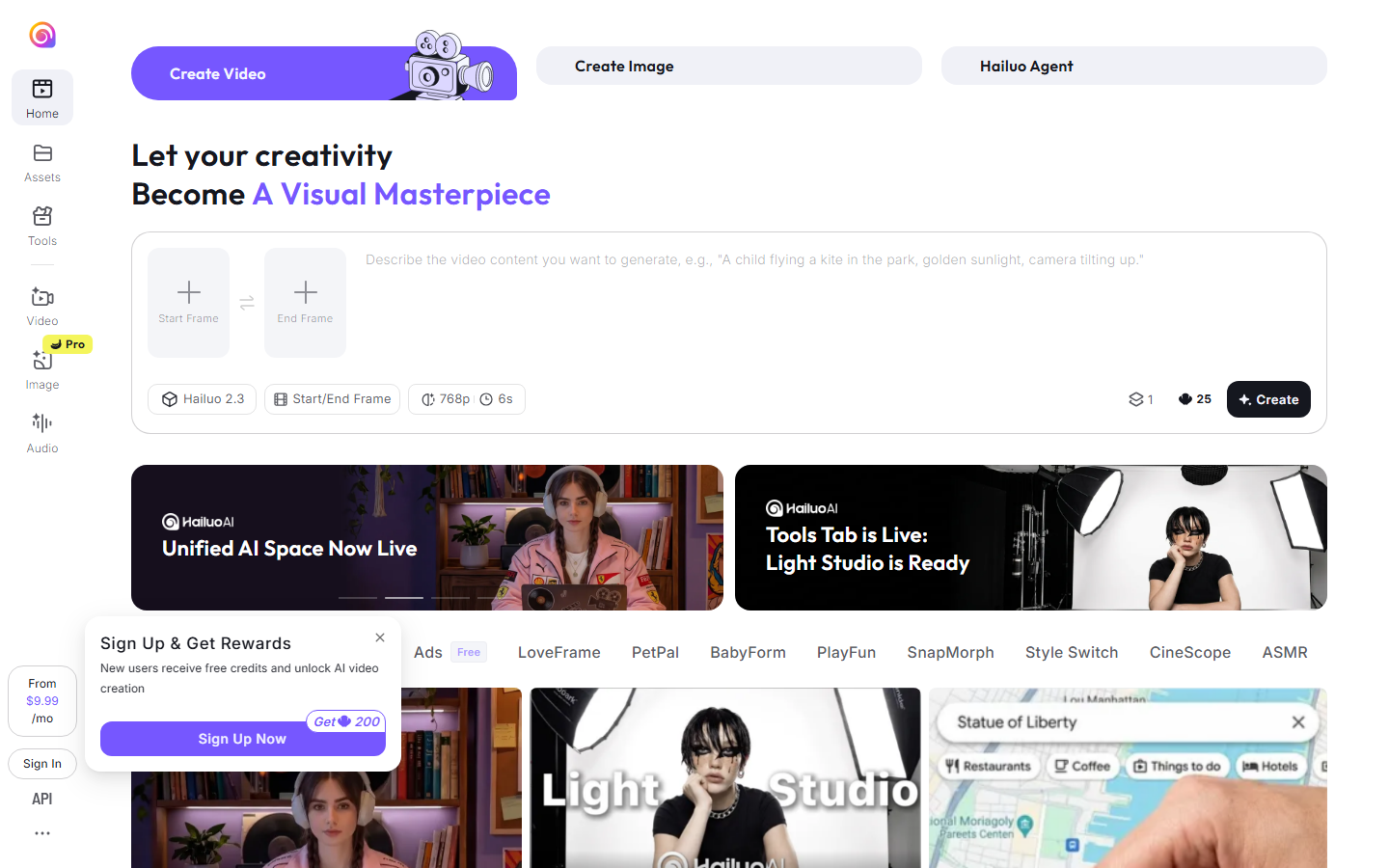
Hailuo AI (MiniMax Video-01) is the fastest and most affordable option on this list for high-volume generation. It is optimized for social content: short clips, fast turnaround, and consistent styling across batches.
Generation speed runs roughly 30-60 seconds per clip, which is 2-3x faster than Kling in standard mode. For creators who post daily or run UGC ad production at scale, the time savings compound quickly across hundreds of clips per month.
The trade-off is quality ceiling. Hailuo's output is solid for social media but does not match Seedance or Runway for cinematic work. If you're producing for TikTok or Instagram Reels rather than YouTube or commercial deliverables, that ceiling is rarely a constraint.
Best for: Social media creators, agencies running high volume, budget-conscious users. Pricing: Credits-based pricing, typically cheaper than Kling per clip. Free tier: Yes.
6. Google Veo 3 - Best for Native Audio
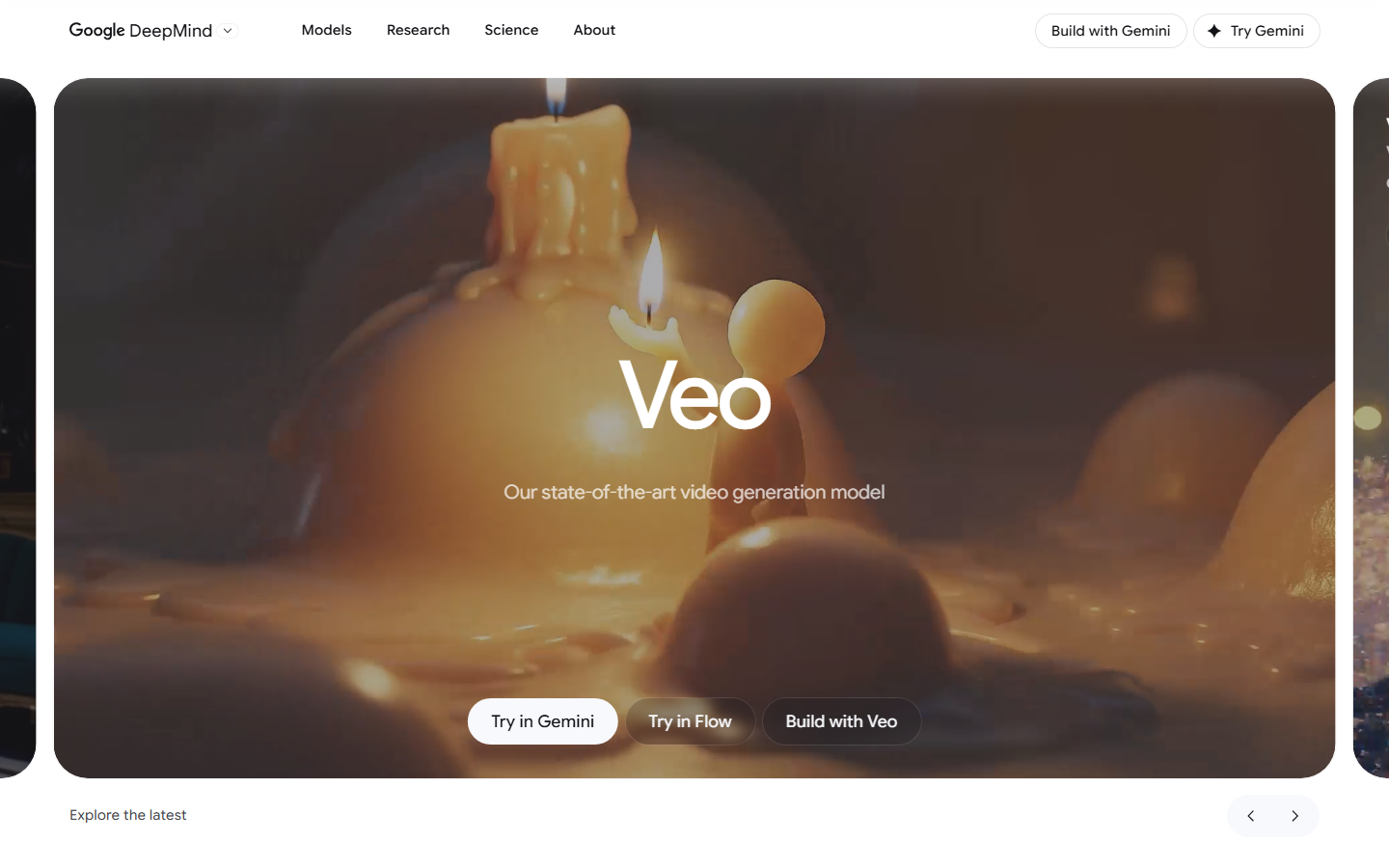
Google Veo 3 is the only model on this list that generates synchronized audio alongside video natively. Ambient sound, dialogue, and music are produced as part of the video output, not as a separate post-processing step. No other major AI video model does this.
The visual quality is photorealistic, with strong physics modeling and accurate lighting. Veo 3 is available through Google AI Ultra subscriptions and the Vertex AI API. Access is more limited than other tools, but the AI video editing API integration is production-grade and suitable for enterprise pipelines.
If synchronized sound is a hard requirement for your content, Veo 3 solves it without needing separate audio generation tools bolted on afterward.
Best for: Content requiring native audio, cinematic realism, YouTube productions. Pricing: Google AI Ultra ($249/month) or Vertex AI API pay-per-use. Free tier: Limited via Gemini app.
7. Pika - Best for Beginners
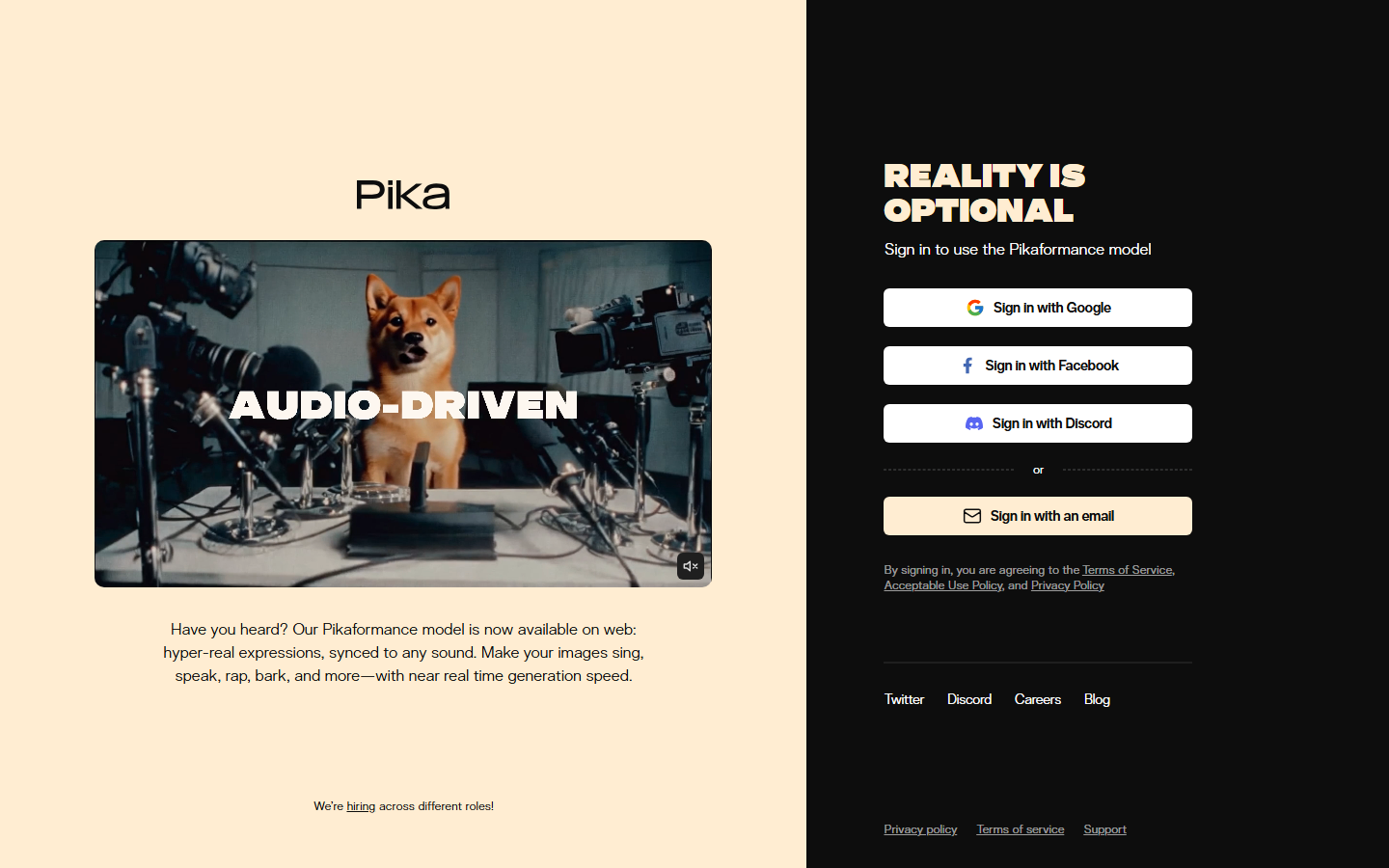
Pika is the most accessible entry point on this list. Its interface is simple, templates cover common use cases, and the learning curve is flat compared to Kling's credit system and parameter tuning.
Pika starts at $8 per month, the lowest paid tier of any tool covered here. The best Pika Labs API options roundup shows how it also serves developers who want programmatic access on a budget. For casual creators who want to start generating without a steep setup cost, the free plan with daily credits removes any barrier to entry.
Output quality is solid for social media content, though it does not reach Seedance or Runway levels for professional work. For someone new to AI video, Pika is the right first stop.
Best for: Beginners, casual creators, anyone trying AI video for the first time. Pricing: Free tier available. Paid plans from $8/month. Free tier: Yes, with daily credits.
8. HeyGen - Best for Avatar Videos
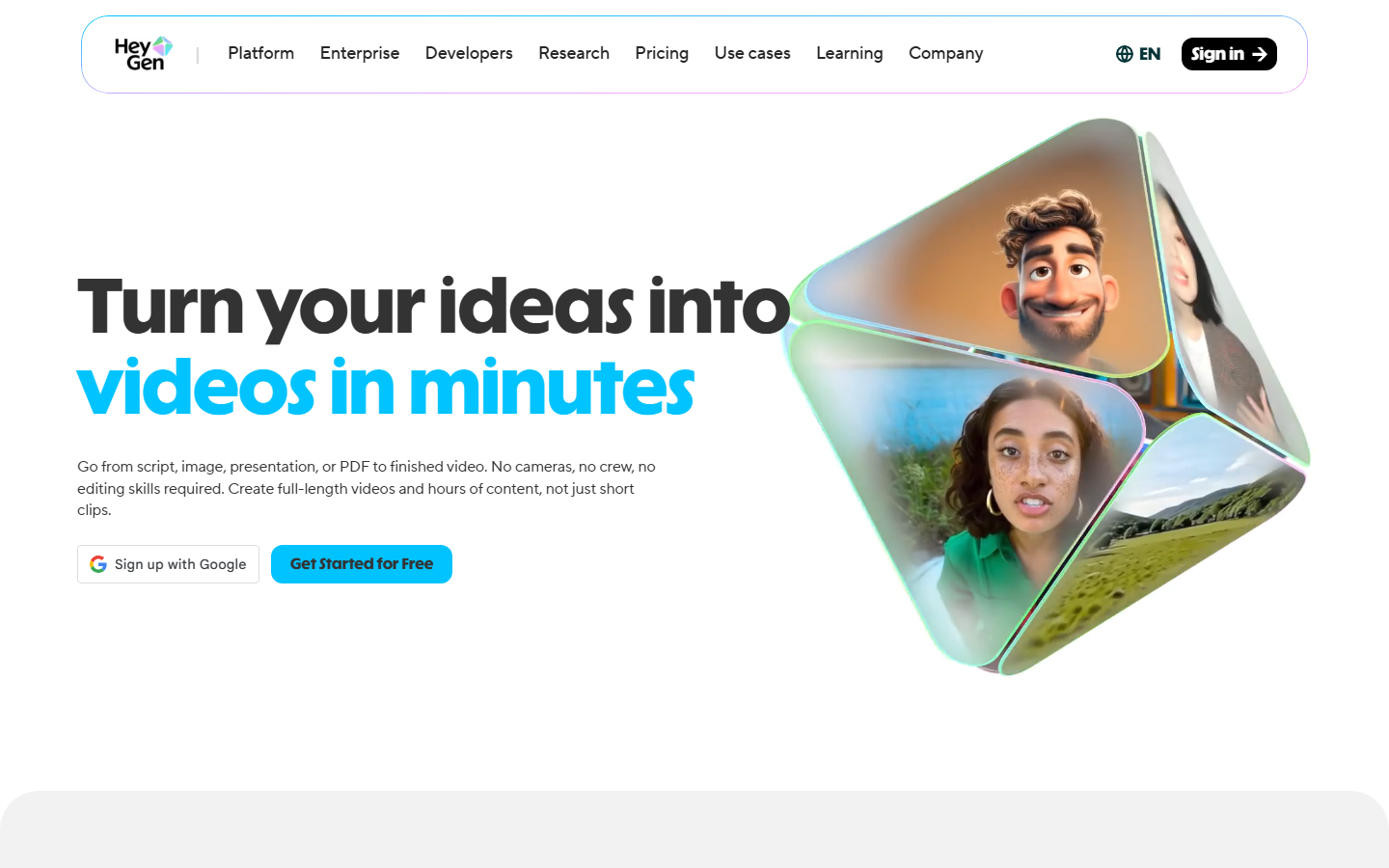
HeyGen serves a different use case than the other tools here. It specializes in talking-head videos and AI avatar content, which Kling does not support at all. If your content involves a presenter, spokesperson, or dubbed character, HeyGen is the direct alternative.
The platform generates realistic lip-sync video from text scripts, supports 40+ languages for dubbing, and maintains avatar consistency across multiple videos. It is widely used for AI UGC ad workflows and corporate training content where consistency across a library of videos matters.
HeyGen also has enterprise features: SOC 2 compliance, custom avatar creation from a personal video sample, and team collaboration. For agencies producing branded spokesperson video at scale, these are meaningful differentiators.
Best for: Talking-head content, multilingual dubbing, corporate and training video. Pricing: Free plan with limited credits. Paid plans from $24/month. Free tier: Yes, limited.
Comparison Table
| Tool | Best For | Free Tier | Starting Price | Native Audio | Avatar Support |
|---|---|---|---|---|---|
| Wireflow | Multi-model workflows | Yes | API-based | Via models | Via models |
| Seedance 2.0 | Highest quality | Limited | API-based | No | No |
| Runway Gen-4 | Professionals | Limited | $15/month | No | No |
| Luma Dream Machine | Image-to-video | Yes | ~$10/month | No | No |
| Hailuo AI | Budget/volume | Yes | Credits | No | No |
| Google Veo 3 | Native audio | Limited | $249/month | Yes | No |
| Pika | Beginners | Yes | $8/month | No | No |
| HeyGen | Avatar videos | Yes | $24/month | Via avatar | Yes |
Try it yourself: Build a multi-model video workflow in Wireflow - the nodes are pre-configured with the exact setup discussed above.
FAQ
What is the best free alternative to Kling AI?
Pika and Hailuo AI both offer free tiers with daily credits. Luma Dream Machine also provides a free plan with meaningful output quality. For the widest model access, Wireflow's API-based pricing means you only pay for the models you actually run.
Which Kling AI alternative has the best video quality?
Seedance 2.0 currently scores highest on the Artificial Analysis benchmark (Elo ~1,269) for motion quality and output consistency. Runway Gen-4 is the closest competitor for professional creative control and multi-shot coherence.
Does any Kling alternative support talking-head or avatar videos?
HeyGen is the primary alternative for avatar-based and talking-head content. Kling does not support this capability, making HeyGen a category-level differentiation rather than a direct quality comparison.
Which tool generates videos fastest?
Hailuo AI is typically the fastest, generating clips in 30-60 seconds. Luma Dream Machine also runs quickly at 60-90 seconds. Kling's standard mode takes 2-3 minutes per clip depending on queue and settings.
Can I use multiple Kling alternatives together?
Yes. Wireflow's visual canvas connects multiple AI video models so you can run the same prompt through Seedance, Runway, and Luma simultaneously and compare outputs before downloading. This is the recommended approach for high-stakes productions where you need to pick the best result.
Which alternative works best for social media content?
Hailuo AI is optimized for short-form social content with fast generation and batch-friendly pricing. Pika is also strong here with its template library and low cost per clip.
Does Google Veo 3 generate audio automatically?
Yes. Google Veo 3 is the only major video generation model that produces synchronized audio including ambient sound, dialogue, and music as part of the video output, without requiring separate audio generation tools.
Is Kling AI still worth using in 2026?
Kling remains competitive on price per clip in standard mode and supports extended 3-minute clip generation that most alternatives do not match. It is a reasonable choice for straightforward text-to-video needs where low cost per output matters more than model flexibility or workflow integration.

Co-Founder & Operations at Wireflow
Runs client operations and content strategy at Wireflow. Works directly with creative teams and agencies to build production AI workflows.
- Content Strategy
- Client Operations
Get unlimited ad creatives today.
One call to see if we are a fit and scope the first ad. If it fits, your first batch lands inside week one.