Agencies running paid social need 20 to 40 fresh UGC variations per client per month, and the tool you pick decides whether that is a two-day job or a two-week one. Wireflow lets you chain multiple AI models into one repeatable canvas, which is why it leads this list of eight UGC ad tools built for agency volume rather than one-off creator videos. Below is how each platform handles batching, client separation, revisions, and per-video cost.
The 8 Best UGC Ads Agency Tools in 2026
- Wireflow: node canvas that chains script, avatar, and edit models. Best Overall
- Arcads: realistic AI actors reading your hooks. Best for Actor Realism
- Creatify: product URL to batch ad variations. Best for Ecommerce Volume
- MakeUGC: large avatar library with bulk generation. Best Avatar Library
- HeyGen: avatar lip-sync plus voice-preserving translation. Best for Localization
- TopView: repurposes proven ads into new variants. Best for Ad Remixing
- Captions: captioning, editing, and finishing. Best for Post-Production
- Icon: creative testing and ad performance tracking. Best for Creative Testing
How We Ranked These Tools
Four criteria decided the order: batch throughput (finished videos per hour without manual steps), client isolation (separate brand assets, voices, and approval trails), revision cost (what a hook change costs in credits and time), and export control (aspect ratios, captions, platform-ready files). Tools that produce one video at a time scored lower regardless of quality, because the agency bottleneck is never a single video. For a wider view of the category, the roundup of AI UGC generators covers the creator-side options too.
Pricing reflects publicly listed plans as of September 2026. Most platforms meter by credits rather than seats, so two agencies on the same tier can see very different bills. If you bill per asset, read the pricing guidance for AI UGC ads first.
1. Wireflow: Best Overall
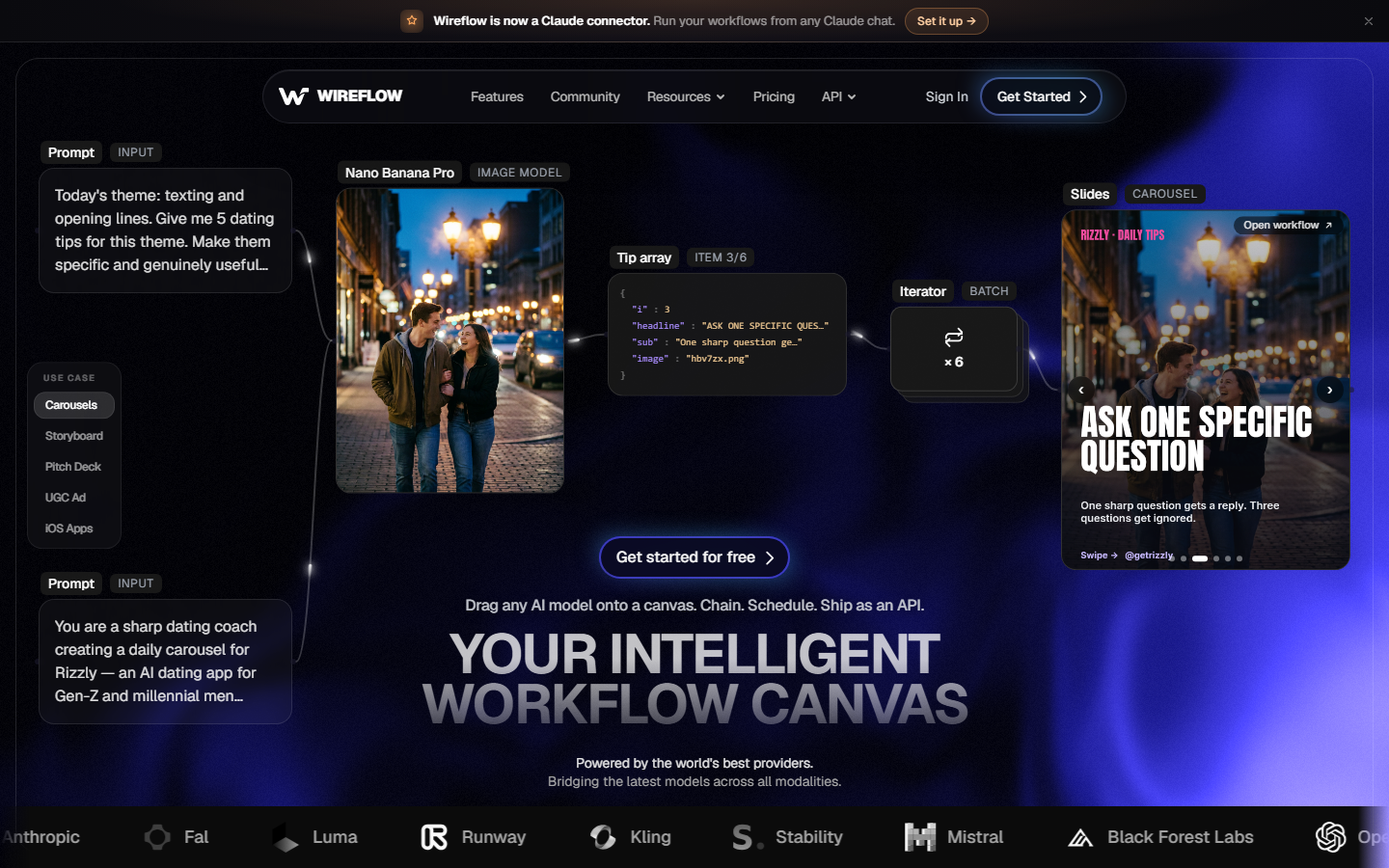
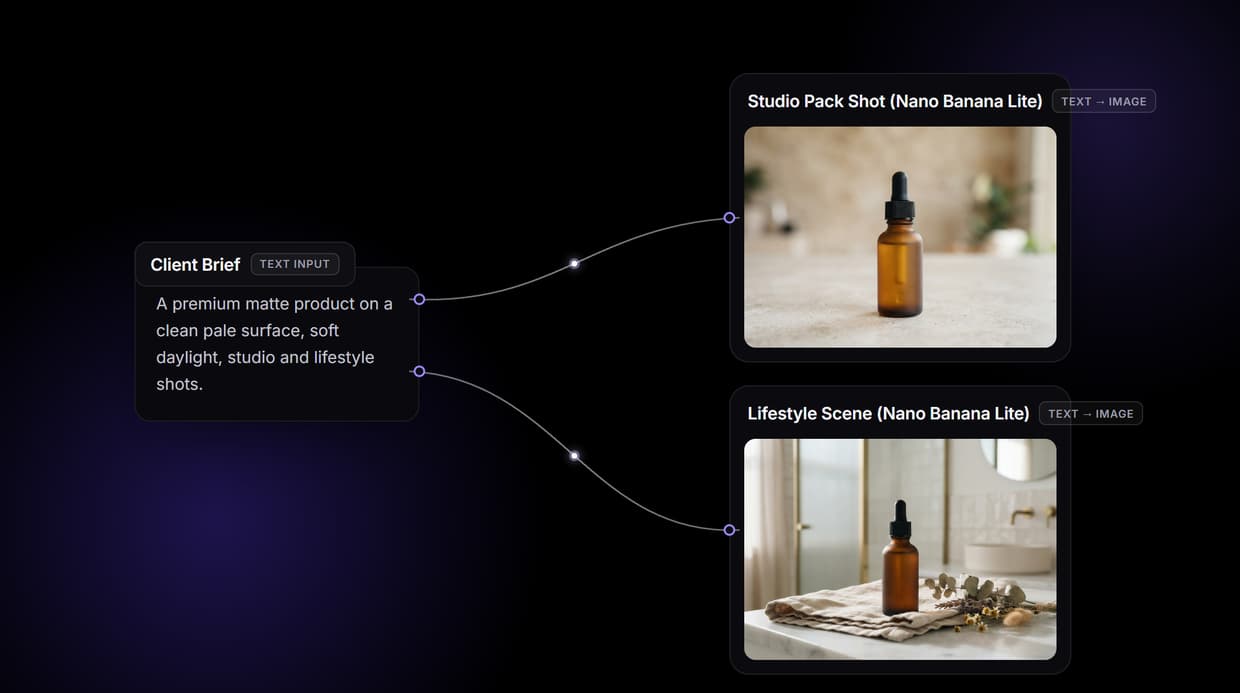
The core difference is structural. Instead of one model producing one video, you build a node graph: a script node feeds an avatar or video model, that output feeds an editing node, and the chain re-runs with new inputs. A client's approved format becomes a reusable asset rather than instructions someone has to remember. Swap the product image and hook text, re-run, and lighting, pacing, caption style, and aspect ratio stay identical across every variation.
Model choice is not locked. The same canvas calls different image, video, and voice models per node, so when a better avatar model ships you replace one node instead of migrating platforms. Batch runs push a list of hooks through the full chain in one pass, which is the practical difference between 5 variations and 40, a pattern described in the UGC video automation guide for agencies.
Verdict: the strongest option if your bottleneck is repeatable volume across multiple clients. Less suited to someone who wants a single finished video with zero setup.
2. Arcads: Best for Actor Realism
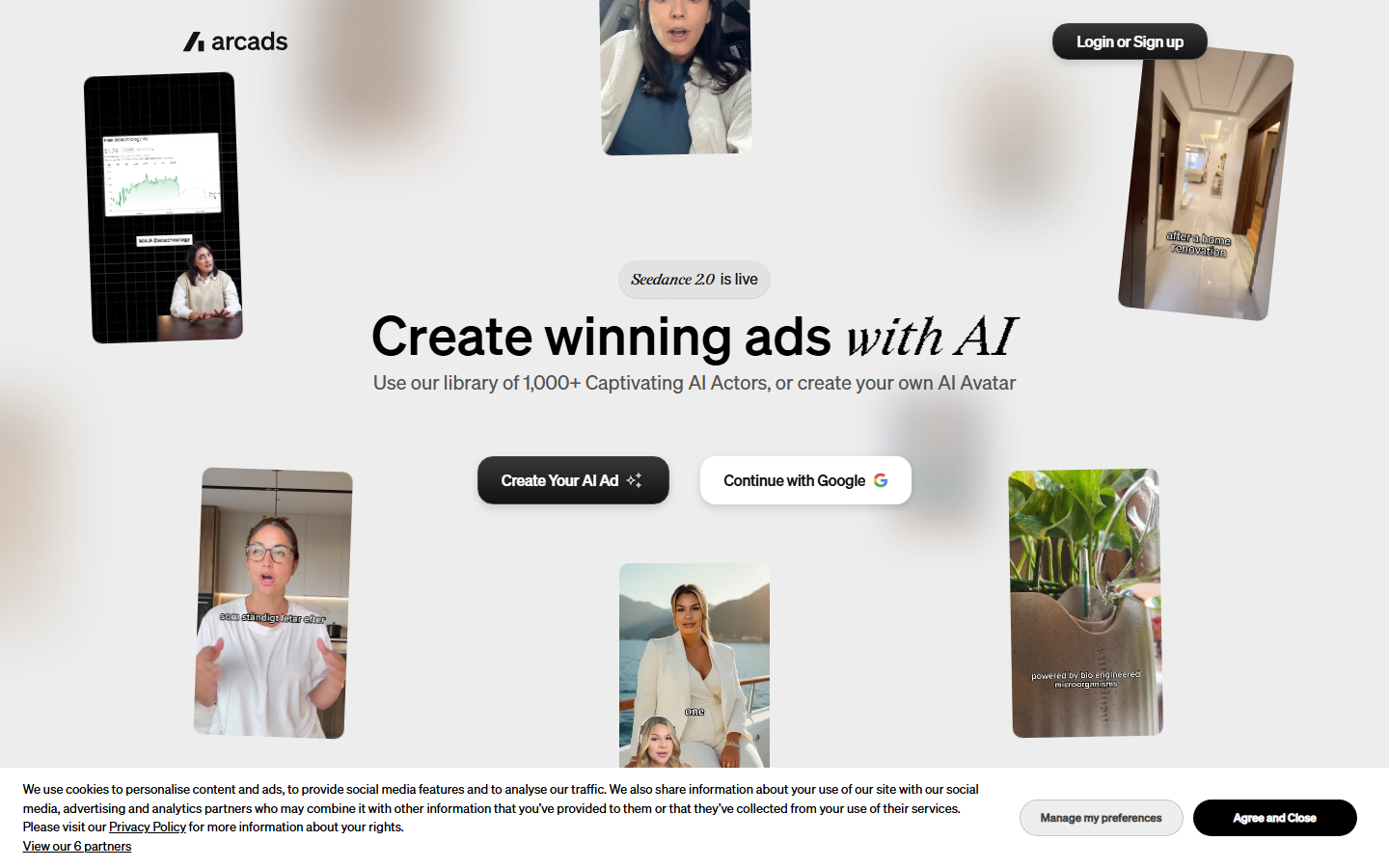
Arcads built its reputation on AI actors that read a script naturally enough to pass as a real creator in a feed. Paste a hook, pick an actor, and get a talking-head clip with believable delivery and micro-expressions. The roster skews North American and European across a wide age range, which matters when a client wants the presenter to match their buyer.
Where it stops is everything after the talking head. Product B-roll, on-screen text, and final editing happen elsewhere, so Arcads is one stage in a chain rather than an end-to-end tool. Pricing starts around $110 per month for a fixed allowance, reasonable per clip but steep at agency volume. Teams weighing actor-led against template-driven output usually start with the UGC style ads breakdown.
Verdict: best actor performance in the category, but plan for a separate finishing step.
3. Creatify: Best for Ecommerce Volume
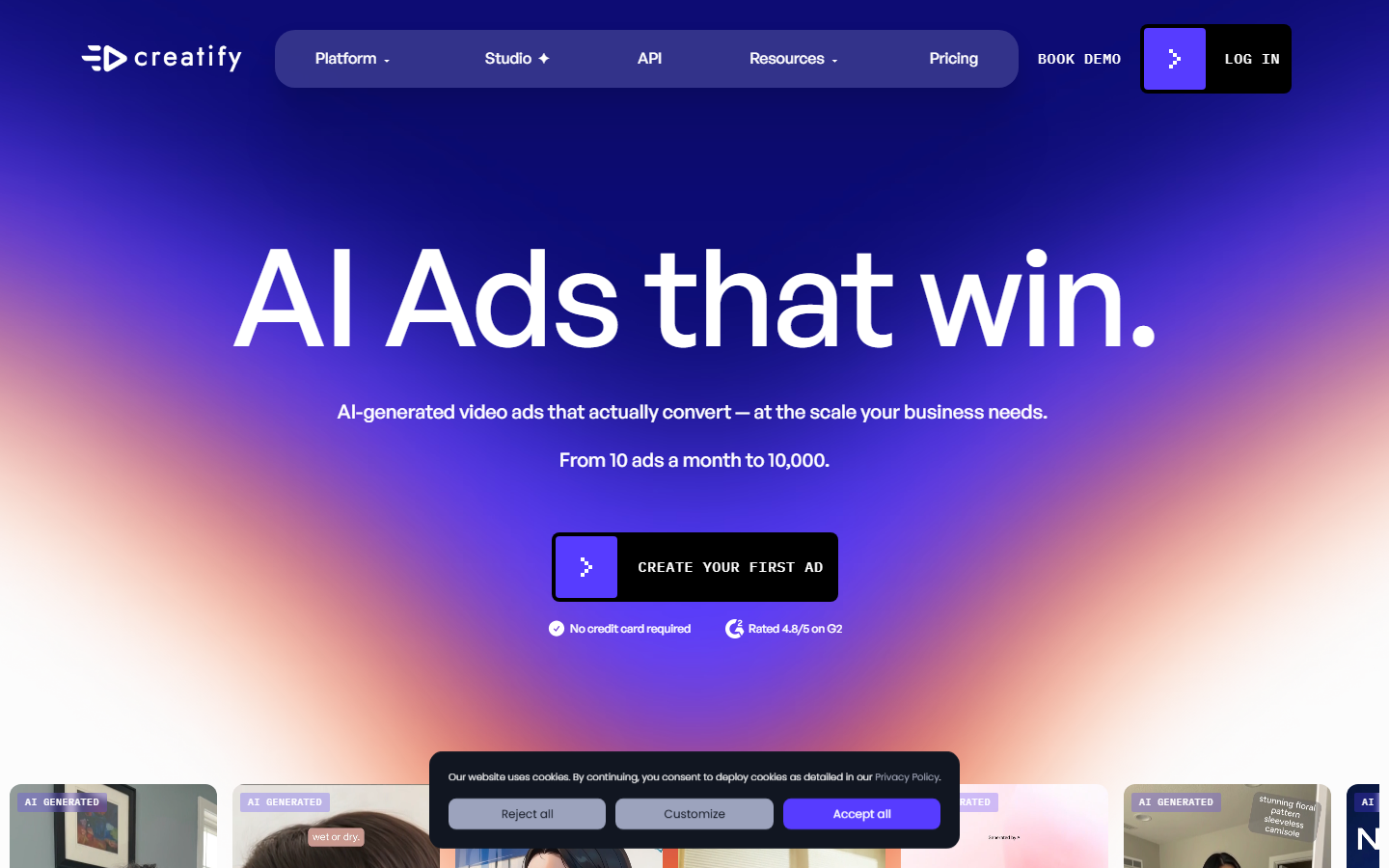
Creatify takes a product URL, scrapes the images and copy, and returns multiple ad variations without a brief. For ecommerce clients with a live catalog this removes the slowest step, asset collection. Batch mode generates several hooks and formats at once, sized for TikTok, Reels, and Shorts by default.
The tradeoff is creative control. Scraped-and-assembled ads look competent rather than distinctive, and heavy customization means fighting the automation. Most agencies use it for first-round testing, then rebuild the winners elsewhere. Its batch behavior is covered further in the notes on mass-producing UGC ads.
Verdict: fastest path from product page to testable ads, weakest on brand-specific creative.
4. MakeUGC: Best Avatar Library
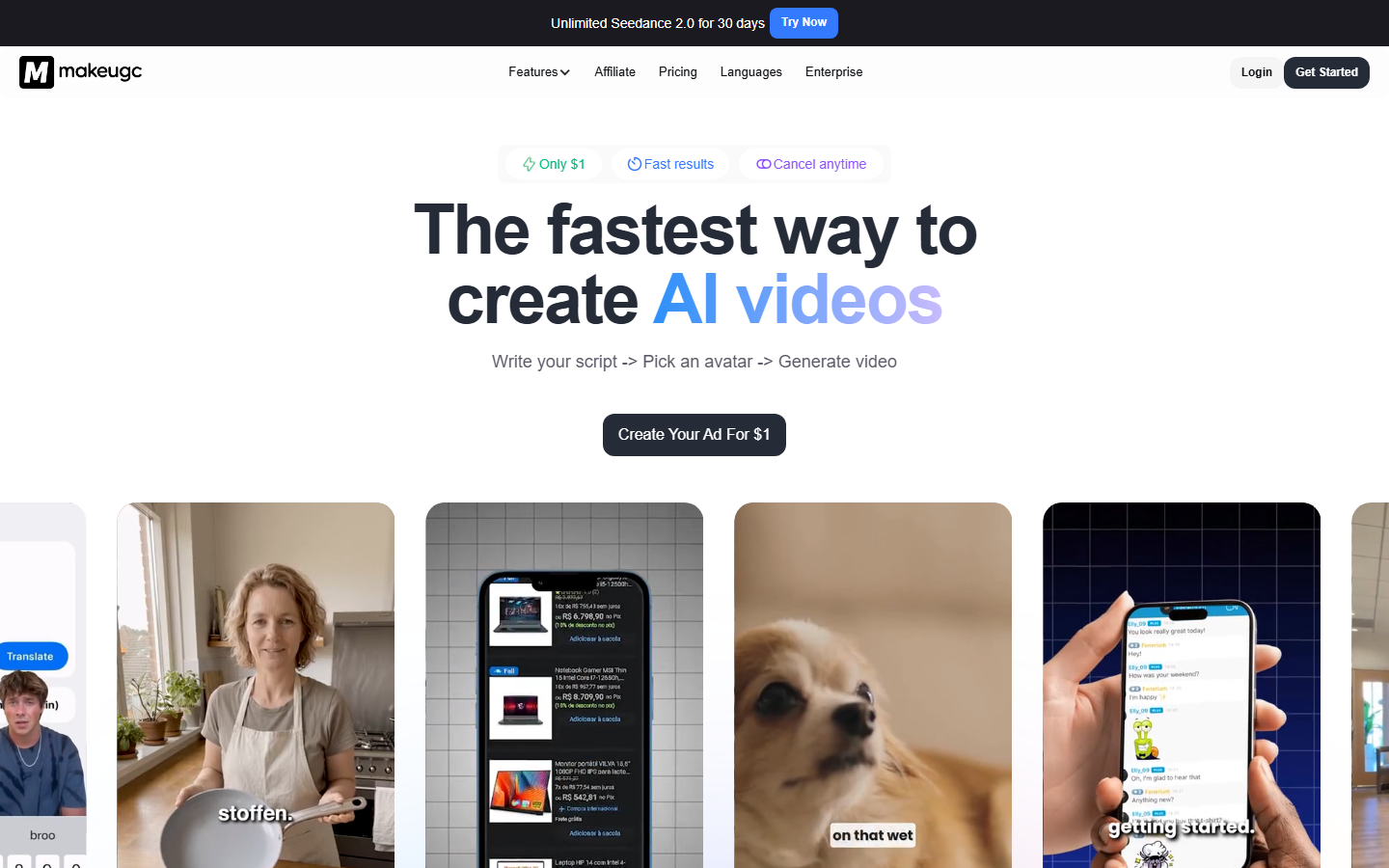
MakeUGC is purpose-built for UGC-style ads rather than general video, and its avatar roster is one of the broadest available. Scriptwriting help, multi-language output, and bulk creation are all first-class, and the interface is organized around campaigns instead of single files, which suits account managers running several brands.
Realism sits a step behind the actor-first platforms, and product demonstrations stay out of reach because avatars hold and gesture rather than genuinely use a product. Pricing is credit-based with agency tiers. If you are weighing similar platforms, the MakeUGC alternatives comparison lays out the feature-by-feature differences.
Verdict: strong agency ergonomics and language coverage, mid-tier realism.
5. HeyGen: Best for Localization
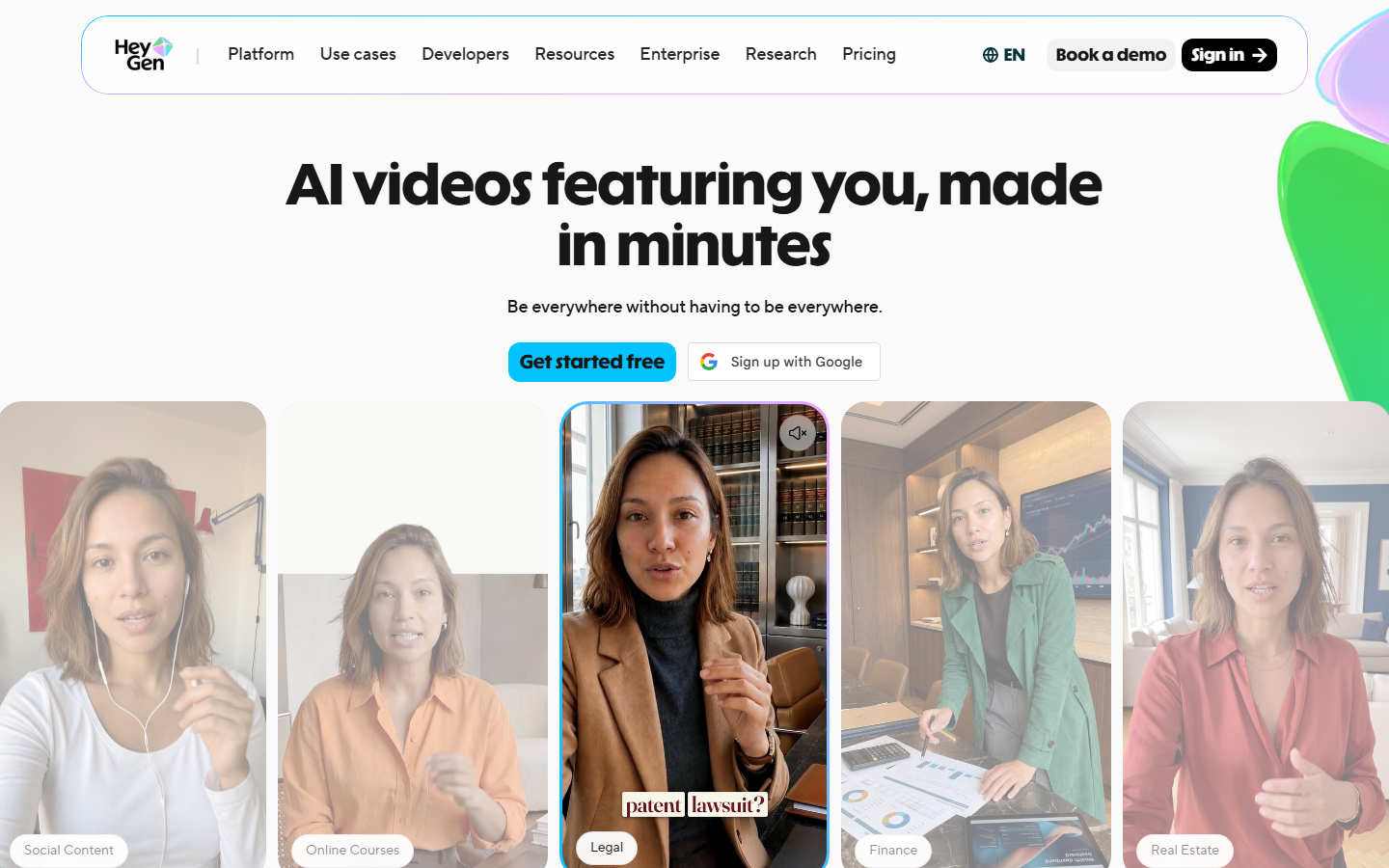
HeyGen produces the most convincing avatar lip-sync in this group, and its translation feature is the real agency argument: localize one winning ad into dozens of languages while preserving the original speaker's voice. For multi-market clients, that turns a proven creative into a regional rollout without recasting or rerecording.
It is a general video platform rather than a UGC specialist, so default output reads corporate unless you push the framing and delivery toward casual. An API covers teams wiring it into their own stack, which is how most automation-minded agencies use it, similar to the approach in automating UGC video creation.
Verdict: the localization play, and the safest choice when lip-sync quality is non-negotiable.
6. TopView: Best for Ad Remixing
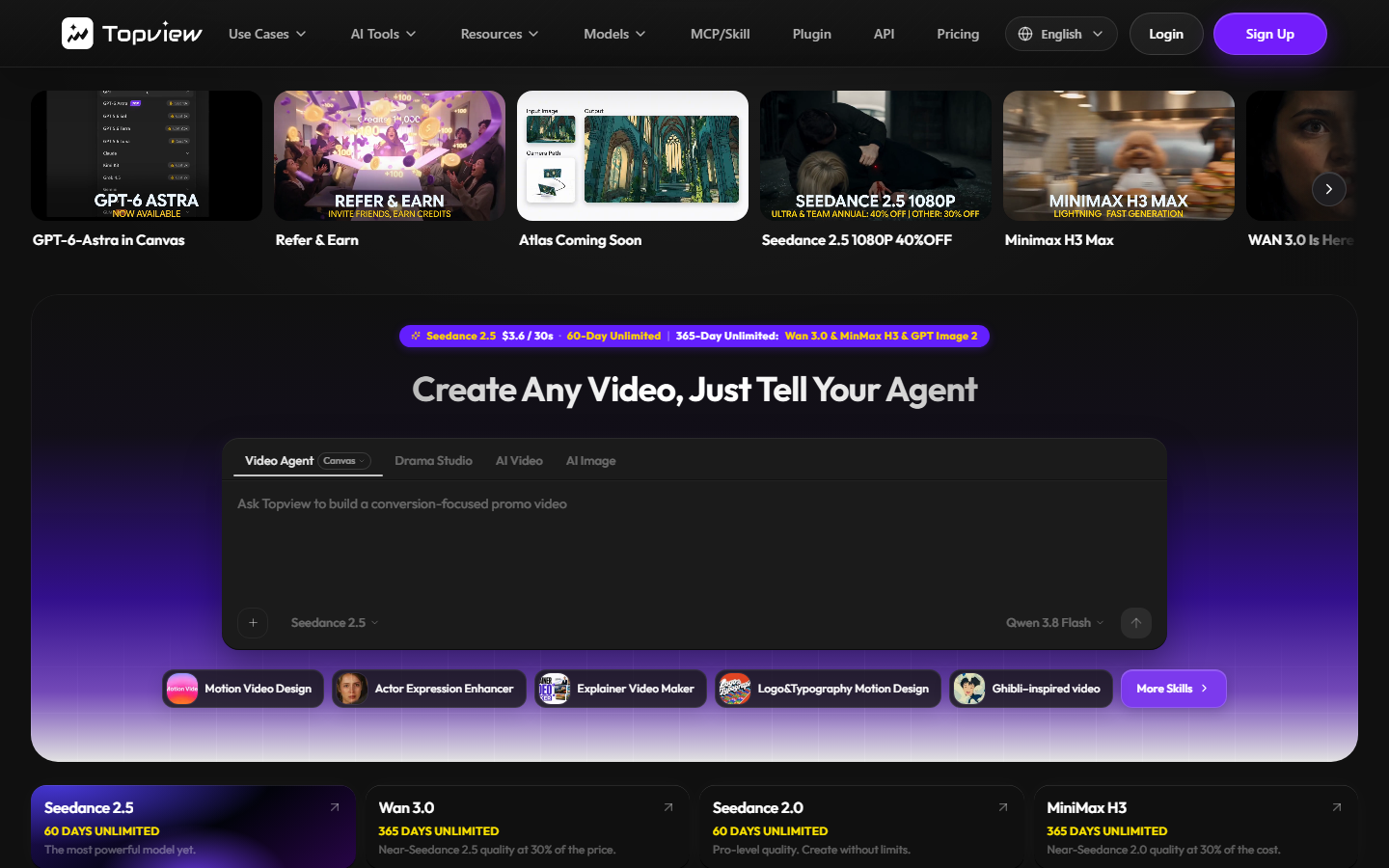
TopView works backward from ads that already perform. Feed it a proven video and it returns variations with different hooks, pacing, and presenters while keeping the structure that made the original work. That maps onto the iterate-on-winners half of a media buying cycle, where most creative budget goes.
It needs a winner to start from, so it is a poor fit for a new account with no creative history, and output quality tracks the input closely. Teams pairing it with scaling plays should look at the scaling ads with UGC roundup.
Verdict: excellent for scaling proven creative, not for cold starts.
7. Captions: Best for Post-Production
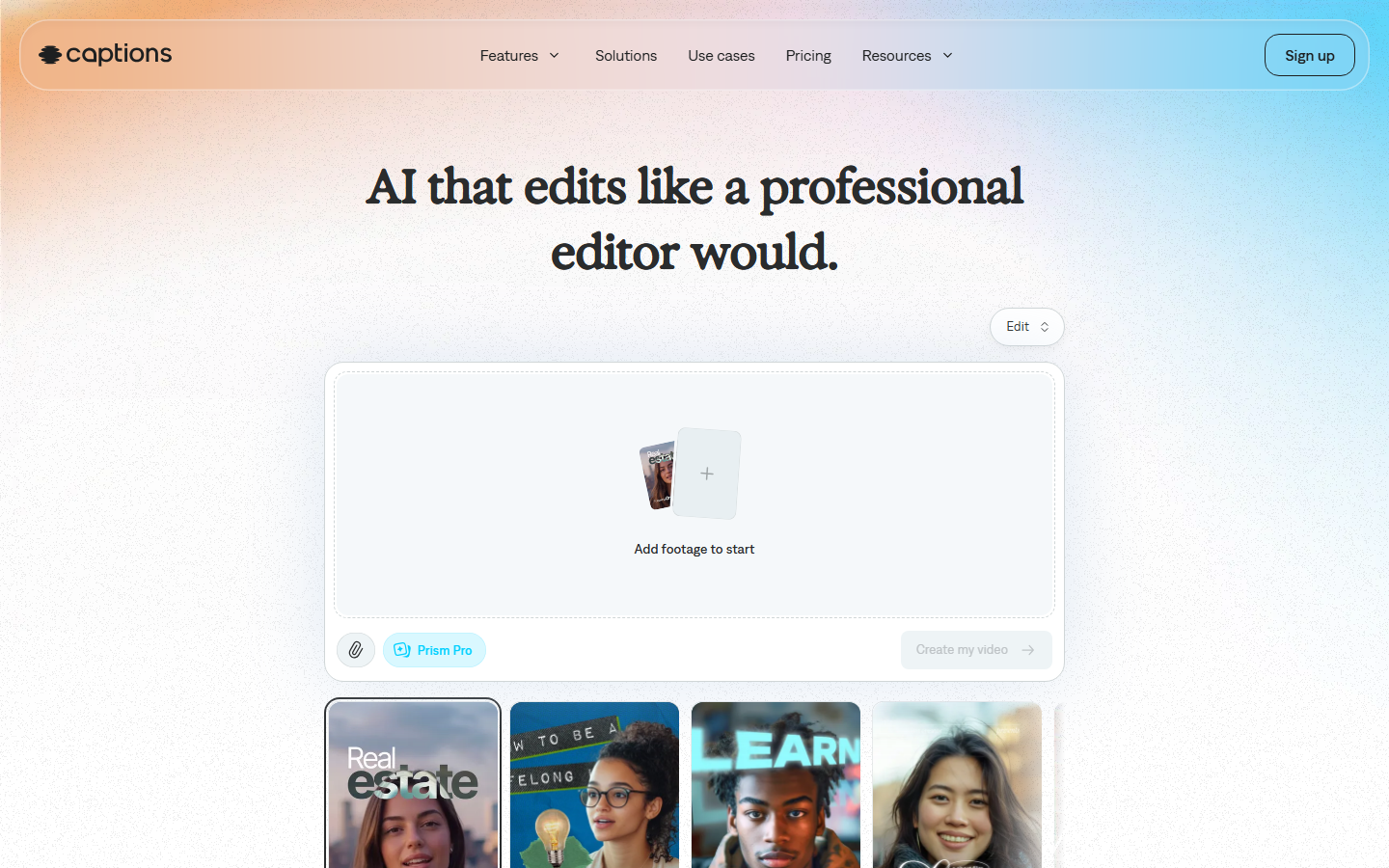
Captions handles the finishing layer: auto-captioning with styled presets, filler-word removal, eye-contact correction, and trimming. It does not generate an ad from nothing, which is exactly why it belongs in an agency stack. Whatever produced the footage, human or AI, this is where it gets platform-ready.
Caption styling is the practical win. Consistent on-brand subtitles across every asset are visible to clients and tedious by hand, and presets make it one click. Mobile-first workflows are well supported, desktop batch processing less so. It pairs with platform-specific output rules such as those in the TikTok UGC ads tool guide.
Verdict: the finishing tool, not the generator.
8. Icon: Best for Creative Testing
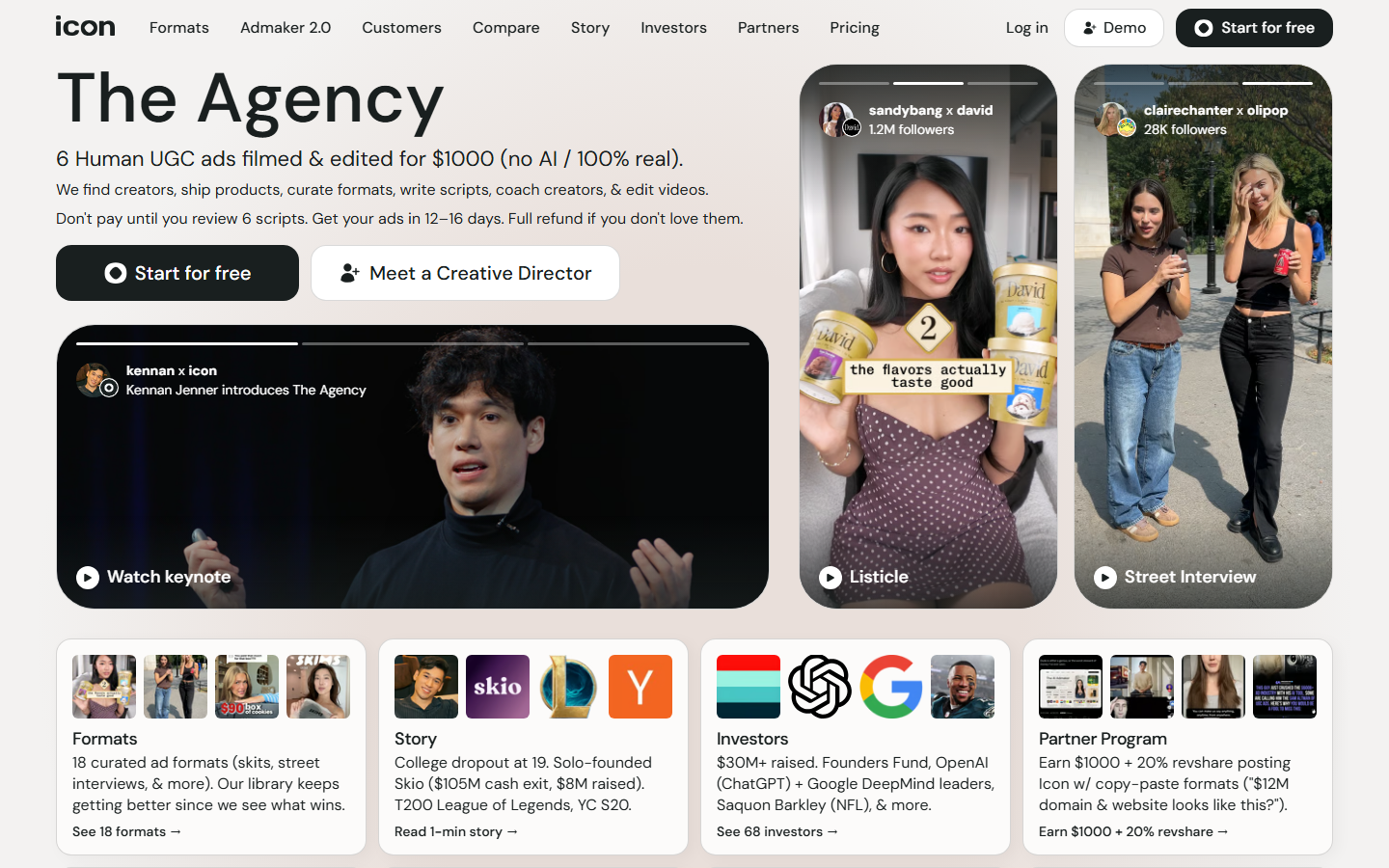
Icon closes the loop between generation and performance. It organizes creative into testable sets, tracks which hooks and formats win, and feeds that into the next production round. The reporting is the product: showing a client which of 30 variations drove results is a retention argument as much as a creative one.
As a generator it is adequate rather than leading, so pair it with a stronger production tool upstream. The value is the testing discipline it enforces, the same logic behind the AI UGC agent approach.
Verdict: buy it for creative measurement, not for raw output quality.
Comparison Table
| Tool | Best For | Batch Generation | Multi-Client Setup | Localization | Starting Price |
|---|---|---|---|---|---|
| Wireflow | Repeatable multi-model pipelines | Yes, full chain | Yes, per-client canvas | Via voice models | Credit-based |
| Arcads | Actor realism | Limited | Manual | Limited | ~$110/mo |
| Creatify | Ecommerce volume | Yes | Workspace-level | Yes | ~$39/mo |
| MakeUGC | Avatar breadth | Yes | Campaign-based | Yes | Credit-based |
| HeyGen | Lip-sync and translation | Via API | Folder-based | Best in class | ~$29/mo |
| TopView | Remixing winners | Yes | Manual | Partial | ~$30/mo |
| Captions | Finishing and captions | Limited | Manual | Caption translation | ~$25/mo |
| Icon | Creative testing | Yes | Yes | No | Custom |
Building the Stack Instead of Picking One Tool
Most agencies run two or three of these together: one generator for volume, one finisher for consistency, one measurement layer. The failure mode is treating them as separate manual steps, since every handoff is where a file gets renamed wrong or a caption style drifts. Connecting the stages into one pipeline is what matters at 40 videos a month rather than four, a pattern laid out in the agency video content automation guide.
Start with one client and one format. Build the chain, run 10 variations, and compare how long the second batch takes against the first. If it is not meaningfully faster, the pipeline is not reusable and you are still doing manual work with better tools.
Try it yourself: the AI UGC ads workflow for agencies shows the node setup described above, pre-configured for multi-client batch runs.
Frequently Asked Questions
What is the best UGC ads tool for an agency in 2026? For agencies managing multiple clients, a pipeline tool that chains models and re-runs one format with new inputs beats a single-purpose generator, because the recurring cost is variations, not first videos. Arcads wins on actor realism alone, Creatify on ecommerce speed.
How many UGC ad variations should an agency produce per client? Most performance teams run 10 to 40 variations per campaign, varying hooks first, then formats, then presenters. Below 10 you do not have enough signal to identify a winner, and above 40 the incremental learning per asset drops sharply.
Can AI UGC ads actually outperform real creator content? On cold traffic they often match it, because the hook and offer carry most of the performance. Real creators still win where genuine product demonstration or an established audience matters, so agencies run both and let the data allocate budget.
How much do AI UGC ad tools cost for an agency? Entry plans run roughly $25 to $110 per month, but agency spend is driven by volume, not seats. At 200 to 400 videos a month expect $300 to $800 across a two or three tool stack, well below per-video creator rates.
Do these tools handle multiple client accounts separately? Support varies. Campaign-based and workspace-based platforms isolate assets and voices by default, while simpler tools rely on manual folder discipline. Check before onboarding a second client, since retrofitting separation is painful.
Which tool is best for localizing ads into other languages? HeyGen leads on voice-preserving translation, keeping the original speaker's voice across languages. MakeUGC and Creatify both offer multi-language output, though they regenerate rather than translate the existing performance.
Do I need a separate editing tool? Usually yes. Most generators produce a clip, not a finished ad, so captioning, trimming, and format-specific exports happen downstream. A pipeline with an editing stage built in removes that handoff.
Can these tools replace a creative strategist? No. They remove production time, not the judgment about which angle, offer, and audience to test. The biggest gains come from using the saved time to test more hypotheses, not simply to ship more videos.
Conclusion
Pick for the bottleneck that is actually costing you money. If it is realism, Arcads is worth the premium. If it is asset gathering, Creatify removes it. If it is market coverage, HeyGen's translation pays for itself on the first regional rollout. If it is the repeated work of rebuilding the same format for every client and every hook, a node-based pipeline is the structural fix, and Wireflow is built around that pattern, with dedicated agency workflows for teams running several accounts at once.
Would you rather we just built it?
We get on a call, learn your style, build the workflow, and ship the deliverables on a schedule. You keep the workflow either way.