Features
MiniMax API
Searching for the MiniMax API usually means you want MiniMax's video, voice, and music models callable from code.
That is what this page's workflow does: a Shot Brief wired into MiniMax Hailuo 03, published as one REST endpoint you call.
Free to build · no credit card · Read the agent docs · See how it works ↓
 Andrew Adams · Co-Founder & Operations at Wireflow ·
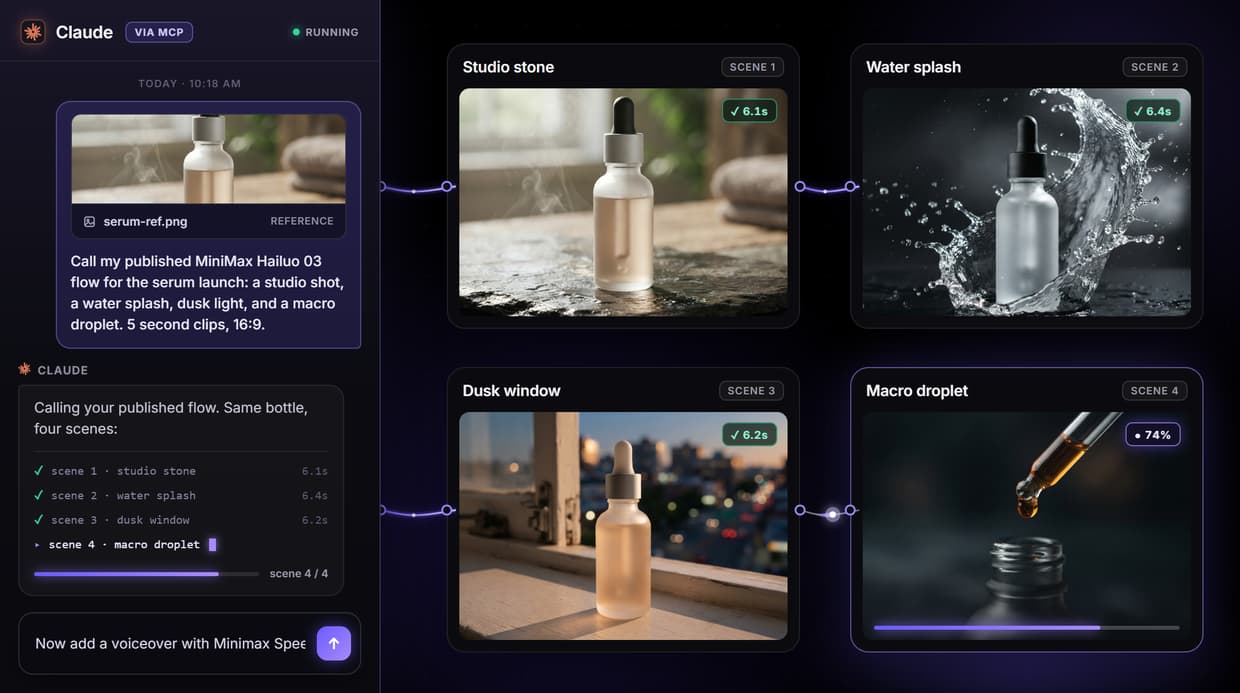
How to Use MiniMax API
Steps to get you started in Wireflow.
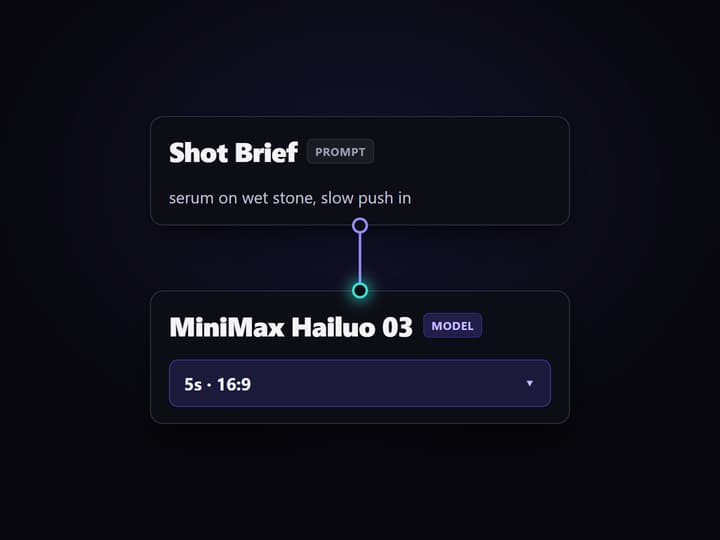
Wire the shot into the model
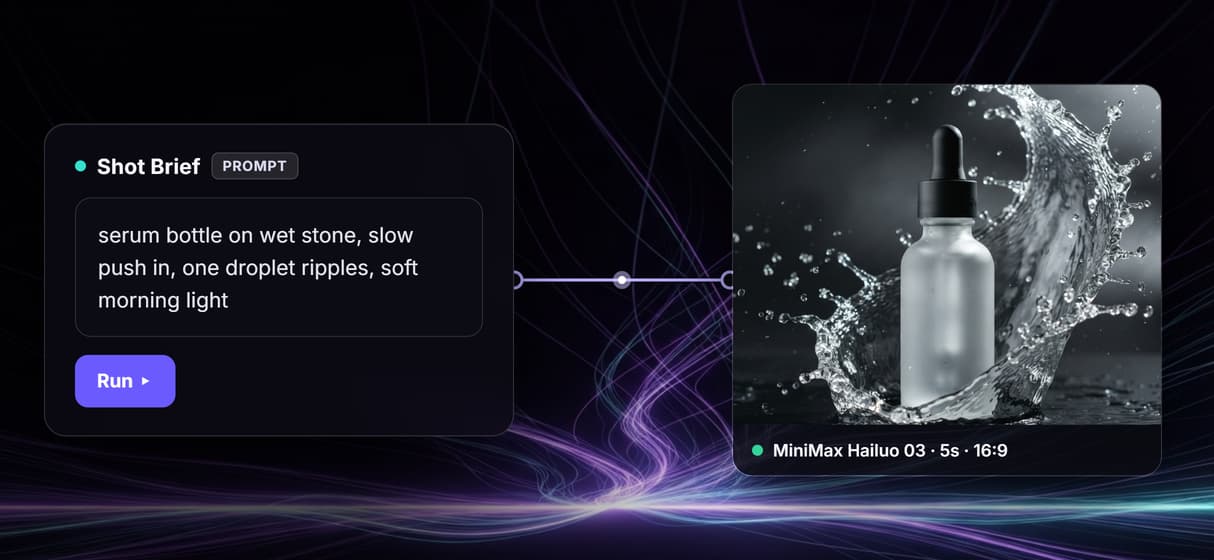
The whole flow is two nodes. A Shot Brief text node holds the scene description, and its output wires into the prompt port of a MiniMax Hailuo 03 node set to a 5 second 16:9 clip.
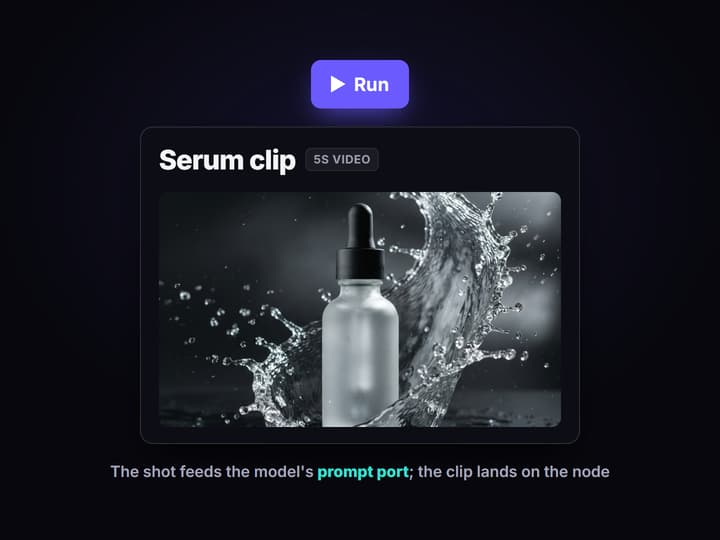
Run it on the canvas first
Type the shot you want and press Run; the finished clip lands on the model node. Iterate on wording here, where a weak prompt costs one run instead of a code deploy.
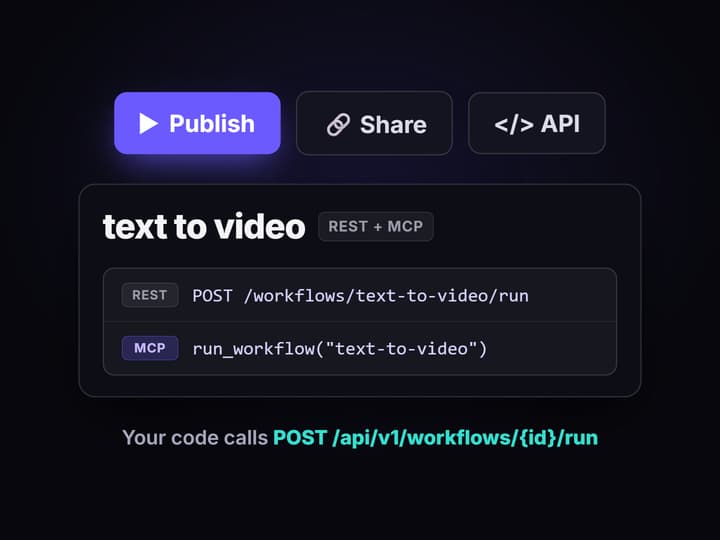
Publish it and call it from code
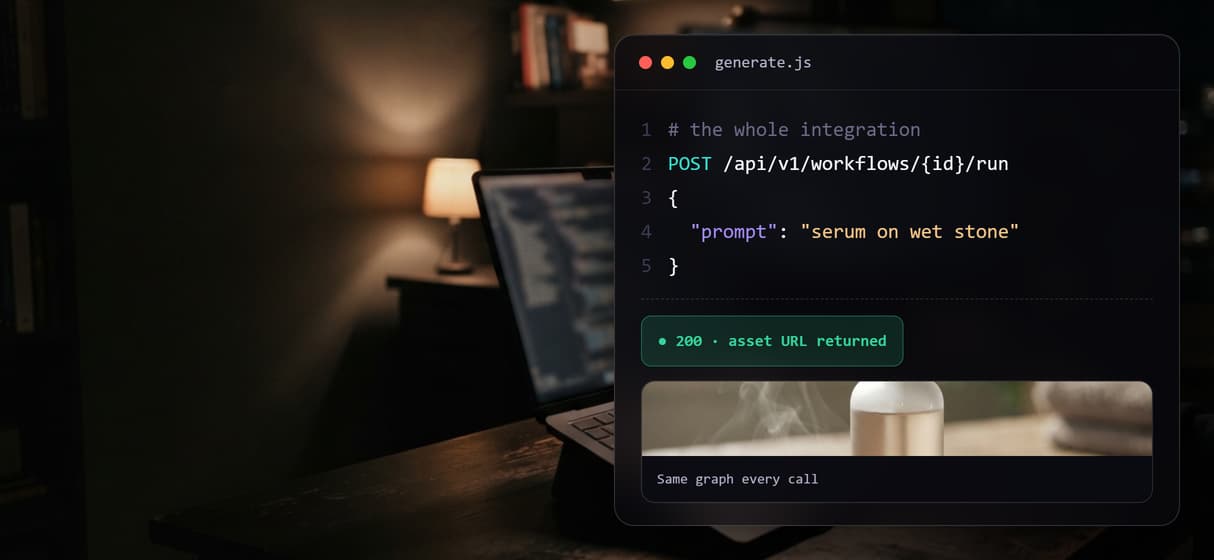
Publish the flow and it becomes a REST endpoint and an MCP tool with a typed prompt input. Your app posts the shot and gets the asset URL back, and the model can change without the call changing.
More Than Just MiniMax API
A shot in, a 5 second clip out
This page's flow is the smallest useful video API: a Shot Brief wired into MiniMax Hailuo 03 at 5 seconds, the same graph any text to video call walks.
Swap the model, keep the endpoint
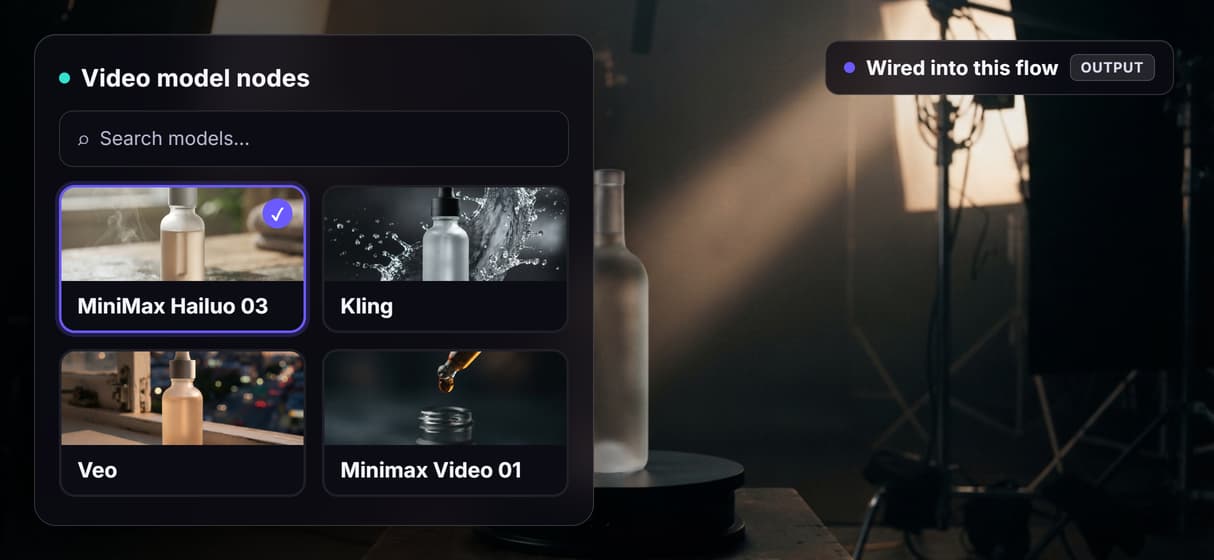
The model is a node, not a vendor lock: swap Hailuo 03 for Kling or Veo on the AI canvas with a REST API and the URL your app calls never changes.
Video, voice, and music from one key
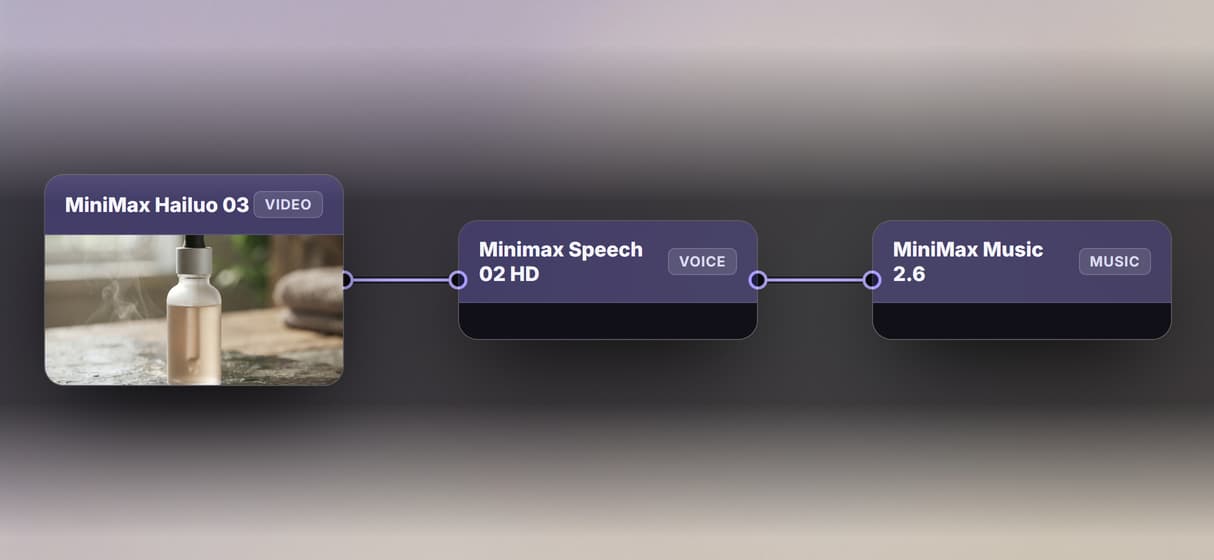
Hailuo video, Minimax Speech, and MiniMax Music all run as hosted nodes, so one AI content generation API key reaches every modality.
One flow, a whole feed
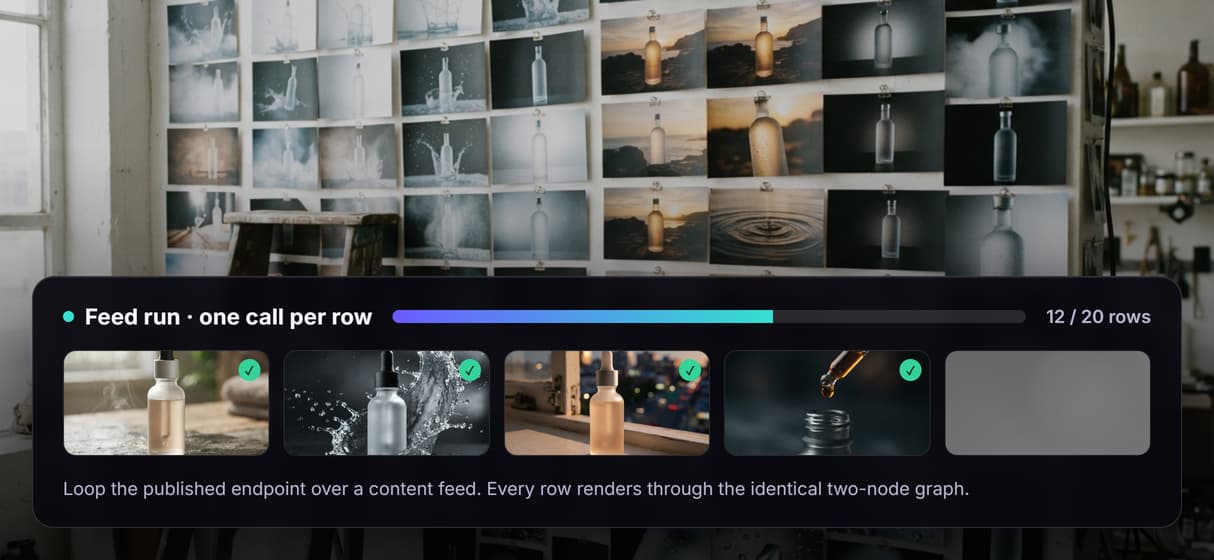
Call the published endpoint once per row of a content feed and every render walks the identical graph, which is what batch AI generation looks like.
Grow the graph, not your client code
Add a voiceover or music node after the clip and republish; your integration still makes one call, the point of AI model chaining.
AI Models Available
Automate Any Workflow
Included in Every Plan
An honest answer to the MiniMax API search
MiniMax runs its own API for its own models. If you specifically need those models or the tooling built around them, that API is the right tool, and Wireflow will not pretend otherwise: it does not host, proxy, or resell MiniMax's API, and the two platforms are not affiliated.
What most teams typing this search actually need is programmatic video generation they control: a strong model, callable from code, swappable when a better one ships. That is what the workflow above is. A Shot Brief wired into MiniMax Hailuo 03 makes a working text to video endpoint, and publishing it turns the graph into the API your product calls. You iterate on the canvas; your codebase keeps one URL.
What the MiniMax workflow API can do
MiniMax models as nodes
Hailuo 03, Hailuo 03 Max, Minimax Video 01, Minimax Speech 02 HD, and MiniMax Music 2.6 all run as canvas nodes.
One key, three modalities
Reach MiniMax video, voice, and music from a single Wireflow key instead of a separate meter per modality.
Chained post-processing
Wire a voiceover, music, or upscale node after the clip; the whole chain answers one API call.
Batch over a feed
Loop one workflow across a CSV or content feed and render every row through the same graph.
Canvas-first testing
Dial in the shot and settings visually, then publish; the endpoint serves exactly the graph you tested.
REST and MCP built in
Every published workflow is an endpoint and an MCP tool with typed inputs and asset URLs back.
Why the model node matters more than the model
Video models age in months. The model that wins on motion today loses to a release that ships next quarter, and an integration welded to one vendor's API inherits that decay. On a canvas the model is one node in a graph: unplug Hailuo 03, drop in another video node, run the same shot, and keep whichever wins when you compare video models side by side.
Reproducibility is what makes the swap safe. Workflows are versioned server-side, so the five hundredth render walks the same graph as the first, and a model change is a deliberate new version instead of silent drift. The honest tradeoff: every generation spends credits, so a batch over a large feed is a budgeting decision, and building the graph itself costs nothing.
When MiniMax's own API is the better pick
If your product depends on MiniMax's specific models, their newest releases the day they ship, or API features Wireflow does not expose, use MiniMax's API; those live only there, and no canvas layer changes that. Wireflow also does not host MiniMax's text or reasoning models, is not a wrapper that proxies another vendor's private API, and does not run offline or support custom Python nodes.
Wireflow earns its place when the job is bigger than one fixed model: when you want to test shots visually before they hit production, chain a clip into voiceover or music, keep one endpoint while models rotate underneath it, or hand the whole workflow to an agent as an MCP tool. If that is the shape of your problem, the two-node flow above is the smallest honest start.
FAQs
Generating media programmatically with MiniMax's hosted models: developers call its video, speech, or music endpoints over HTTP and get assets back. If you need those specific models, use MiniMax directly; Wireflow is a separate platform and does not resell them.
Discover related AI tools
More From Wireflow
Written by
Andrew Adams · Co-Founder & Operations at Wireflow
Runs client operations and content strategy at Wireflow. Works directly with creative teams and agencies to build production AI workflows.
Open the two-node MiniMax flow behind this page
It is live on the canvas: a Shot Brief wired into MiniMax Hailuo 03 at 5 seconds. Run a shot, watch the clip land on the node, then publish your own copy as the endpoint your code calls. Building is free; generations are pay per run.