Best Suno MCP Tools in 2026


In this article▾
- Quick Summary
- How These Tools Were Ranked
- 1. Wireflow: Best Overall
- 2. AceDataCloud SunoMCP: Best Hosted Server
- 3. frankxai/suno-mcp-server: Best for Coding Agents
- 4. runapi-ai/suno-mcp: Best for Cost Control
- 5. CodeKeanu/suno-mcp: Best Minimal Setup
- 6. PiAPI: Best for Batch Volume
- 7. useapi.net: Best Account-Backed Route
- 8. Smithery: Best for Discovery
- 9. Composio: Best for App Routing
- Comparison Table
- How to Choose
- FAQ
- Conclusion
The best Suno MCP tools in 2026 let an AI agent write lyrics, pick a style, and hand back a finished track without you ever opening a browser tab. This guide ranks nine options by what they actually control, where the audio is rendered, and how long each one takes to wire up. Wireflow leads the list because it exposes a hosted node graph over MCP, so a music step can sit inside a larger media pipeline instead of standing alone.
Model Context Protocol changed how music generation gets used. Instead of an API you integrate once and babysit, Suno becomes a set of tools an agent can call mid-conversation: generate, extend, cover, separate stems, fetch credits. The catch is that the tools in this space are not interchangeable. Some are true MCP servers, some are API providers you point a server at, and some are registries or orchestrators that make the servers usable in production. If you are still choosing an engine rather than a protocol layer, our roundup of the best AI music generators for content creators covers that decision separately.
For a worked example of a generated track inside an ad, see our song ad build with the costs included.
Quick Summary
- Wireflow: hosted node graph over MCP, chains music with video and voice. Best Overall
- AceDataCloud SunoMCP: hosted server with the widest first-party tool surface. Best Hosted Server
- frankxai/suno-mcp-server: built for Claude Code and Cursor sessions. Best for Coding Agents
- runapi-ai/suno-mcp: task creation, polling, and pricing checks across model variants. Best for Cost Control
- CodeKeanu/suno-mcp: small server covering generate, fetch, and credits. Best Minimal Setup
- PiAPI: high-volume music endpoints behind your own MCP wrapper. Best for Batch Volume
- useapi.net: account-backed access for teams already paying for Suno. Best Account-Backed Route
- Smithery: registry plus hosted runtime for MCP servers. Best for Discovery
- Composio: managed auth and routing into a large app catalog. Best for App Routing
How These Tools Were Ranked
Four things decided the order. First, tool coverage: does the server expose generation only, or the full lifecycle of extend, cover, stem separation, and credit checks? Second, where the work runs, because a local server means your machine holds the audio and your key. Third, chaining, since a track is rarely the deliverable on its own. Fourth, setup measured in minutes. The same criteria produced our ranking of the best ElevenLabs MCP tools, and the pattern holds across audio vendors.
One clarification before the list. An MCP server publishes tools, an MCP client consumes them, and a registry distributes them. Several entries below are API providers rather than servers, which is deliberate: most Suno MCP servers are thin wrappers over a third-party API, so the provider you choose decides your rate limits, your latency, and your bill. The same layering shows up in image work, as our walkthrough of fal MCP explains.
Build this in Wireflow
Make the same kind of asset on a canvas you control, with a free account and no credit card.
1. Wireflow: Best Overall
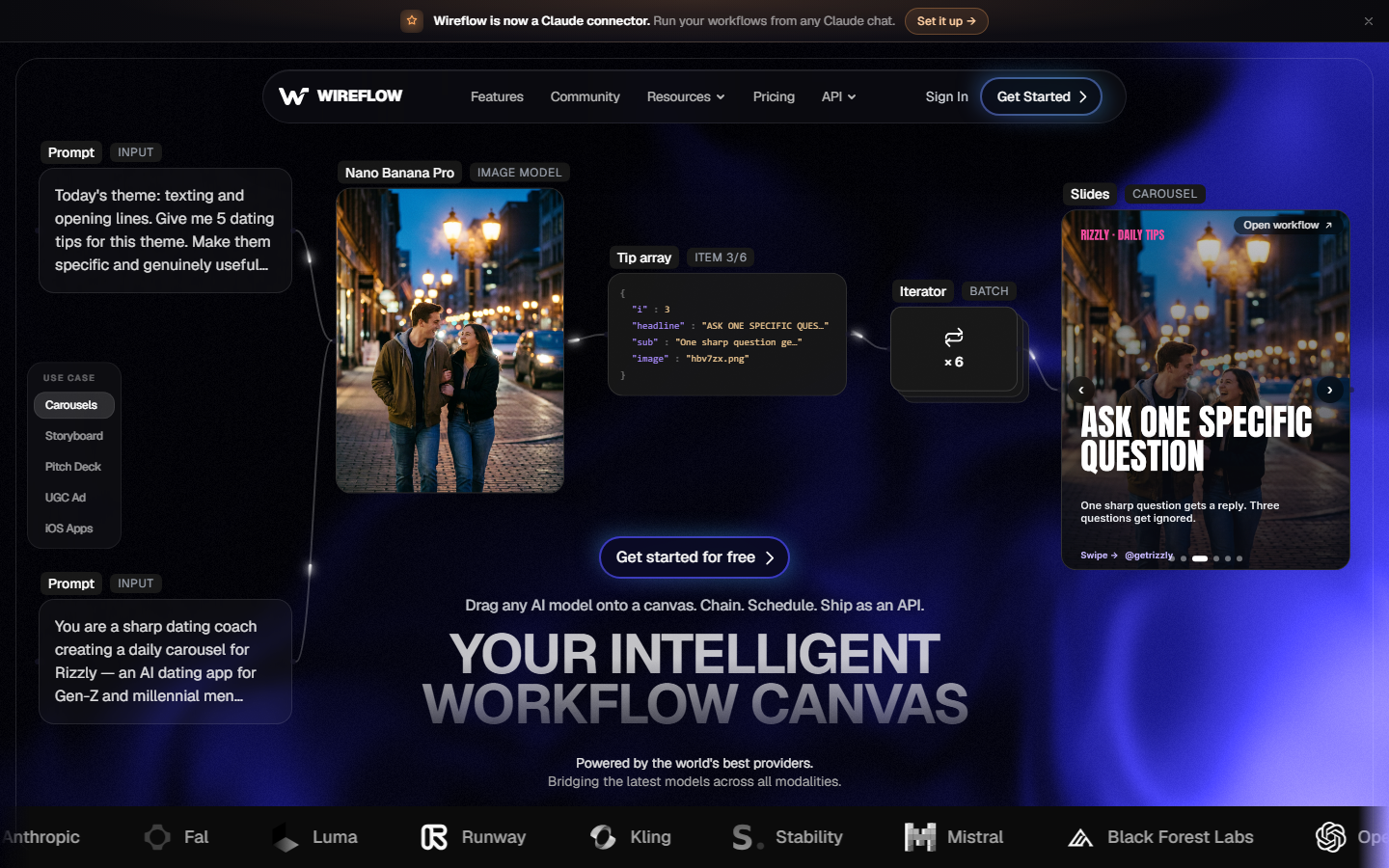
Wireflow is a node-based AI workflow platform whose published graphs are callable over MCP, so an agent triggers an entire pipeline rather than a single model call. Music work benefits from that more than most: a background track usually needs a style prompt, a generation step, a trim or loop, and then a mix against a video or a voiceover. For a hands-on look at this in action, check out the AI music generator feature page.
You build the graph once on the canvas and publish it. The agent then calls the workflow with a prompt and a duration, polls, and receives a hosted audio URL that does not expire when your laptop sleeps. That workflow is published as a hosted music MCP tool your agent can call directly. Suno itself is not available on Wireflow, so the music node runs ElevenLabs Music. The same graph is reachable from Claude, Cursor, or a scheduled job without being rebuilt for each one, and swapping the underlying music model later is a node change rather than a code change. Teams scoring a whole video usually pair it with an AI background music generator setup for consistent loudness across scenes.
Strengths: hosted execution, multi-model chaining, one graph reusable from any MCP client, durable output URLs. Limits: you build the graph before the first call, which costs a few minutes up front. Credit-based pricing means high-volume batch scoring deserves a quick cost check first.
2. AceDataCloud SunoMCP: Best Hosted Server
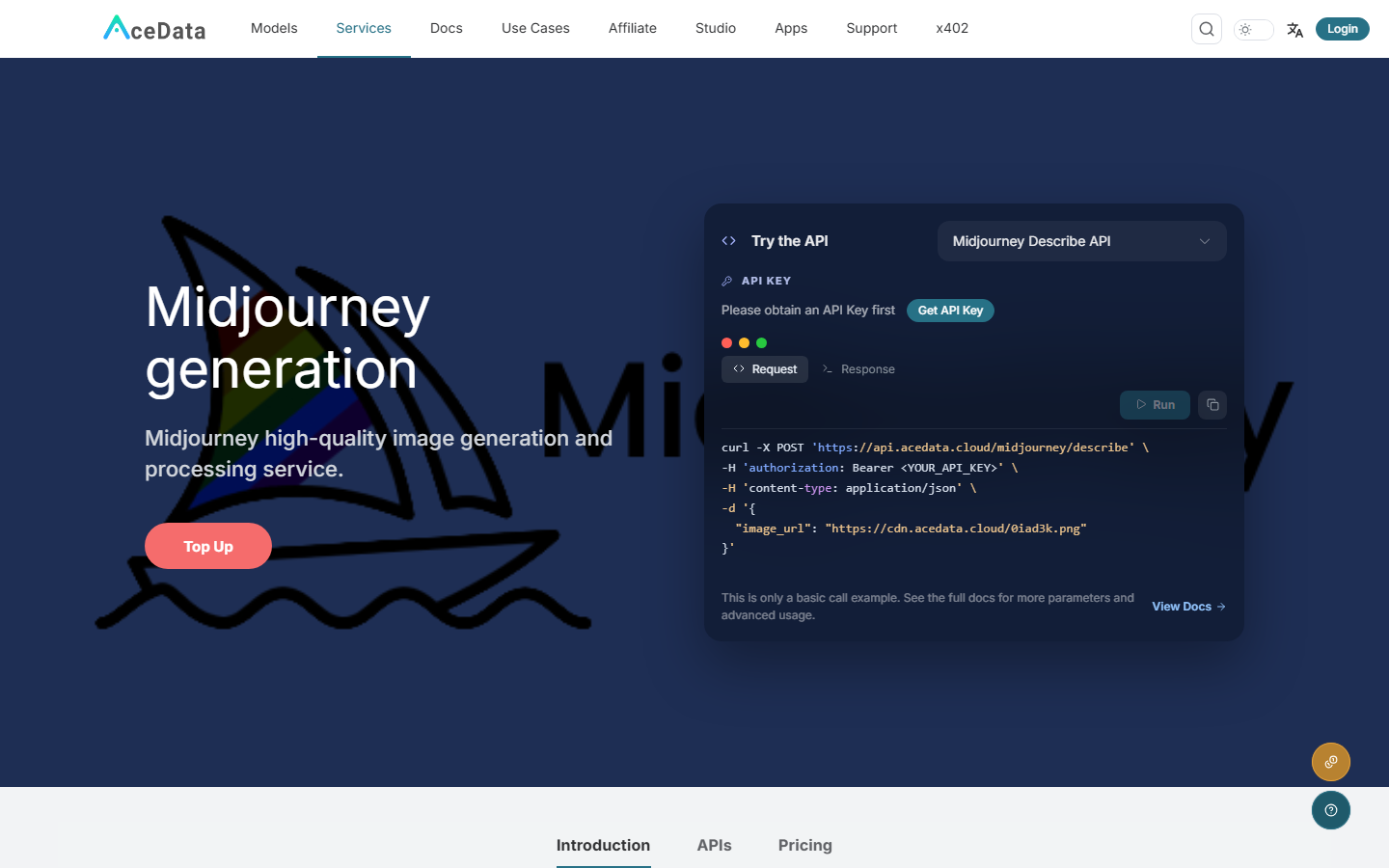
AceDataCloud SunoMCP is the most complete Suno server most people will find. It exposes the creative lifecycle rather than a single generate call: songs from a plain prompt or from custom lyrics with style control, extensions from a chosen timestamp, covers and remixes, stem separation, vocal extraction, lyric generation, and persona management for a consistent voice across a release.
Setup is the other reason it ranks here. The server is reachable at a hosted endpoint, so there is no local runtime to keep alive, no Python environment to pin, and no queue worker to babysit. You take a token from the AceDataCloud dashboard, drop the config into Claude Desktop, Cursor, or VS Code, and start calling. That hosted-endpoint pattern is the same one that made image servers practical, as our MCP server image generation example shows.
Strengths: broad tool surface, hosted endpoint, works across mainstream MCP clients, active maintenance. Limits: you are buying Suno access through an intermediary, so pricing and availability follow that provider rather than Suno directly.
3. frankxai/suno-mcp-server: Best for Coding Agents
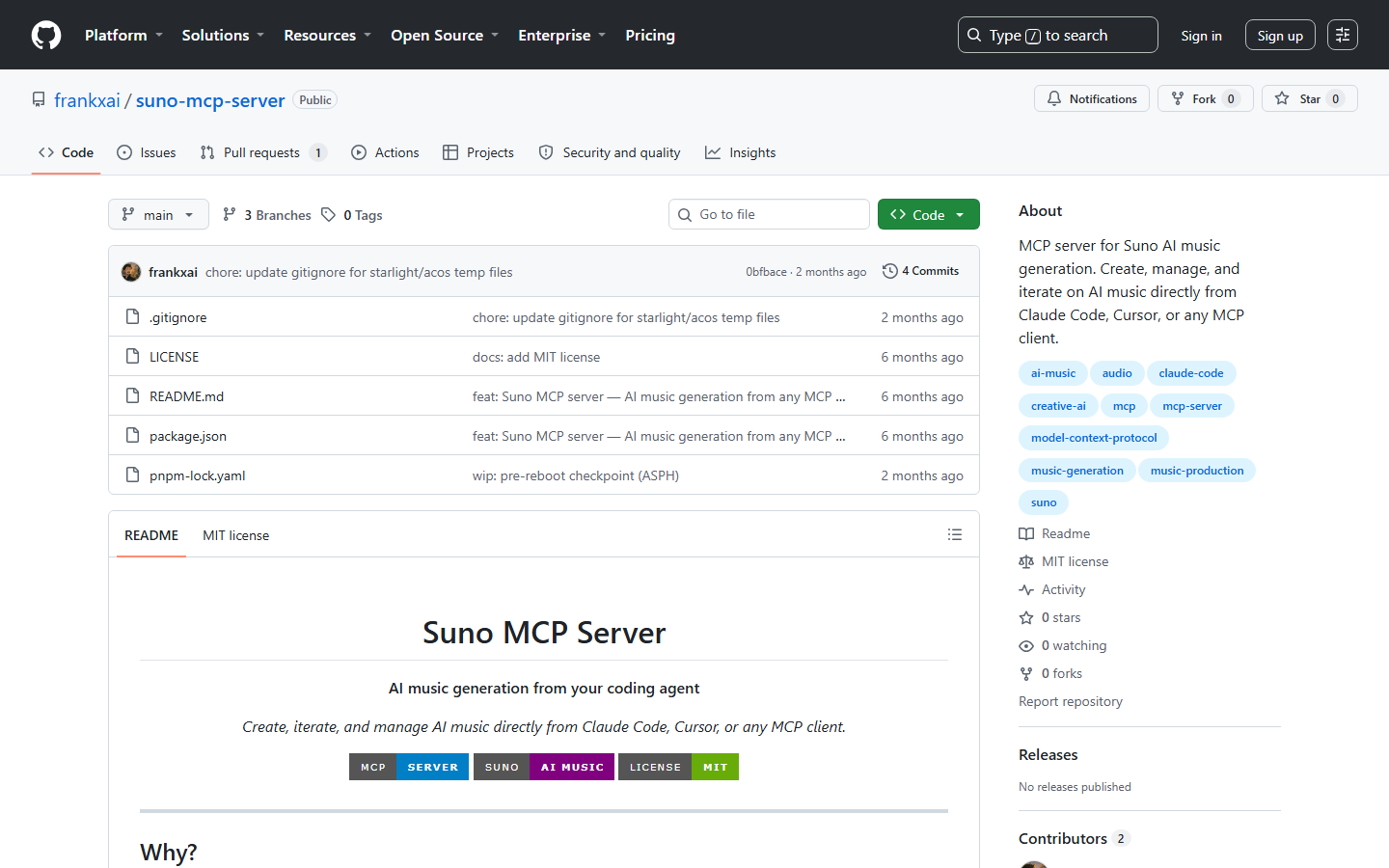
frankxai/suno-mcp-server is written for people who live in Claude Code or Cursor. It covers creation, track management, and iteration through extension, remix, and style transfer, and it ships a large library of genre prompt templates so the agent has a starting vocabulary instead of guessing at style tags.
The template library matters more than it sounds. Suno output quality is mostly a prompting problem, and an agent that can reach for a known-good descriptor set produces usable takes faster than one improvising. Keeping that iteration inside the editor also means the track path lands straight in your project config, the same repository-context advantage we describe for ComfyUI MCP tools.
Strengths: iteration-focused tools, prompt template library, natural fit with coding agents, open source and forkable. Limits: local by default, so long jobs are tied to your session, and you still supply your own upstream Suno access.
4. runapi-ai/suno-mcp: Best for Cost Control
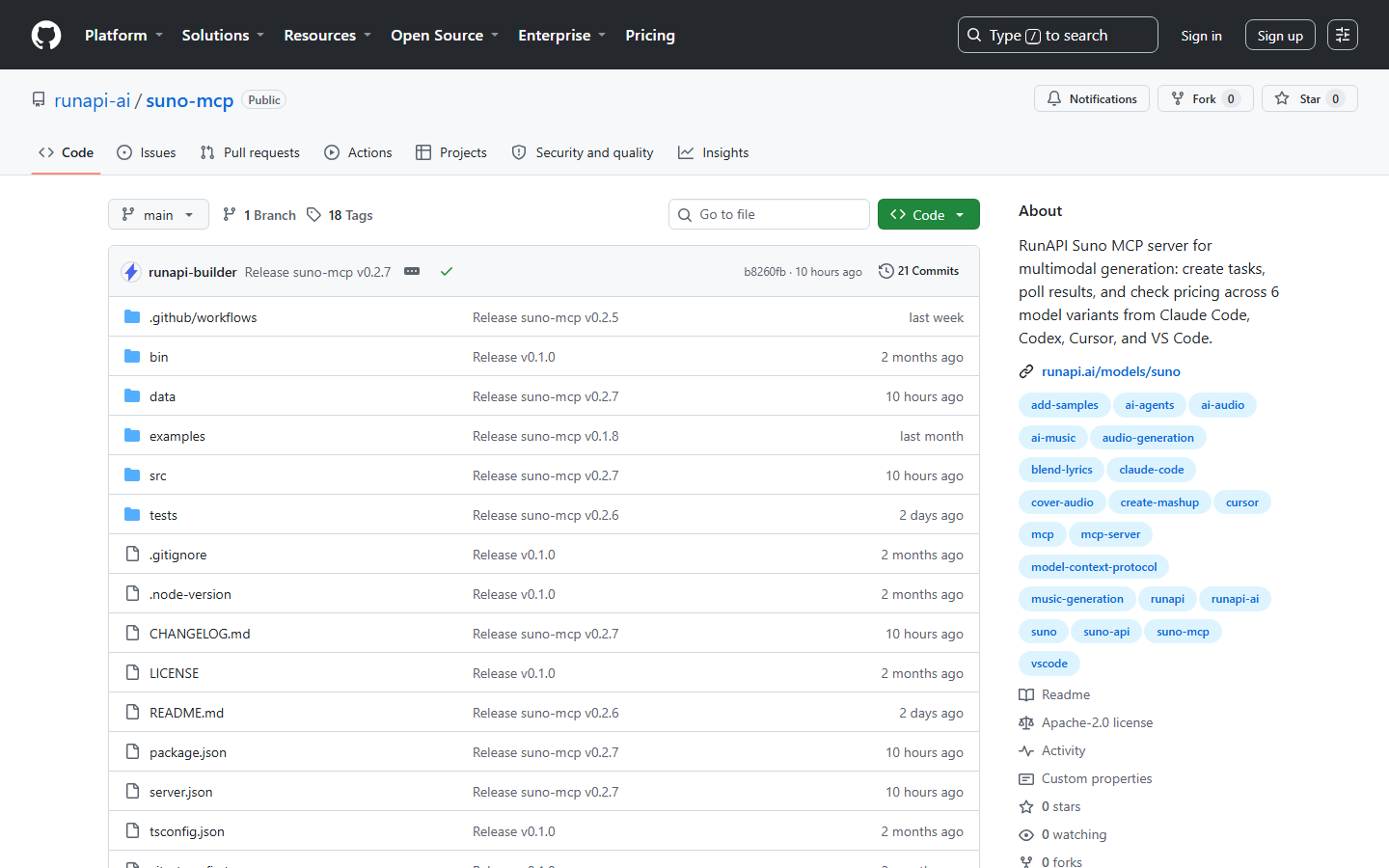
runapi-ai/suno-mcp takes a task-oriented shape: the agent creates a generation task, polls for the result, and can query pricing across several model variants before committing. It lists support for Claude Code, Codex, Cursor, Windsurf, VS Code, and Roo Code, which is a wider client matrix than most community servers bother with.
The pricing tool is the differentiator. Music generation is one of the few agent tasks where the cheap model and the expensive model both produce something listenable, so letting the agent check the rate before it spends is a real guardrail on an autonomous loop. Anyone comparing hosted inference providers on the same basis will recognise the pattern from our Replicate MCP tools roundup.
Strengths: explicit task and poll model, pricing visibility, broad client support, several model variants in one server. Limits: the polling pattern means the agent holds a loop open, and you are again routing through a third-party API layer.
5. CodeKeanu/suno-mcp: Best Minimal Setup
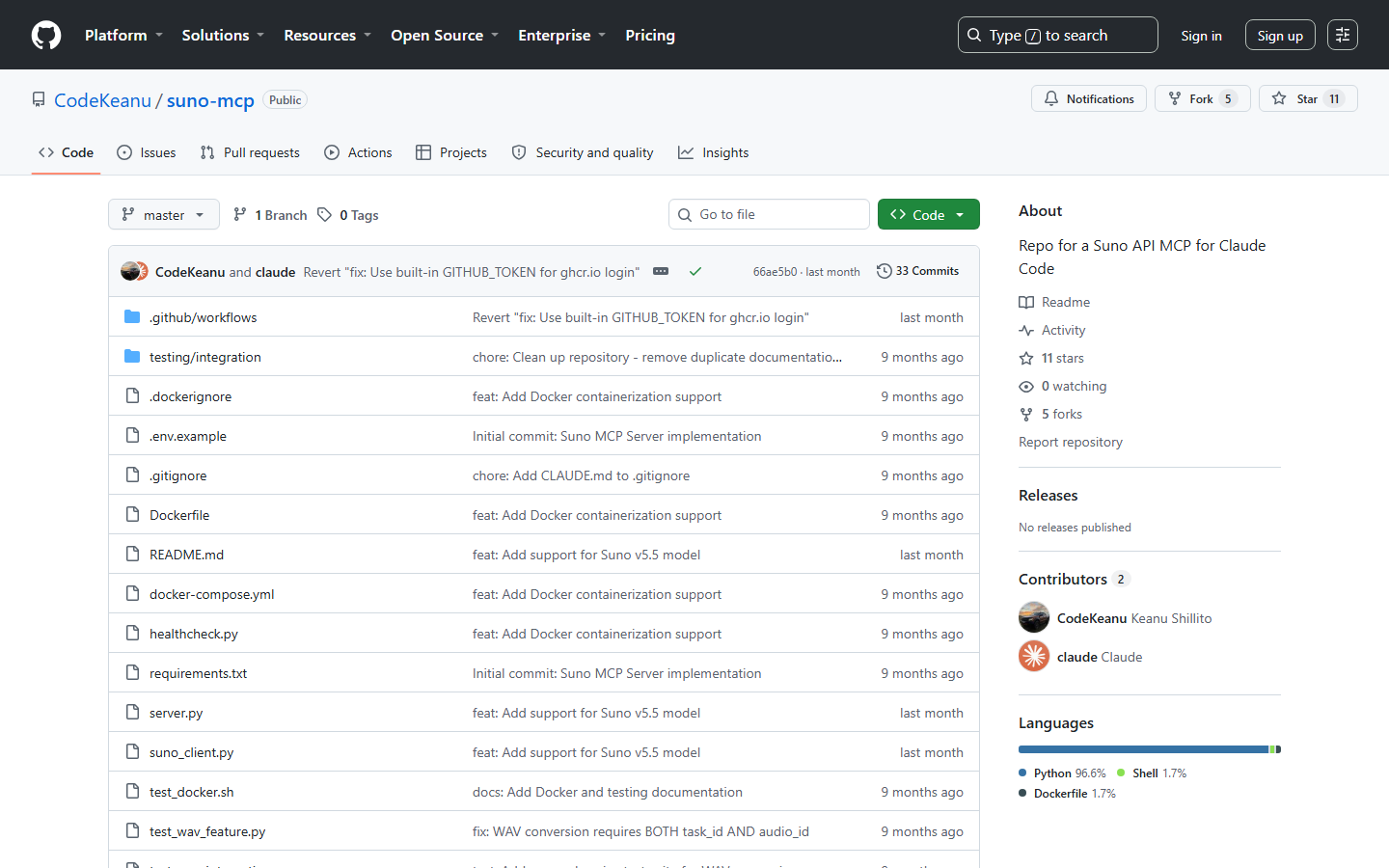
CodeKeanu/suno-mcp is the smallest useful option. It exposes music generation, track information retrieval, and a credit check over a short tool interface, and that is close to the whole surface. For a single-purpose agent that needs a background track and nothing else, less surface is a feature.
Small servers are also the easiest to read before you trust them with a key, which matters when the server is community-maintained and sits between your credentials and a paid API. If you want to understand what a server is actually doing before installing it, this is a reasonable first read. The same audit habit applies when you evaluate any of the MCP servers for video editing.
Strengths: tiny surface, quick to audit, low install cost, good for single-purpose agents. Limits: no extend, cover, or stem tools, so anything past first-pass generation happens elsewhere.
6. PiAPI: Best for Batch Volume
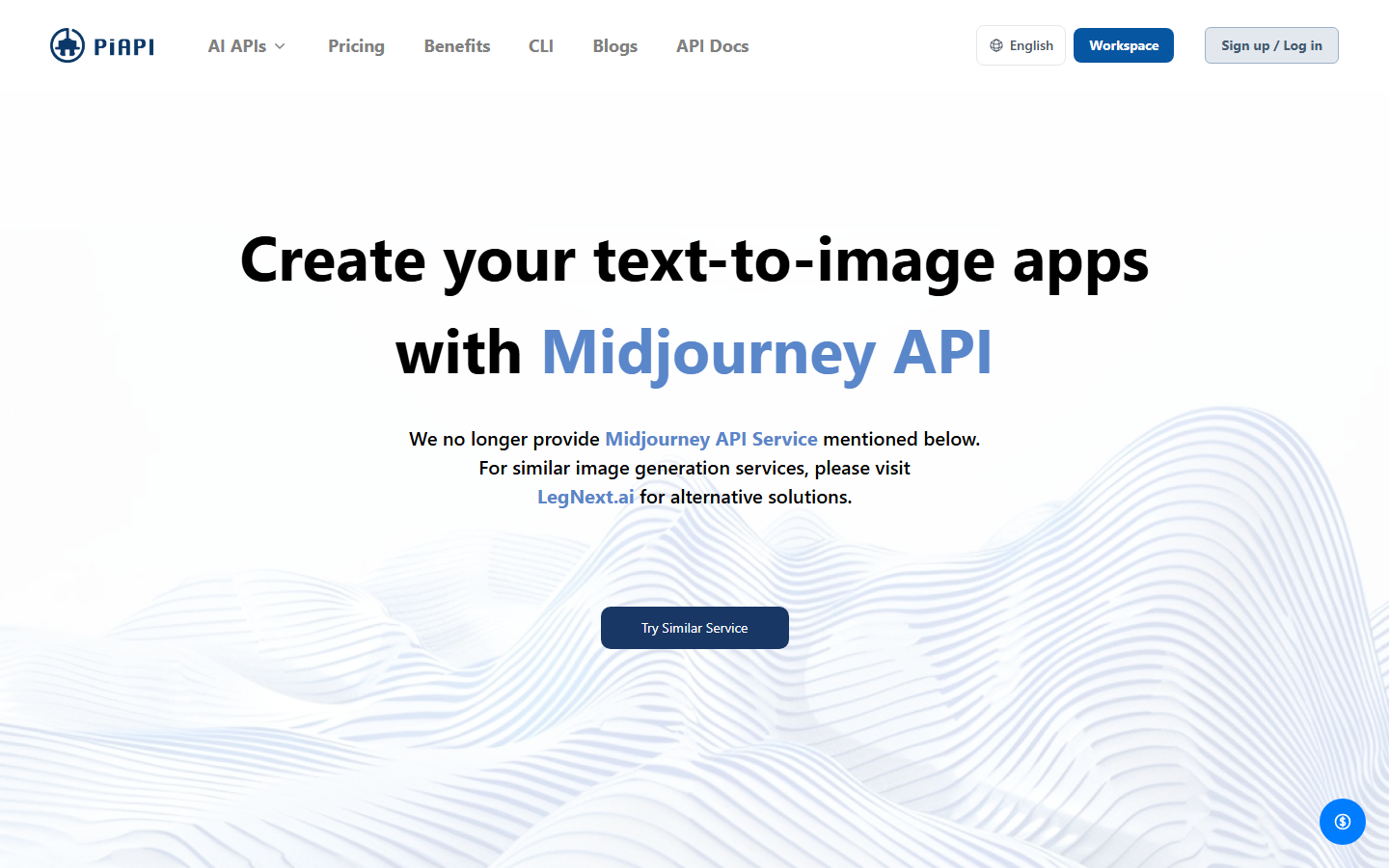
PiAPI is an API provider rather than an MCP server, and it earns a place because it is what a lot of Suno MCP servers are quietly pointed at. It offers music endpoints alongside image and video models, with the queue handling and concurrency controls you need once a job stops being one track at a time.
If you are generating dozens of variations for an ad set or a game level, provider behaviour under load decides whether the pipeline finishes. Wrapping a provider like this in a thin MCP server of your own is a common and sensible pattern, and it gives you one credential and one rate limit across media types instead of four. That consolidation is the same argument we make for AI image generation MCP tools.
Strengths: multi-model catalog beyond music, built for concurrency, straightforward to wrap in your own server. Limits: no MCP server of its own to install, so you write the wrapper or borrow one.
7. useapi.net: Best Account-Backed Route
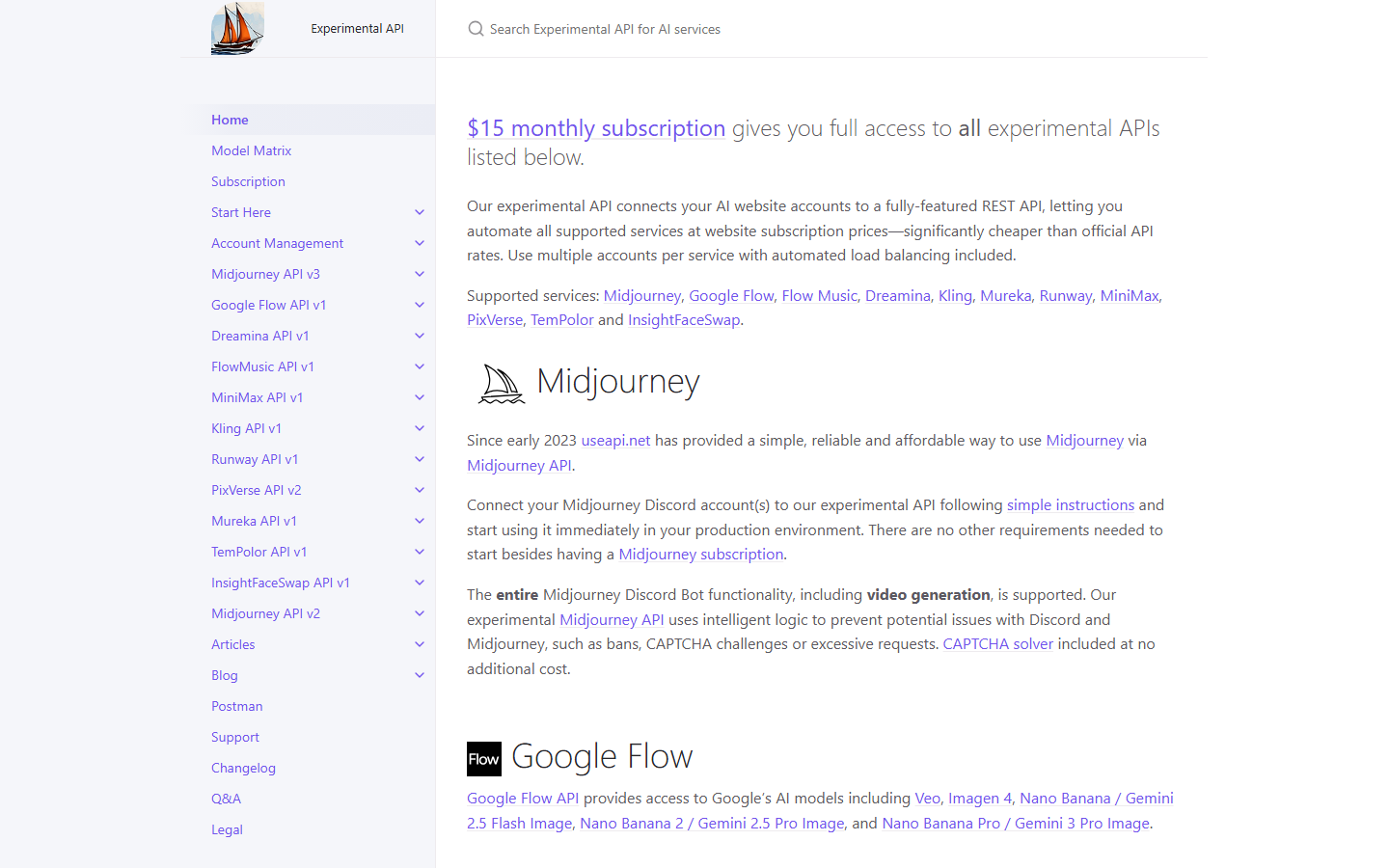
useapi.net takes the account-backed approach: instead of reselling capacity, it drives generation through a Suno account you already pay for. For teams with an existing subscription and unused monthly credits, that changes the arithmetic, because you are paying for an access layer rather than for the music twice.
It is also the route that stays closest to feature parity with the product itself, since anything the account can do is broadly what the layer can expose. The tradeoff is coupling: your automation now depends on account health, session validity, and whatever terms apply to programmatic access, so read them before you build a business process on top. Creators pairing generated music with visuals often start from our guide on making music videos with AI for free.
Strengths: uses credits you already own, close to product feature parity, multi-account handling for teams. Limits: account-coupled and therefore more fragile, and you should check the terms that govern automated access.
8. Smithery: Best for Discovery
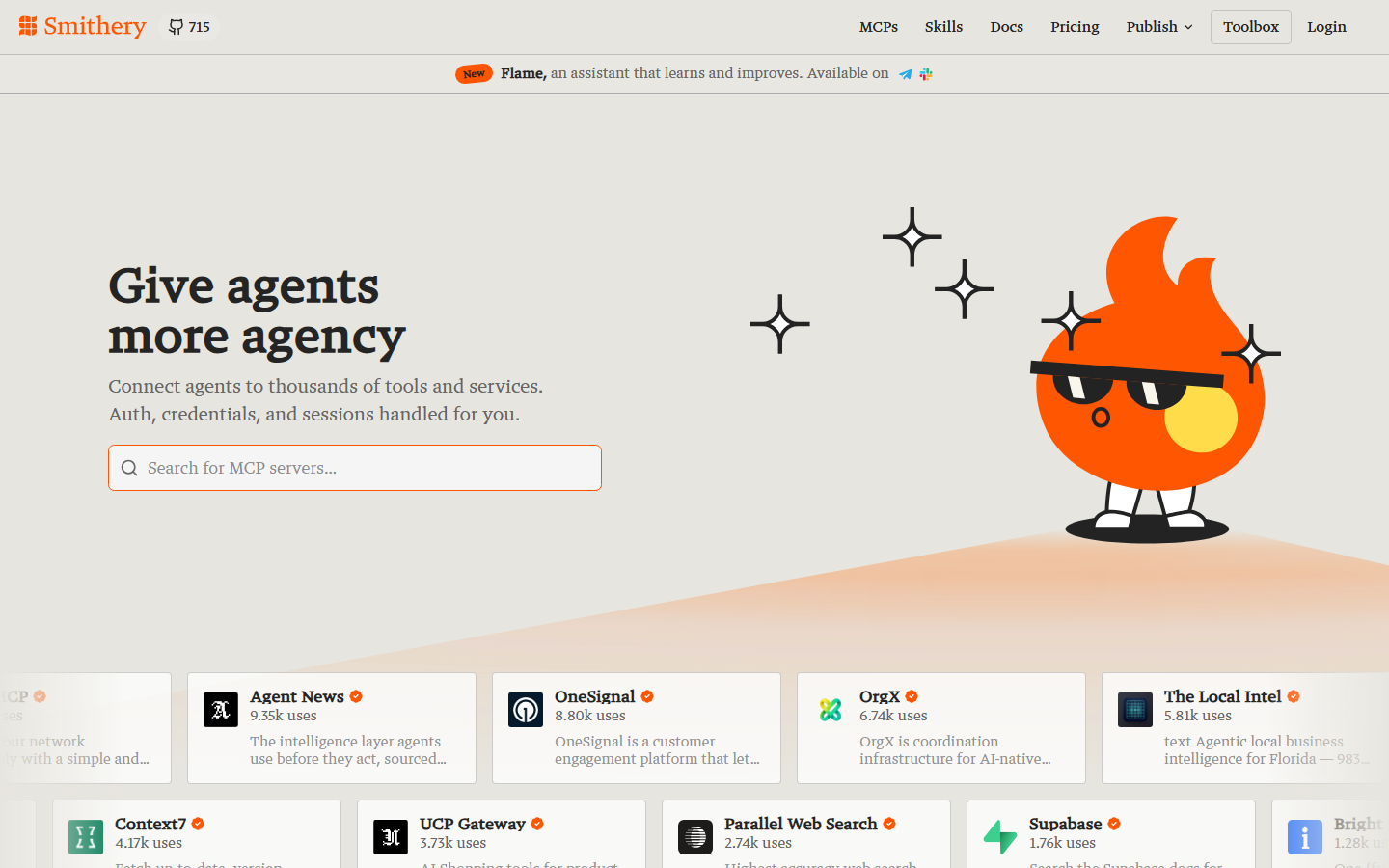
Smithery is a registry and hosted runtime rather than a music tool. For Suno specifically it lets you compare the servers above side by side, see usage signal on each, and connect without hand-editing a JSON config, which is the fastest way to find out that a promising-looking repository has three users.
Hosting is the underrated half. A registry-hosted server keeps running when your machine does not, which turns an interactive experiment into something a scheduled agent can depend on. That is the difference between generating a track while you watch and having a nightly job score tomorrow's clips, a pattern we cover in the AI video generation MCP tools guide.
Strengths: real usage signal for community servers, hosted runtime, managed credentials, easy side-by-side testing. Limits: a third party handles your credentials, and hosted tiers cost more than running the server yourself.
9. Composio: Best for App Routing
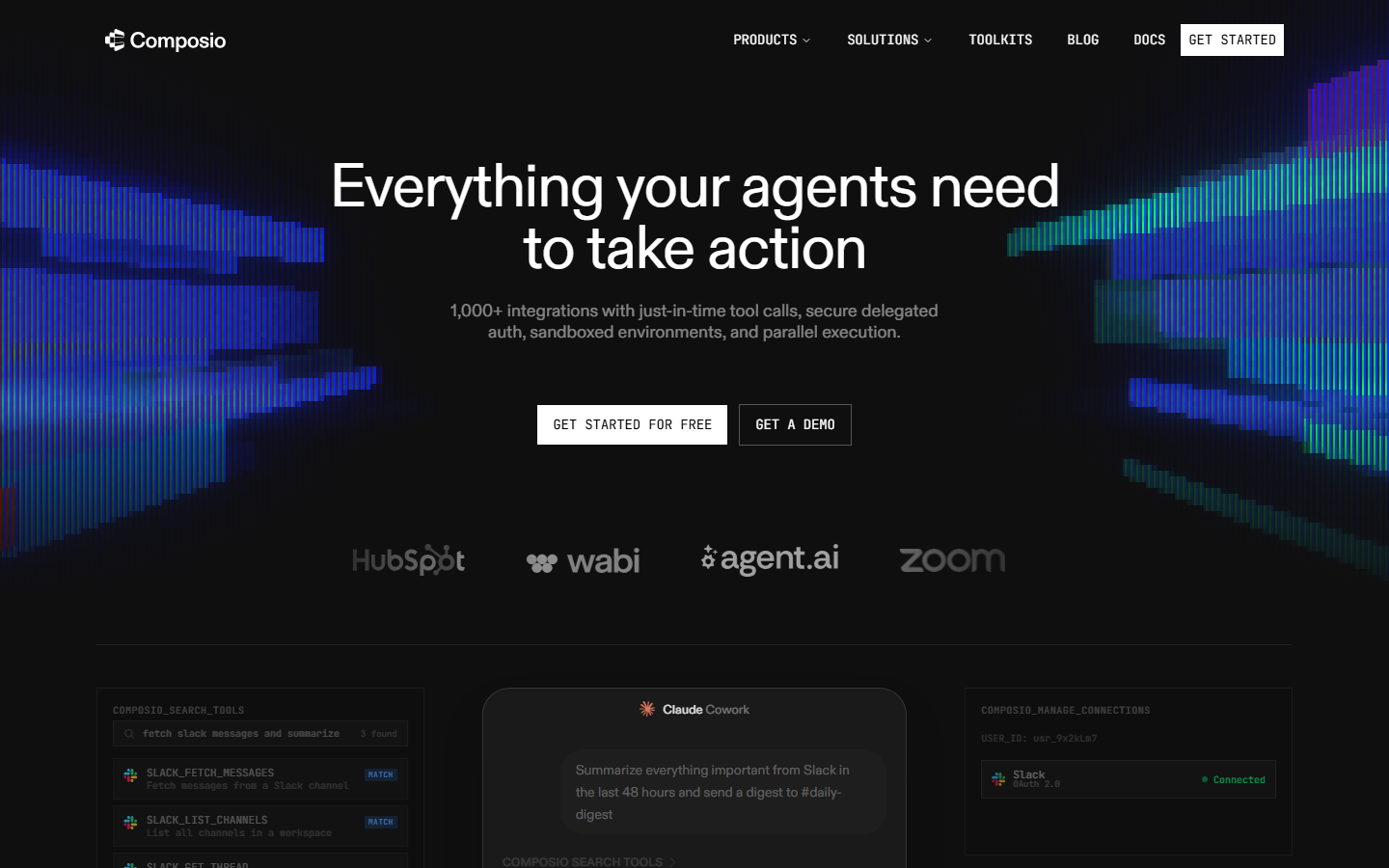
Composio handles the part that happens after the audio exists. It provides managed authentication and sandboxed execution across a large catalog of apps, so the agent that generated a track can drop it in Slack, attach it to a Notion page, or push it to Drive without you writing an upload function.
For teams, the credential story is the real draw: connect the account once and the platform issues scoped credentials to agents instead of handing every developer a production key. It is not a Suno server, so you pair it with one of the entries above rather than choosing between them. We make the same pairing argument for avatar work in our HeyGen MCP tools roundup.
Strengths: managed auth, wide app catalog, good multi-user fit, removes glue code after generation. Limits: another vendor in the path, and no music tools of its own.
Comparison Table
| Tool | Category | Runs where | Beyond generation | Best for |
|---|---|---|---|---|
| Wireflow | Workflow platform | Hosted | Chains music with video, voice, image | Full pipelines |
| AceDataCloud SunoMCP | MCP server | Hosted | Extend, cover, stems, personas | Widest tool surface |
| frankxai/suno-mcp-server | MCP server | Local | Extend, remix, style transfer | Coding agents |
| runapi-ai/suno-mcp | MCP server | Local | Task polling, pricing checks | Cost-aware loops |
| CodeKeanu/suno-mcp | MCP server | Local | Track info, credits | Minimal installs |
| PiAPI | API provider | Hosted | Image and video endpoints too | Batch volume |
| useapi.net | Access layer | Hosted | Multi-account handling | Existing subscribers |
| Smithery | Registry and runtime | Hosted | Discovery, hosting, auth | Finding and hosting servers |
| Composio | Orchestrator | Hosted | Delivery into 1,000+ apps | Post-generation routing |
How to Choose
Start with where the output has to land. If the track is the deliverable and a human will place it, a local server such as CodeKeanu or frankxai is enough and costs nothing to try. If the track feeds something else, a render, a caption pass, an upload, then a local server just moves the glue code somewhere less convenient, and a hosted graph or an orchestrator pays for itself in the first week. The same decision splits self-hosted automation from protocol-native tooling, which we unpack in n8n vs MCP for video automation.
Then decide who holds the credential. A solo builder can put a key in a local config and move on. A team should not, and that is where Smithery or Composio stops being optional overhead. Expect to swap servers once as the surface you actually use becomes clear, and if your end product is a finished video rather than a bare track, an AI music video maker closes the last step.
Try it yourself: Suno is not available on Wireflow, so this music workflow in Wireflow uses the closest option, ElevenLabs Music. The nodes are pre-configured with the prompt-to-track setup described above, so you can run it and swap the style prompt for your own.
FAQ
What is a Suno MCP server? It is a small program that publishes Suno capabilities as Model Context Protocol tools, so an AI client such as Claude or Cursor can call generate, extend, or cover the same way it calls a file read. The server handles authentication and the upstream API; the agent just picks a tool.
Does Suno have an official MCP server? There is no widely used first-party server. Everything in this list is either a community project or a commercial access layer, which is why credential handling and terms of use deserve a look before you automate anything on top of one.
Do I need a Suno subscription to use these tools? You need upstream access of some kind. That is either a Suno account, as with an account-backed layer, or credits with an API provider such as AceDataCloud, PiAPI, or RunAPI. The MCP server itself is usually free.
Can an agent generate lyrics as well as music? Yes on the fuller servers. AceDataCloud exposes lyric generation and custom-lyric input, and most agents are better at writing the lyrics themselves and passing them in than relying on the model to invent them.
How long does a track take to generate? Typically one to three minutes for a short instrumental, depending on the model variant and queue depth. Servers built around a task-and-poll pattern handle that wait more gracefully than ones that block on a single call.
Can I put a generated track straight into a video? Only after a loudness pass. Generated music tends to arrive louder than dialogue, so normalise it and duck it under voice before mixing.
Which option is best for a scheduled, unattended job? Anything hosted. A local server stops when your machine does, so nightly or event-driven work belongs on a hosted graph, a registry-hosted runtime, or your own deployed wrapper.
Is it safe to give an agent my API key? Treat it like any production secret. Scope it, keep it out of a repository, and prefer a platform that issues delegated credentials over pasting the real key into a local config.
Conclusion
The Suno MCP space in 2026 is a small set of thin servers over a handful of API providers, and picking well is mostly about deciding where the work runs and what happens after the track exists. Local servers are the cheapest way to start, hosted servers survive a closed laptop, and orchestrators earn their place once music stops being the last step. Wherever you land, expect the protocol layer to keep moving faster than the models under it.

Co-Founder & Operations at Wireflow
Runs client operations and content strategy at Wireflow. Works directly with creative teams and agencies to build production AI workflows.
- Content Strategy
- Client Operations
Make AI videos and ads.
Start free, no card needed.