An AI influencer generator builds a synthetic person who looks the same in every photo and video you publish, which is the part cheap image tools still get wrong. We compared eight platforms on face consistency, video length, commercial rights and real monthly cost, then ranked them for the job most people actually have: producing a steady feed of on-persona content rather than one impressive demo image. Wireflow sits at the top because it treats a persona as a reusable workflow instead of a single generation, and the rest of the list covers the specialists worth paying for when your needs are narrower.
Quick summary: the 8 best AI influencer generators
- Wireflow: chain a locked character reference into every downstream image and video node. Best Overall
- Higgsfield: cinematic camera and motion control over a reference character. Best for Motion
- Influencer Studio: trains a real per-character model from your reference photos. Best for True Consistency
- The Influencer AI: clones your own face into a publishable digital twin. Best for Digital Twins
- HeyGen: multilingual lip-sync at scale on an existing avatar. Best for Talking Video
- ZenCreator: credit packs with access to several video engines. Best Pay As You Go
- APOB AI: face-lock plus animation with daily free credits. Best Free Tier
- Synthesia: corporate presenter avatars with heavy language coverage. Best for Brand Safe Use
How we ranked these tools
Consistency was weighted highest. A persona that drifts between posts reads as fake within three images, so we scored how each tool holds identity across a batch rather than how good a single render looks. After that came video capability, clip length limits, whether you own the trained character, and cost per finished asset instead of headline subscription tiers. Tools for discovering human influencers were excluded, as were platforms whose primary market is adult content, since neither serves brand or UGC creator workflows. Pricing below is what each vendor listed at the time of writing and moves often, so confirm before you commit.

1. Wireflow: Best Overall
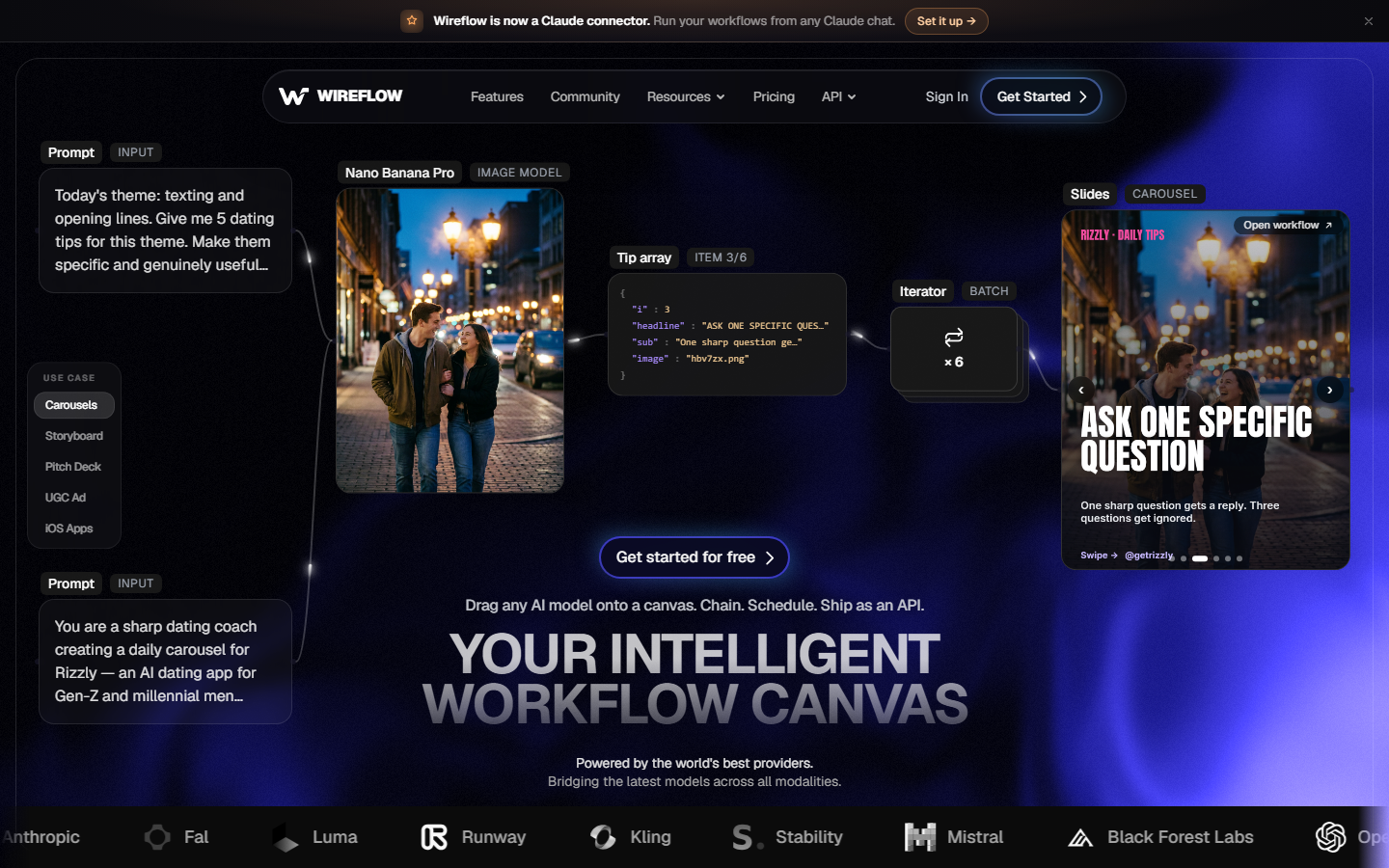
The difference here is structural. Most influencer tools ask you to describe your character again for every generation and hope the model lands close enough. A node canvas instead lets you generate one reference sheet, then wire that exact image into the image input of every scene, video and edit node downstream. The face stops being a prompt you re-roll and becomes a fixed input, the same principle behind the reference-sheet method in this guide to designing characters with AI.
That structure pays off on volume. Once the persona node is locked you duplicate the branch, swap only the scene prompt, and run twenty on-persona posts in one execution. You also pick the model per node, so a photoreal render, a video clip and a lip-synced cut each run on the engine that handles them best. Billing is metered per run rather than per seat. The trade-off is real: you are assembling a pipeline, so the first hour is slower than on a template tool. Anyone who has compared free image generators and hit the consistency wall will know why that hour is worth spending.
Verdict: the strongest option if you need a persona that survives hundreds of posts across image and video.
2. Higgsfield: Best for Motion
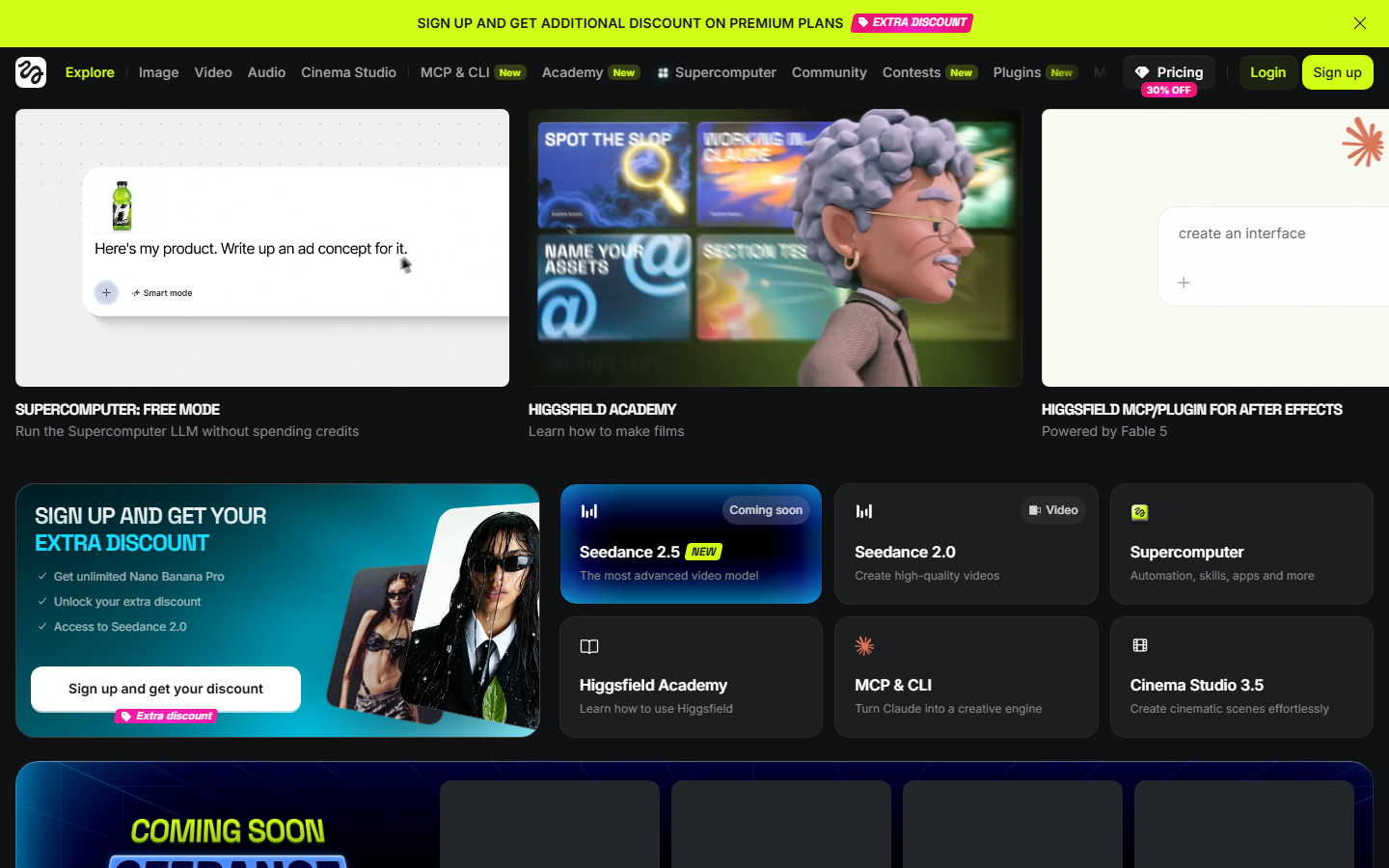
Higgsfield runs an AI Influencer Studio on top of its video stack, and its real advantage is camera language. You pick a reference image for the character, choose motion presets like dolly-in, crash zoom or orbit, and get clips that look directed rather than drifting. That makes it the pick when the movement is the hook, which covers most short-form social media video. Paid plans start in the mid-teens per month with a free tier to test on. Face lock is good but not perfect across long batches, so expect to cull frames.
Verdict: best when motion quality matters more than absolute face stability.
3. Influencer Studio: Best for True Consistency
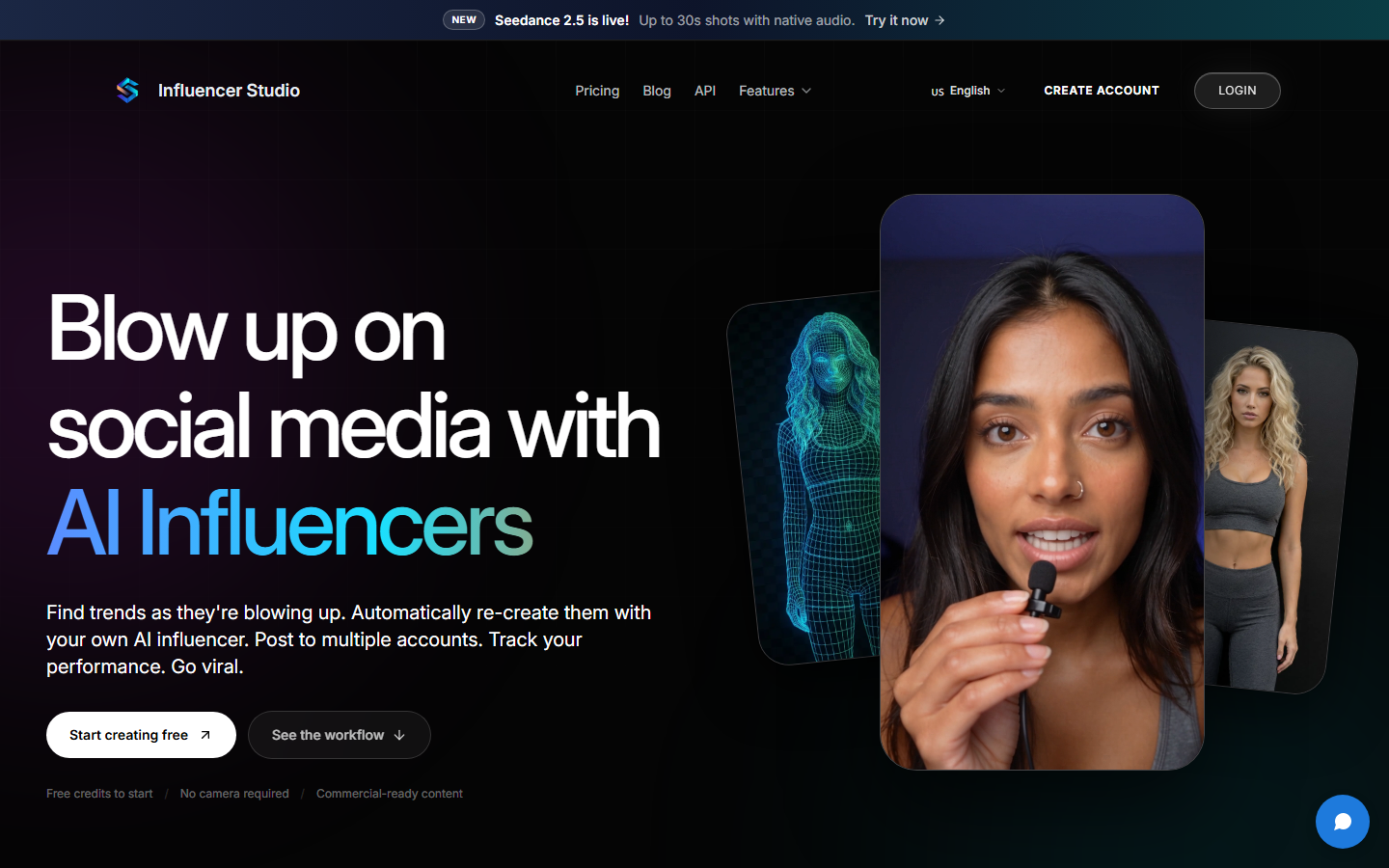
Influencer Studio takes the slow, correct route. You upload ten to twenty reference photos and it trains an actual model on that character rather than conditioning a generic one at inference. Consistency is noticeably better than prompt-based tools, and the same character carries into images, video and audio. Setup takes longer, plans start around fifty dollars a month, and the trained model lives on their platform rather than yours, which matters if you plan to move later. The workflow will feel familiar if you have built AI characters for games and stories.
Verdict: the most reliable identity lock among managed platforms, at the cost of setup time and portability.
4. The Influencer AI: Best for Digital Twins
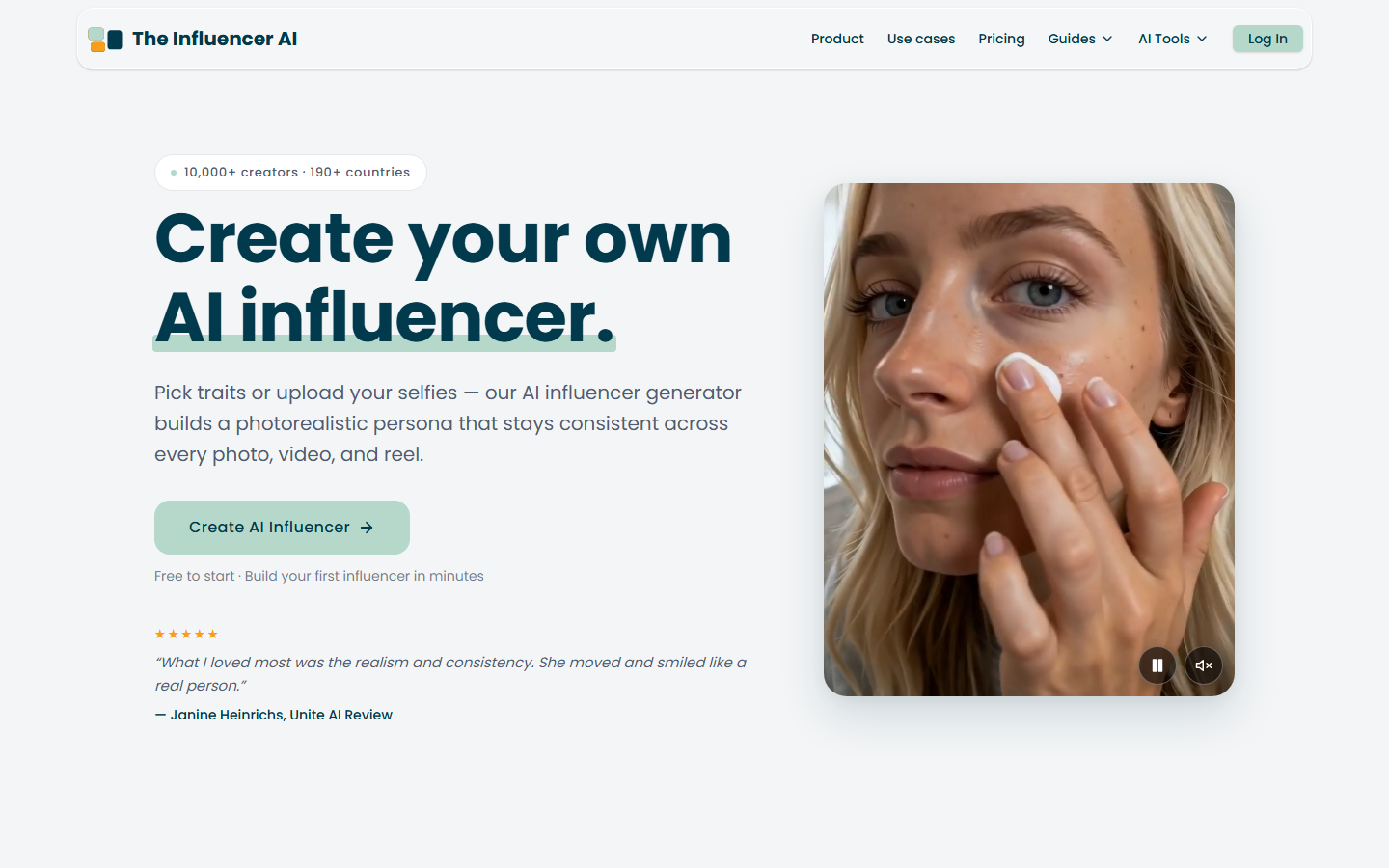
The Influencer AI is aimed at people who want to appear in content without filming it. You supply roughly a dozen selfies, it builds a photoreal twin, and from there you generate posts and short reels in dozens of languages. Entry pricing is under twenty dollars a month and the vendor states full commercial rights on output. The main limit is clip length, which caps in the five to fifteen second range depending on tier, so it suits feed posts and AI profile pictures more than long-form video.
Verdict: the fastest path from your own face to a publishable synthetic creator.
5. HeyGen: Best for Talking Video
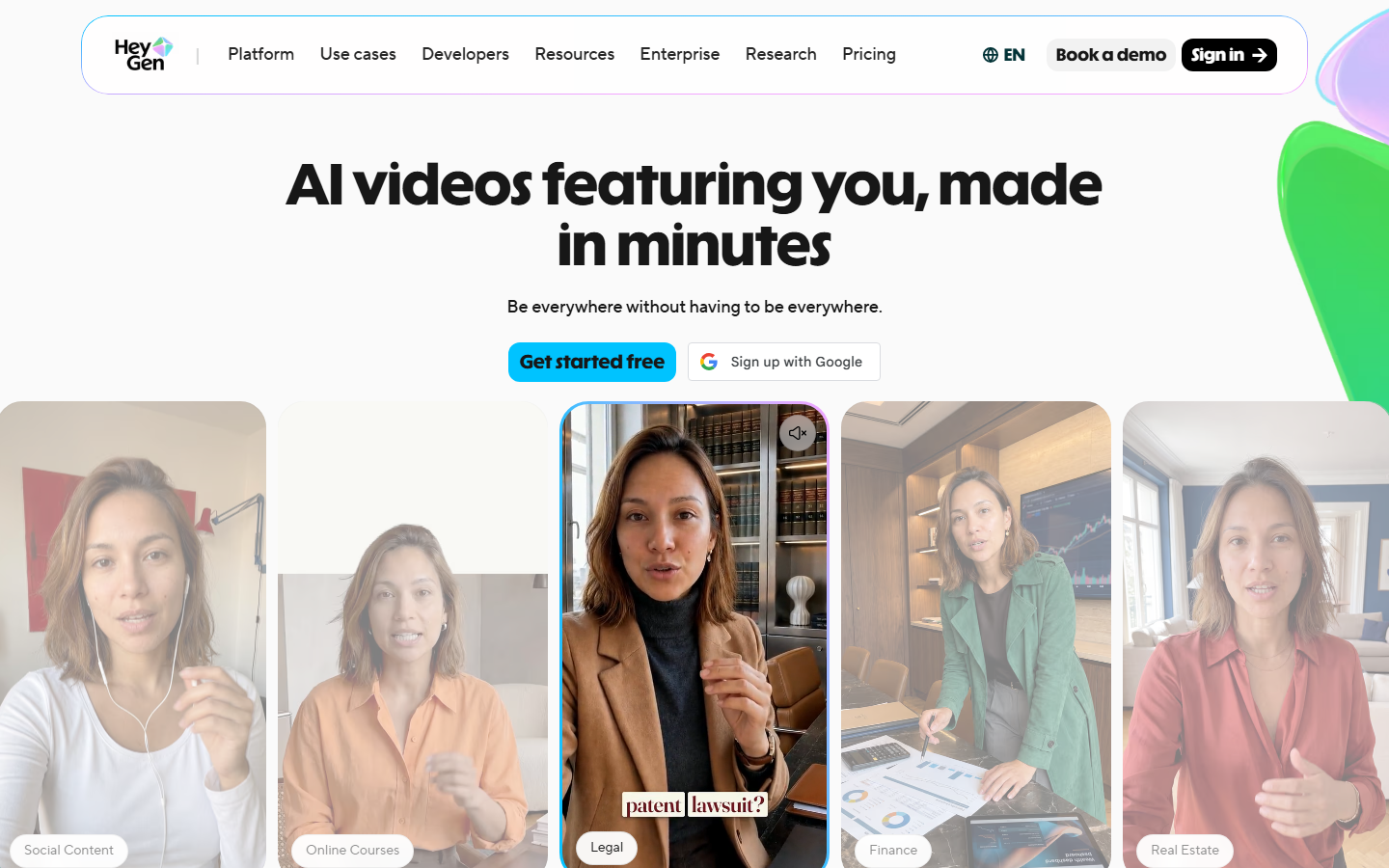
HeyGen is the strongest tool here for one specific job: making an existing face talk convincingly in many languages. Lip-sync quality and translation coverage are ahead of the field, and there is a large library of licensed presenters if you do not want to build a character at all. What it does not do is invent a novel persona and hold it across still imagery, so it works best as the voice stage of a pipeline rather than the whole pipeline. Creator plans sit around thirty dollars a month; the HeyGen pricing breakdown covers how credits burn at volume.
Verdict: buy it for multilingual talking video, not for persona creation.
6. ZenCreator: Best Pay As You Go
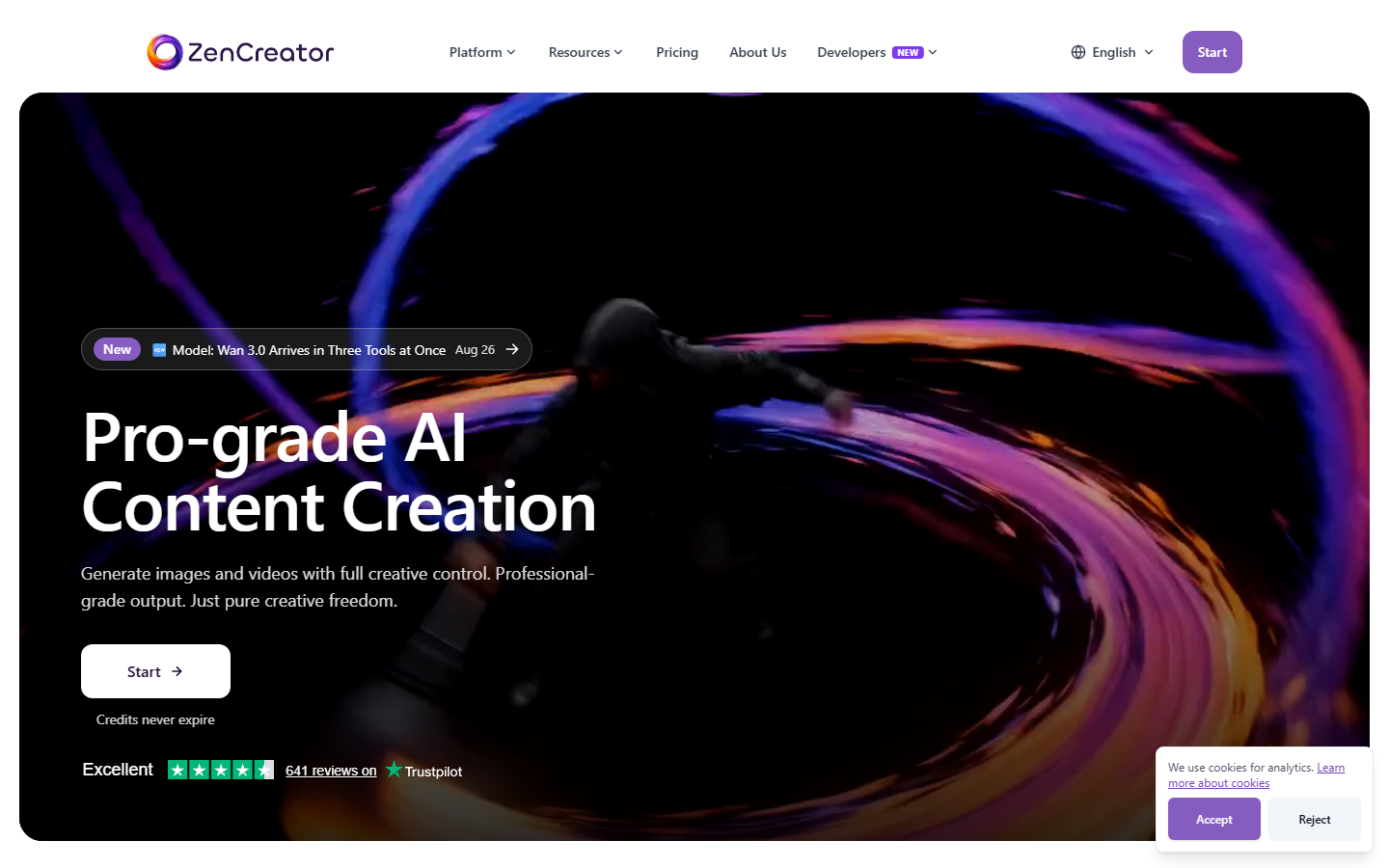
ZenCreator sells credit packs rather than subscriptions, starting near twenty dollars, and the credits do not expire. In return you get access to several third-party video engines, so you can push the same character through different models and keep the one that lands. That flexibility comes with a learning curve, since results depend more on your prompt and conditioning choices than on presets. Anyone tracking model costs will find the Seedance pricing comparison useful before buying credits.
Verdict: the right shape for irregular output where a monthly seat would sit idle.
7. APOB AI: Best Free Tier
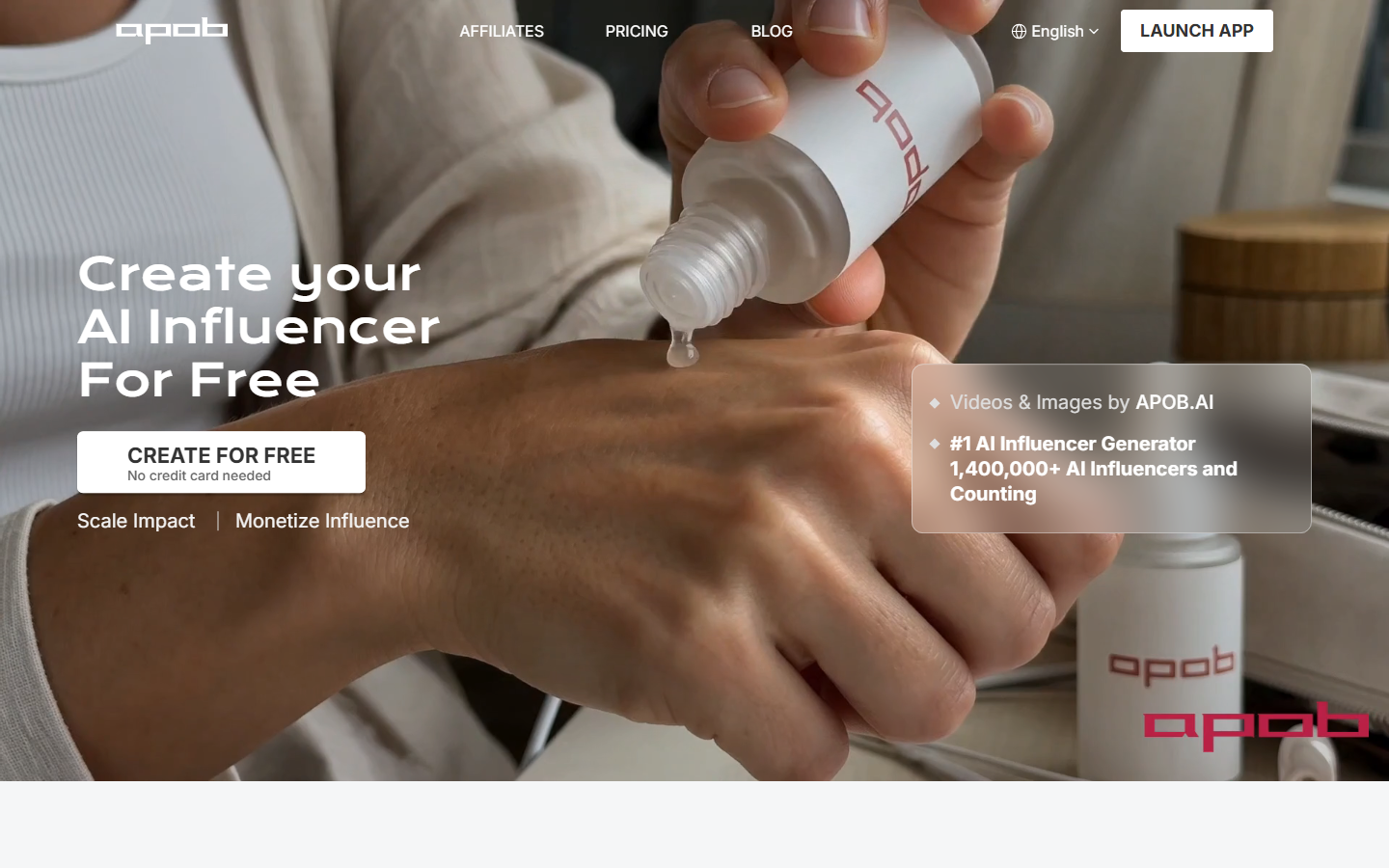
APOB AI combines face-lock training, image generation, animation and lip-sync in one interface, and its free tier refreshes credits daily, which is unusually generous for testing a persona idea. Paid tiers begin near eleven dollars. Credits drain quickly once you move to video and clips are short, so treat it as a proving ground rather than a production line. Its editing side overlaps with the tools in our roundup of AI face editors.
Verdict: the cheapest honest way to find out whether an AI persona works for your niche.
8. Synthesia: Best for Brand Safe Use
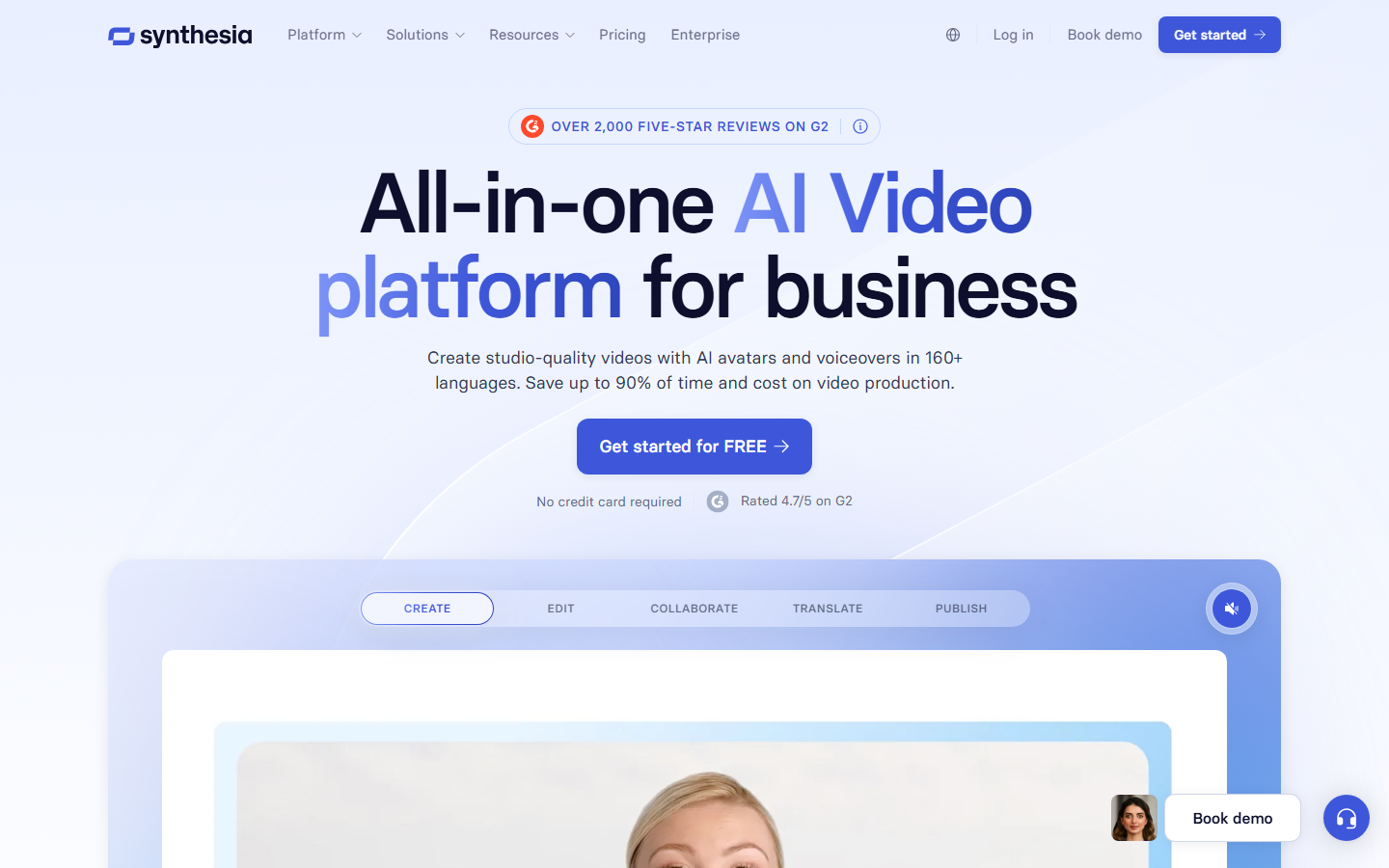
Synthesia is an enterprise avatar platform that ended up adjacent to this category. Language coverage passes 140 and the compliance posture is the most conservative here, which is why marketing teams inside larger companies pick it. Delivery is deliberately corporate, with limited body movement and a presenter feel that does not pass as organic social content. Starter plans begin near thirty dollars a month, and the Synthesia alternatives comparison is worth reading if you want similar reliability with a looser look.
Verdict: choose it for internal and brand video, not for a creator persona.
Comparison table
| Tool | Best for | Entry price | Consistency method | Video |
|---|---|---|---|---|
| Wireflow | Overall persona pipelines | Metered per run | Reference image wired into every node | Yes, multi-model |
| Higgsfield | Motion and camera work | ~$15/mo | Reference image conditioning | Yes |
| Influencer Studio | Strongest identity lock | ~$49/mo | Per-character model training | Yes |
| The Influencer AI | Digital twin of yourself | ~$19/mo | Face cloning from selfies | Short clips |
| HeyGen | Multilingual talking video | ~$29/mo | Avatar from footage or library | Yes |
| ZenCreator | Occasional output | ~$20 credits | Prompt plus LoRA conditioning | Yes, several engines |
| APOB AI | Testing an idea free | ~$11/mo | Face-lock training | Short clips |
| Synthesia | Corporate and brand video | ~$29/mo | Licensed or custom avatar | Yes |
What most comparison guides leave out
Three things get skipped almost everywhere. Ownership is the first: when a platform trains a model on your character, ask whether you can export it, because a persona you cannot move is a persona you rent. Disclosure is the second. Instagram and TikTok both require synthetic media to be labelled and advertising regulators treat an undisclosed AI endorser as deceptive, so build the label into your posting template rather than deciding per post, the same discipline that keeps social media management workable as accounts grow.
The third is cost per finished asset. Subscription tiers are not comparable until you divide by output you would actually publish, and rejection rates differ enormously between these tools. A twenty dollar plan where you discard four of five renders costs more than a fifty dollar plan where you keep most of them. Track keep-rate for two weeks before renewing anything and compare it against a metered run cost. The teams getting the most out of this category treat persona work as an assembly line, which is the logic behind automated UGC video creation.
Try it yourself: open the AI influencer persona workflow to see a character reference sheet feeding straight into on-persona post generation, with the nodes already configured.
FAQ
What is an AI influencer generator? It is a tool that creates a synthetic person and then reproduces that same person across new images and videos. The generation part is easy; the value is in the identity holding steady from post to post.
Which tool gives the most consistent face? Platforms that train a model on your character, like Influencer Studio, beat prompt-conditioned tools on raw consistency. A node pipeline that feeds one locked reference image into every downstream step reaches the same result and keeps the reference in your own hands.
What is the best free AI influencer generator? APOB AI has the most usable free tier because its credits refresh daily. Higgsfield and Synthesia also offer free allowances, though both are small once you start rendering video.
How much does it cost to run an AI influencer per month? Realistically between twenty and one hundred dollars for a single active persona posting a few times a week. Video consumes credits several times faster than stills, so your video ratio drives the bill more than the plan you pick.
Can I use an AI influencer in paid ads? Most platforms grant commercial rights on output, but read the terms for your specific tier and check whether the trained character itself is licensed to you or retained by the vendor. Ad platforms additionally require synthetic media disclosure.
Do I have to disclose that an influencer is AI? Yes on the major social platforms, and yes for advertising in most markets. Label it in the caption and use the platform's AI content toggle where one exists.
Can these tools make the persona speak? Yes, though quality varies. HeyGen leads on multilingual delivery, and dedicated lip sync tools can be layered on top of footage generated elsewhere.
What is the difference between a generator and an influencer discovery tool? A generator creates a synthetic creator you own and operate. A discovery tool finds real human influencers to hire. They share the word influencer and nothing else, which is why lists that mix them are hard to use.
Conclusion
The right pick depends on which constraint binds first. If you need a face that never drifts across hundreds of assets, a trained-character platform or a node pipeline that treats the reference image as a fixed input beats any prompt-based tool. If you need cinematic motion, multilingual speech, or a corporate presenter, the specialists above each win their lane and are worth buying alongside a general pipeline rather than instead of one. Wireflow earns the top spot because it assembles those stages into a single repeatable run, which is what turns an AI persona from a demo into a publishing schedule. Whichever you choose, settle your disclosure policy and measure keep-rate from week one, and read up on mass-producing UGC content before you scale output.
Would you rather we just built it?
We get on a call, learn your style, build the workflow, and ship the deliverables on a schedule. You keep the workflow either way.