Best Remotion Alternatives in 2026

In this article▾
Remotion renders video from React code, and teams look for an alternative over render infrastructure, cost at scale, and needing a developer for every change. This guide ranks nine Remotion alternatives in 2026 across three lanes: hosted video APIs, open source code-first frameworks, and visual pipelines like Wireflow that chain AI models and render steps on a canvas instead of a codebase. Each entry covers what it renders, who it suits, and where it stops fitting. If your work is closer to animated titles and stat cards than long-form video, an AI motion graphics generator covers that lane without any render infrastructure.
Quick Summary: 9 Remotion Alternatives Ranked
- Wireflow - Best overall, AI video pipelines
- Creatomate - Best template plus API
- Shotstack - Best managed render API
- JSON2Video - Best no-code automation
- Motion Canvas - Best open source explainers
- Revideo - Best Remotion-style framework
- Plainly - Best for After Effects templates
- Bannerbear - Best for simple social clips
- Cloudinary - Best transform-on-delivery
Why Teams Replace Remotion
Remotion itself is solid; the friction shows up around it. You own the render farm or manage Lambda concurrency yourself, compositions live in a React repo so a headline change becomes a ticket, and Remotion has no opinion about generating the media, so AI image, voice, and video models sit in a separate service you also build. For a hands-on look at the canvas approach, see the Remotion alternative feature page.
The three lanes below solve different parts of that. Hosted APIs remove the infrastructure but keep you writing JSON. Open source frameworks keep code-first control without the licence cost. Visual pipelines move the whole thing, generation included, into an interface non-developers can edit, the same argument behind node-based video generation tools.
Build this in Wireflow
Make the same kind of asset on a canvas you control, with a free account and no credit card.
1. Wireflow (Best Overall)
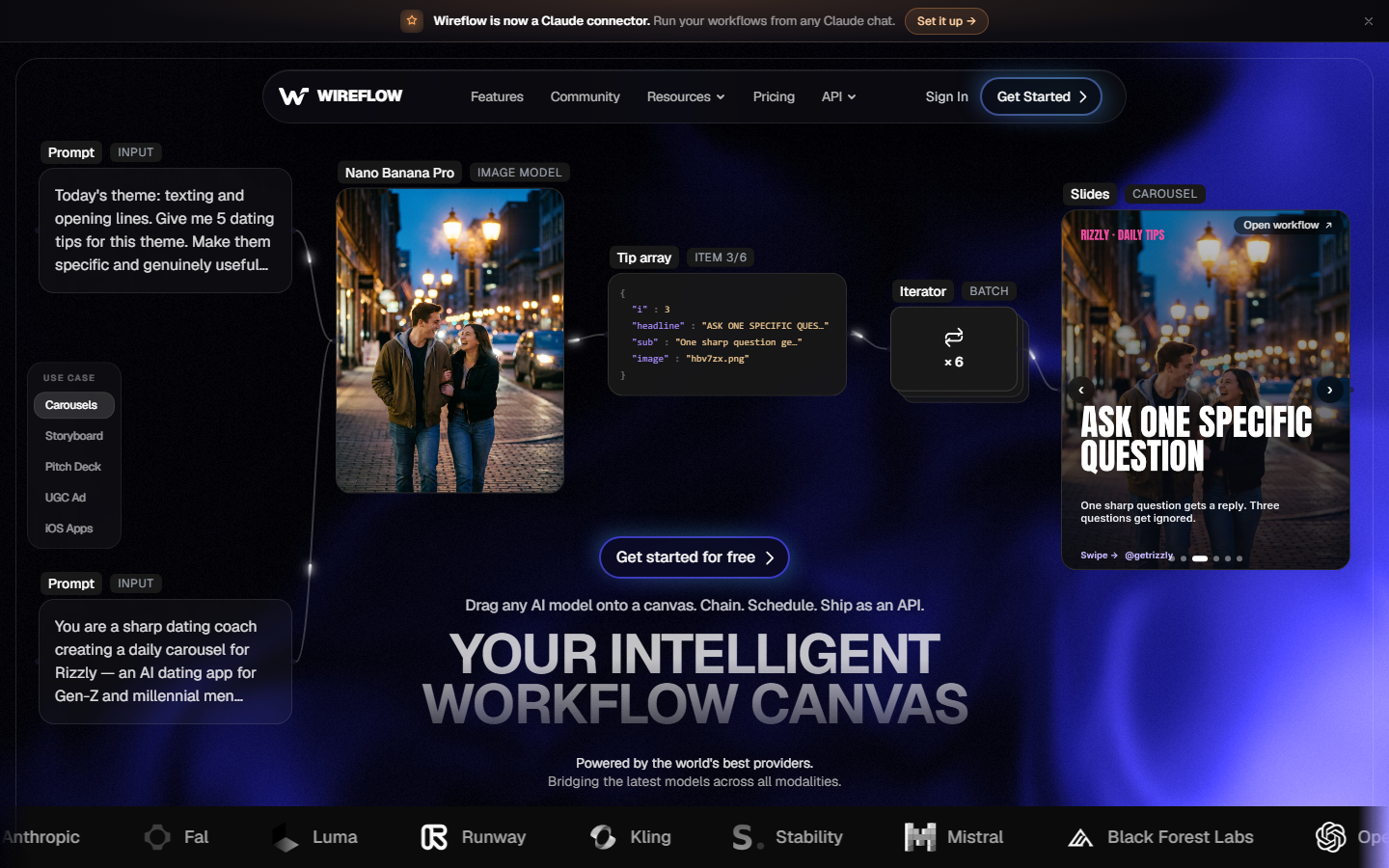
Wireflow is a visual canvas where each node is a model call or a media operation and the edges pass files between them. One flow can write a script with an LLM, generate shots with a video model, add a voiceover, stitch the result, and return a finished MP4 from a single API call. That is the part Remotion deliberately leaves to you, which makes the real question less "which renderer" than "how much of the pipeline lives in one place". Flows are callable over HTTP, so the canvas doubles as the deployment target, an approach detailed in how to chain multiple AI models in one API call.
Best for: generated video, with marketers or agents editing the pipeline directly. Watch for: purely deterministic templates with no AI in them; a template API is simpler.
2. Creatomate
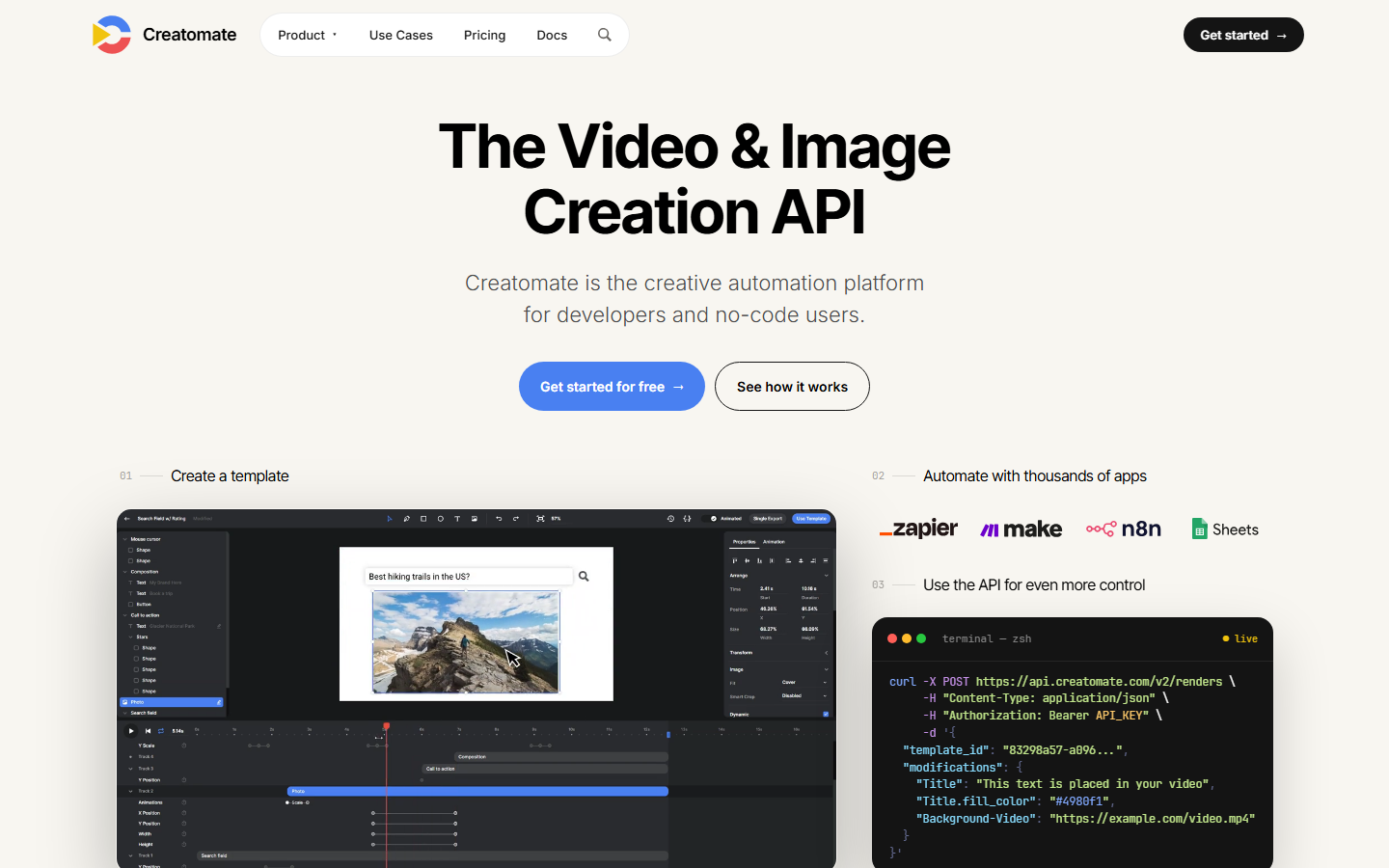
Creatomate is the closest hosted equivalent to the Remotion mental model: build a composition in a visual editor, then feed it dynamic values through an API or a Make automation. Pricing starts around $54 per month for roughly 143 minutes at 720p after the 2026 increase. It suits one template with many variations far better than one-off bespoke pieces, the pattern described in Make.com video automation.
Best for: hundreds of variants from a single design. Watch for: per-minute billing above a few hundred minutes a month.
3. Shotstack
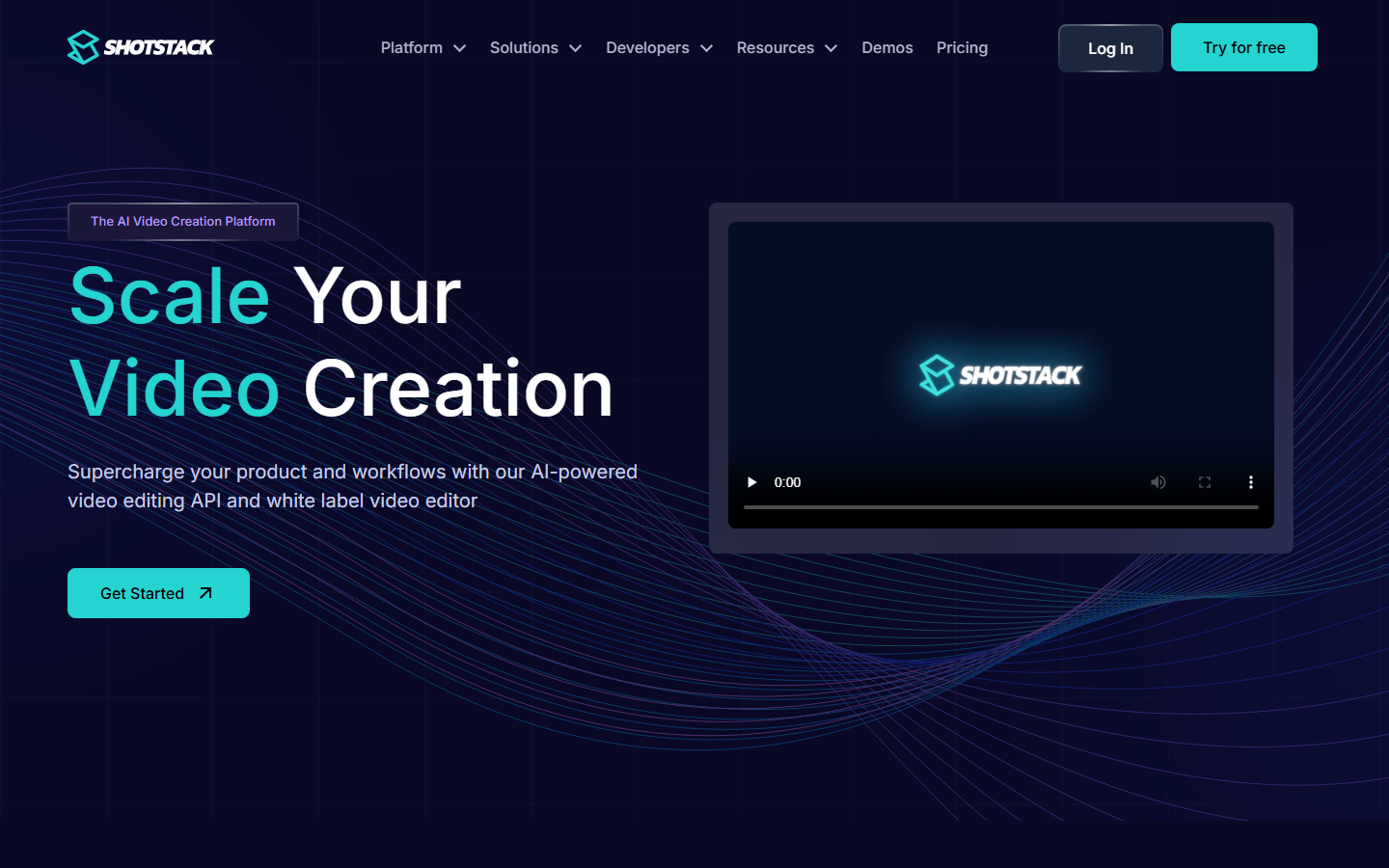
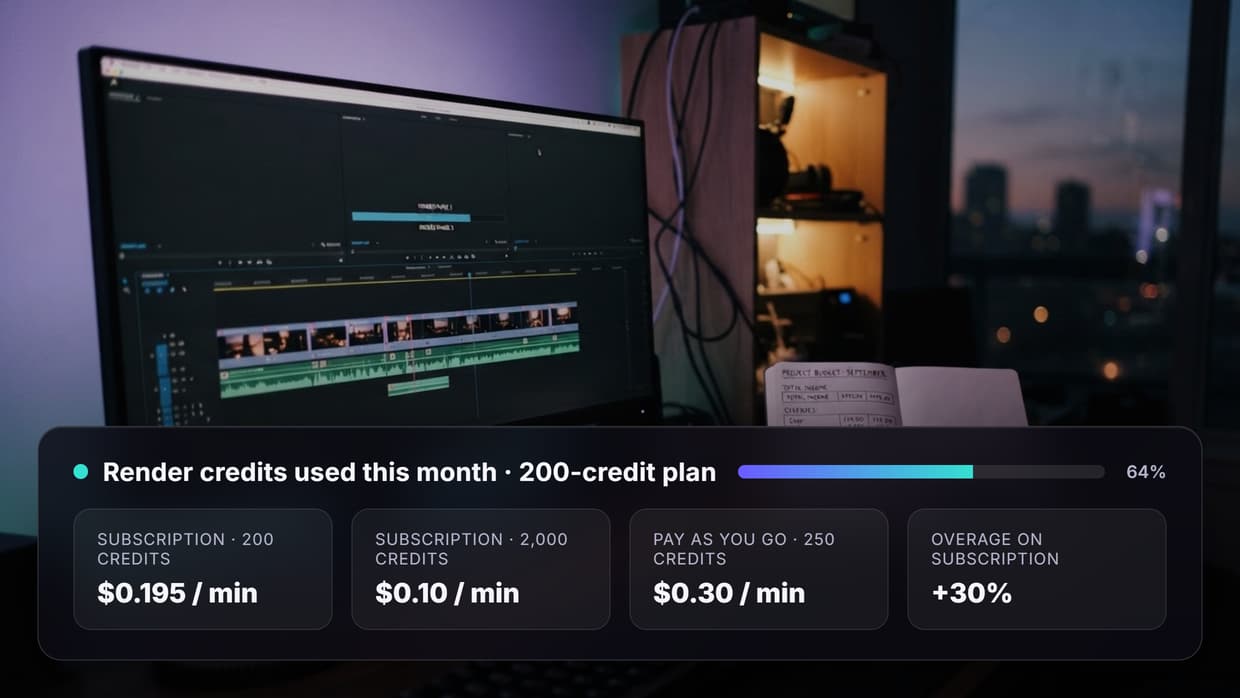
Shotstack is a JSON edit-decision-list API with a managed render cluster behind it, and the fastest renderer in this group at roughly 20 seconds per finished minute. You describe tracks, clips, and transitions as JSON, POST it, and poll for the output URL; overage bills at a 30 percent premium, so capacity planning matters. It is a strong drop-in when you have a working editorial spec and want it rendered reliably, the core case for a headless video editor for automation.
Best for: engineering teams wanting an SLA-backed renderer, no infrastructure. Watch for: no AI generation; you source media elsewhere.
4. JSON2Video
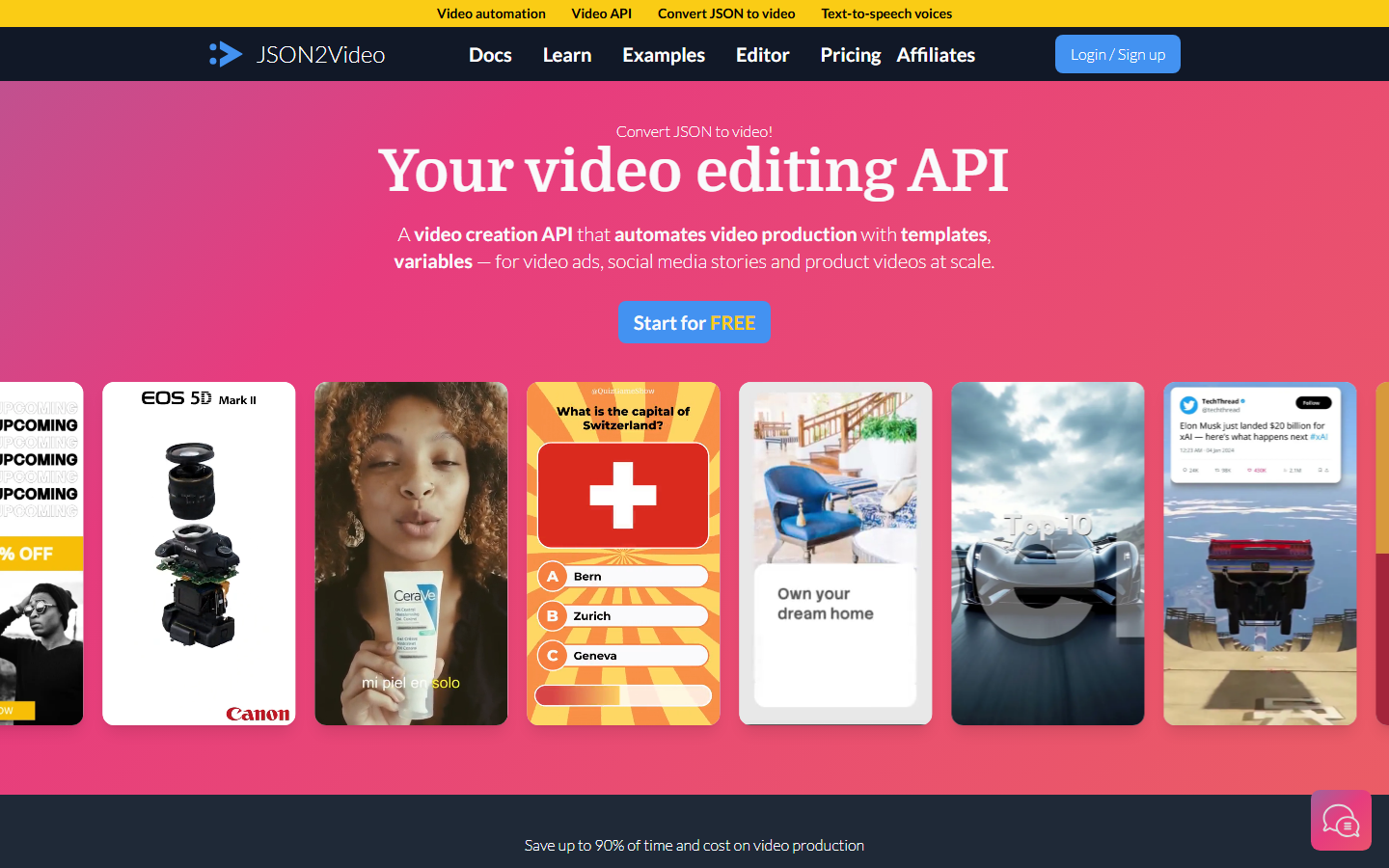
JSON2Video takes the same JSON-first idea and bundles text-to-speech, subtitles, and native n8n and Make integrations, so non-developers can trigger renders from a spreadsheet row or a CRM event. The 2026 lineup is $16.95 per month for Hobby and about $49 for 200 minutes in full HD with TTS included. It is the most complete no-code substitute for a Remotion pipeline, and appears in most JSON2Video alternatives comparisons for that reason.
Best for: automation-led teams on n8n or Make. Watch for: the JSON schema is proprietary, so migrating later is a rewrite.
5. Motion Canvas
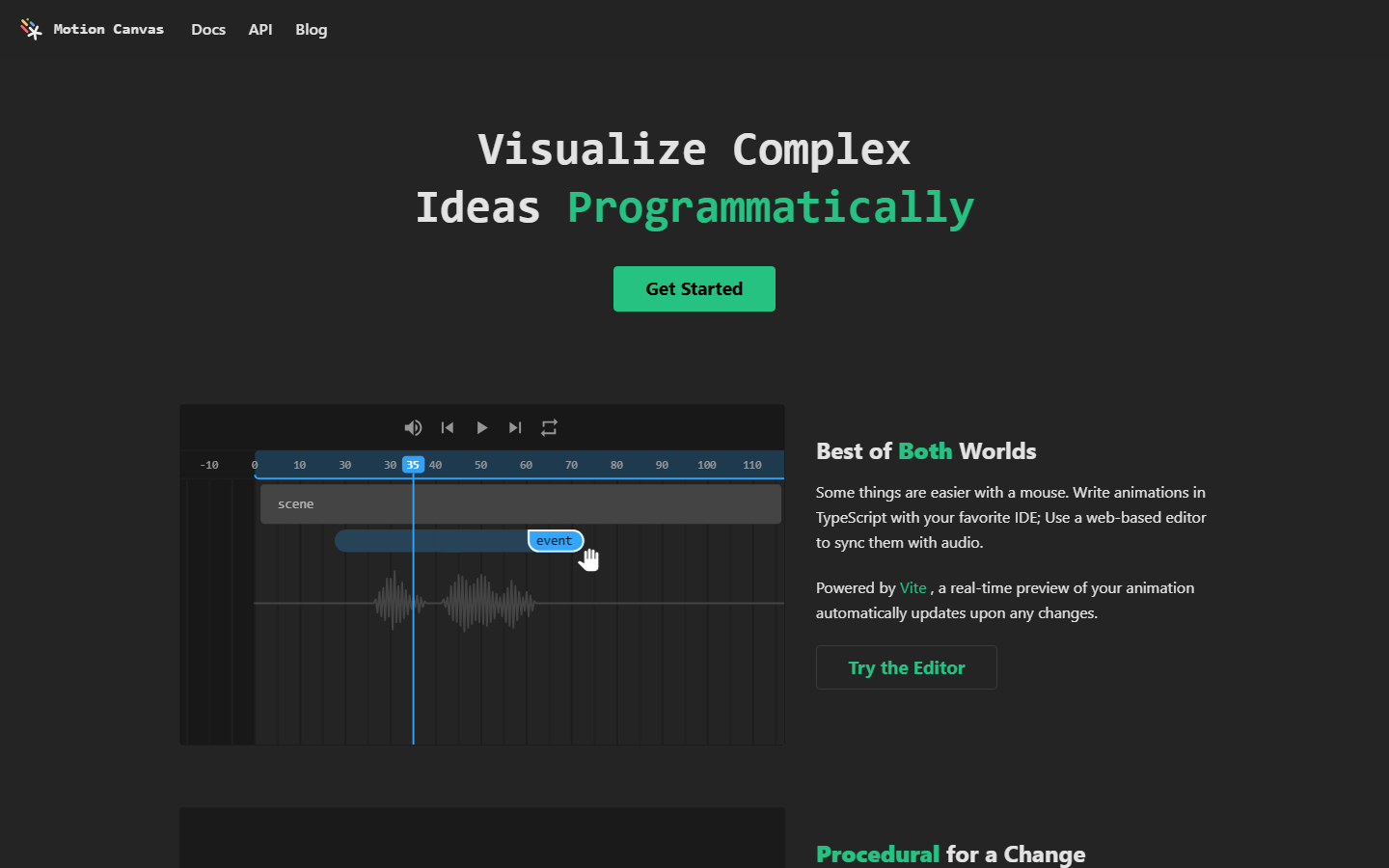
Motion Canvas is MIT-licensed TypeScript with a generator-based animation API and a live editor for syncing to audio. It targets technical explainer content, the animated code and diagram work that reads well on YouTube, with no commercial licence to negotiate. Rendering is browser-based, so batch throughput is your problem to solve, a tradeoff worth weighing against self-hosted generation APIs.
Best for: developers animating diagrams and code. Watch for: no headless render service, smaller ecosystem than Remotion.
6. Revideo
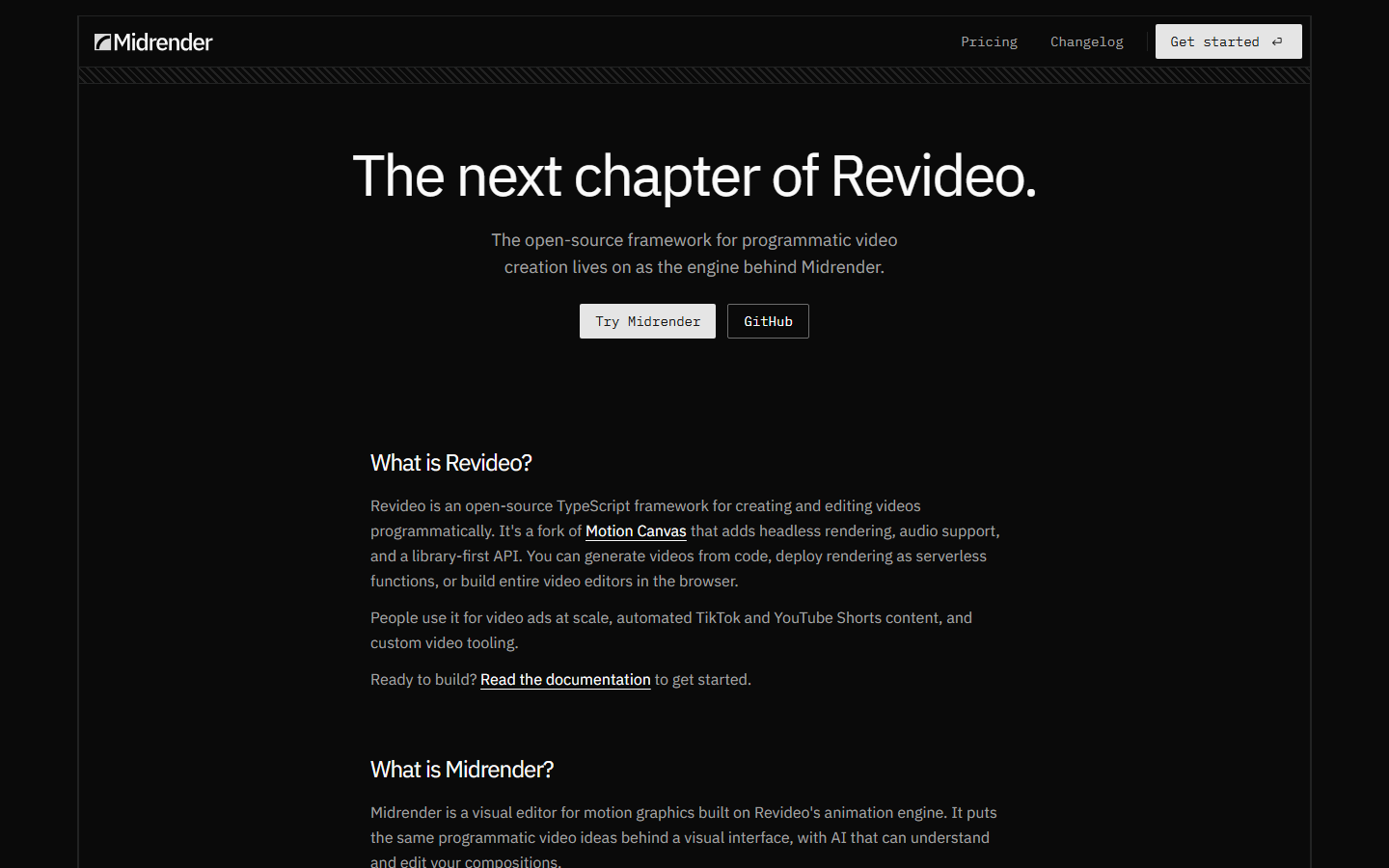
Revideo is an open source TypeScript framework forked from Motion Canvas that adds headless rendering, audio support, and a library-first API, making it the closest open source analogue to Remotion. As of 2026 it has folded into Midrender, a visual motion-graphics editor on the same engine, so the framework is maintained but its roadmap follows a commercial product. Teams building automated shorts pipelines still use it directly, in the shape of an automated UGC video pipeline.
Best for: Remotion-style control with headless rendering, no licence fee. Watch for: the framework is now downstream of a commercial editor.
7. Plainly
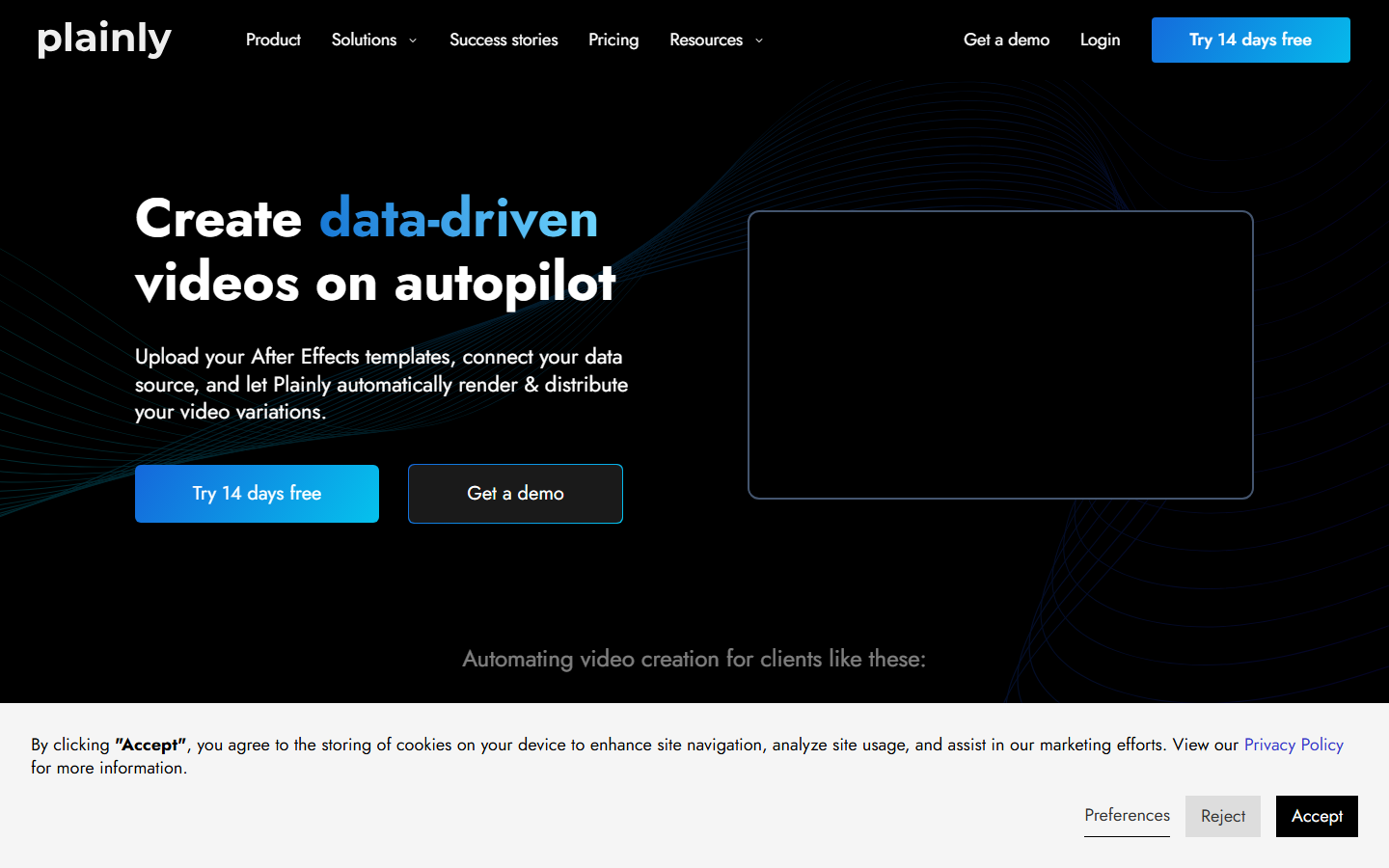
Plainly renders After Effects projects through an API: upload a .aep file, mark the dynamic layers, and hit the endpoint with your data. That is a different bet from Remotion, since the design work stays with a motion designer in the tool they already use and engineering only wires up the data. It is the right answer when the visual bar is high and the template already exists, which is why it recurs in Plainly alternatives roundups.
Best for: brands with a motion designer and existing After Effects assets. Watch for: every new template needs After Effects work.
8. Bannerbear

Bannerbear started as an image auto-generation API and extended into short video and animated GIFs from the same template system. It stays deliberately narrow: text and image layers over a background, driven by an API call or a spreadsheet. For social cards and announcement clips it is quicker to stand up than anything else here, similar in scope to bulk video ad API tools.
Best for: high-volume social clips with a fixed layout. Watch for: no timeline editing, so real motion design is out of scope.
9. Cloudinary
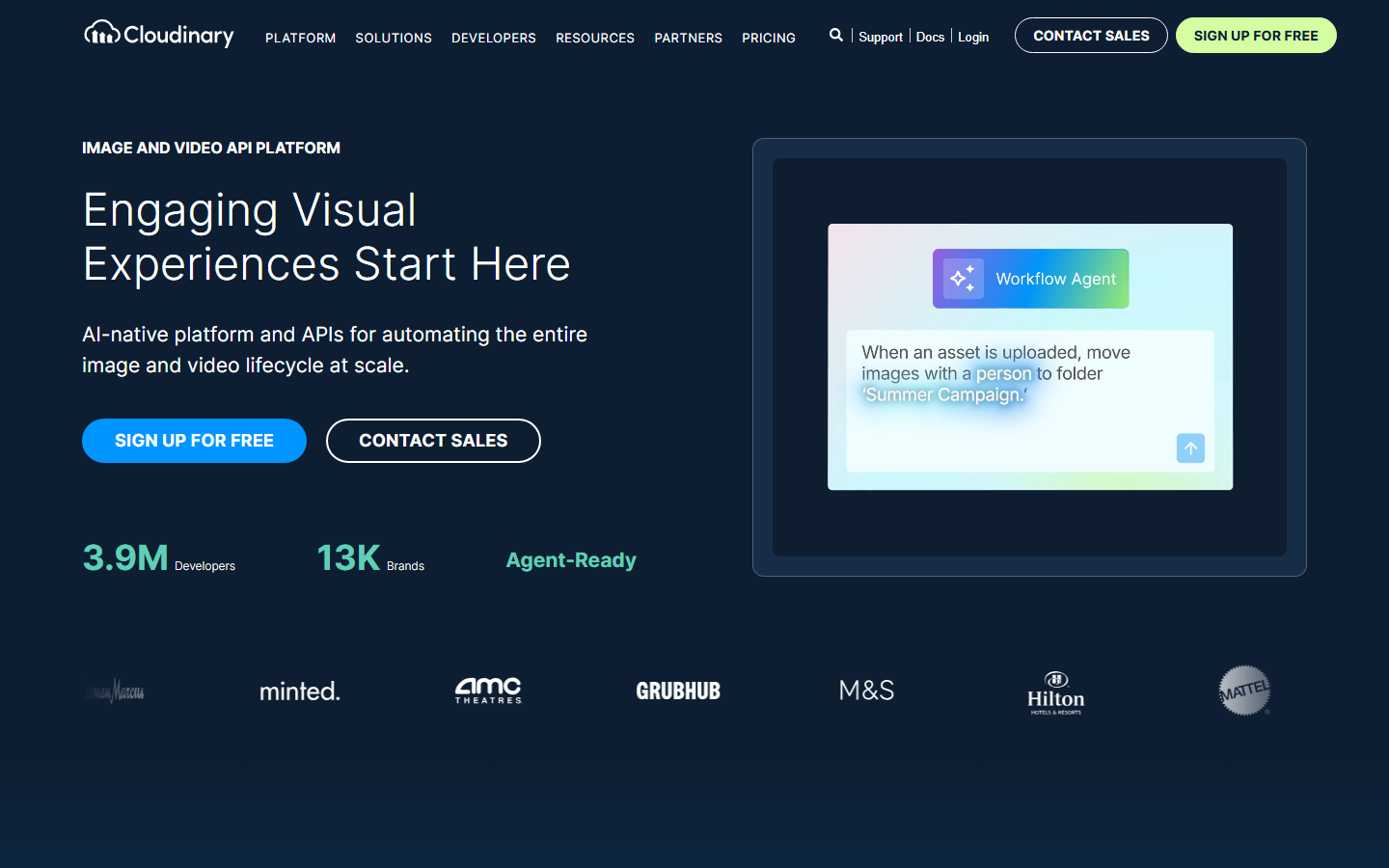
Cloudinary is a media CDN whose video transformation URLs can overlay text, concatenate clips, trim, and transcode on delivery. It is not a compositional framework and does not pretend to be, but if your assets already live there, a lot of light programmatic video happens without a render step at all. Teams pair it with a generation layer, the pattern in video assembly API tools.
Best for: teams already on Cloudinary for media delivery. Watch for: transformation chains get unreadable fast; complex edits are not viable.
Comparison Table
| Tool | Approach | Hosting | AI generation | Best for |
|---|---|---|---|---|
| Wireflow | Visual node canvas | Managed | Built in | Generated video pipelines |
| Creatomate | Visual template plus API | Managed | No | Template variations at volume |
| Shotstack | JSON edit API | Managed | No | Fast, reliable rendering |
| JSON2Video | JSON plus no-code | Managed | TTS and subtitles | n8n and Make automations |
| Motion Canvas | Code-first, TypeScript | Self-hosted | No | Technical explainers |
| Revideo | Code-first, TypeScript | Self-hosted | No | Remotion-style control, open source |
| Plainly | After Effects render API | Managed | No | Designer-built templates |
| Bannerbear | Template API | Managed | No | Simple social clips |
| Cloudinary | Delivery transformations | Managed | No | Existing media stacks |
How to Choose
Pick the lane before the tool. If the content is generated (script, shots, voice), you want a pipeline, not a renderer. If the content is fixed and only the data changes, a template API wins on setup time. If you need frame-level control without per-minute billing, open source is the honest answer, infrastructure work included, the same logic behind building a video generation agent.
Try it yourself: the remotion alternative workflow opens a prebuilt canvas with the generation and render nodes already connected, so you can run it before deciding whether to migrate.
Frequently Asked Questions
Is Remotion free? Remotion is free for individuals and companies under four people; larger companies need a paid company licence. That licence cost is the most common trigger for an alternatives search, alongside render infrastructure.
What is the closest open source alternative to Remotion? Revideo. It is a TypeScript framework with headless rendering and a library-first API, forked from Motion Canvas, and maps most directly onto the Remotion workflow. Motion Canvas is better if you animate explainers rather than automate batches.
Can I replace Remotion without writing code? Yes. JSON2Video, Creatomate, and Bannerbear render from templates driven by an API or automation tool, and a visual pipeline covers generation without a codebase. See n8n video editing workflows for a no-code build.
Which alternative is cheapest at scale? Self-hosted open source is cheapest per minute if you already run render infrastructure, since you only pay compute. Among hosted options, JSON2Video's 200 minutes for around $49 per month is the lowest published full-HD rate here.
Do any of these generate the video content itself? Only the pipeline tools. Creatomate, Shotstack, Plainly, Bannerbear, and Cloudinary assume you supply the media. JSON2Video adds text-to-speech and subtitles but not image or video generation, a common gap in AI video editing API tools.
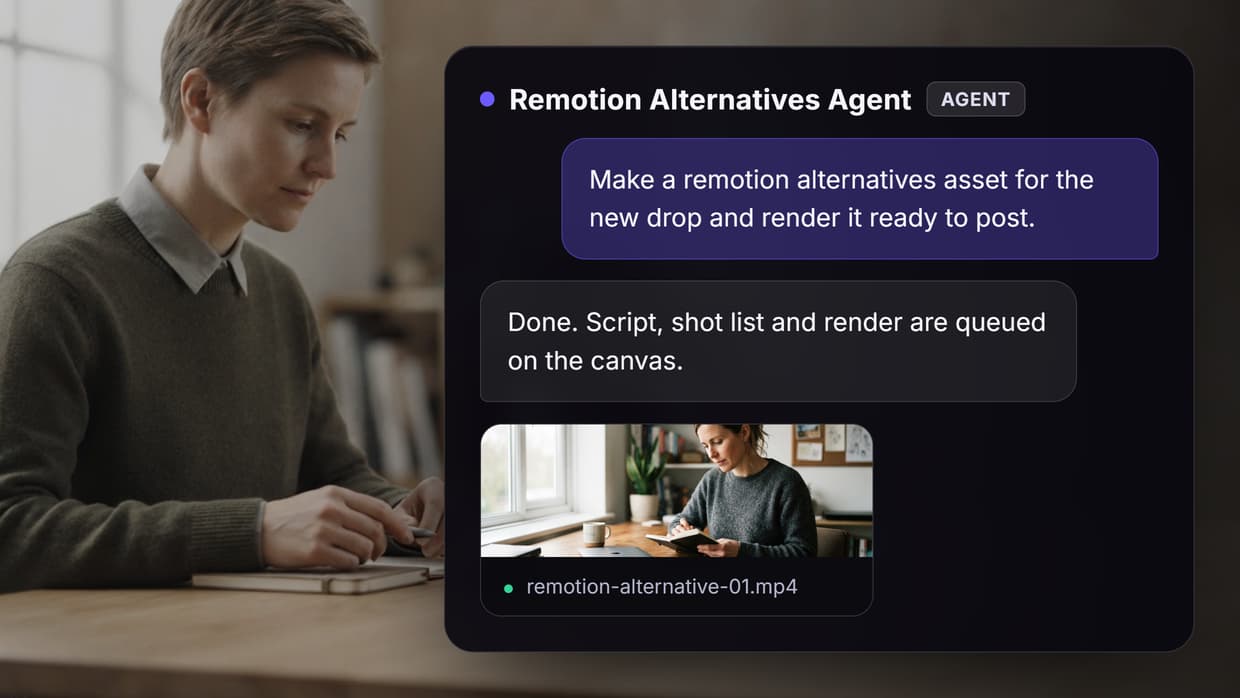
Can these be triggered from a coding agent? Every hosted option here exposes a REST API an agent can call, and several publish MCP servers. Agent-driven editing is covered in agent that edits video tools.
Conclusion
There is no single best Remotion alternative in 2026, because Remotion sits at the intersection of three jobs. If you only need rendering, Shotstack or Creatomate remove the infrastructure. If you need code-level control without a licence, Revideo and Motion Canvas are the open source answers. If the harder problem is generating the footage, a visual pipeline collapses generation, editing, and delivery into one flow, which is the case Wireflow is built around. Name the job that is actually blocking you, then pick from that lane instead of comparing feature lists across all nine.

Co-Founder & Operations at Wireflow
Runs client operations and content strategy at Wireflow. Works directly with creative teams and agencies to build production AI workflows.
- Content Strategy
- Client Operations
Get unlimited ad creatives today.
One call to see if we are a fit and scope the first ad. If it fits, your first batch lands inside week one.