

Generating one video ad by hand is easy. Generating five hundred on-brand variants for a product catalog, a set of audiences, and six aspect ratios is a different problem, and it is the reason bulk video ad APIs exist. These tools let you define an ad once, then mint variants programmatically by looping a single endpoint over a spreadsheet or a product feed. The same pattern lets a team create ads with AI from one endpoint, building the ad on a canvas once and then calling that workflow to loop it over a product feed. Wireflow sits at the top of this list because it treats a whole multi-model pipeline as one callable workflow, but the right pick depends on whether you need template compositing, AI actors, or full model chaining.
The tools below split into two camps. Template compositors like Creatomate, Shotstack, and Bannerbear swap variables into a pre-built layout and render fast, but they do not generate new footage. AI ad generators like Creatify and Arcads produce synthetic presenters and voiceover from a prompt or a product URL. The same batch can render finished spots through a commercial generator you can call as an API. A video generation API platform can span both by chaining models. We ranked each tool on batch throughput, API maturity, pricing transparency, and how much of the ad it builds without a human in the loop.
Quick Summary: The 8 Best Bulk Video Ad APIs
- Wireflow: Best overall, chains any model into one callable, loopable workflow
- Creatomate: Best template compositor, strong data-driven automation
- Shotstack: Best developer API, JSON edit spec with cloud rendering
- JSON2Video: Best for simple JSON-to-video, low-friction REST
- Plainly: Best for After Effects teams, template automation at scale
- Creatify: Best AI ad generator, product URL to UGC-style ad
- Arcads: Best synthetic actors, realistic AI presenters for ads
- Bannerbear: Best lightweight auto-generation, images plus short video
1. Wireflow
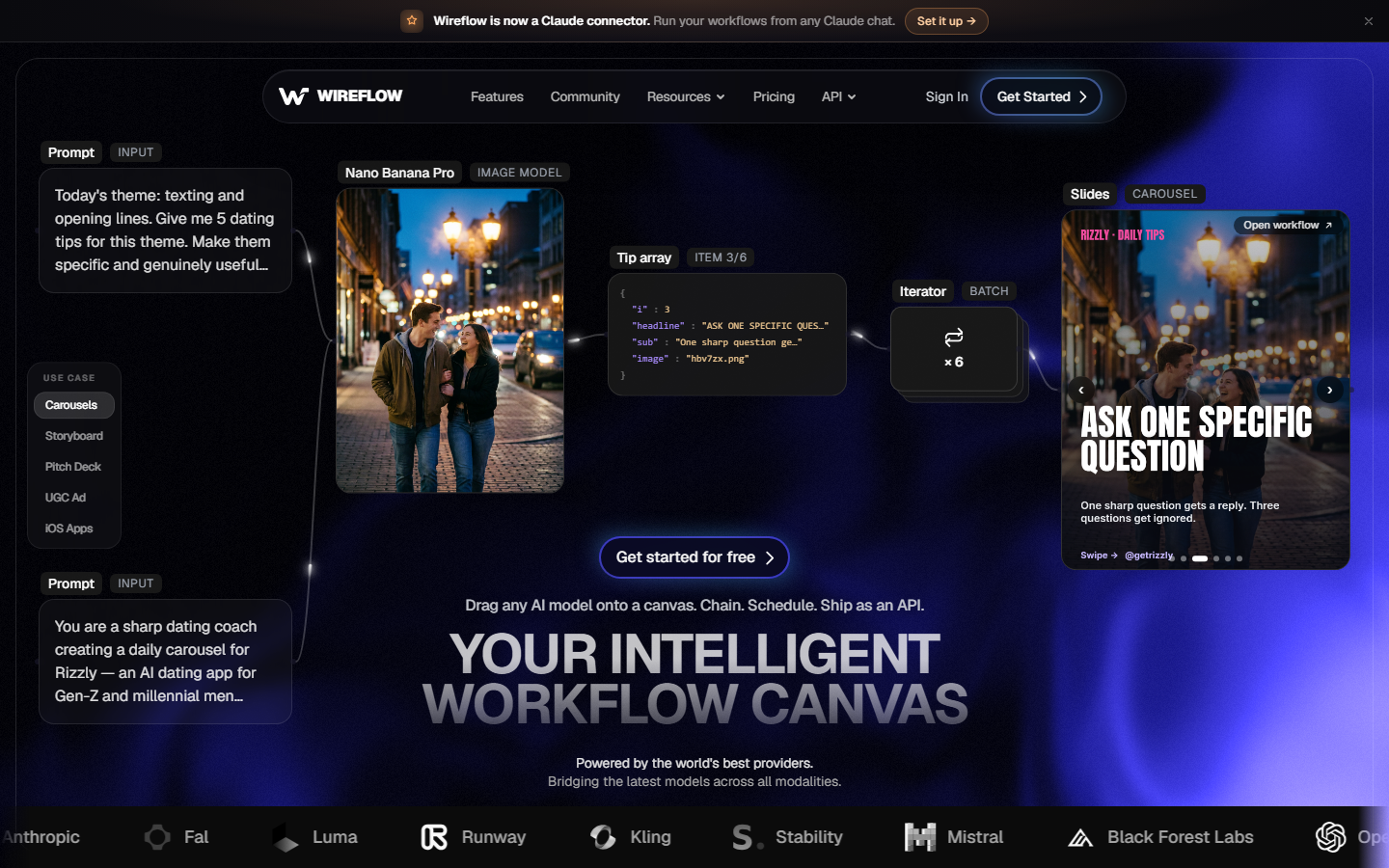
Wireflow is a node canvas where you assemble a video ad pipeline visually, then publish it as a REST endpoint and an MCP tool at the same time. Instead of locking you to one model or to pure template compositing, it lets you chain an image model into a video model into an upscaler into an audio pass, and swap any node's model without rewriting the pipeline. That published workflow becomes the unit of bulk work: loop one call over a CSV of products and you get N on-brand variants back as downloadable asset URLs, with transparent pricing at 24, 45, and 249 dollars per month and no local GPU to manage. Wireflow does not write your ad copy or decide your media strategy; it is the generation and assembly layer, not the creative brain. For a hands-on look at this in action, check out the bulk video ad API feature page.
2. Creatomate
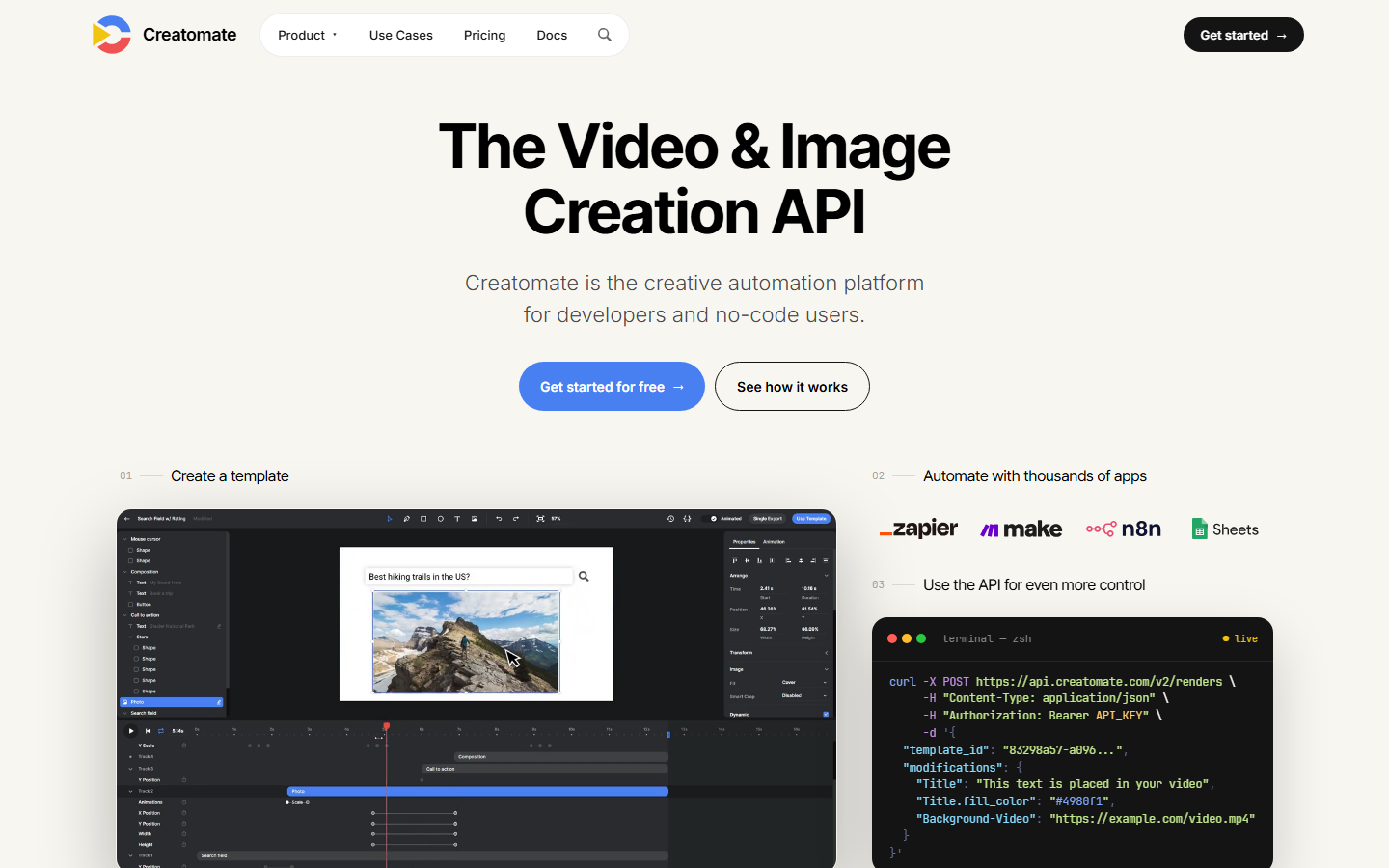
Creatomate is the most established template compositor for automated video ads. You design a template with placeholder text, images, and video slots, then push data through it via API, Zapier, or a spreadsheet import, which makes it strong for data-driven social and display variants where the layout is fixed and only the content changes across rows. The main limitation is that it does no generative AI, so if you need new footage or an AI presenter you must generate that elsewhere first. Pricing scales by render volume and resolution, and the free tier is a small credit trial rather than a production allowance. The best Creatomate alternatives guide covers where teams outgrow it.
3. Shotstack
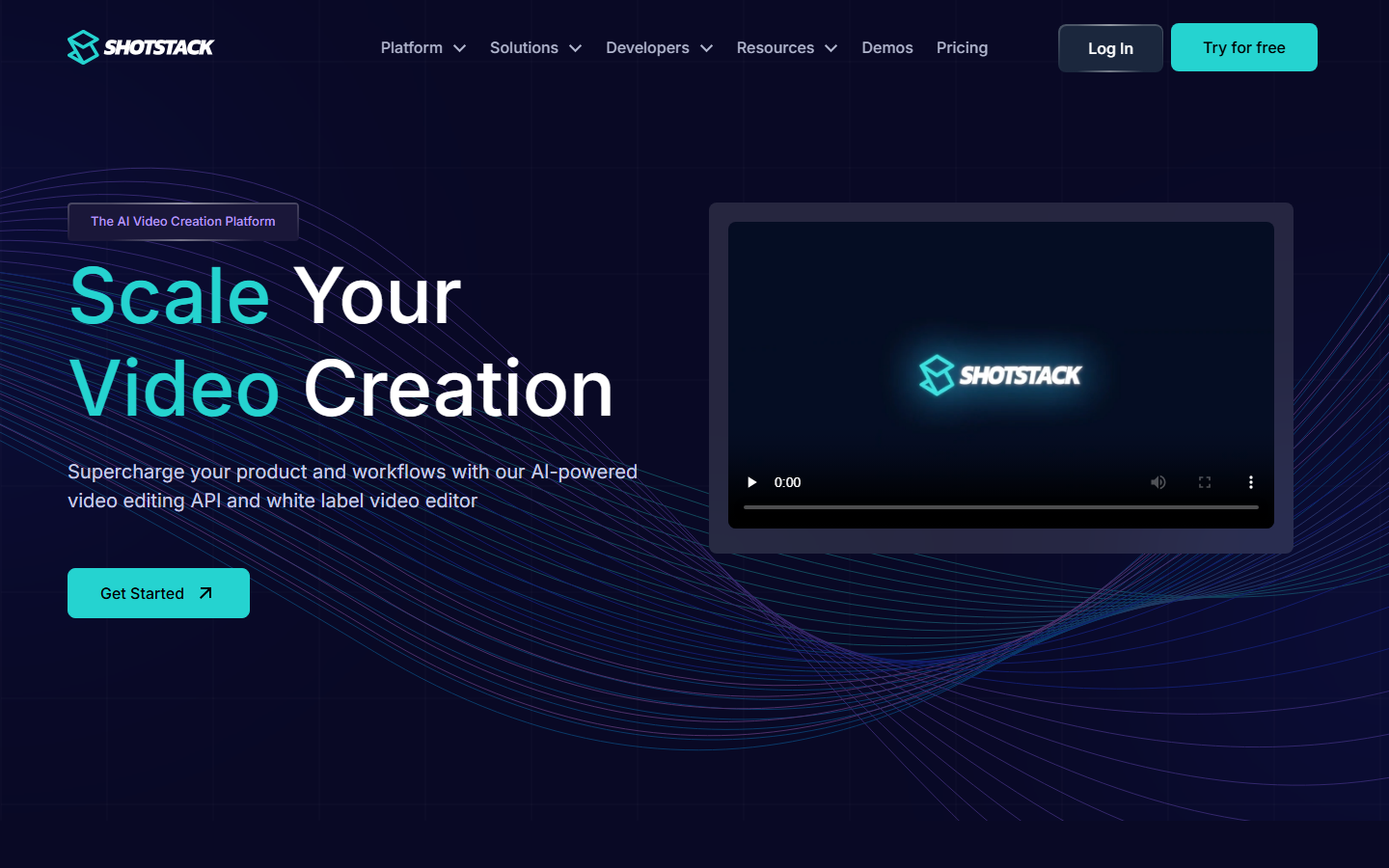
Shotstack exposes video editing as a JSON edit spec that its cloud renders at scale. Developers describe tracks, clips, transitions, and effects in a structured payload, then submit render jobs and poll for finished MP4s, backed by good docs, SDKs, and a rendering fleet built for parallel jobs. Like other compositors it assembles rather than synthesizes, so it fits programmatic variants built from stock, product shots, and brand assets, and is less useful when the ad itself needs generated actors. Pricing is usage-based per rendered minute, which keeps cost predictable once you know your variant count and clip length. Teams weighing render engines often compare it in the best Shotstack alternatives roundup.
4. JSON2Video
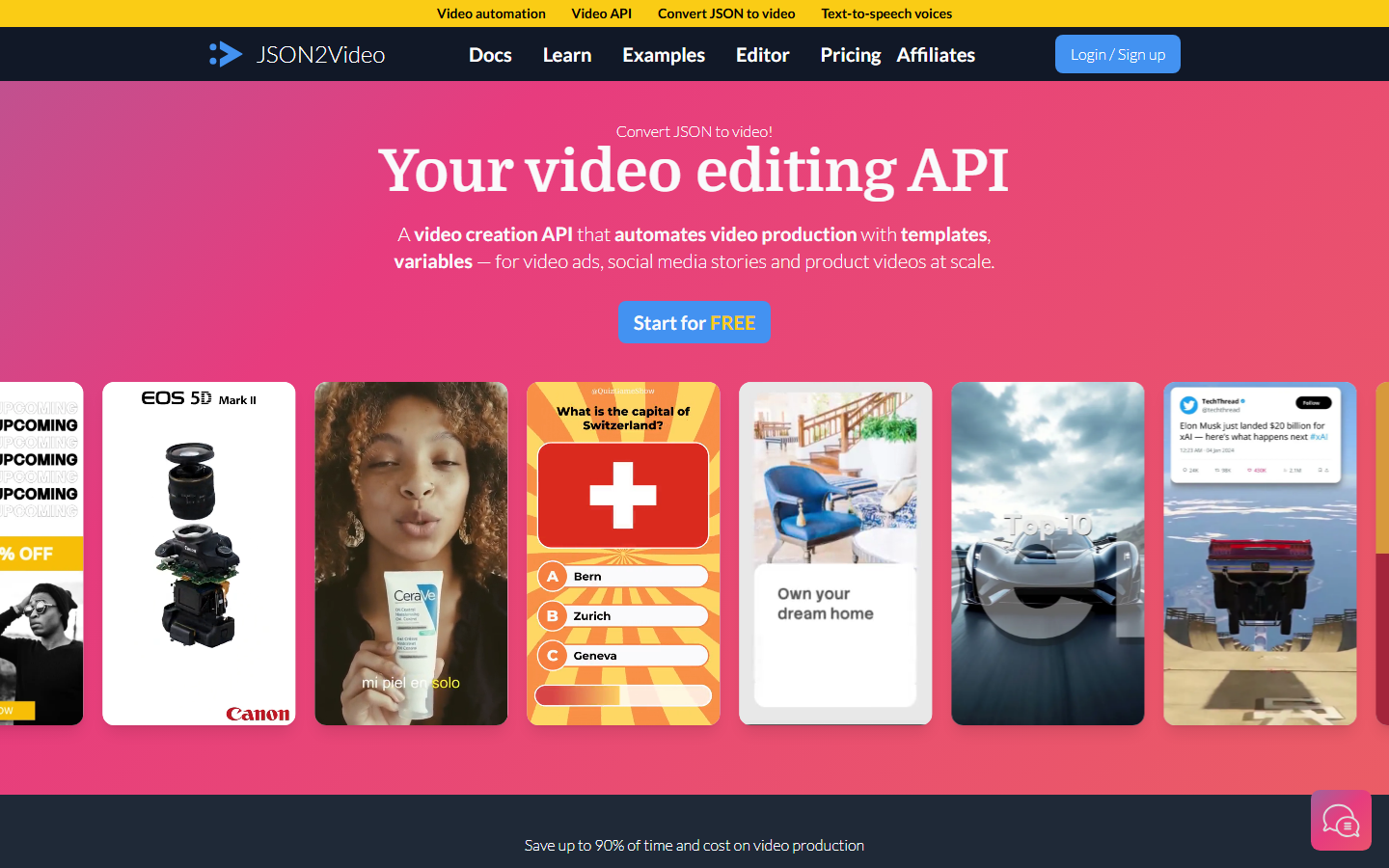
JSON2Video keeps the edit-spec idea deliberately minimal: a single JSON document describes the scenes, and the API returns a video. The low ceremony makes it easy to wire into a script or a no-code tool for simple bulk generation, such as turning a feed of headlines and images into short promo clips. The trade-off is depth, since complex multi-layer compositions or generative steps push past what a flat JSON spec handles comfortably. For teams that want the least possible integration work for straightforward templated video, it is a strong low-friction option with clear per-render pricing, as the best JSON2Video alternatives comparison shows.
5. Plainly
Plainly is built for teams that already live in After Effects. You upload an AE project, mark the dynamic layers as template parameters, and Plainly renders variants through its API in the cloud, which is the highest-fidelity path for motion-graphics-heavy ads because designers keep their existing tooling. The dependency on After Effects is both its strength and its constraint: if your team does not build in AE the value drops sharply, and there is still no generative layer for new footage. Pricing is render-based and aimed at agencies producing volume, and it pairs well with the batch image generation pipelines that feed assets into video templates.
6. Creatify

Creatify moves into the generative camp. Point it at a product URL and it produces UGC-style video ads with an AI presenter, script, and voiceover, then exposes that generation through an API for ecommerce-scale catalogs, which is genuinely different work from compositing because it invents the ad rather than swapping variables into a fixed layout. The limitation is that you are constrained to Creatify's avatars, formats, and generation style, so it is excellent for high-volume product ads where a synthetic spokesperson works and less flexible when you need a bespoke pipeline. Cost-conscious teams should read the Creatify pricing breakdown before committing to a plan.
7. Arcads
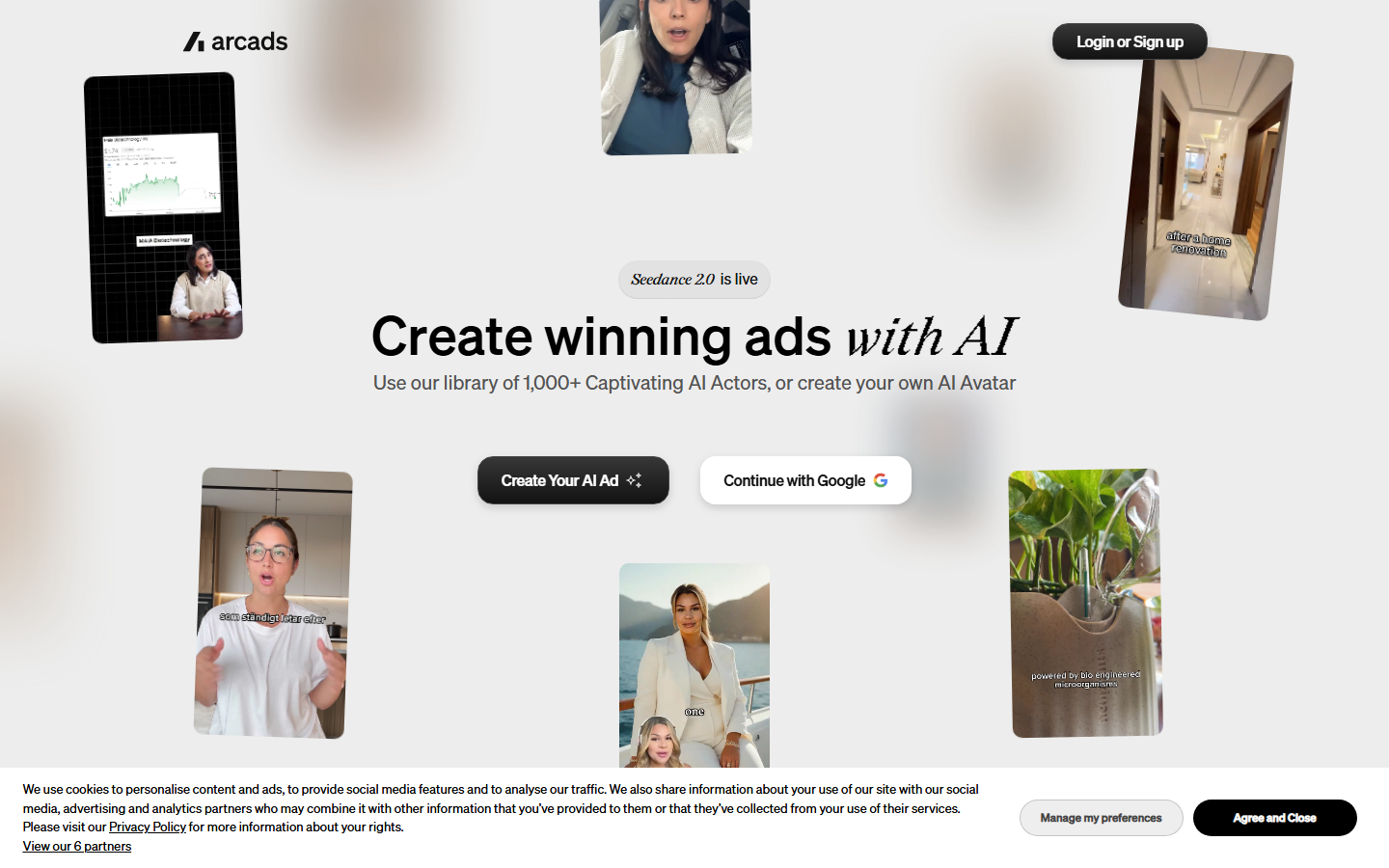
Arcads focuses on realistic AI actors for ads. You supply a script and choose from a library of synthetic presenters, and Arcads generates talking-head UGC ads convincing enough for paid social, which suits performance teams that want many creative angles tested quickly without booking real creators. Where it is narrower is scope, since it produces the presenter clip rather than a full composited ad with product overlays, captions, and end cards, so many teams pair it with a compositor to finish the ad. Pricing is subscription-based with generation limits per tier, and agencies scaling this format should look at UGC video automation for agencies for the operational side.
8. Bannerbear
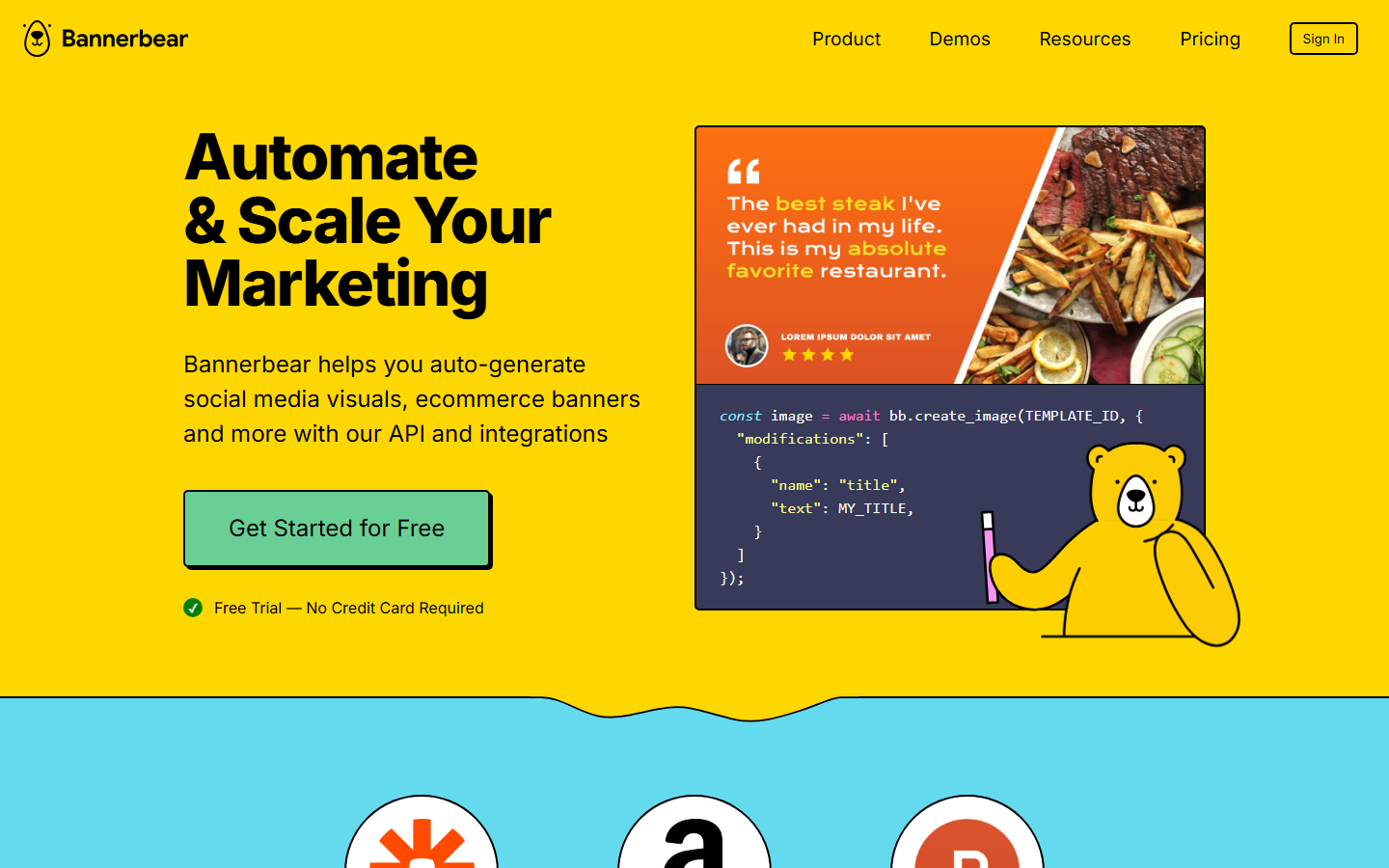
Bannerbear started as an auto-generation API for images and expanded into short video. You define a template, then generate personalized images and simple videos at scale through a clean REST API and native integrations, which covers a lot of ground with minimal setup for ad needs that skew toward static and lightly animated formats. Its video capabilities are intentionally lightweight, so it is not the tool for complex multi-scene ads or generative footage. Bannerbear is best seen as a fast, dependable variant engine for image-first campaigns that occasionally need a short video, and it appears on many AI ad generator shortlists for exactly that reason.
Comparison Table
| Tool | Type | Generates AI footage | Bulk method | Pricing model |
|---|---|---|---|---|
| Wireflow | Model-chaining workflow | Yes, any model | Loop endpoint over CSV/feed | 24 to 249 per month plus compute |
| Creatomate | Template compositor | No | Data feed, Zapier, API | Per render volume |
| Shotstack | Editing API | No | JSON render jobs | Per rendered minute |
| JSON2Video | Editing API | No | JSON per video | Per render |
| Plainly | AE template render | No | AE template parameters | Per render |
| Creatify | AI ad generator | Yes, avatar | API over product URLs | Subscription |
| Arcads | AI actor generator | Yes, presenter | Script per generation | Subscription |
| Bannerbear | Auto-generation API | No | Template plus data | Per generation |
How to Choose the Right Bulk Video Ad API
Start by naming the bottleneck. If you already have all the footage and only the copy, images, and product data change across variants, a template compositor is the cheapest, fastest path, and the best video generation API guide can help you shortlist candidates. If the ad itself must be generated, an AI ad generator or a model-chaining platform is the only real option.
The second question is how much of the pipeline you want in one place. Stitching a generator, an editor, and an upscaler together with separate vendors means separate auth, billing, and failure modes, so a single AI orchestration API that runs the whole chain behind one endpoint reduces that operational surface. Weigh that against lock-in, and prefer platforms that let you swap the underlying models as they improve. If your callers are agents rather than scripts, the best video API for coding agents breakdown is a useful companion read.
Try it yourself: Build this bulk video ad workflow in Wireflow with the exact model-chaining setup discussed above, then call it over your product feed to mint variants at scale.
Frequently Asked Questions
What is a bulk video ad API? A bulk video ad API lets you generate many video ad variants programmatically instead of building each one by hand. You define an ad as a template or a workflow, then call an endpoint once per row of data, per audience, or per aspect ratio to produce dozens or hundreds of finished videos.
What is the difference between a template compositor and an AI video generator? A template compositor swaps your existing text, images, and clips into a fixed layout and renders it, but it does not create new footage. An AI video generator synthesizes new content such as an avatar, voiceover, or scene from a prompt or product URL. Some platforms chain both steps in one pipeline.
Can I loop one API call over a spreadsheet to make many ads? Yes. The core bulk pattern is a published workflow or template exposed as a REST endpoint, which you call in a loop over a CSV or product feed. Each call returns an asset URL, so a feed of N products yields N on-brand variants. The how to build multi-model AI workflows guide walks through the pattern.
Do these APIs run asynchronously? Most video rendering and generation is async because a single clip can take seconds to minutes. You submit a job, receive an ID, and either poll for status or receive a webhook when the asset is ready. Design your batch runner to handle retries and rate limits rather than blocking on each call.
Which bulk video ad API is cheapest? Cost depends on variant count, clip length, and whether AI generation is involved. Pure compositors tend to be cheapest per render because they do no generation, while AI actor tools cost more per clip. Compare published pricing tiers against your monthly variant volume before committing.
Can an AI agent call these workflows directly? Some platforms expose workflows as tools an AI agent can invoke, not just as REST endpoints, which lets an agent list available workflows, run one with typed inputs, and retrieve asset URLs. See the best MCP server for video editing overview for how agent access works in practice.
Conclusion
Bulk video ad generation in 2026 comes down to matching the tool to the job: template compositors for variant-swapping at low cost, AI generators for synthetic footage, and model-chaining platforms when you need both behind one endpoint. Engines like Creatomate and Shotstack remain excellent for fixed-layout work, while Creatify and Arcads handle the generative side. Wireflow earns the top spot for teams that want to build a pipeline once, swap models freely, and loop a single call over a feed to produce ads at scale. Pick the camp that matches your bottleneck, confirm the pricing against your real variant volume, and start with a small batch before you commit a full campaign.
Would you rather we just built it?
We get on a call, learn your style, build the workflow, and ship the deliverables on a schedule. You keep the workflow either way.


