

TopView AI turns a product link into a UGC-style ad video, and for a lot of teams that is enough. The friction shows up later, when you need twenty variants instead of one, a specific voice model, or an avatar step that feeds into your own editing chain. That is usually the point where people start comparing options, and where a node-based canvas like Wireflow enters the picture because it lets you chain the image model, the avatar model, and the video assembly step into one repeatable run. This guide ranks eight TopView alternatives for 2026, with real screenshots, pricing notes, and the specific job each tool is actually good at.
Quick summary: the 8 best TopView AI alternatives
- Wireflow: Best overall. Chain any model into one repeatable ad pipeline.
- Creatify: Best for product-link-to-ad parity with TopView.
- Arcads: Best for scripted actor-style UGC ads.
- HeyGen: Best for avatar quality and API access.
- MakeUGC: Best for high-volume UGC batches.
- InVideo AI: Best for beginners and prompt-to-video.
- Synthesia: Best for corporate and training video.
- OpusClip: Best for repurposing long-form footage.
Why teams look for a TopView alternative
The complaints are consistent across review sites. TopView is fast at the first draft and slower at everything after it: variant generation is manual, avatar and voice selection is limited to what the platform ships, and there is no clean way to plug the output into a wider production process. For a single founder posting a few ads a month that is fine. For an agency running creative tests across five clients, the ceiling arrives quickly, which is the same pressure that pushes teams toward systematic ad creative testing.
The second reason is model lock-in. TopView decides which generation models sit behind each step. When a better avatar model ships, you wait for the roadmap. Teams that care about output quality increasingly want the model choice in their own hands, which is why UGC creators have been moving toward tools that expose the underlying models rather than hiding them.
1. Wireflow: best overall
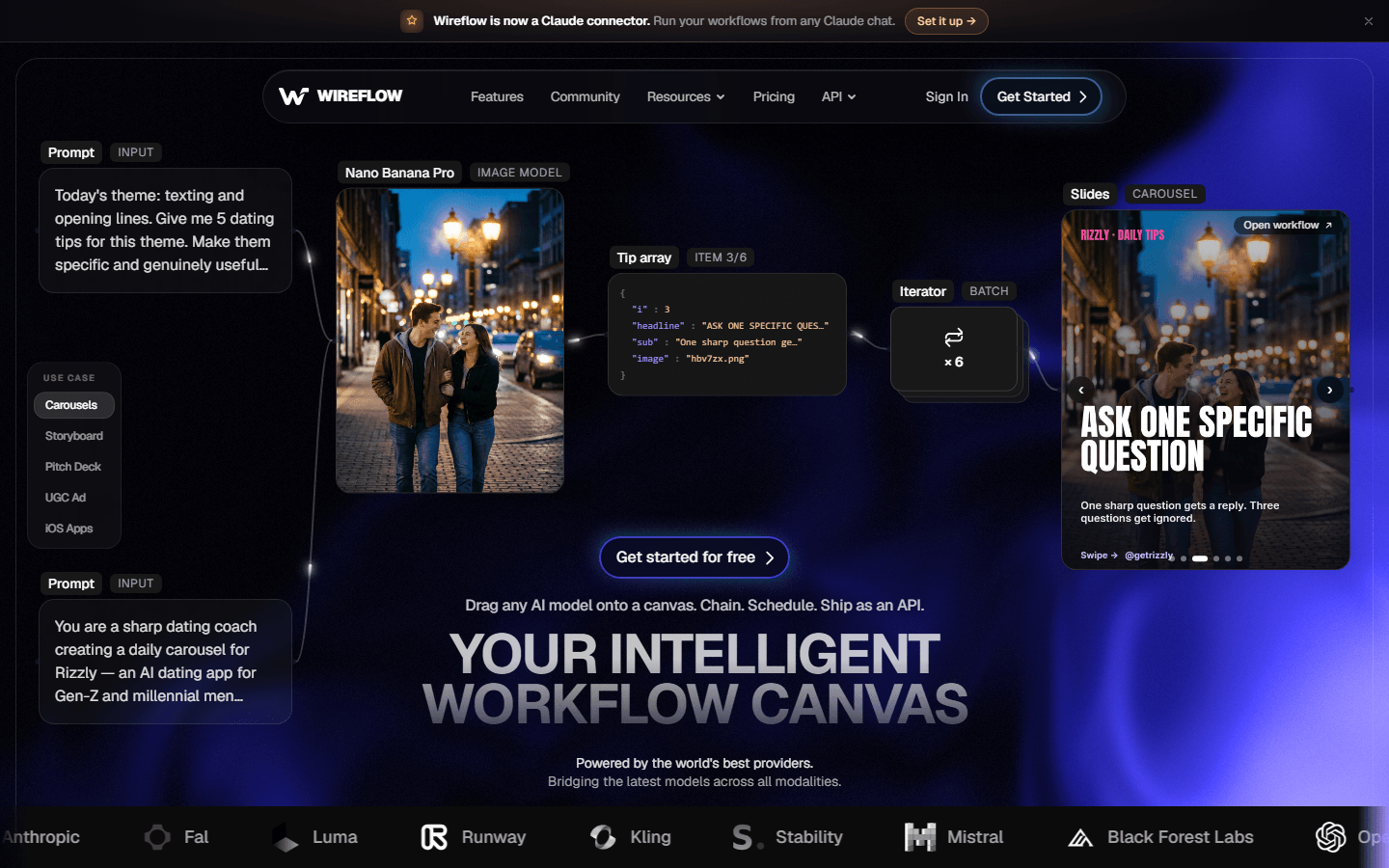
Wireflow is a visual canvas where each AI model is a node and the nodes connect. A typical UGC ad flow looks like this: a text node holds the ad script, an image node generates a casual creator still, an avatar node animates that still into a talking testimonial, and a compose node assembles the final 9:16 cut. Every node is swappable, so you can run the same script through three different avatar models and compare, rather than accepting one vendor's default. For a hands-on look at this in action, check out the TopView AI alternative feature page.
Where it differs most from TopView is repeatability. Once the flow works, you change the input and re-run it, which turns one good ad into a batch of twenty without rebuilding anything. That is the core mechanic behind automated UGC video creation, and it is why agencies tend to land here after outgrowing single-purpose generators.
Pricing is credit-based rather than seat-based, so cost tracks output volume instead of headcount. Full details are on the pricing page. The tradeoff is honest: you build the flow once, which takes longer than pasting a product URL into TopView. You get model choice and a reusable pipeline in exchange.
Best for: agencies and operators who need repeatable, multi-model ad pipelines.
2. Creatify: closest to TopView
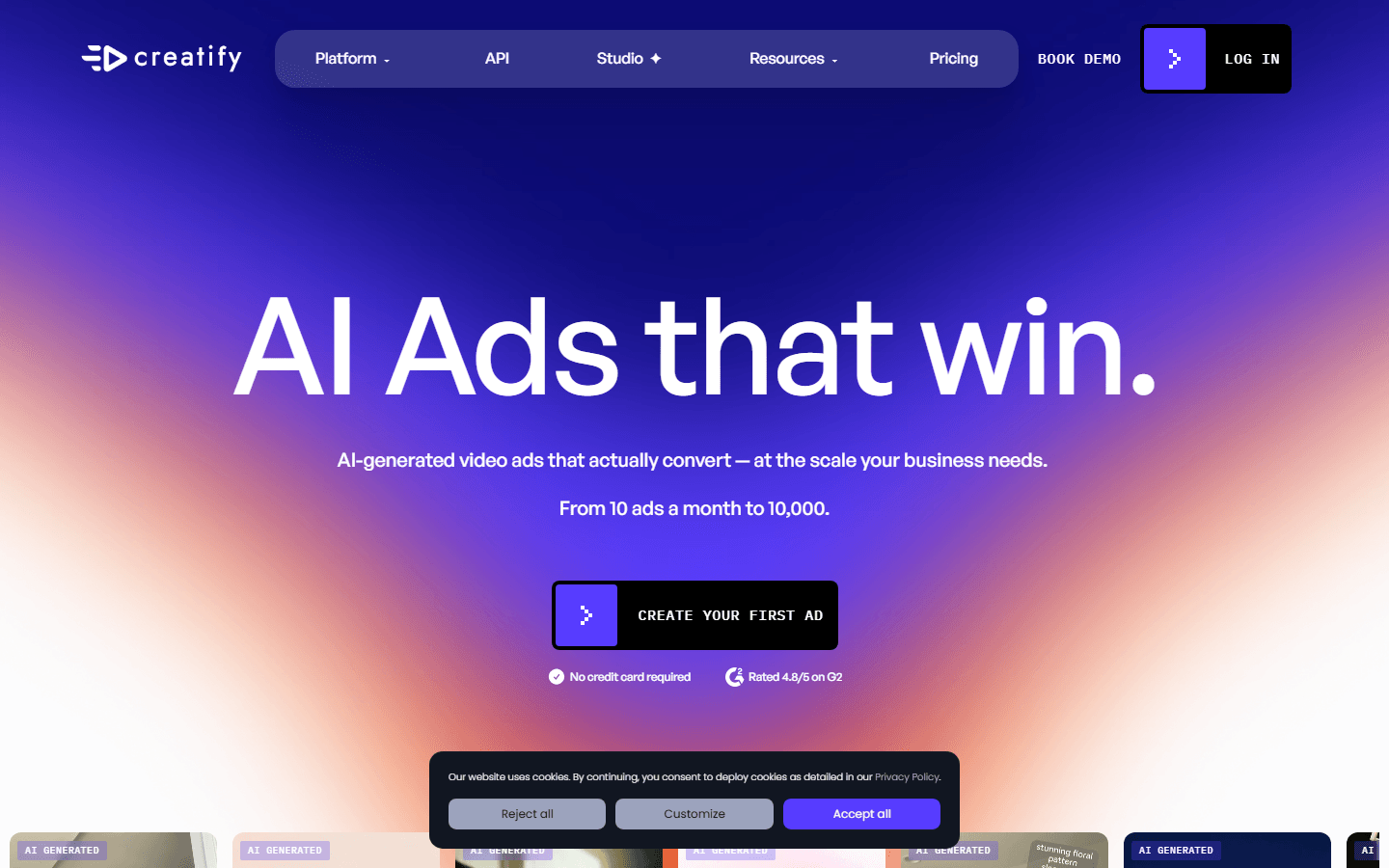
Creatify works the same way TopView does: drop in a product URL, get an ad with an AI avatar reading a generated script. The avatar library is larger, the script generator is noticeably better at hooks, and the batch mode lets you produce several variants in one pass. If you liked TopView's premise but want more polish, this is the shortest move, and the differences are covered in more depth in our Creatify alternatives breakdown.
Plans start around $39/month for a limited credit pool, with the useful tiers sitting higher; the Creatify pricing analysis walks through where the credits actually go. The limitation is the same one you left TopView over: the models are fixed and the pipeline ends at export.
Best for: teams who want TopView's workflow with better avatars and scripts.
3. Arcads: best for scripted actor ads
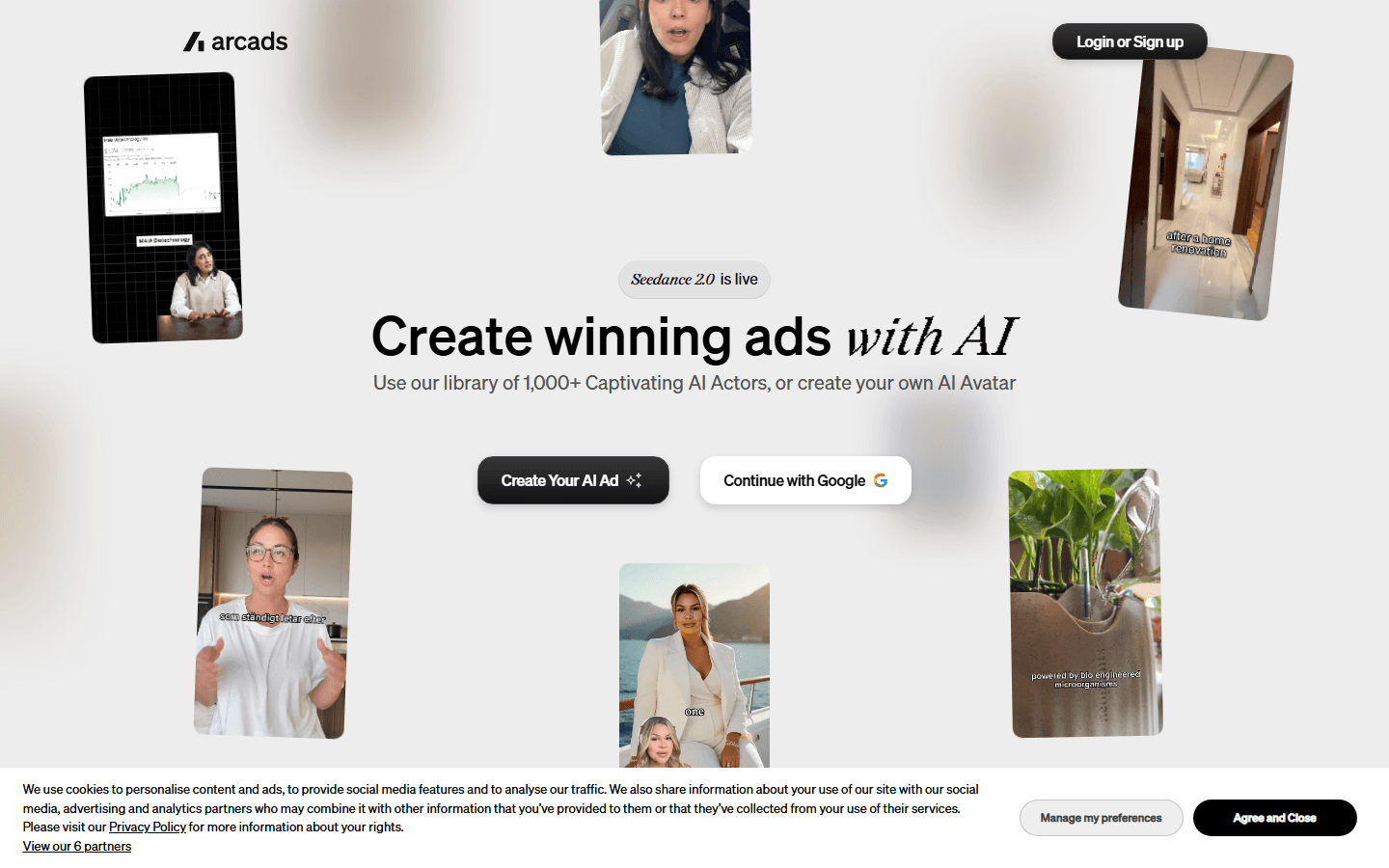
Arcads takes a narrower position: you write the script, pick from a roster of AI actors, and it renders the delivery. There is no product-URL magic, which is the point. Output feels more like a real casting decision than an automated ad, and the actor performances hold up better on TikTok than most avatar tools. The head-to-head with its closest rival is covered in Arcads vs Creatify.
Pricing starts at $110/month for 10 videos, which is steep per unit; the Arcads pricing breakdown shows how that scales. Buy it for performance quality, not for volume.
Best for: performance marketers who write their own scripts and care about delivery.
4. HeyGen: best avatar quality and API
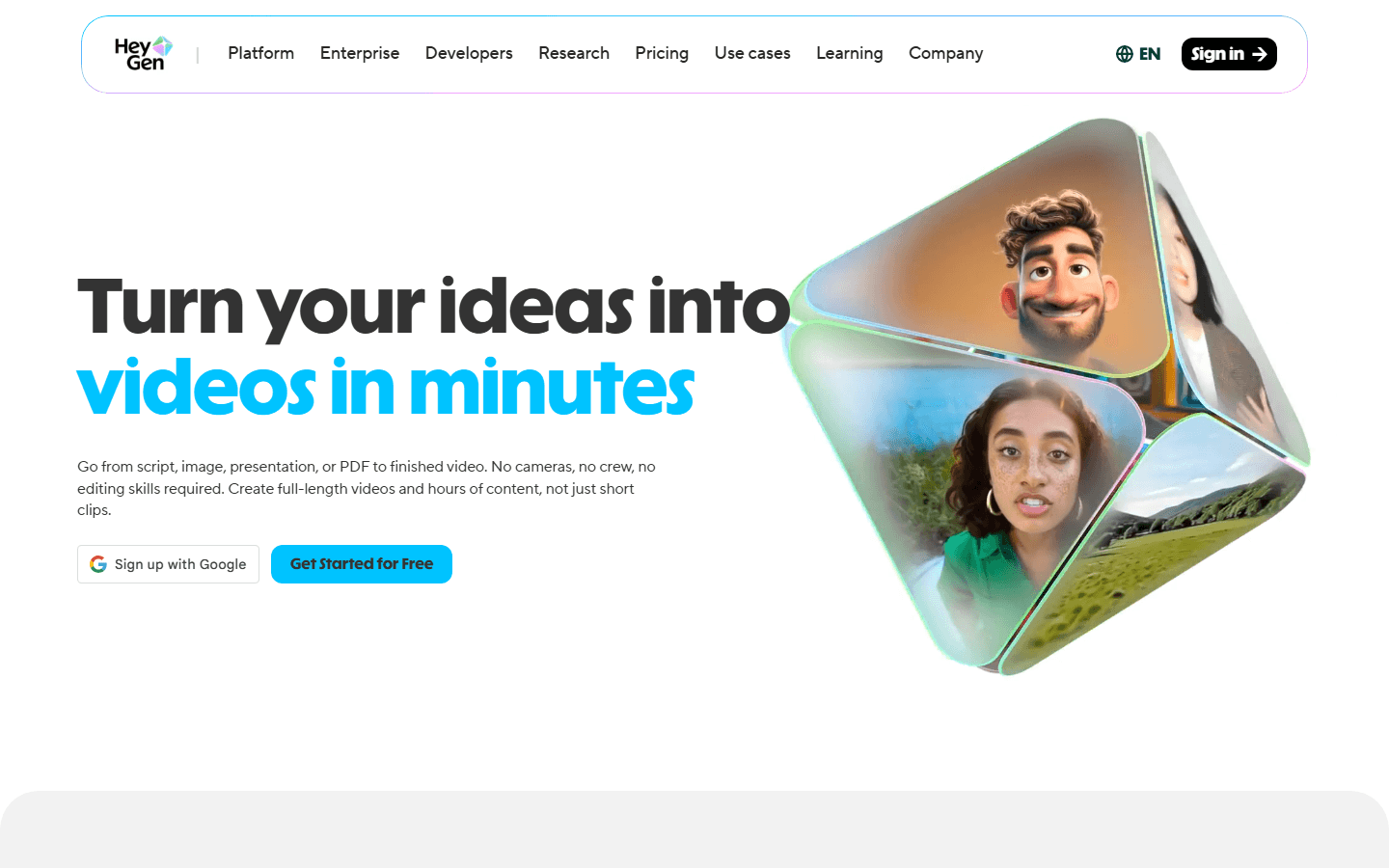
HeyGen has the strongest avatar rendering in this list, with lip sync and expression handling that hold up in close crops. It also ships a real API, so it can act as one step inside a larger system rather than as the whole tool, and teams frequently pair it with a canvas for exactly that reason. Our HeyGen alternatives guide covers where it wins and where it costs too much.
The catch is that HeyGen is an avatar engine, not an ad engine. It does not write scripts from a product page or assemble a finished vertical ad, so you supply the surrounding steps. Plans start at $29/month with credit limits that tighten fast at 1080p.
Best for: teams who need broadcast-grade avatars and will build the rest themselves.
5. MakeUGC: best for volume batches
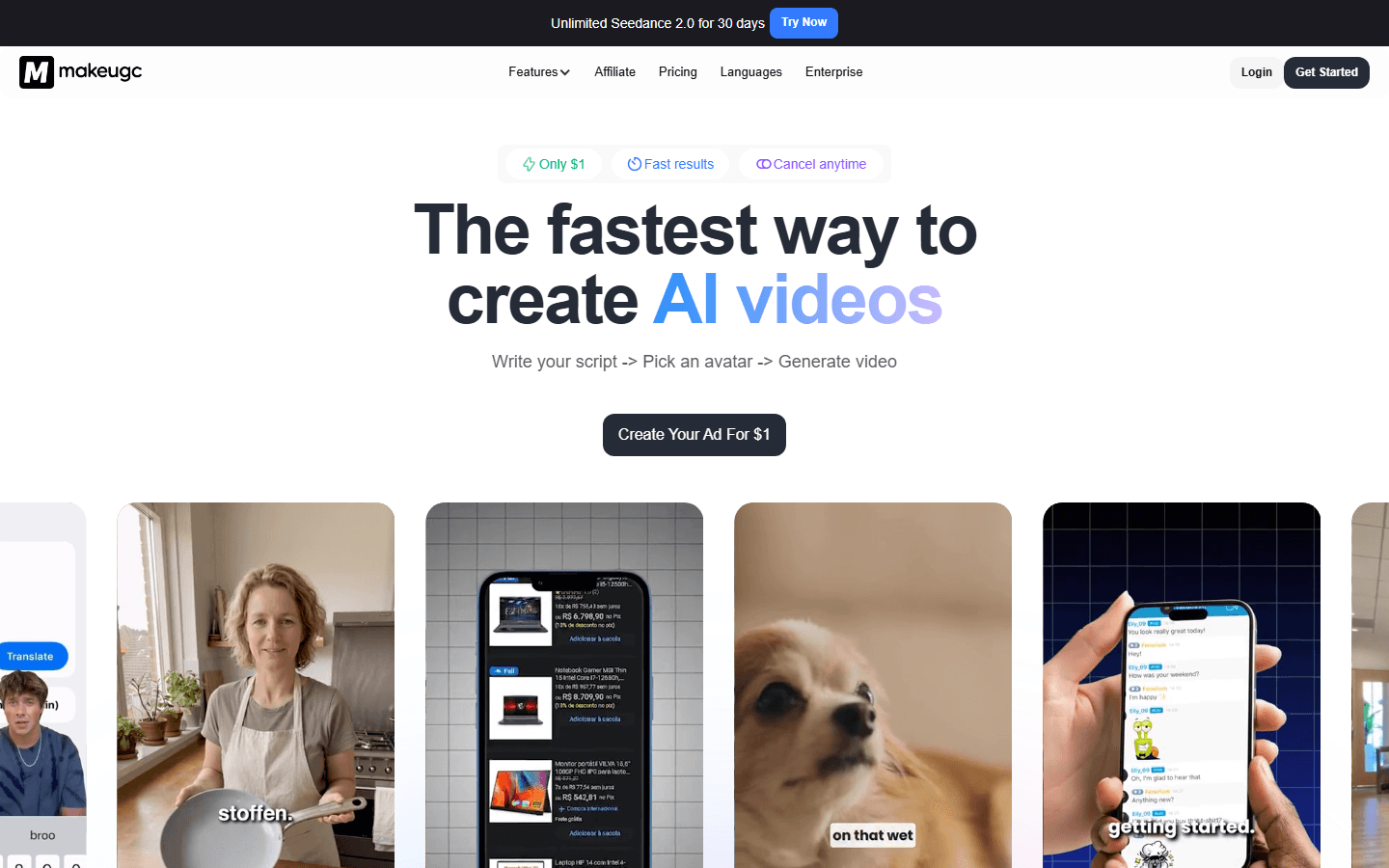
MakeUGC is built around throughput. You load a script set and a creator selection, and it renders dozens of variants in a queue. For teams whose bottleneck is quantity rather than craft, that model works, and it sits alongside the other options in our roundup of tools that mass-produce UGC ads.
Quality is a step below HeyGen and Arcads, and the creator library repeats across customers, so ads from different brands can look related. Full comparisons live in the MakeUGC alternatives guide.
Best for: volume-first testing where variant count beats per-video polish.
6. InVideo AI: best for beginners
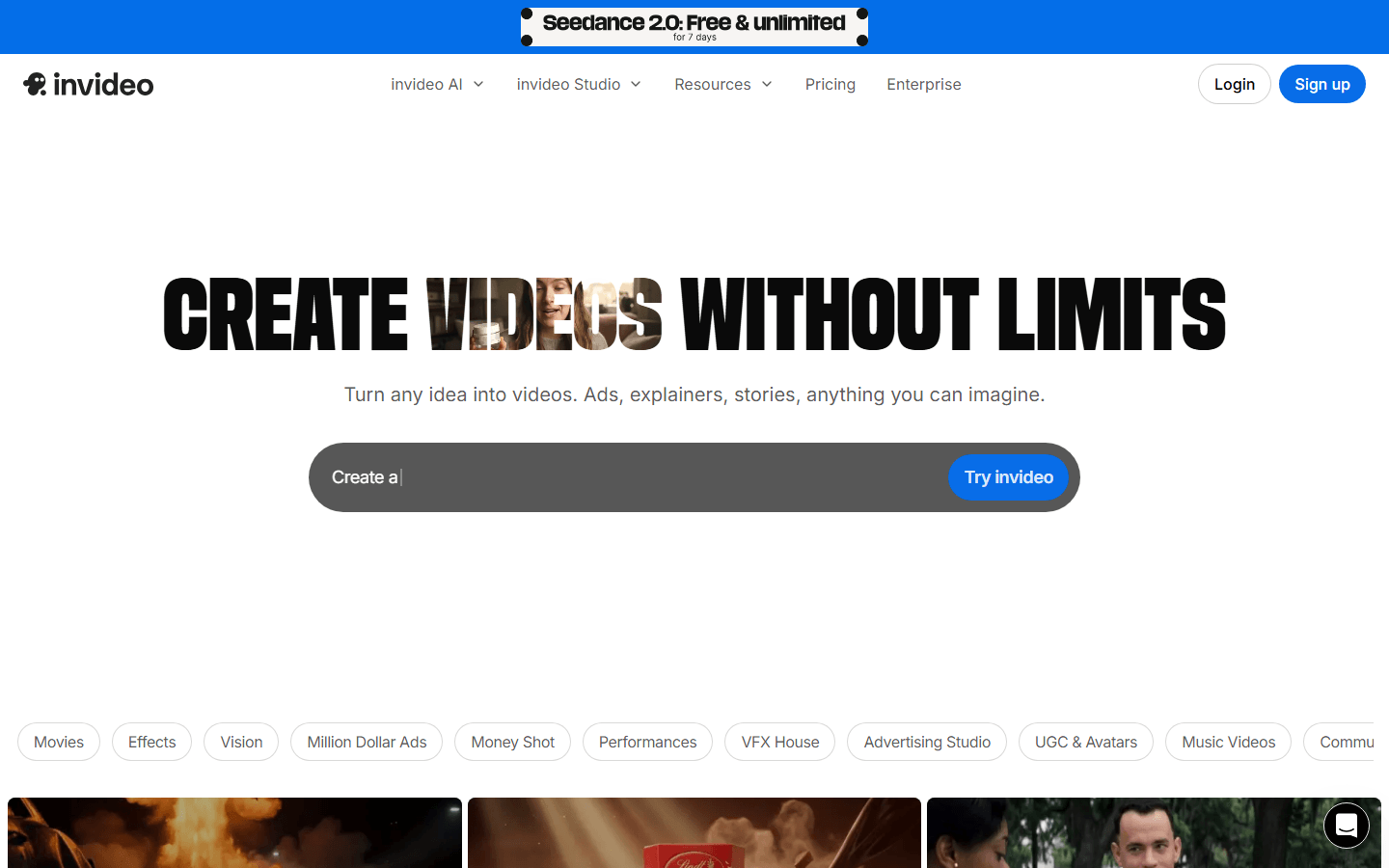
InVideo AI is the easiest tool here. You describe the video in plain English and it returns a cut with stock footage, voiceover, subtitles, and music already in place, then you refine by chatting with it. It is not a UGC-avatar tool, so the output reads as a produced brand video rather than a creator testimonial, closer in spirit to a general AI video generator.
Free tier output carries a watermark, which matters if you plan to run ads; see AI video generators without watermarks for the alternatives. Paid plans start at $28/month.
Best for: solo founders and beginners who want a finished video from one prompt.
7. Synthesia: best for corporate video
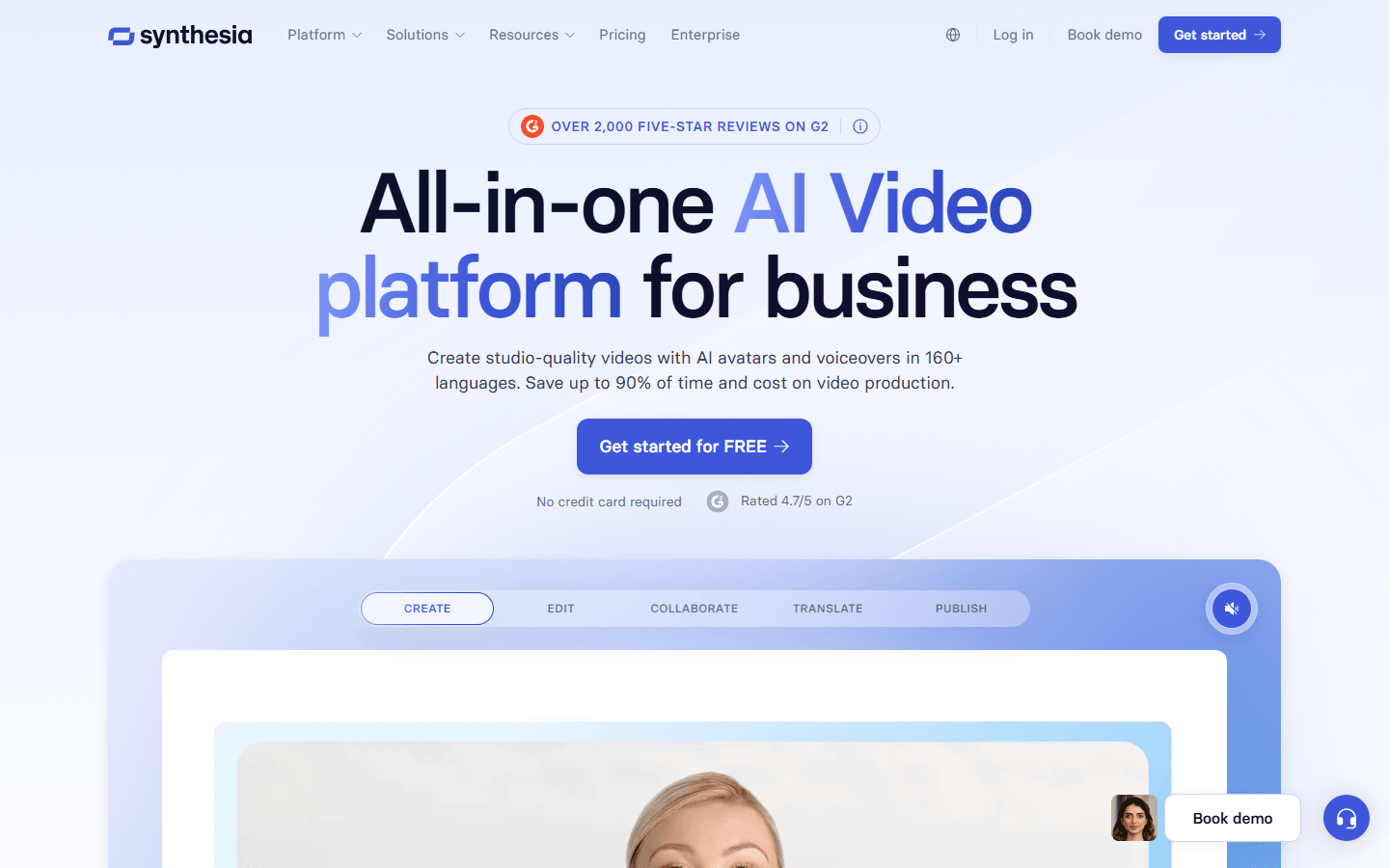
Synthesia is the enterprise standard for talking-head video: training modules, product explainers, internal comms, over 140 languages, and a brand-kit system that keeps output consistent across a large team. It is closer to the talking photo and talking head category than to performance ads.
For UGC specifically it is the wrong shape. The avatars read as polished and corporate, which is the opposite of what a TikTok ad needs, and the entry plan at $29/month caps you at a low minutes ceiling. The Synthesia alternatives comparison covers the ad-focused options in more detail.
Best for: L&D and internal communications teams, not paid social.
8. OpusClip: best for repurposing footage
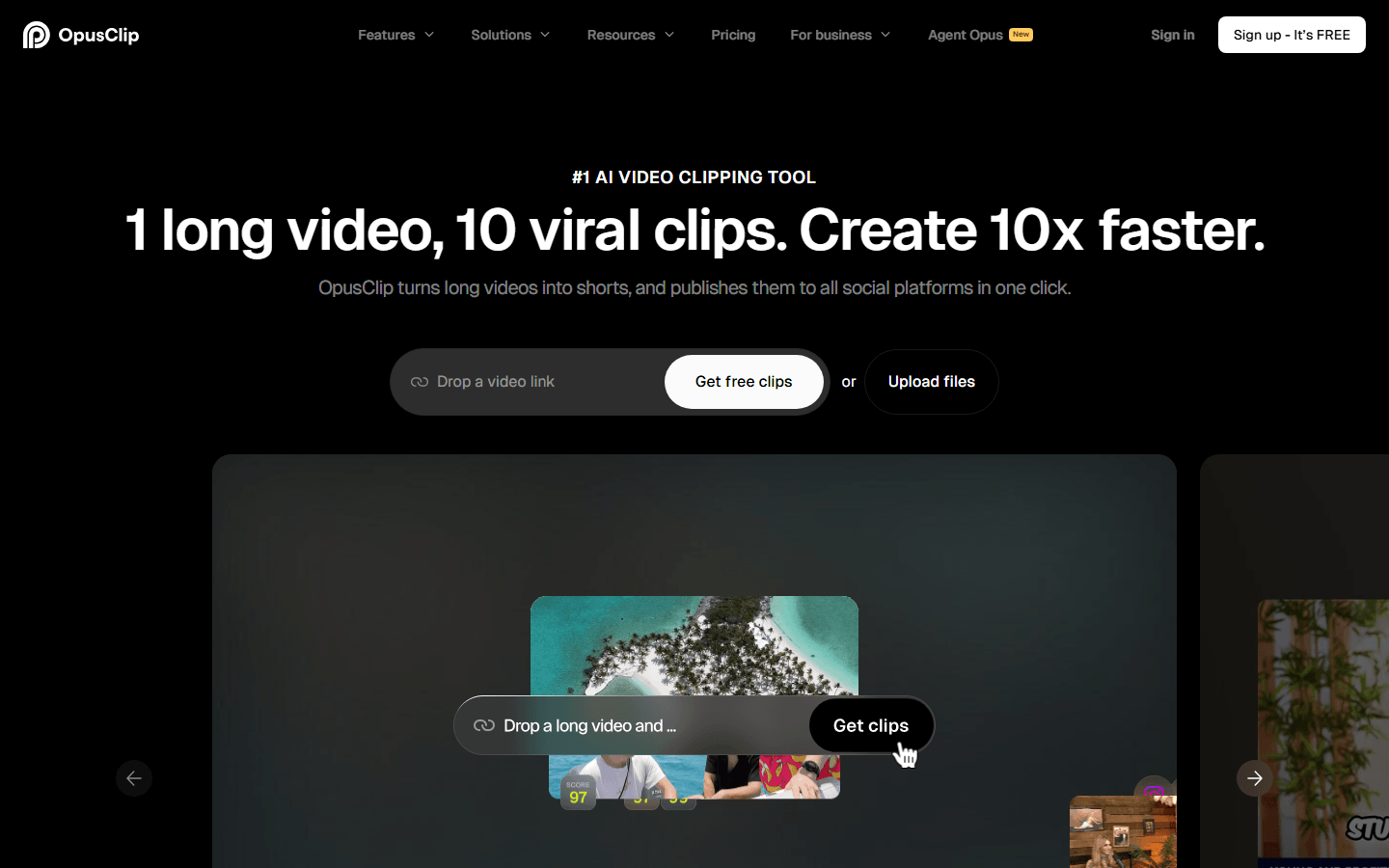
OpusClip solves an adjacent problem: you already have long-form video and want vertical clips out of it. It finds the moments likely to perform, reframes to 9:16, and burns in captions. If your raw material is podcast or webinar footage rather than a product page, this beats every generator in the list, and it pairs well with a broader creative production process.
It generates nothing net-new, so it is a complement to a TopView replacement rather than a substitute. Free tier available, paid from $15/month.
Best for: creators sitting on a long-form back catalog.
Comparison table
| Tool | Best for | Product URL input | Model choice | Starting price |
|---|---|---|---|---|
| Wireflow | Repeatable multi-model pipelines | Via flow input | Full | Credit-based |
| Creatify | TopView-style ads, better polish | Yes | Fixed | $39/mo |
| Arcads | Scripted actor performances | No | Fixed | $110/mo |
| HeyGen | Avatar quality plus API | No | Fixed | $29/mo |
| MakeUGC | High-volume batches | Partial | Fixed | $49/mo |
| InVideo AI | Beginners, prompt-to-video | No | Fixed | $28/mo |
| Synthesia | Corporate and training video | No | Fixed | $29/mo |
| OpusClip | Repurposing long-form footage | No | Fixed | $15/mo |
How to choose
Match the tool to the bottleneck. If the bottleneck is speed to a first ad, Creatify is the shortest path. If it is performance quality on a small number of ads, Arcads. If it is raw variant count, MakeUGC. If it is avatar fidelity inside a system you already control, HeyGen. If the bottleneck is that every new campaign means rebuilding the same process by hand, that is a pipeline problem, and a video ad variant generator built on a canvas solves it more cleanly than any single-purpose generator.
Agencies should also price the work before picking the tool, because per-video cost changes which tier makes sense; the math is laid out in how much to charge clients for AI UGC ads. Teams shipping across multiple client accounts usually end up needing programmatic access as well, which points toward a bulk video ad API rather than a seat in a web app.
Try it yourself: Build this UGC ad workflow on the canvas. The nodes are pre-configured with the script, image, avatar, and compose steps discussed above.
FAQ
Is TopView AI free? TopView offers a limited free tier with watermarked exports and a small credit allowance. Removing the watermark and unlocking usable resolution requires a paid plan.
What is the closest alternative to TopView AI? Creatify. It uses the same product-URL-to-ad model, with a larger avatar library and a stronger script generator.
Which TopView alternative is best for agencies? Wireflow for pipeline reuse across clients, or MakeUGC if the priority is raw variant volume rather than per-client customization.
Do any of these tools let me pick the underlying AI model? Only Wireflow. The rest fix the model behind each step, so quality changes when the vendor updates their stack rather than when you choose to switch.
Can I use these tools for TikTok and Meta ads commercially? Yes, on paid plans. Check each provider's terms for avatar likeness rights, since actor-based tools like Arcads have specific usage clauses.
How much should I budget for AI UGC ads per month? A small brand testing 10 to 20 variants a month typically lands between $30 and $120. Agencies running multiple accounts should model cost per finished video rather than per seat.
Do AI UGC ads actually perform against real creator content? They perform well as volume for testing hooks and angles. Winning concepts are often reshot with real creators once the data is clear.
Which tool is best if I already have long-form video? OpusClip. It extracts vertical clips from existing footage instead of generating new material.
Conclusion
TopView is a reasonable starting point and a poor ending point. The tool you move to depends on whether your constraint is quality, volume, or process. If it is process, meaning you keep rebuilding the same ad steps for every campaign, then a node canvas is the structural fix: Wireflow lets you wire the script, image, avatar, and assembly steps together once and re-run them for every new product, with the model choice at each step staying yours.
Would you rather we just built it?
We get on a call, learn your style, build the workflow, and ship the deliverables on a schedule. You keep the workflow either way.


