 Andrew Adams · Co-Founder & Operations at Wireflow ·
 Bulk Video Ad API
Build one ad pipeline, publish it as an endpoint, then loop it over your feed to render video ad variants at scale.
Free to build · no credit card · See how it works ↓
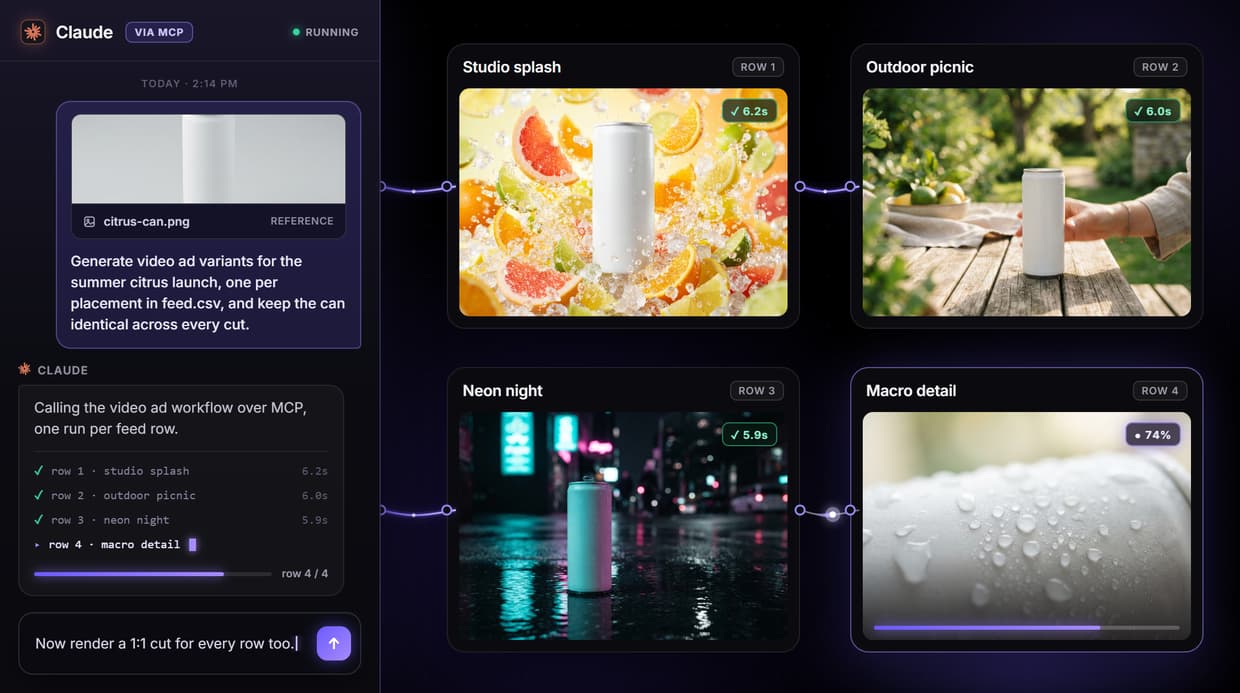
How to Use Bulk Video Ad API
Steps to get you started in Wireflow.
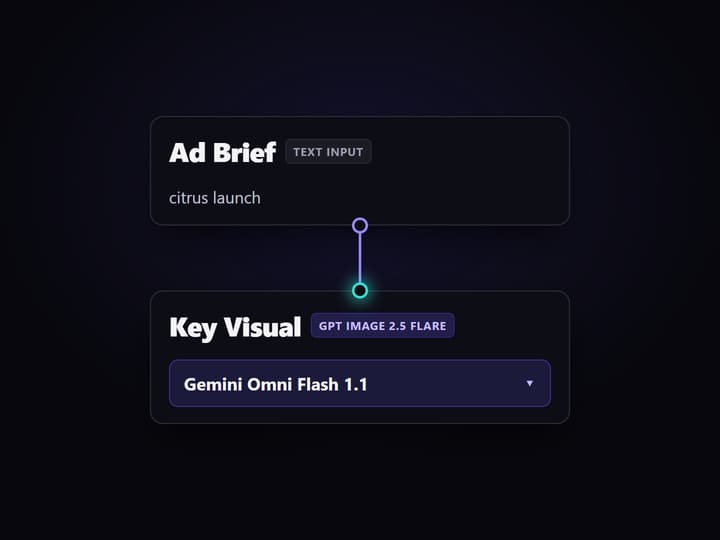
Build the ad pipeline
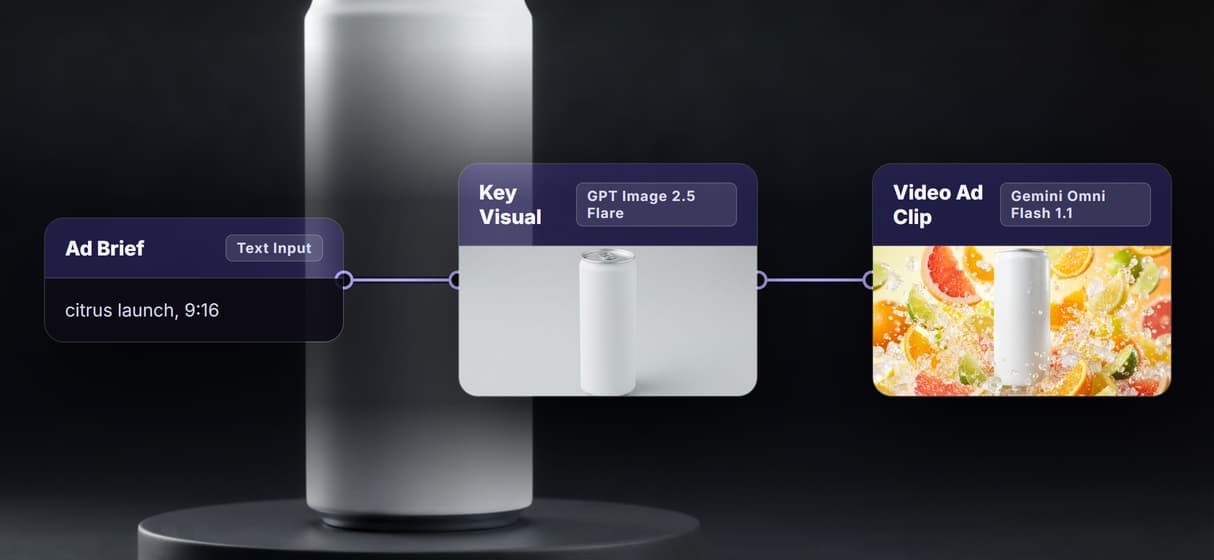
Chain an ad brief into a key visual on GPT Image 2.5 Flare, a clip on Gemini Omni Flash 1.1, and a composed cut, all on one Wireflow canvas with no local GPU.
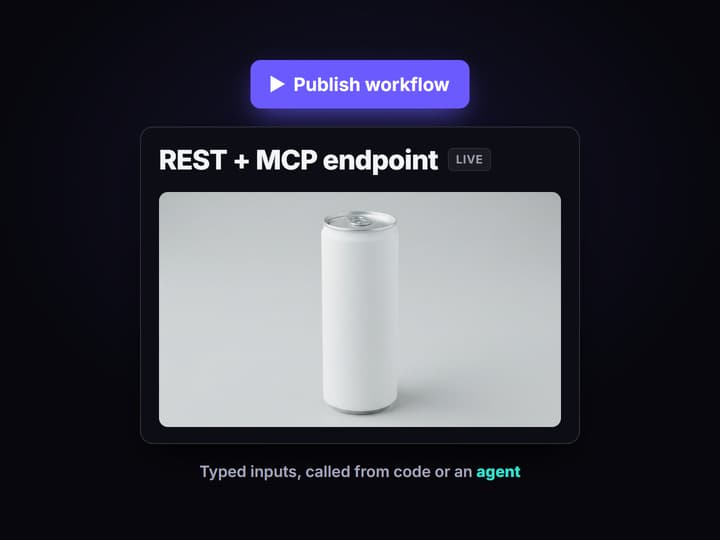
Publish it as an endpoint
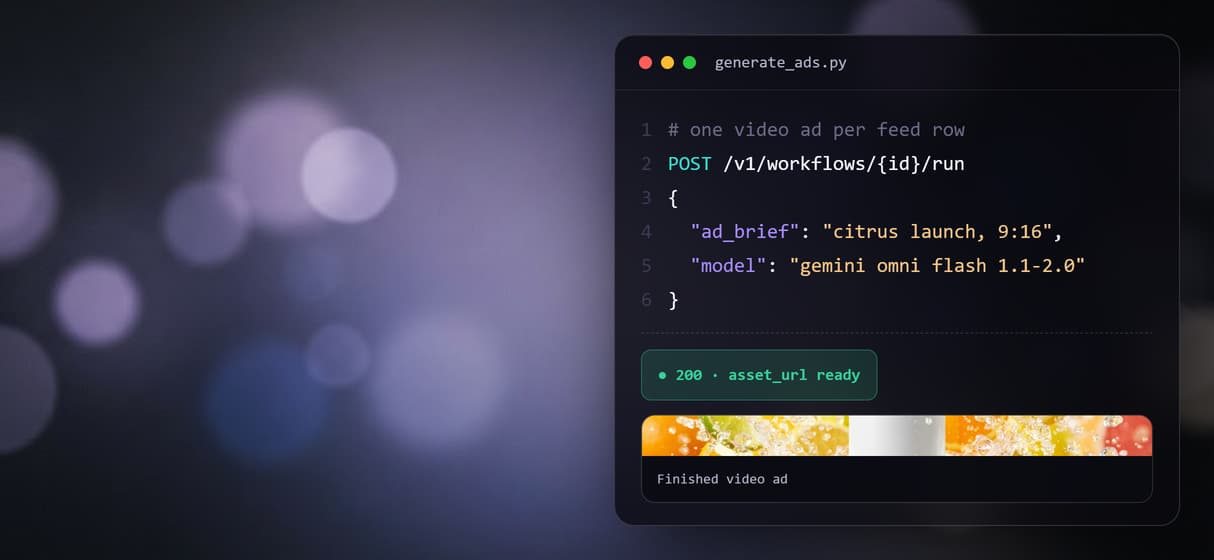
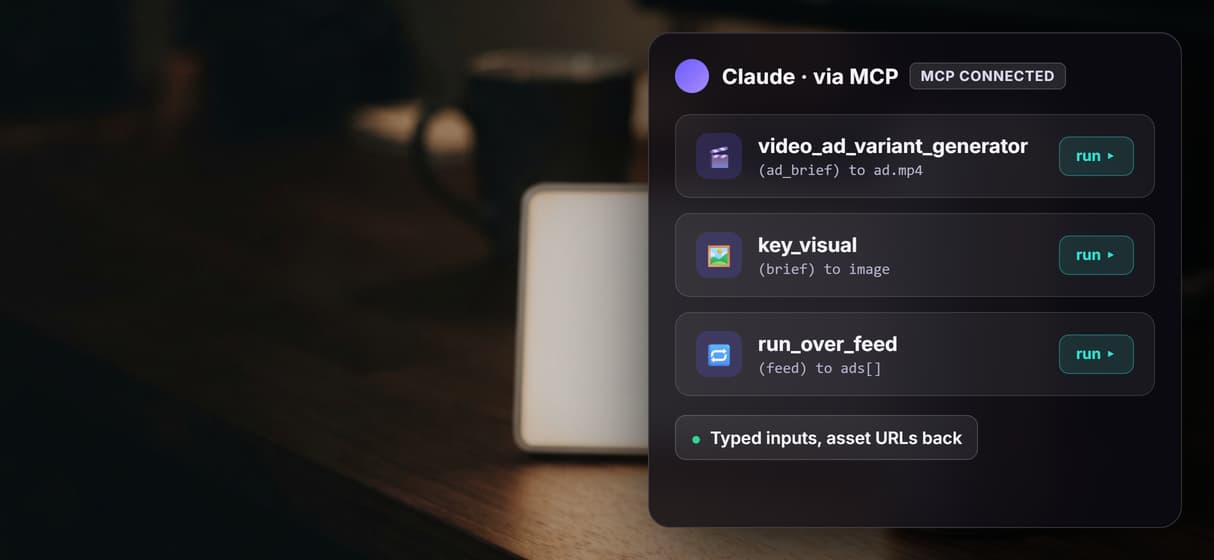
Publish the workflow so it becomes a typed REST endpoint and an MCP tool with named inputs your code or an agent can call the same way every run.
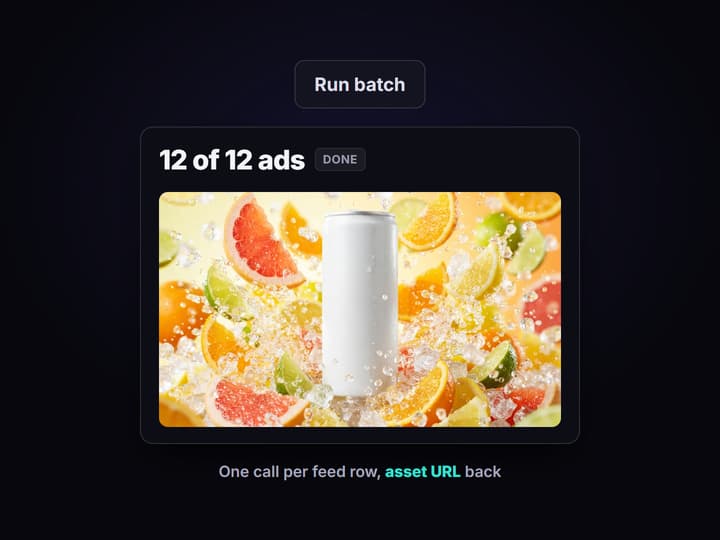
Loop over your feed
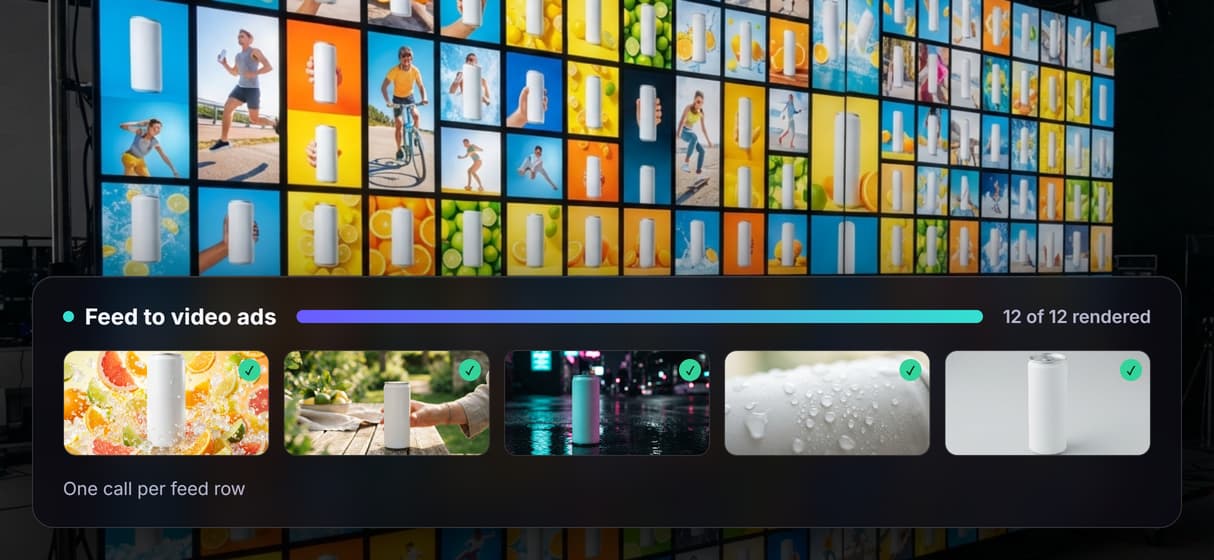
POST one brief per row of a CSV or product feed, poll each run, and collect the finished video ad and its asset URL for every variant in the batch.
A bulk video ad API, not another one-off editor
Most tools that promise bulk video ads are template compositors: you lay out one design, swap a few text and image variables, and stamp out near-identical cuts. That works until you want a different hook, a different model, or a real generated scene per product. A bulk video ad API should let you describe the ad once and mass-produce genuinely distinct variants from real generation, not slot-filling.
Wireflow takes the pipeline approach. You build one ad pipeline on a node canvas, an ad brief feeding a key visual, a video clip, and a composed cut, then publish that graph as a single endpoint. From then on, one call renders one finished video ad, and a loop over your feed renders the whole batch.
What the endpoint gives you
Loop over a feed
Call one endpoint per row of a CSV or product feed to render a video ad for every variant.
One chained graph
Ad brief to key visual to video clip to composed cut, wired once and reused on every run.
Typed REST inputs
POST named inputs, poll the run, and get back the finished ad and its asset URL.
MCP tool
The same workflow is callable by an agent as a typed tool, no glue code to maintain.
Swappable models
Trade the video or image node for another of 70+ models without rewiring the graph.
Hosted compute
No local GPU and no render server to run; generations happen on hosted infrastructure.
Where the pipeline stops and your system starts
The division of labor is deliberate. Wireflow owns the generation: it turns each brief into a real key visual, animates it into a clip, and composes the finished ad, on repeat, at whatever volume your feed defines. Your code owns the loop, the feed, and the decisions, which product goes in which variant, which hook to try, when to stop spending.
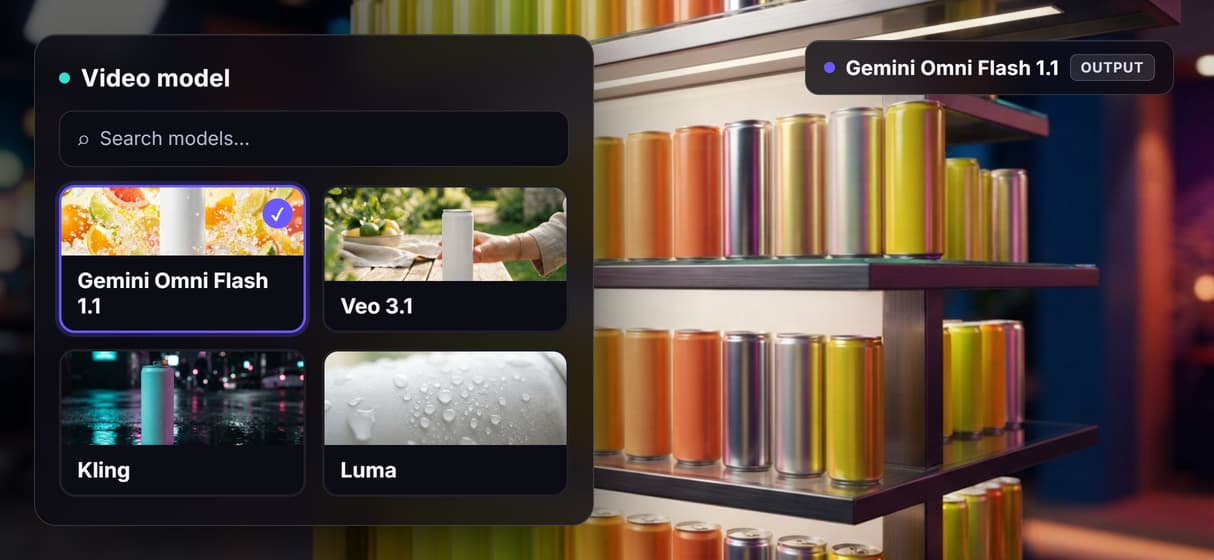
Because the graph is published server-side, every call runs the same version. Swap the video model from Gemini Omni Flash 1.1 to Veo 3.1 or Kling once on the canvas, and the next batch picks it up with no client change. An LLM node can rewrite hooks or captions inside the graph, but campaign strategy stays in your system, where it belongs.
When this is NOT the right tool
This is a generation layer, not a media buyer and not a strategy brain. Wireflow does not place bids, set budgets, choose audiences, or report attribution; it has no ad-account integration and no A/B analytics dashboard. If you need those, keep them in your ad platform and call this API only for the creative.
It also will not decide what to say. Strategy, targeting, and channel mix come from your team or the agent you bring. Generations cost credits per run, so an unbounded agent loop is a real spend decision, and one-off creative with no repeatable shape gains little from a published pipeline. If you make a single ad once a month, a manual editor is simpler.
More Than Just Bulk Video Ad API
Publish once, loop over your feed
Build the pipeline once, publish it as one endpoint, then loop it over a CSV or product feed so every row renders its own video ad variant. For still product ads from the same feed, see our comparison of ecommerce ad creative tools.
One graph, brief to finished ad
One canvas chains your brief into a GPT Image 2.5 Flare key visual, a Gemini Omni Flash 1.1 clip, and a composed cut, the chained-model graph behind every call.
Call it from your own code
Every published workflow is a typed REST endpoint: POST a brief, poll the run, get asset URLs back, no render box to host, like the hosted video API.
Your agent's video-ad tool
The same workflow is also an MCP tool, so an agent like Claude lists it, runs it with typed inputs, and gets finished ads back, like video API for agents.
Swap models without rewiring
Trade Gemini Omni Flash 1.1 for Veo 3.1 or Kling, or GPT Image 2.5 Flare for Flux, on the same graph, one of 70+ models you can chain in one API call. See our AI commercial generator.
AI Models Available
Automate Any Workflow
Included in Every Plan
FAQs
It is an endpoint that generates video ad variants programmatically. You publish one ad pipeline as a REST endpoint and MCP tool, then call it in a loop over a feed so each call returns a finished video ad.
Discover related AI tools
- AI Pipeline Automation
- AI Workflow Templates
- AI Video Pipeline: Build One on a Node Canvas
- Batch AI Generation: Many Assets, One Run
- AI Model Chaining
- AI Asset Pipeline
- AI Workflow Builder
- AI Content Generation API
- AI Workflow API
- AI Orchestration API
- Headless AI Workflow Platform
- Krea AI API Alternative: Image and Video From One REST Endpoint
More From Wireflow
Written by
Andrew Adams · Co-Founder & Operations at Wireflow
Runs client operations and content strategy at Wireflow. Works directly with creative teams and agencies to build production AI workflows.
Build your bulk video ad endpoint
Build one ad pipeline on the canvas, publish it as a REST endpoint and MCP tool, then loop it over your feed to render every video ad variant. Hosted compute, 70+ swappable models, pay per generation.