Best Creatopy Alternatives in 2026

In this article▾
- Quick summary
- Why people look for a Creatopy alternative
- How these tools were ranked
- 1. Wireflow: Best Overall
- 2. Canva: Best Free Option
- 3. AdCreative.ai: Best for Performance Scoring
- 4. Bannerbear: Best for Developers
- 5. Placid: Best for Template Automation
- 6. Celtra: Best for Creative Ops
- 7. Smartly: Best for Paid Media at Scale
- 8. Adobe Express: Best for Adobe Teams
- Comparison table
- FAQ
- Conclusion
Creatopy rebranded to The Brief in 2026, and the pricing moved with it: $29 per month for Pro, $79 for Ultra, and $49 per seat for teams of two to ten. That change sent a lot of banner and display teams back to the market. This guide ranks eight working alternatives, from free design tools to developer APIs, with Wireflow at the top for teams that want to chain several AI models into one repeatable ad pipeline instead of clicking through templates.
Quick summary
- Wireflow: node canvas that chains models into one ad pipeline. Best Overall
- Canva: huge template library with a usable free tier. Best Free Option
- AdCreative.ai: generates creative and scores it before you spend. Best for Performance Scoring
- Bannerbear: REST API that renders images from templates. Best for Developers
- Placid: credit-based template automation with no-code integrations. Best for Template Automation
- Celtra: enterprise creative automation with approval workflows. Best for Creative Ops
- Smartly: creative plus media buying in one platform. Best for Paid Media at Scale
- Adobe Express: brand kits and quick edits inside Adobe. Best for Adobe Teams
Why people look for a Creatopy alternative
Creatopy was built around one job: banner and display sets across every standard IAB size, with a brand kit enforced across the set. It still does that well. The complaints that push people to switch are consistent, though. Animated HTML5 output and ad serving sit behind the upper tiers, the seat model gets expensive once more than one designer needs access, and there is no way to generate net-new imagery inside the tool, so you pair it with a separate AI image generator anyway. Teams that have outgrown template editing usually want ad creative automation that runs on its own rather than a faster place to click.
The rebrand added a second reason. Integrations, documentation links and internal bookmarks that pointed at creatopy.com now redirect to thebrief.ai, and anything scripted against the old domain needs revisiting. If you were already reconsidering the tool, that is a natural moment to look at what else exists. Before you commit to any replacement, it is worth reading how other teams structure ad creative testing at scale, because the right tool depends far more on your volume than on your feature checklist.
Build this in Wireflow
Make the same kind of asset on a canvas you control, with a free account and no credit card.
How these tools were ranked
Each tool was judged on four things: how many finished variants it produces without manual work per variant, whether it generates imagery or only arranges it, whether there is an API for pipeline use, and the realistic monthly cost for a small team. Prices below are published list prices at the time of writing and are worth re-checking.
1. Wireflow: Best Overall
Wireflow is a node canvas rather than a template editor. You drop an input node, connect it to one or more AI model nodes, and the canvas runs the chain end to end: a product photo goes in, a background swap, a copy generation step and a resize step run in sequence, and a full set of placements comes out. Because each step is a node, changing the hook or the aspect ratio means editing one node and re-running, not rebuilding every variant by hand. That is the structural difference from Creatopy, which assumes the imagery already exists and your job is to arrange it. The approach is explained in more depth in how to chain multiple AI models in one API call.
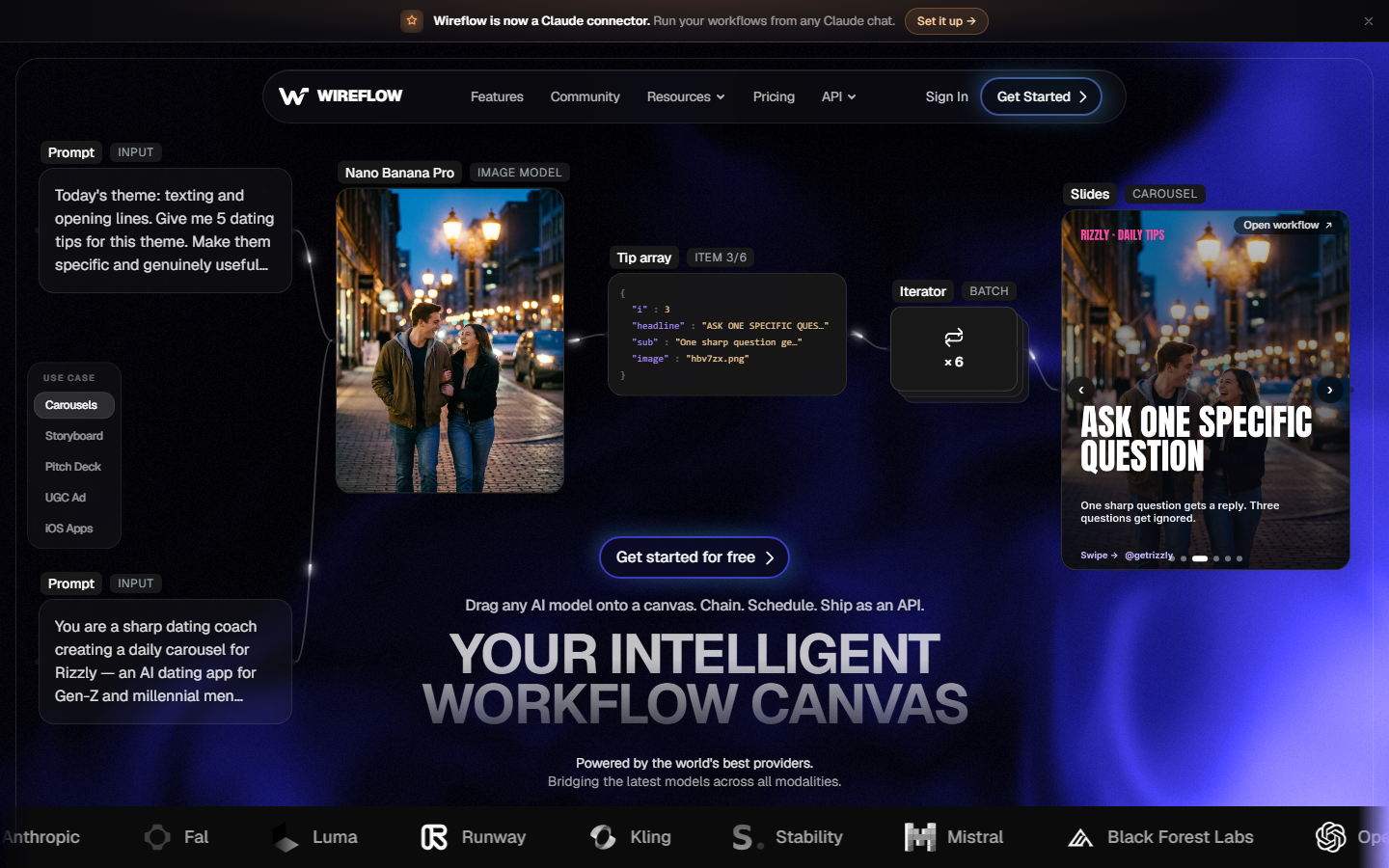
The trade is that a canvas takes longer to learn than a template gallery. If your output is five display banners a month, a template tool is faster. If you produce dozens of variants across placements and re-run them as offers change, the canvas pays for itself within a couple of campaigns.
2. Canva: Best Free Option
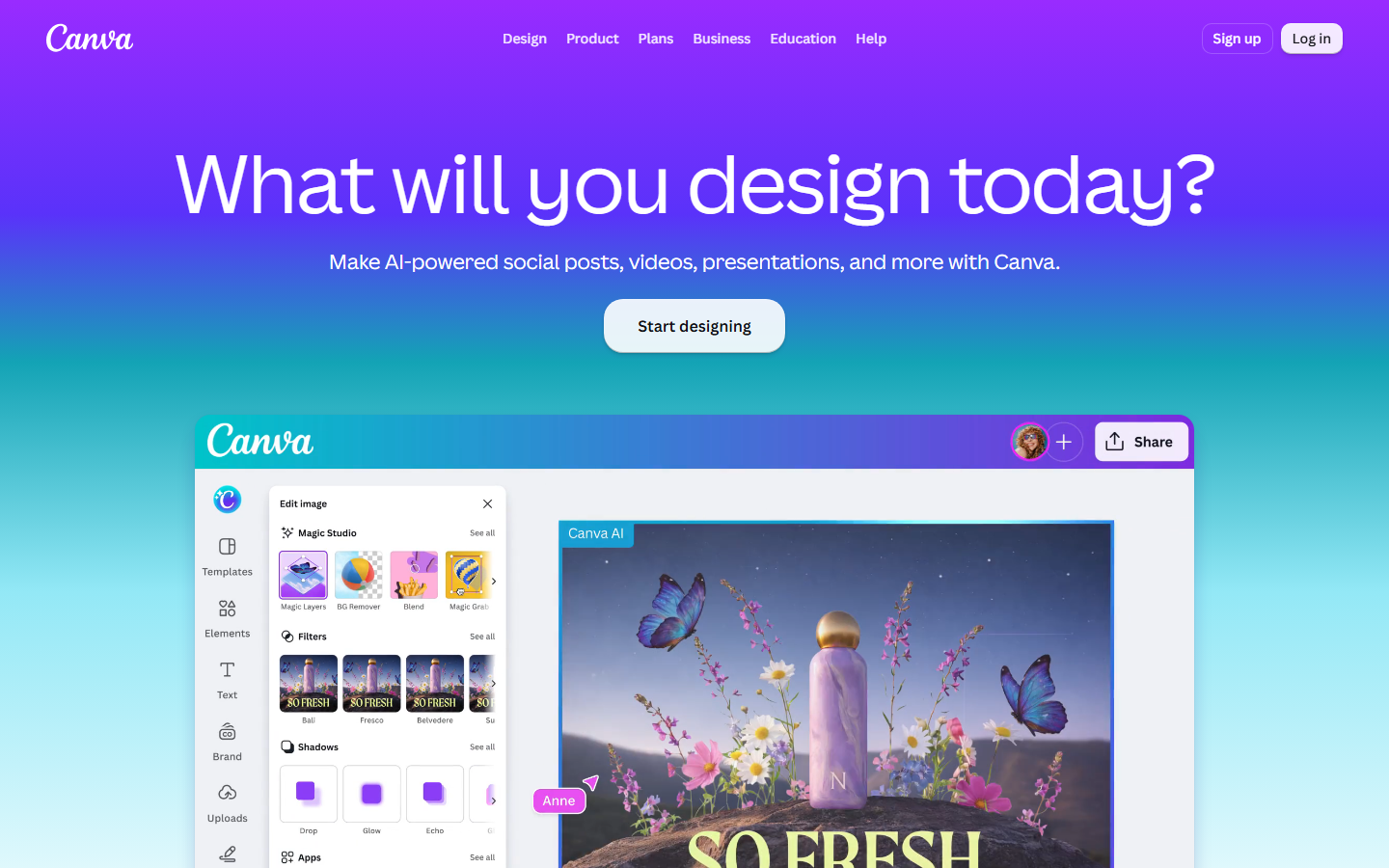
Canva is the default answer for teams whose real constraint is budget. The free plan covers a genuine share of everyday ad work, and Pro sits at around $15 per month with brand kits, background removal and the resize-to-every-placement feature most Creatopy users are actually paying for. Built-in AI generation now handles backgrounds and simple product scenes without leaving the editor. What it will not do is batch: every variant is a separate manual action, so throughput is capped by how fast someone can click. A fuller breakdown of where it falls short sits in the Canva AI alternatives comparison.
3. AdCreative.ai: Best for Performance Scoring
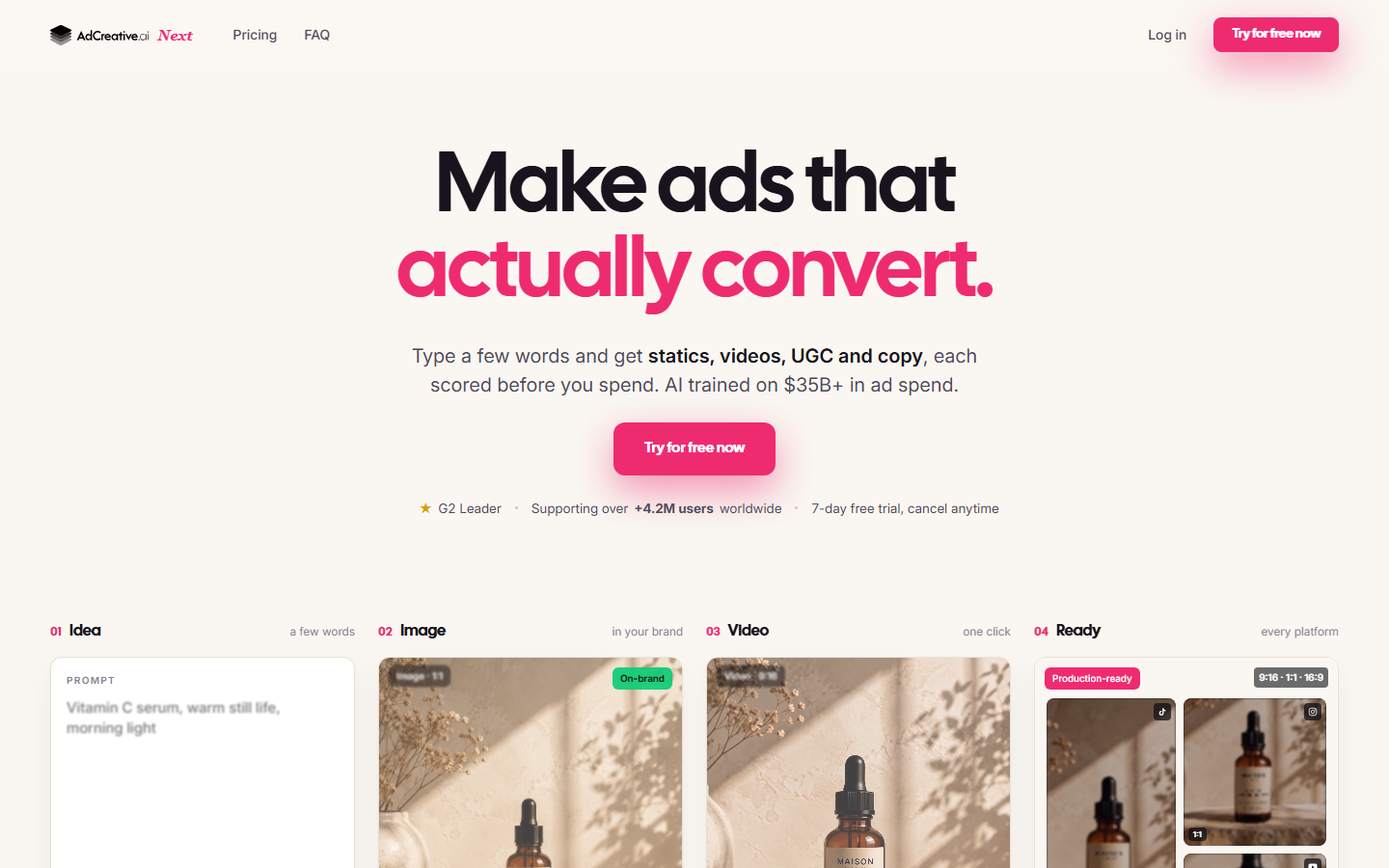
AdCreative.ai generates creative and attaches a predicted performance score to each variant, so you can rank a batch before spending on it. Plans start around $39 per month. It connects to ad accounts, so it can compare what it predicted against what actually converted. How much you trust that scoring depends on how close your category sits to its training data. Static output is reasonable rather than exceptional, and the template ceiling is lower than Creatopy's. Its own strengths and gaps are covered in the AdCreative.ai alternatives guide.
4. Bannerbear: Best for Developers
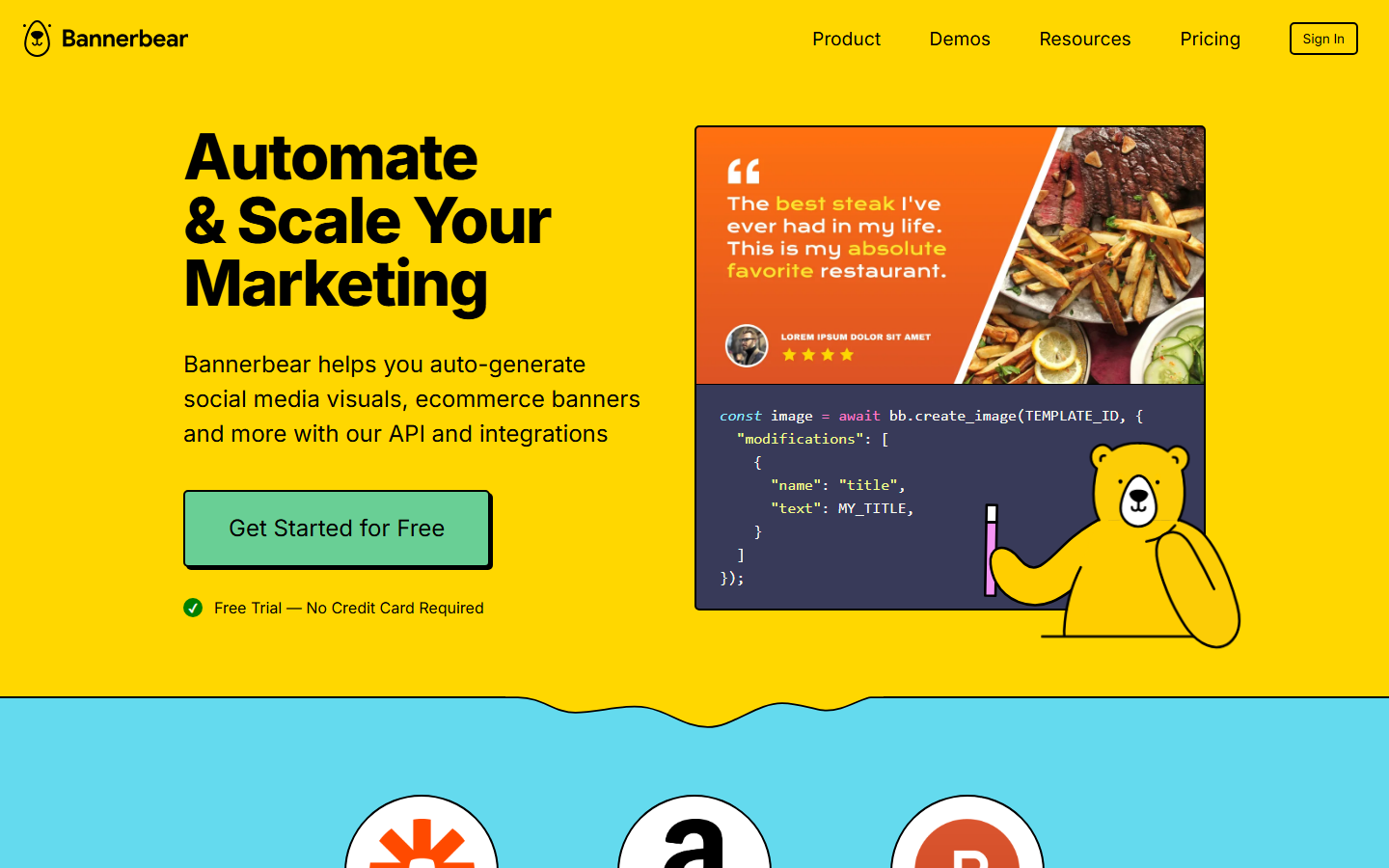
Bannerbear is the API answer. You design a template once, then POST data to a REST endpoint and get a rendered image back. Automate is $49 per month for 1,000 API credits, Scale is $149 for 10,000, and Enterprise is $299 for 50,000. There is an MCP server and around fifty app integrations, so it slots into existing automation without custom glue. It is right when the creative is templated and the volume comes from data, such as per-product banners. It is wrong if you need the imagery invented rather than filled in, which is where AI canvas API tools are the closer category.
5. Placid: Best for Template Automation
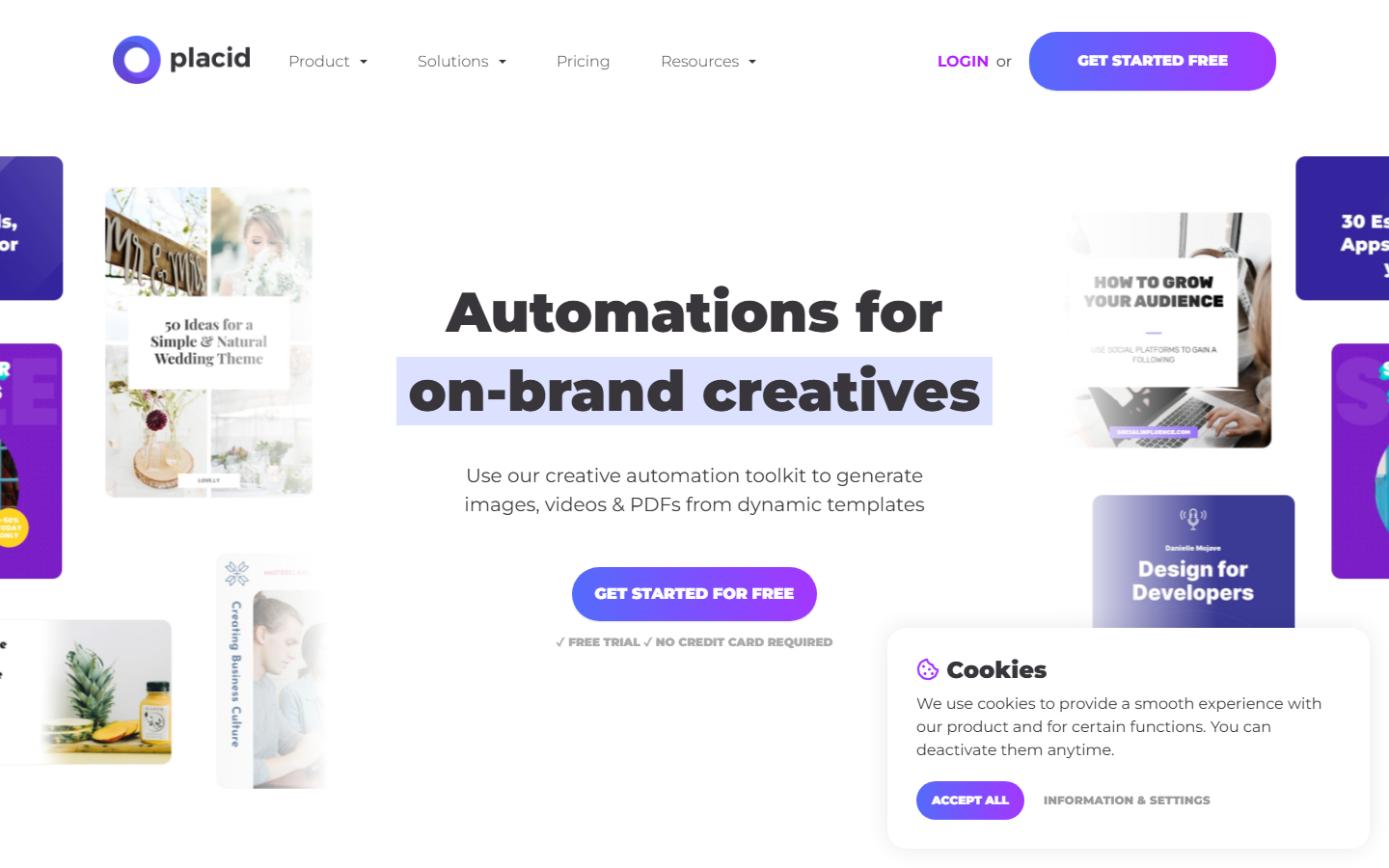
Placid covers similar ground to Bannerbear but leans no-code. Plans are credit-based at 500, 2,500, 25,000 and 100,000 monthly credits, where one image costs one credit, ten seconds of video costs ten, and a PDF page costs two. Unused credits roll over up to double your allocation, which suits uneven campaign months, and previews are free, so you can iterate on a template without burning quota. The editor is simpler than Creatopy's by design: it is built for templates filled programmatically, not hand-finished display sets. The same pattern applied to organic posting is walked through in how to create social media banners with AI.
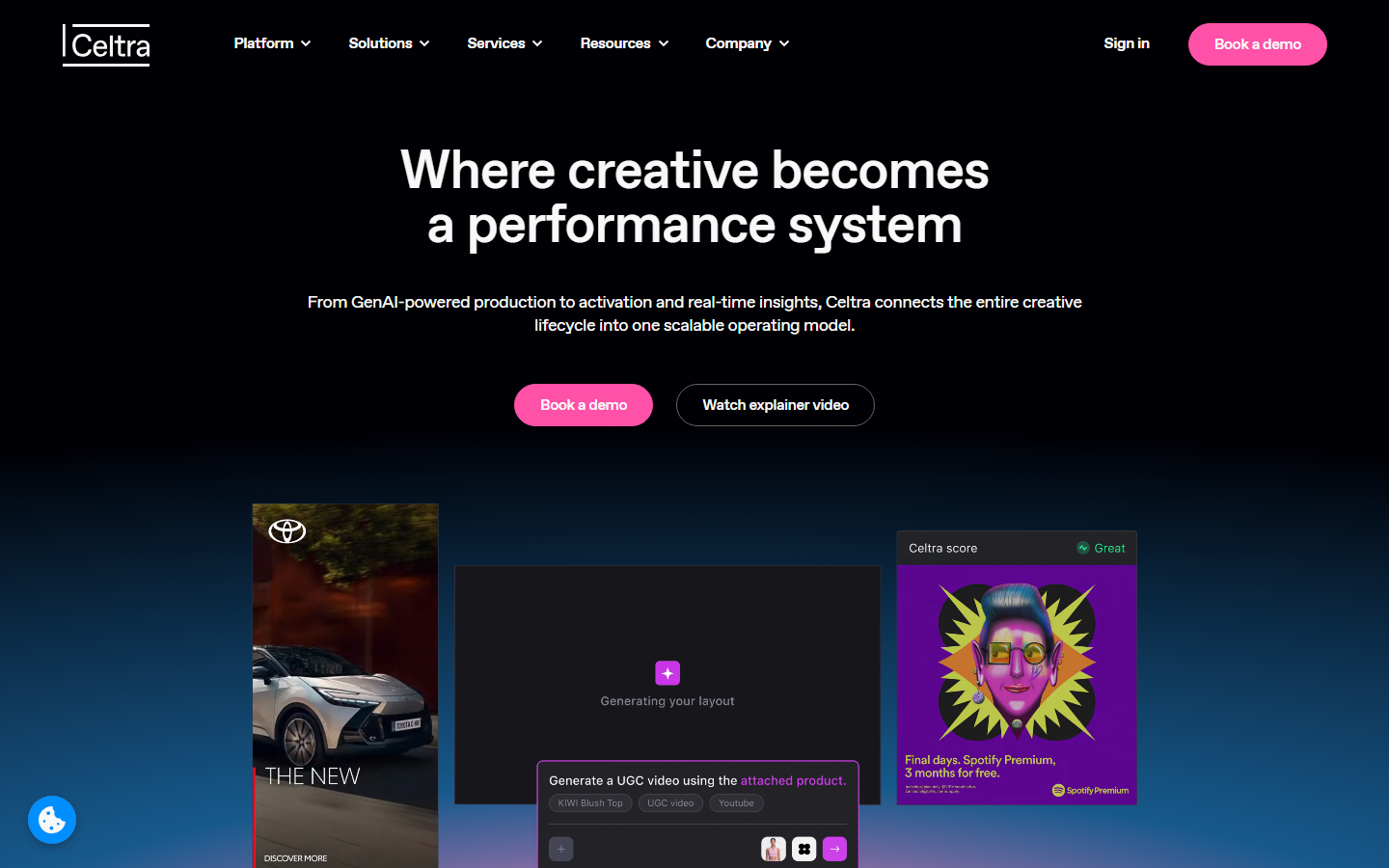
6. Celtra: Best for Creative Ops
Celtra is the enterprise version of what Creatopy does: creative automation with versioning, approval workflows, localisation and asset governance. Pricing is quote-based and sits well above the self-serve tools here. It fits when the bottleneck is coordination rather than production, such as one campaign shipping into fifteen markets with legal review at each step. The tradeoffs against lighter options are laid out in AI solutions for marketing agencies.
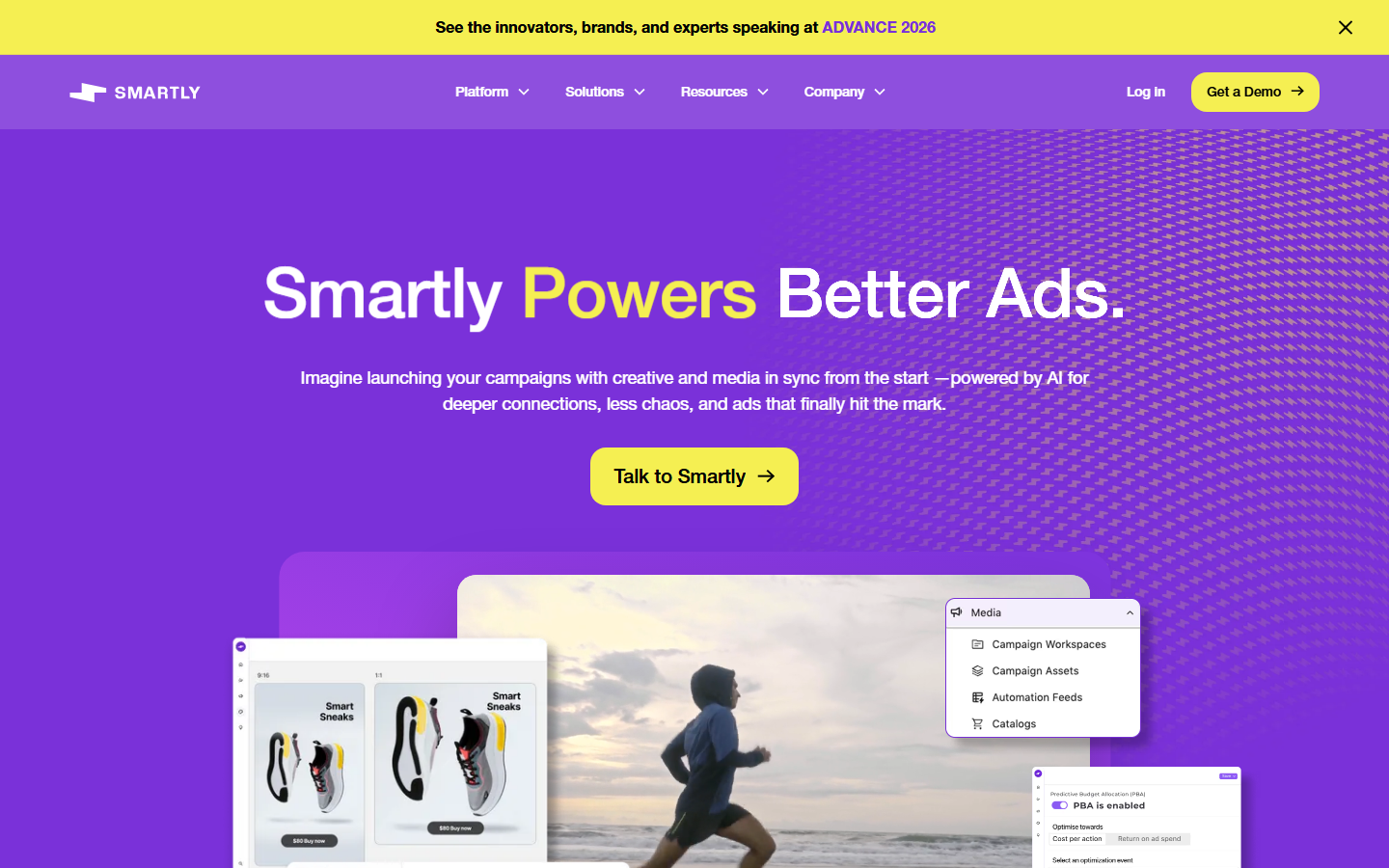
7. Smartly: Best for Paid Media at Scale
Smartly merges creative production with media buying, so variants are generated, launched and optimised in one platform. Pricing is quote-based and usually tied to a percentage of ad spend, so it only makes sense above a meaningful monthly budget. The feedback loop is closed by default: the platform knows which creative won because it bought the placement. If your spend does not justify that, the standalone route is covered in Facebook ad creative generators.
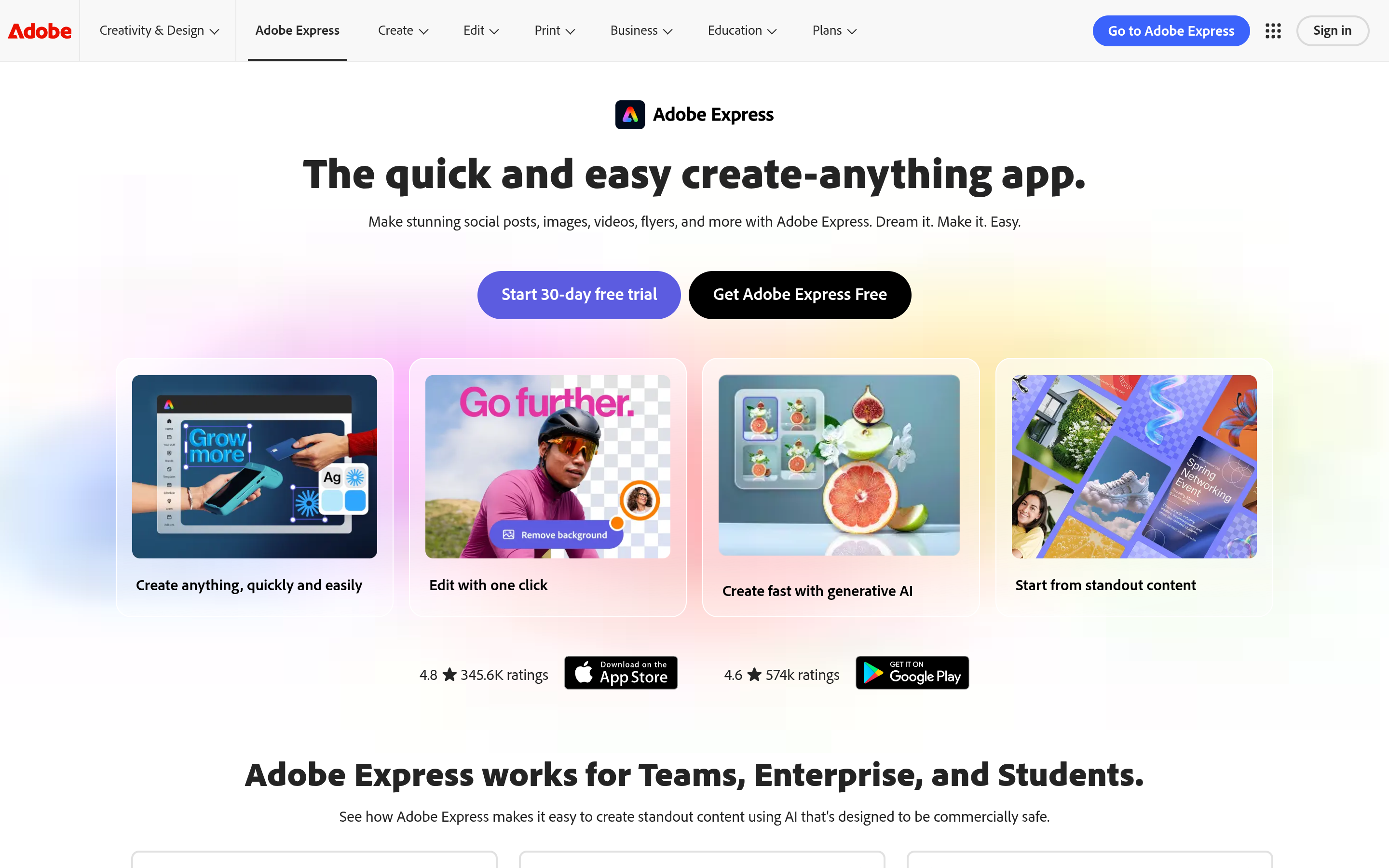
8. Adobe Express: Best for Adobe Teams
Adobe Express is worth considering mainly if you already pay for Creative Cloud, where it is close to free at the margin. It has a free tier, brand kits, generative fill backed by Firefly, and handoff into Photoshop and Illustrator when a design needs finishing. As a Creatopy replacement it is weakest on scale: no batch render and no API, so it suits a moderate number of high-polish assets rather than high variant volume. Teams on the volume side should compare static ad creative generators.
Comparison table
| Tool | Best for | Starting price | API | Generates imagery | Batch output |
|---|---|---|---|---|---|
| Wireflow | Chained AI ad pipelines | Free tier, paid plans | Yes | Yes | Yes |
| Canva | Free everyday design | Free, Pro ~$15/mo | Limited | Yes | No |
| AdCreative.ai | Performance scoring | ~$39/mo | Yes | Yes | Yes |
| Bannerbear | Developer rendering | $49/mo | Yes | Partial | Yes |
| Placid | No-code template automation | Credit-based tiers | Yes | No | Yes |
| Celtra | Enterprise creative ops | Quote | Yes | Partial | Yes |
| Smartly | Creative plus media buying | Quote | Yes | Yes | Yes |
| Adobe Express | Adobe Creative Cloud teams | Free, Premium paid | No | Yes | No |
| The Brief (Creatopy) | Display and banner sets | $29/mo | Limited | No | Yes |

Volume separates these tools more cleanly than price does. Canva and Adobe Express are per-asset tools that happen to have templates; Bannerbear, Placid and Celtra are per-batch tools that happen to have editors. Knowing which side you sit on decides the shortlist faster than any feature comparison, and the same logic applies to bulk image generation more broadly.
Try it yourself: Build this ad creative workflow in Wireflow. The nodes are pre-configured with the exact setup discussed above.
FAQ
Is Creatopy still available in 2026? Yes. Creatopy rebranded to The Brief, and creatopy.com now redirects to thebrief.ai. The product is the same banner and display platform, with plans at $29 per month for Pro, $79 for Ultra and $49 per seat for teams of two to ten.
What is the closest direct replacement for Creatopy? For like-for-like display and banner sets, Celtra is the nearest match at enterprise scale and Placid is the nearest at small-team scale. If you want the same output without maintaining templates by hand, a node pipeline is a closer functional match than another template editor. Ecommerce teams in particular should compare against ecommerce ad creative generators.
Is there a free Creatopy alternative? Canva and Adobe Express both have free tiers that cover basic ad production, including brand assets and resizing. Neither offers batch rendering on the free plan, so they suit low-volume work.
Which alternative has the best API? Bannerbear has the most mature standalone rendering API, with published credit tiers from 1,000 to 50,000 calls per month and an MCP server. Placid is close behind with a simpler credit model. For display-specific automation, see Google ad creative generators.
Can these tools keep brand consistency across a set? All of them support brand kits in some form. The Brief allows five on Pro and twenty on Ultra, Canva and Adobe Express include them on paid plans, and Celtra adds governance and approvals on top. The mechanics of setting one up are covered in AI brand kit generators.
How much should a small team expect to pay? A two-person team at moderate volume typically lands between $30 and $150 per month once one design tool and one automation tool are counted. Quote-based platforms like Celtra and Smartly start much higher.
Which tool is best for social rather than display? Creatopy was always strongest at display. For feed-native placements, tools built around social formats do better, and the options are compared in Instagram ad creative makers.
Conclusion
The right Creatopy alternative depends on which constraint actually hurts. If it is cost, Canva or Adobe Express covers the basics for free. If it is developer integration, Bannerbear and Placid render from data on demand. If it is governance across markets, Celtra and Smartly are built for that and priced accordingly. If the real problem is arranging assets by hand when the imagery could be generated in the same run, Wireflow replaces the template step with a pipeline you build once and re-run whenever the offer changes. Agencies weighing that across clients will find the economics in ad creative generators for agencies.

Co-Founder & Operations at Wireflow
Runs client operations and content strategy at Wireflow. Works directly with creative teams and agencies to build production AI workflows.
- Content Strategy
- Client Operations
Get unlimited ad creatives today.
One call to see if we are a fit and scope the first ad. If it fits, your first batch lands inside week one.